Spiritual and religiousCentral Asia and the CaucasusChristianPagan and ancient
Trndez
In its own language: տրնդեզ
An Armenian fire feast forty days after Christmas, kept with bonfires and shared sweets

Trndez is an Armenian fire feast kept forty days after Christmas, on 2 February for one church and in mid-February for the other. Families and couples gather around a bonfire, jump the flames for luck and fertility, and share sweets made from wheat and hemp.
When is Trndez kept?
Trndez is kept on forty days after Christmas, kept on 2 February and on the 13th, with the eve of the 14th as the time of celebration.
Trndez is a feast of purification kept by the Armenian Apostolic Church and the Armenian Catholic Church, forty days after the birth of Jesus. In Armenia it is a public holiday. People light bonfires, and couples jump over the flames. The night marks the turn from winter towards spring, and it carries older, pre-Christian ideas about fire, warmth and fertility.
What it is
Trndez is a purification feast kept by two Armenian churches. In the Armenian Apostolic Church and the Armenian Catholic Church it comes forty days after the Nativity, and it is close in spirit to Candlemas in the Western churches. Armenians also call it Tyarnndarach. The two churches keep it on different dates: one on 2 February, the other on the 13th, when the eve of the 14th is the time of celebration. In Armenia the day is a public holiday. The name Trndez grew out of an older word, Derendez, which described a bundle of straw placed before a house.
Origins and history
The feast is older than its Christian form. According to the sources, Trndez began as a pagan rite tied to the worship of sun and fire in Armenia before the country became Christian. It honoured Vahagn, known in Armenia as the god of war, courage, the sun and fire. People held that fire drives off the cold of winter and helps the land give a good harvest, so the rite belongs to the coming of spring and to fertility. The church later took the custom into its calendar as a purification feast, forty days after the Nativity, and it has been kept that way since.
How it is kept
Bonfires are the centre of the night. Families gather, and in many places the fire is lit in the evening. Newly married and engaged couples jump over the flames for luck, prosperity and children. Others jump too. Trays of festive food are shared near the fire. Some people keep the ash and use it as a folk remedy, rubbing it on the skin for pain or into the eyelids, in the belief that this helps the eyes. Today the feast is marked both in church and around the fire.
Food and drink
Two sweets belong to the night. The first is aghandz, a snack of toasted wheat and hemp, often mixed with sesame seeds, peas, raisins and other dried fruit, which gives it a sweet taste. Newly married or engaged couples eat it after they have jumped the fire. The second is pokhind, made from baked and ground grains and stirred with honey or fruit syrup. Large trays of festive food are set out near the flames, and everyone shares from them. Both dishes are simple and tied to this one celebration.
How Trndez is kept
Families come together in the evening and a bonfire is lit. Newly married and engaged couples jump over the flames, and others follow them. The jumping is done for luck, prosperity and fertility. Trays of festive food are passed around near the fire, including the wheat and hemp snack aghandz and the honeyed grain dish pokhind. Some people gather the ash afterwards, believing it has healing power. In church, the day is kept as a purification feast.
When and where
Trndez falls forty days after Christmas, which places it in February. The Armenian Apostolic Church and the Armenian Catholic Church keep it on different dates: one on 2 February, the other on the 13th, when the eve of the 14th is the time of celebration. It is a fixed feast, so the date does not move with Easter.
Trndez belongs to Armenia, where it is a public holiday, and the tradition is also recorded for Russia. Both the Armenian Apostolic Church and the Armenian Catholic Church keep the feast. Bonfires are lit outdoors after dark, and families and neighbours gather around them to jump the flames.
What Trndez means
Fire carries the meaning of the night. It stands for warmth and light at the end of winter, and for the fertility of fields and families. Jumping the flames is a wish for good fortune, prosperity and children, and couples, especially newlyweds, take part. The ashes are thought to hold a healing power of their own. The feast joins an older, pre-Christian regard for the sun with the church's blessing, and the two are held together rather than set apart.
On the table
Flavours: Sesame


Questions people ask about Trndez
When is Trndez kept?
Trndez is kept on forty days after Christmas, kept on 2 February and on the 13th, with the eve of the 14th as the time of celebration.
What is Trndez?
Trndez is a purification feast kept by the Armenian Apostolic Church and the Armenian Catholic Church. It falls forty days after the birth of Jesus, and it is also known as Tyarnndarach. An older word, Derendez, described a bundle of straw placed before a house.
Why do couples jump over the fire?
Jumping the flames is done for luck, prosperity and fertility, and newly married or engaged couples take part most visibly. The fire is also believed to drive away the cold of winter and to help the land yield a good harvest.
What is eaten at Trndez?
Aghandz, a sweet snack of toasted wheat and hemp with sesame seeds, peas, raisins and dried fruit often added, is eaten by couples after they jump the fire. Pokhind, ground baked grains with honey or fruit syrup, is shared near the flames along with other festive food.
Is Trndez the same as Candlemas?
They have much in common, and both come forty days after Christmas. Trndez is kept by the Armenian Apostolic Church and the Armenian Catholic Church; Candlemas is the Western feast on the same count of days. Trndez also carries pre-Christian fire customs of its own.
See also
 OvooA stone cairn on a peak or pass, circled by travellers and honoured in sky worship
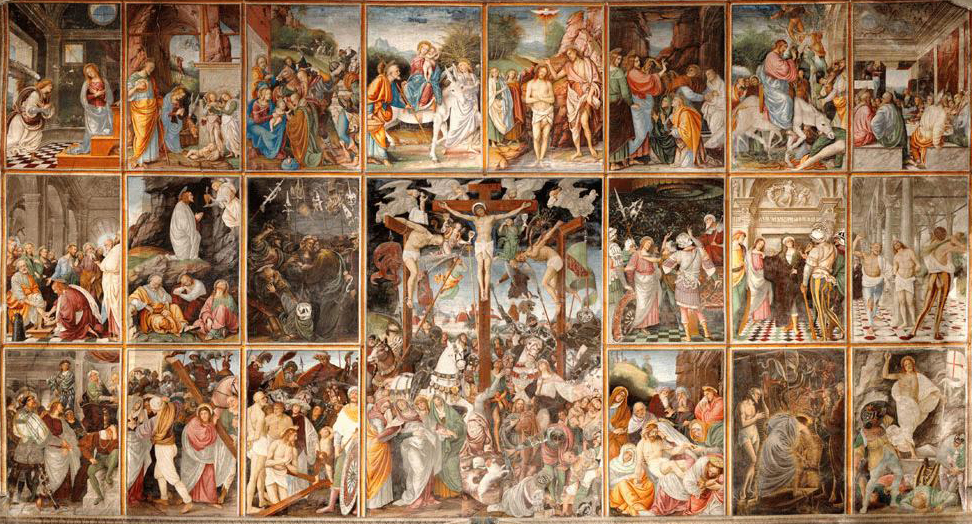 Presentation of Jesus at the TempleA February feast of candles and welcome, kept forty days after Christmas
 Traditional tattooingThe ancient custom of marking the skin for protection, healing, status and sacred rites
 April Fools' DayAn annual day of lighthearted pranks, hoaxes and teasing kept on the first of April
Good reading and sources
The facts on this page come from the Wikipedia article "Trndez", written by its contributors and used under the CC BY-SA 4.0 licence, and from its Wikidata record (CC0). EveryParampara rewrote the text in its own words, with AI assistance, and compares every page with the article to make sure no passage is copied. It may be reused under the same CC BY-SA 4.0 licence with a link back.
It may contain mistakes. Traditions differ from one family, village and community to the next, and the people who keep them know them best. If something is wrong, tell us. Last refreshed 2026-10-05.
More from Armenia
All the traditions of Armenia
🇮🇱 Jerusalem, Israel and 5 morePresentation of Jesus at the TempleIn praesentatione Domini
A February feast of candles and welcome, kept forty days after ChristmasSpiritual
 🇦🇲 Armenia and 4 moreBlessing of the Throats
A Christian prayer rite touching throats with crossed candles for protection from illnessSpiritual
🇦🇲 Armenia and 4 moreBlessing of the Throats
A Christian prayer rite touching throats with crossed candles for protection from illnessSpiritual
 🇦🇲 Yerevan, Armenia and 6 moreArmenian Genocide Remembrance DayՄեծ Եղեռնի զոհերի հիշատակի օր
An annual day of mourning and remembrance for the victims of the 1915 Armenian Genocide.Spiritual
🇦🇲 Yerevan, Armenia and 6 moreArmenian Genocide Remembrance DayՄեծ Եղեռնի զոհերի հիշատակի օր
An annual day of mourning and remembrance for the victims of the 1915 Armenian Genocide.Spiritual
 🇪🇹 Ethiopia and 5 moreNativity Fast
A forty-day Christian period of abstinence and prayer observed in preparation for Christmas.Spiritual
🇪🇹 Ethiopia and 5 moreNativity Fast
A forty-day Christian period of abstinence and prayer observed in preparation for Christmas.Spiritual
The same idea elsewhere
Spring and renewal compared 🇫🇷 France and 5 moreCandlemas
A Christian feast of candle blessings marking the end of the Christmas seasonSpiritual
🇫🇷 France and 5 moreCandlemas
A Christian feast of candle blessings marking the end of the Christmas seasonSpiritual
 🇰🇷 Jeju, South KoreaGut굿
Sacred rites of song, dance, and spirit communion performed by Korean shamansSpiritual
🇰🇷 Jeju, South KoreaGut굿
Sacred rites of song, dance, and spirit communion performed by Korean shamansSpiritual
 🇮🇪 Ireland and 1 moreImbolcLá Fhéile Bríde
A Gaelic festival heralding spring and honoring Saint Brigid with woven rush crossesSeasonal · Feasts and festival meals
🇮🇪 Ireland and 1 moreImbolcLá Fhéile Bríde
A Gaelic festival heralding spring and honoring Saint Brigid with woven rush crossesSeasonal · Feasts and festival meals
 🇯🇵 JapanChildren's Dayこどもの日
A Japanese holiday on May fifth celebrating the happiness and growth of childrenFestival
🇯🇵 JapanChildren's Dayこどもの日
A Japanese holiday on May fifth celebrating the happiness and growth of childrenFestival