Life-cycle ritesSub-Saharan Africa
Ekisaakaate
A royal Buganda cultural retreat teaching heritage, crafts, and manners to the young
Ekisaakaate is a cultural retreat organized in the Buganda Kingdom of Uganda for children and teenagers aged six to eighteen. Started in royal enclosures and revived by Queen Sylvia Nagginda, it gathers young people during holiday breaks to learn traditional etiquette, artisan crafts, music, and leadership.
When is Ekisaakaate kept?
Ekisaakaate is kept on twice a year, during school holidays in January and July.
Ekisaakaate is a traditional youth camp organized within Uganda's Buganda Kingdom. Originating in pre-colonial royal enclosures managed by chiefs, the custom brings boys and girls together to learn practical life skills and cultural values. Revived in the modern era under the leadership of the Nnaabagereka, Queen Sylvia Nagginda, the retreat trains young participants in craftsmanship, courtesy, traditional performance, and civic responsibility so that Kingdom customs pass safely to the next generation.
Origins and revival
In pre-colonial Buganda, an ekisaakaate was a royal enclosure surrounded by papyrus reeds where kingdom chiefs prepared young men for leadership. These traditional schools taught crafts like blacksmithing, hunting, and pottery alongside kingdom governance. The practice waned after British colonial rule took hold in the late nineteenth century and vanished when kingdoms were abolished in 1966. Following the restoration of Buganda in 1993, Queen Sylvia Nagginda revived the retreat in the mid-2000s under the Nnabagereka Development Foundation. Her modern version opened the custom to both boys and girls between six and eighteen years old.
What participants learn
During the retreat, young people known as abasaakaate study ancestral customs alongside practical modern disciplines. Teachers instruct them in Buganda courtly manners, such as kneeling while offering greetings, as well as patriotism and the moral philosophy of obuntu bulamu. Hands-on lessons cover bark cloth fabrication, basket weaving, traditional pottery, and preparing dishes such as oluwombo. Evenings bring folk singing, dancing, and traditional board games like Omweso. Modern elements, including self-defence through karate, mental health sessions, and personal budgeting workshops, are also integrated into the training schedule.
Camp life and calendar
The retreat takes place twice every year during primary and secondary school breaks. The January session serves local students following the national examinations calendar, while the July camp welcomes youth from the international diaspora. Large editions often draw hundreds of children to host schools in places like Gayaza and Luweero. Beyond artisan crafts, the curriculum emphasizes social bonding, discipline, and self-reliance. Organizers encourage families to reinforce these newly acquired domestic and social habits when children return home.
How Ekisaakaate is kept
Participants gather at a designated school for an intensive multi-week residential camp. Under the guidance of skilled instructors, young attendees practice traditional courtesies, learn folk dances, and play strategy games such as Omweso. They participate in practical workshops making bark cloth, weaving baskets, and shaping pottery, as well as cooking regional food. Kingdom leaders and the Nnaabagereka attend launch ceremonies and closing events to review student achievements and encourage disciplined community life.
When and where
The retreat is held twice a year. The main two-week gathering takes place during the January school break for local students, while a second session runs in July for youth travelling from the international diaspora.
Ekisaakaate takes place across the Buganda Kingdom in the Central Region of Uganda. Camps are hosted at regional boarding schools such as those in Gayaza and Luweero, with major ceremonial events launched at royal sites in Mengo.
What Ekisaakaate means
The enclosure represents a nurturing sanctuary where ancestral knowledge and the principle of obuntu bulamu are handed down. Historically a reed-fenced compound where chiefs developed future leaders, it symbolizes continuity, kingdom resilience, self-reliance, and respect for royal heritage across changing times.
Questions people ask about Ekisaakaate
When is Ekisaakaate kept?
Ekisaakaate is kept on twice a year, during school holidays in January and July.
What is Ekisaakaate?
Ekisaakaate is a cultural retreat and training camp in the Buganda Kingdom of Uganda. It teaches children and teenagers traditional etiquette, artisan crafts, kingdom values, and modern life skills.
Who takes part in the camps?
Boys and girls aged between six and eighteen take part in the program. Participants are referred to as abasaakaate and include both local Ugandan students and youth from the diaspora.
Who restored the tradition?
Sylvia Nagginda, the Nnaabagereka of Buganda, revived the camp program in the mid-2000s under her charitable foundation to ensure younger generations retain kingdom heritage and practical life skills.
See also
 GomesiA floor-length, brightly coloured dress tied with a sash, worn by women in UgandaKwanjulaA formal marriage introduction ritual of the Baganda people in Uganda, where families meet to exchange gifts and seek bl
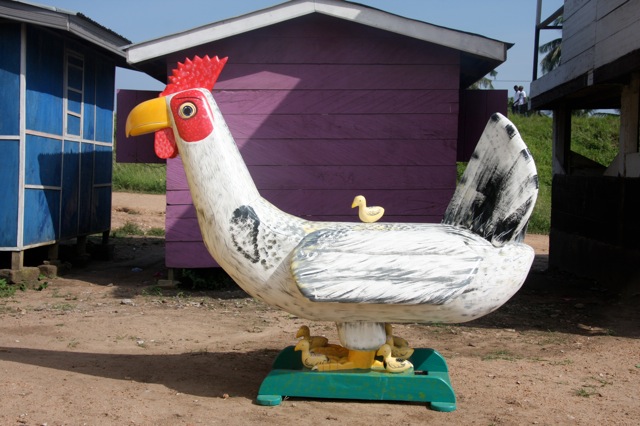 Fantasy coffinsCustom hand-carved burial caskets shaped as animals, tools and symbols in southern Ghana
Good reading and sources
The facts on this page come from the Wikipedia article "Ekisaakaate", written by its contributors and used under the CC BY-SA 4.0 licence, and from its Wikidata record (CC0). EveryParampara rewrote the text in its own words, with AI assistance, and compares every page with the article to make sure no passage is copied. It may be reused under the same CC BY-SA 4.0 licence with a link back.
It may contain mistakes. Traditions differ from one family, village and community to the next, and the people who keep them know them best. If something is wrong, tell us. Last refreshed 2026-10-05.
More from Uganda
All the traditions of Uganda 🇺🇬 Mbale, UgandaImbalu
The biennial rite of passage into adulthood observed by the Bamasaaba of UgandaRite of passage
🇺🇬 UgandaGomesi
A floor-length, brightly coloured dress tied with a sash, worn by women in UgandaDress
🇺🇬 UgandaEkisaakaate
A Buganda youth retreat teaching traditional manners, crafts and life skillsEtiquette
🇺🇬 Mbale, UgandaImbalu
The biennial rite of passage into adulthood observed by the Bamasaaba of UgandaRite of passage
🇺🇬 UgandaGomesi
A floor-length, brightly coloured dress tied with a sash, worn by women in UgandaDress
🇺🇬 UgandaEkisaakaate
A Buganda youth retreat teaching traditional manners, crafts and life skillsEtiquette
The same idea elsewhere
Royalty and coronation compared 🇮🇷 Isfahan, Iran and 4 moreMehreganمهرگان
An Iranian autumn festival honoring Mithra, friendship, and the harvestSeasonal
🇮🇷 Isfahan, Iran and 4 moreMehreganمهرگان
An Iranian autumn festival honoring Mithra, friendship, and the harvestSeasonal
 🇳🇿 Waitangi, New Zealand and 2 moreWaitangi DayTe Rā o Waitangi
New Zealand's national day remembering the 1840 founding agreement.Ceremony · Breakfast
🇳🇿 Waitangi, New Zealand and 2 moreWaitangi DayTe Rā o Waitangi
New Zealand's national day remembering the 1840 founding agreement.Ceremony · Breakfast
 🇮🇷 Iran and 5 moreEid al-Ghadirعید الغدیر
A Shia Muslim festival of prayer, gifts and shared meals, kept on 18 Dhu al-HijjahSpiritual
🇮🇷 Iran and 5 moreEid al-Ghadirعید الغدیر
A Shia Muslim festival of prayer, gifts and shared meals, kept on 18 Dhu al-HijjahSpiritual
 🇨🇳 ChinaKowtow叩頭
A traditional Chinese prostration of deep respect by kneeling and bowing to the groundEtiquette
🇨🇳 ChinaKowtow叩頭
A traditional Chinese prostration of deep respect by kneeling and bowing to the groundEtiquette