Spiritual and religiousMiddle EastMuslim
Eid al-Ghadir
In its own language: عید الغدیر
A Shia Muslim festival of prayer, gifts and shared meals, kept on 18 Dhu al-Hijjah

Eid al-Ghadir is a Shia Muslim festival on the eighteenth of Dhu al-Hijjah. It remembers the sermon at Ghadir Khumm in 10 AH, when Shia Muslims believe Muhammad named Ali as his successor, and is kept with prayer, sermons, gifts and public celebration.
When is Eid al-Ghadir kept?
Eid al-Ghadir is kept on once a year, on the eighteenth day of Dhu al-Hijjah.
Eid al-Ghadir is a Shia Muslim festival kept on the eighteenth of Dhu al-Hijjah, the closing month of the Islamic year. It remembers the day at Ghadir Khumm when, in Shia teaching, the Prophet Muhammad named Ali as his successor. Shia communities mark it with prayer, sermons, gifts, shared food and public celebration, and many count it among the year's most important religious days.
Origins at Ghadir Khumm
Muhammad called people to join the pilgrimage he would make only once, ten years after the migration to Medina. Over seventy thousand travelled with him, and when he reached Mecca on the fourth of Dhu al-Hijja more than a hundred thousand Muslims were there to meet him. On the way home, at a place called Ghadir Khumm, he spoke to the crowd. He asked whether he held more authority over them than they held over themselves, and they answered that he did. He then said that whoever counted him as mawla counted Ali as mawla too, and Shia Muslims read this as naming Ali ibn Abi Talib, his cousin and son-in-law, as his successor.
What the day means
The word mawla carries several senses, among them friend and master. In Shia teaching the question Muhammad asked first settles the meaning as authority, so the sermon is taken as a public designation of Ali as leader and first Imam. Shia Muslims therefore treat this anniversary as one of the founding moments of their faith. A hadith recorded by Ibn Babawayh places this day above every other festival of the Muslim community. The feast also carries the name Yawm al-Mithaq, the Day of the Covenant.
Customs of the day
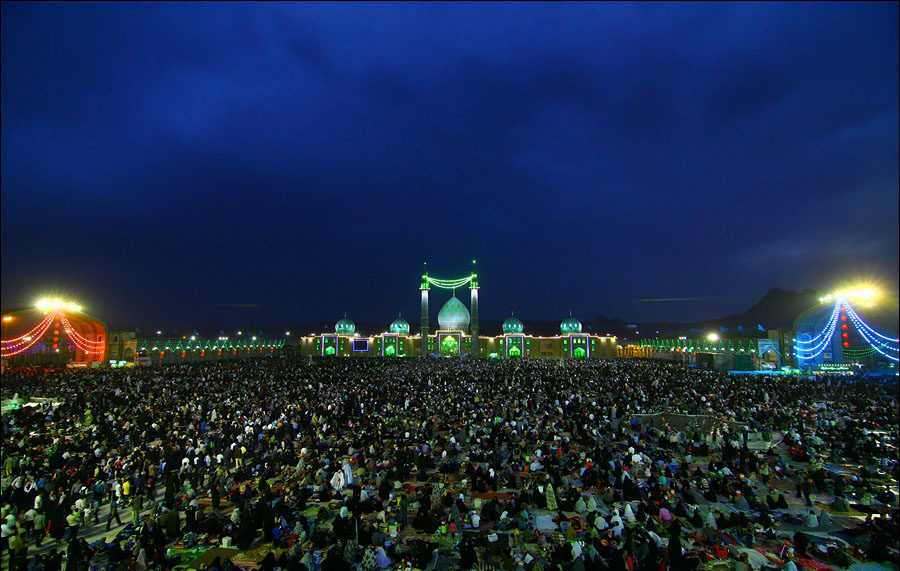
Customs vary by community. Reports say that Hasan ibn Ali held gatherings in Kufa on this day, with Ali ibn Abi Talib attending along with a group of his followers, and that gifts were given out afterwards. Other customs recorded in these accounts include alms and prayer, new clothes and perfume, greetings and handshakes, food shared with others, help for people in need, and presents meant to gladden others. Du'a Nudba is recited in many places. Public celebrations can bring sermons, processions, sweets and food shared with neighbours, and congratulations passed between friends.
From court to street
Historical accounts say the event was marked from the early centuries of Islam. It became a formal observance under the Buyids. Under the Safavids it grew into one of the largest religious festivals of the realm, and the Qajar court staged an official greeting ceremony for the king on that day. The practice of greeting the ruler carried on into the Pahlavi era. Today the day is kept from Iran, Iraq, Yemen and Azerbaijan to India, Pakistan and Afghanistan, and Shia Muslims also observe it in Europe, Canada and the United States.
Today and change
In 2022 Tehran held a festival ten kilometres long: hundreds of thousands of people filled Valiasr Street and the roads around it. Two years later several Yemeni provinces marked the day with fireworks, bands and speeches. In Yemen it is known as Yom Al-Wilaya, and it has been kept more widely since the Zaydi Shia government took power there. In 2024 Iraq's Council of Representatives also voted to make Eid al-Ghadir a public holiday, after the National Shiite Movement leader Muqtada al-Sadr pressed for it.
How Eid al-Ghadir is kept
Shia Muslims keep the day, among them Twelvers, Zaydis, Ismailis and Alawites. Gatherings begin with prayer and sermons, and many communities recite Du'a Nudba. Families greet one another, shake hands, put on new clothes and perfume, and exchange gifts. People give to charity, cook festive meals, and hand out food and sweets. Congratulating friends and neighbours is part of the custom. In larger towns there are processions, music and speeches, and in some countries the day is a public holiday.
When and where
It comes once a year, on the eighteenth day of Dhu al-Hijjah, the closing month of the Islamic year, so its date on the Gregorian calendar shifts annually. In 2024 Iran kept it on 25 June. The sermon it remembers was given in 10 AH, in March 632 CE.
Shia communities keep it across the Middle East and South Asia, in Iran, Iraq, Yemen, Azerbaijan, Bahrain, Lebanon, Syria, Turkey, India, Pakistan and Afghanistan. Shia Muslims also hold it in the United States, Canada, the United Kingdom, Germany and France. The largest public gatherings are reported in Iran and Yemen.
What Eid al-Ghadir means
Those who keep this festival see it as settling who should lead the community after Muhammad. The declaration at Ghadir Khumm is understood as a pledge of allegiance, which is why the day is also called Yawm al-Mithaq, the Day of the Covenant. It affirms the authority of Ali and of the Imams who followed him, and links ordinary believers to that line of guidance. Marking the feast is a public sign of belonging.

Questions people ask about Eid al-Ghadir
When is Eid al-Ghadir kept?
Eid al-Ghadir is kept on once a year, on the eighteenth day of Dhu al-Hijjah.
What is Eid al-Ghadir?
A Shia Muslim festival. It recalls the day at Ghadir Khumm when, in Shia belief, the Prophet Muhammad named Ali as his successor. It is kept on the eighteenth day of Dhu al-Hijjah and counts among the most important observances of the Shia year.
Who keeps it?
Shia Muslims, particularly Twelvers, Zaydis, Ismailis and Alawites. It is a public holiday in Iraq, and in Yemen it is known as Yom Al-Wilaya. Communities in Iran, South Asia, Turkey and the Gulf keep it, as do Shia Muslims in Europe and North America.
How do people mark the day?
With prayers and sermons, the recitation of Du'a Nudba, greetings and handshakes, new clothes and perfume, gifts, donations, and food and sweets shared with others. Larger celebrations add processions, music and speeches, as in Tehran's ten-kilometre festival in 2022.
Why does the word mawla matter?
Muhammad asked the crowd whether he had more authority over them than they had over themselves before he used the word. Shia Muslims therefore read mawla as master or leader, rather than only as friend, and take the sermon as the appointment of Ali.
See also
 KathinaA Buddhist season of offering new robes and gifts to monks after the rains retreat
 Ayudha PujaA Hindu festival blessing the tools, vehicles, books and instruments of daily work
 ProstrationBowing the whole body to the ground, in prayer and as a sign of respect
 Jagaddhatri PujaA Hindu festival for the world-bearing goddess, kept in West Bengal each autumn
Good reading and sources
- Eid al-Ghadir on WikipediaEncyclopedia
- More photos on Wikimedia CommonsPhotos and video
- Wikidata recordOpen data
The facts on this page come from the Wikipedia article "Eid al-Ghadir", written by its contributors and used under the CC BY-SA 4.0 licence, and from its Wikidata record (CC0). EveryParampara rewrote the text in its own words, with AI assistance, and compares every page with the article to make sure no passage is copied. It may be reused under the same CC BY-SA 4.0 licence with a link back.
It may contain mistakes. Traditions differ from one family, village and community to the next, and the people who keep them know them best. If something is wrong, tell us. Last refreshed 2026-10-05.
More from Iran
All the traditions of Iran 🇮🇳 Mumbai, India and 1 moreFire templeآتشکده
A consecrated sanctuary where Zoroastrians tend sacred fires and gather for worshipSpiritual
🇮🇳 Mumbai, India and 1 moreFire templeآتشکده
A consecrated sanctuary where Zoroastrians tend sacred fires and gather for worshipSpiritual
 🇮🇱 Jerusalem, Israel and 5 moreTisha B'Avתשעה באב
A solemn fast day in July or August to mourn the destruction of the Jerusalem Temples and other Jewish tragedies.Spiritual · Fasting and breaking the fast
🇮🇱 Jerusalem, Israel and 5 moreTisha B'Avתשעה באב
A solemn fast day in July or August to mourn the destruction of the Jerusalem Temples and other Jewish tragedies.Spiritual · Fasting and breaking the fast
 🇮🇷 Iran and 5 moreMid-Sha'banنصف شعبان
An Islamic night of prayer, remembrance, and seeking divine forgiveness.Spiritual
🇮🇷 Iran and 5 moreMid-Sha'banنصف شعبان
An Islamic night of prayer, remembrance, and seeking divine forgiveness.Spiritual
 🇮🇷 Tehran, IranTa'ziyehتعزیه
A ritual drama from Iran that retells the Karbala mourning each MuharramSpiritual
🇮🇷 Tehran, IranTa'ziyehتعزیه
A ritual drama from Iran that retells the Karbala mourning each MuharramSpiritual
The same idea elsewhere
Greetings and farewells compared 🇳🇿 Waitangi, New Zealand and 2 moreWaitangi DayTe Rā o Waitangi
New Zealand's national day remembering the 1840 founding agreement.Ceremony · Breakfast
🇳🇿 Waitangi, New Zealand and 2 moreWaitangi DayTe Rā o Waitangi
New Zealand's national day remembering the 1840 founding agreement.Ceremony · Breakfast
 🇨🇳 ChinaKowtow叩頭
A traditional Chinese prostration of deep respect by kneeling and bowing to the groundEtiquette
🇬🇧 United Kingdom and 4 moreHip hip hooray
A traditional celebratory cheer of call and response to honour someoneFestival
🇺🇬 UgandaEkisaakaate
A Buganda youth retreat teaching traditional manners, crafts and life skillsEtiquette
🇨🇳 ChinaKowtow叩頭
A traditional Chinese prostration of deep respect by kneeling and bowing to the groundEtiquette
🇬🇧 United Kingdom and 4 moreHip hip hooray
A traditional celebratory cheer of call and response to honour someoneFestival
🇺🇬 UgandaEkisaakaate
A Buganda youth retreat teaching traditional manners, crafts and life skillsEtiquette