Festivals and celebrationsLatin America and the CaribbeanChristian
Festa Junina
In its own language: Festas Juninas
A Brazilian midwinter celebration marked by bonfires, folk dances and countryside games

Festa Junina is an annual Brazilian winter festival observed throughout June, brought from Portugal during colonial rule. Communities gather around towering bonfires in countryside attire to dance the quadrilha, play traditional party games and give thanks for seasonal rains.
When is Festa Junina in 2027?
Festa Junina 2027 runs from 13 to 29 June 2027. The date follows the moon or a local calendar, so it can move by a day. Other years: 2026, 13 to 29 June 2026; 2028, 13 to 29 June 2028.
Festa Junina is a month-long celebration observed across Brazil each June during the southern hemisphere winter. Originally introduced by Portuguese settlers between 1500 and 1822, it combines Christian feast days with rural customs. People gather in thatched spaces or city squares to light bonfires, perform quadrilha square dances and express gratitude for rainfall. Today, schools and entire municipalities stage these gatherings with music, games and theatrical performances.
Bonfires and folklore
Central to the event is the fogueira, a tall outdoor fire. This practice traces back to the Christian account of a hill fire lit by Elizabeth to announce the birth of Saint John to Mary. European midsummer traditions also contributed maypoles adorned with colourful ribbons and pennants strung overhead. In Brazil, these gatherings traditionally took place in an arraial, a large thatched shelter once used for significant farm parties. Because Brazil's winter climate differs from Europe, participants historically used the occasion to offer thanks for rain. Today, the gatherings range from intimate school fundraisers to massive urban celebrations attended by over a million people.
Dance styles and drama
Dancing is at the heart of every festival. The primary dance is the quadrilha, a 19th-century European square dance introduced by the Portuguese. Couples dance around a comedic mock wedding featuring a bride and groom, an act reflecting soil fertility. In southern regions, dancers improvise the cana-verde, a style related to fandango. Another theatrical tradition is the Bumba Meu Boi dance, which dramatises a tale where a husband slaughters an ox to satisfy his wife's craving for its tongue, after which a local healer revives the animal to everyone's relief. In the dança das fitas, dancers weave patterns around a tall pole using bright ribbons to represent community unity.
Music and festival games
In northeastern Brazil, forró music drives the festivities. Led by accordions and triangles, this music sings of the hardships and homesickness felt by rural sertanejo people. Modern bands often add fiddles, guitars and drums. Alongside the music, schools set up classic festival games to entertain children and raise funds. In pescaria, players fish with rods for paper or tin fish out of a box. Other games include one-legged races inspired by the folkloric Saci-pererê, three-legged races, ring tosses onto bottle necks and target dart throwing. Successful players win small toys or snacks as prizes.
Costumes and modern debate
Participants frequently dress in stereotypical countryside clothing. Men wear broad straw hats, while women put on red checked dresses, pigtails, painted freckles and blackened teeth to suggest gaps. Experts note that while these costumes draw on the Caipira rural folk, they often promote clumsy or backwards caricatures of countryside people rather than genuine representations. Furthermore, critics point out a shift from quiet, religious devotions toward massive, commercialised concert spectacles in major cities. Even so, the festival remains deeply popular across Brazil, bringing together schools, families and entire city districts each June.
How Festa Junina is kept
Celebrations occur throughout June in school yards, community halls and decorated town squares. Participants dress in countryside attire with straw hats and checked patterns. Families and neighbours gather around large bonfires called fogueiras and beneath canopies of pennant flags. Dancers take the floor for the quadrilha, moving in pairs around a theatrical bride and groom, or weave ribbons during the maypole dance. Musicians play forró on accordions and triangles while children participate in fairground games like bottle ring tosses and pretend fishing competitions to win small prizes.
When and where
The festival spans the entire month of June, starting on 1 June and ending on 30 June. Key celebrations align with the vigils of specific Catholic feast days, particularly the eve of the Nativity of Saint John the Baptist on 24 June, along with the observances dedicated to Saint Peter and Saint Anthony.
Festa Junina is kept across Brazil. While it originated on rural interior plantations, it is now celebrated in coastal cities like Recife and inland hubs such as Caruaru in Pernambuco, as well as in schools and public plazas nationwide.
What Festa Junina means
The festival connects Catholic religious narratives with agricultural life. Bonfires recall the biblical signal fire between Elizabeth and Mary, while the mock wedding at the centre of the quadrilha dance symbolises land fertility. Dances such as the ribbon maypole celebrate unity, and northeastern forró music expresses saudade, a bittersweet longing for rural roots.


Festa Junina dates: 2026, 2027, 2028
| Year | Festa Junina date |
|---|---|
| 2026 | 13 to 29 June 2026 |
| 2027 | 13 to 29 June 2027 |
| 2028 | 13 to 29 June 2028 |
This date follows the moon or a local calendar and can move by a day, so check with a local source nearer the time.
Questions people ask about Festa Junina
When is Festa Junina in 2027?
Festa Junina 2027 runs from 13 to 29 June 2027. The date follows the moon or a local calendar, so it can move by a day. Other years: 2026, 13 to 29 June 2026; 2028, 13 to 29 June 2028.
What is Festa Junina?
Festa Junina is an annual Brazilian midwinter festival held across June. It blends Catholic saints' feast days with Portuguese folk traditions, rural dances, bonfires and party games.
What is the quadrilha dance?
The quadrilha is a group square dance brought from 19th-century Europe. Couples perform choreographed steps centred around a comedic mock wedding, an act traditionally tied to land fertility.
Why do people light bonfires during the festival?
The bonfire, or fogueira, is tied to a Catholic tradition where Elizabeth lit a hill fire to announce the birth of Saint John to Mary, while also serving as a midwinter gathering point.
See also
 KwanzaaA seven-day African American celebration of heritage, family and community values
 TanabataA Japanese summer star festival of written wishes hung on leafy bamboo.
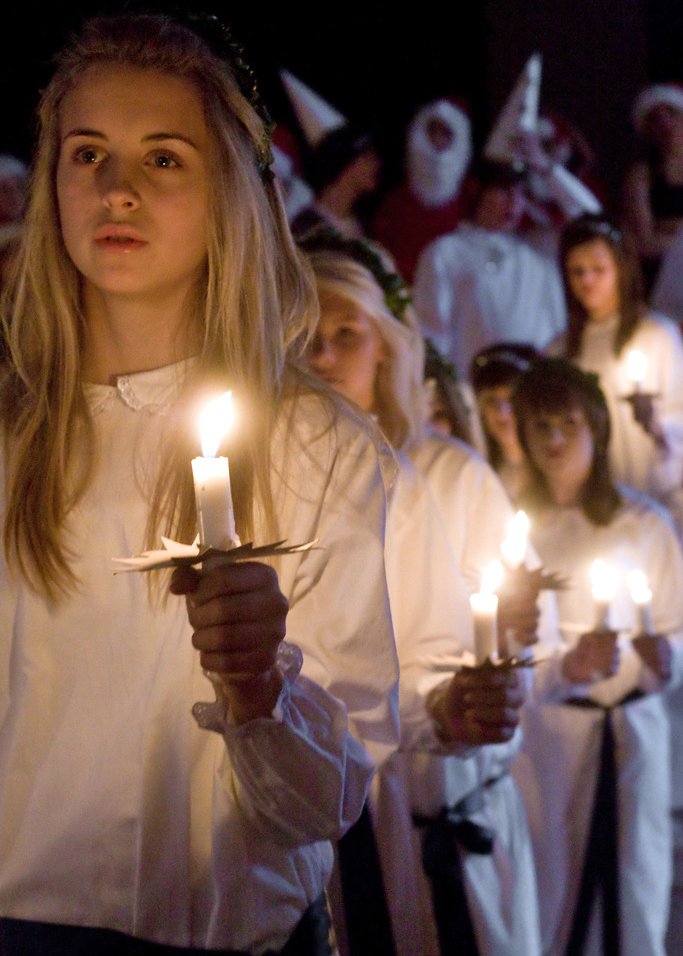 Saint Lucy's DayA December festival of light and song held across Scandinavia and Italy to honour a Christian martyr.
Good reading and sources
- Festa Junina on WikipediaEncyclopedia
- More photos on Wikimedia CommonsPhotos and video
- Wikidata recordOpen data
The facts on this page come from the Wikipedia article "Festa Junina", written by its contributors and used under the CC BY-SA 4.0 licence, and from its Wikidata record (CC0). EveryParampara rewrote the text in its own words, with AI assistance, and compares every page with the article to make sure no passage is copied. It may be reused under the same CC BY-SA 4.0 licence with a link back.
It may contain mistakes. Traditions differ from one family, village and community to the next, and the people who keep them know them best. If something is wrong, tell us. Last refreshed 2026-10-04.
More from Brazil
All the traditions of Brazil 🇧🇷 Rio de Janeiro, BrazilRio CarnivalCarnaval do Rio de Janeiro
Five days of samba parades, costumes and street parties in Rio, ending at LentFestival
🇺🇸 Chicago, United States and 4 moreKwanzaa
A seven-day African American celebration of heritage, family and community valuesFestival · Feasts and festival meals
🇯🇵 Tokyo, Japan and 2 moreTanabataたなばた
A Japanese summer star festival of written wishes hung on leafy bamboo.Festival
🇧🇷 Rio de Janeiro, BrazilRio CarnivalCarnaval do Rio de Janeiro
Five days of samba parades, costumes and street parties in Rio, ending at LentFestival
🇺🇸 Chicago, United States and 4 moreKwanzaa
A seven-day African American celebration of heritage, family and community valuesFestival · Feasts and festival meals
🇯🇵 Tokyo, Japan and 2 moreTanabataたなばた
A Japanese summer star festival of written wishes hung on leafy bamboo.Festival
 🇳🇬 Oyo, Nigeria and 3 moreSango Festival
An annual Yoruba gathering in Nigeria honoring the deity of thunder and lightningFestival · Feasts and festival meals
🇳🇬 Oyo, Nigeria and 3 moreSango Festival
An annual Yoruba gathering in Nigeria honoring the deity of thunder and lightningFestival · Feasts and festival meals
The same idea elsewhere
Midwinter and the longest night compared 🇮🇹 Rome, Italy and 4 moreChristmas
A festival of Jesus's birth, kept on 25 December with gifts, lights and shared mealsFestival
🇮🇹 Rome, Italy and 4 moreChristmas
A festival of Jesus's birth, kept on 25 December with gifts, lights and shared mealsFestival
 🇩🇪 Germany and 5 moreChristmas tree
A decorated evergreen or artificial tree placed indoors to mark the Christmas season.Festival
🇩🇪 Germany and 5 moreChristmas tree
A decorated evergreen or artificial tree placed indoors to mark the Christmas season.Festival
 🇫🇷 France and 5 moreCandlemas
A Christian feast of candle blessings marking the end of the Christmas seasonSpiritual
🇫🇷 France and 5 moreCandlemas
A Christian feast of candle blessings marking the end of the Christmas seasonSpiritual
 🇩🇰 Copenhagen, Denmark and 1 moreHygge
A Danish word for unhurried time at home with others, kept with candles and cookingHome
🇩🇰 Copenhagen, Denmark and 1 moreHygge
A Danish word for unhurried time at home with others, kept with candles and cookingHome