Festivals and celebrationsEast AsiaShinto, Taoist and folk Chinese
Tanabata
In its own language: たなばた
A Japanese summer star festival of written wishes hung on leafy bamboo.

Tanabata is a Japanese summer festival rooted in folklore about two separated celestial lovers who meet once a year. Across Japan and overseas communities, people celebrate by writing personal wishes on colourful slips of paper and tying them to fresh bamboo branches.
When is Tanabata in 2027?
Tanabata 2027 is on Wednesday, 7 July 2027. Other years: 2026, Tuesday, 7 July 2026; 2028, Friday, 7 July 2028.
Tanabata, also called the Star Festival, is an annual Japanese celebration that honours the brief yearly reunion of two legendary deities represented by the stars Vega and Altair. Originating from ancient court rites and the Chinese Qixi festival, the holiday is now widely celebrated across neighbourhoods and shopping arcades. People mark the occasion by writing hopes and poems on paper slips, decorating outdoor spaces with streamers, and gathering for street festivities.
The legend of separated lovers
According to the central myth, the weaving maiden Orihime and the cowherd Hikoboshi fell deeply in love after meeting across the heavenly river, known as the Milky Way. Once wed, both neglected their daily duties, leaving the universe without woven cloth and allowing cattle to wander untended. Orihime's father, the ruler of the skies, separated them on opposite banks as punishment. Moved by his daughter's grief, he permitted them to meet for a single night each year, provided she finished her weaving. If bad weather floods the river, magpies form a bridge with their wings so the pair can cross.
Origins and early court rites
Empress Kōken introduced the festival to Japan in 755 as a craft-honouring ceremony known as Kikkōden. Over time, it combined with an older Shinto ritual in which a shrine maiden wove cloth on a loom to pray for good autumn harvests. During the Heian era, the Kyoto imperial court held banquets where the sovereign watched the sky while courtiers enjoyed music and poetry. Nobles offered seasonal fruit such as pears and peaches alongside dried sea bream, piercing them with gold and silver needles threaded with five coloured cords.
Modern decorations and wishes
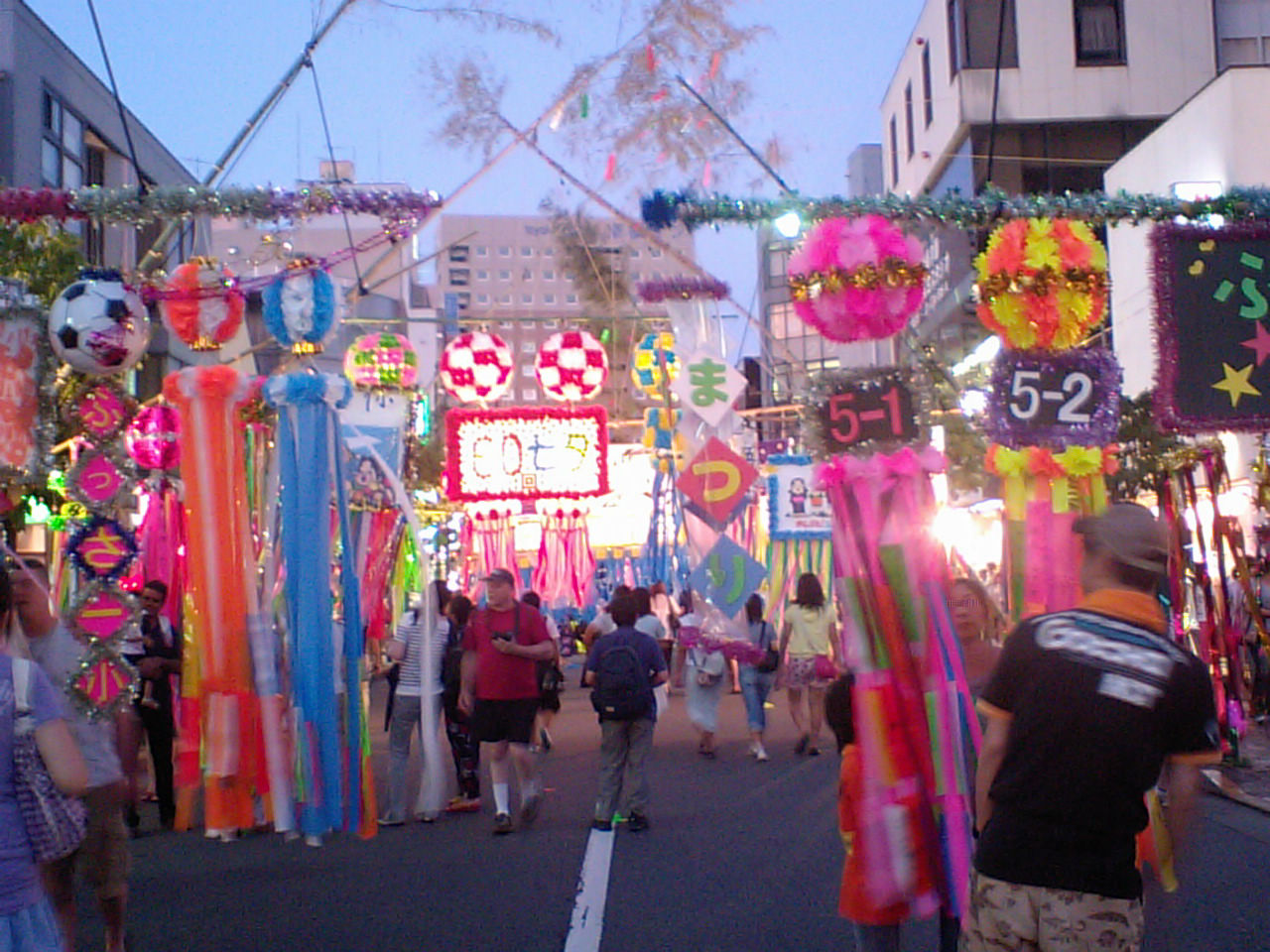
By the Edo period, the festival had spread to the wider public, blending with Bon customs. Boys traditionally wrote requests for fine calligraphy, while girls prayed for skill in weaving and sewing. People used ink ground with dew collected from taro leaves to write their desires on paper strips called tanzaku. Today, communities tie these colourful paper slips to leafy bamboo stalks. Towns and covered shopping arcades hang giant, colourful streamers and paper craft globes called kusudama, holding contests for the most imaginative displays alongside street food stalls and parades.
Regional variations and festivals
Towns throughout Japan mark the holiday at different times between July and August because of shifts from the old lunisolar calendar to modern dates. Sendai hosts one of the largest gatherings, a tradition dating back to the local warlord Date Masamune in the early Edo era. The city fills its thoroughfares with elaborate paper displays and fireworks. Large gatherings also take place in Tokyo and Kanagawa, while overseas Japanese communities in cities like São Paulo and Los Angeles organize their own lively street celebrations.
How Tanabata is kept
Families, schoolchildren, and local shopkeepers prepare for the festival by cutting bamboo branches and attaching colourful paper strips known as tanzaku. On these papers, people write down personal wishes, hopes for better skills, or short poems. Public avenues and commercial districts put up massive paper streamers, ornamental floral balls, and themed craft ornaments. Visitors stroll through pedestrian areas wearing light summer robes, view competitive craft displays, purchase snacks from open-air food stalls, and join street processions or watch evening fireworks.
When and where
Because of historical calendar reforms, observance dates differ across regions. Some towns celebrate on 7 July under the solar calendar. Others wait until early August, either observing a standard one-month delay or following the traditional East Asian lunisolar date.
The festival takes place nationwide across Japan, with prominent displays in cities like Sendai, Hiratsuka, and Tokyo. Diaspora communities in countries such as Brazil and the United States also organize street festivals.
What Tanabata means
The festival symbolises romance, perseverance, and the pursuit of mastery. By writing wishes on tanzaku, participants reflect on personal aspirations, from academic progress to artistic proficiency. The historic offerings also reflect ancient agrarian prayers for favourable weather, storm protection, and abundant autumn crops.
On the table
- pears
- peaches
- dried sea bream



Tanabata dates: 2026, 2027, 2028
| Year | Tanabata date |
|---|---|
| 2026 | Tuesday, 7 July 2026 |
| 2027 | Wednesday, 7 July 2027 |
| 2028 | Friday, 7 July 2028 |
Questions people ask about Tanabata
When is Tanabata in 2027?
Tanabata 2027 is on Wednesday, 7 July 2027. Other years: 2026, Tuesday, 7 July 2026; 2028, Friday, 7 July 2028.
What is Tanabata?
Tanabata is a Japanese holiday celebrating the yearly meeting of the celestial deities Orihime and Hikoboshi, who represent the stars Vega and Altair. People celebrate by writing wishes on small paper strips and tying them to fresh bamboo stalks.
What are tanzaku?
Tanzaku are small, rectangular slips of paper on which people write wishes or poems during Tanabata. Participants fasten these paper strips to outdoor bamboo branches in the hope that their dreams and artistic skills improve.
Where is Tanabata celebrated?
It is observed across Japan, with famous public festivals in cities like Sendai and Tokyo. Japanese communities in other countries, including Brazil and the United States, also hold local celebrations.
See also
 KwanzaaA seven-day African American celebration of heritage, family and community values
 OnamA ten-day harvest festival in Kerala celebrating the return of King Mahabali with feasts, flower carpets and boat races.
 SabantuyA summer festival of folk sports and feasting celebrated by Tatar, Bashkir, Chuvash, and Kazakh communities.
 LosarThe Tibetan Buddhist New Year festival of renewal, offerings, and family feasts
Good reading and sources
- Tanabata on WikipediaEncyclopedia
- More photos on Wikimedia CommonsPhotos and video
- Wikidata recordOpen data
The facts on this page come from the Wikipedia article "Tanabata", written by its contributors and used under the CC BY-SA 4.0 licence, and from its Wikidata record (CC0). EveryParampara rewrote the text in its own words, with AI assistance, and compares every page with the article to make sure no passage is copied. It may be reused under the same CC BY-SA 4.0 licence with a link back.
It may contain mistakes. Traditions differ from one family, village and community to the next, and the people who keep them know them best. If something is wrong, tell us. Last refreshed 2026-10-04.
More from Japan
All the traditions of Japan 🇯🇵 Kishiwada, JapanKishiwada Danjiri Matsuri岸和田だんじり祭
A high-speed festival of wooden shrine floats pulled through Kishiwada, JapanFestival
🇯🇵 Kishiwada, JapanKishiwada Danjiri Matsuri岸和田だんじり祭
A high-speed festival of wooden shrine floats pulled through Kishiwada, JapanFestival
 🇯🇵 Osaka, JapanTsukimi月見 (Tsukimi) / お月見 (Otsukimi)
A Japanese autumn festival honoring the harvest moon with seasonal foods and pampas grass decorations.Festival · Dinner
🇯🇵 Osaka, JapanTsukimi月見 (Tsukimi) / お月見 (Otsukimi)
A Japanese autumn festival honoring the harvest moon with seasonal foods and pampas grass decorations.Festival · Dinner
 🇯🇵 Takayama, JapanTakayama Festival高山祭
Twin seasonal shrine festivals in Japan famed for elaborate lantern-lit floatsFestival
🇯🇵 Takayama, JapanTakayama Festival高山祭
Twin seasonal shrine festivals in Japan famed for elaborate lantern-lit floatsFestival
 🇮🇪 Ireland and 5 moreHalloween
An annual observance on 31 October marking the eve of All Saints' Day, rooted in Christian tradition and Celtic heritageFestival · Sweets given and shared
🇮🇪 Ireland and 5 moreHalloween
An annual observance on 31 October marking the eve of All Saints' Day, rooted in Christian tradition and Celtic heritageFestival · Sweets given and shared
The same idea elsewhere
Harvest and thanksgiving compared 🇮🇳 Ayodhya, India and 7 moreDiwaliदीपावली (Dīpāvalī)
A five-day festival of lights celebrated across India and its diaspora to mark the victory of light over darkness.Festival · Feasts and festival meals
🇮🇳 Ayodhya, India and 7 moreDiwaliदीपावली (Dīpāvalī)
A five-day festival of lights celebrated across India and its diaspora to mark the victory of light over darkness.Festival · Feasts and festival meals
 🇮🇱 Jerusalem, IsraelPassoverפסח
A Jewish spring festival celebrating freedom from slavery with ritual mealsSpiritual · Dinner
🇮🇱 Jerusalem, IsraelPassoverפסח
A Jewish spring festival celebrating freedom from slavery with ritual mealsSpiritual · Dinner
 🇮🇱 Jerusalem, IsraelSukkotסוכות
A seven-day autumn Jewish festival of temporary booths, harvest prayers and hospitalitySpiritual
🇮🇪 Ireland and 2 moreJack-o'-lantern
A carved pumpkin lantern lit with a candle to brighten and protect Halloween nightsFolklore
🇮🇱 Jerusalem, IsraelSukkotסוכות
A seven-day autumn Jewish festival of temporary booths, harvest prayers and hospitalitySpiritual
🇮🇪 Ireland and 2 moreJack-o'-lantern
A carved pumpkin lantern lit with a candle to brighten and protect Halloween nightsFolklore