Music, dance and storytellingEurope
Lithuanian folk songs
In its own language: liaudies dainos
Songs of love, weddings, work and war, sung in unison or in harmony across Lithuania

Lithuanian folk songs, known at home as liaudies dainos, are a body of traditional singing from Lithuania: love songs, wedding songs, work songs and old war songs. They are sung alone or in groups, in unison or in harmony, and are kept alive today by folklore ensembles and by a mass song celebration held every five years.
When is Lithuanian folk songs kept?
Lithuanian folk songs is kept on sung at weddings, funerals and seasonal rituals, and at the mass song celebration held every five years.
Lithuanian folk songs are a living body of sung poetry: love songs, wedding songs, work songs and old songs about war, along with laments for the dead. They are sung alone or in company, on one voice or in harmony. Families, villages and folklore ensembles have carried them down, and mass song festivals keep the choral side of the tradition in public view.
What it is
Lithuanian singing covers a wide range. Some songs are romantic, some belong to weddings, some accompany work, and some are old songs of war. A singer may perform alone or with others, either on a single melodic line or in parts; harmonising in thirds has its own name, tūravoti. Three old ways of singing follow the country's regions: one voice alone, several voices moving together, and polyphony. The last is rare outside the sutartinės of the northeast. Multi-voiced homophony is found everywhere and is most archaic in the west. Many of these songs sit in a minor key.
Sutartinės
The sutartinės are the best known of the part-songs. Their name comes from a verb meaning to be in agreement, which suits music built on canon and imitation. Two or three voices enter one after another, usually across two to five notes, in two halves of equal length; one half often syncopates, so the parts pull against each other. Singers group them by number: dvejinės for two, trejinės for three in strict canon, keturinės for two pairs. Women sang them, while men played them on the kanklės, a Baltic psaltery, on horns, on skudučiai panpipes and on wooden trumpets. They were heard at weddings, gatherings and chores. Ensembles keep them going now.
Laments for the dead
Raudos, or laments, are among the oldest kinds of sung poetry here, tied to funerals. Written notes about Lithuanian funeral custom go back to the 9th century. The earliest lament set down may be from 1551, in a mix of Belarusian and Lithuanian. Most places had two sorts: laidotuvių raudos sung at funerals, and vestuvių raudos sung by a bride at her wedding. Their words carry an old picture of the afterlife, a world where the dead live on, and trees are given human traits. Skilled mourners were paid in cloth, gloves, bacon or a meal. Laments can still be heard in the east and south.
Wedding songs
Weddings once ran for a week or more and drew in the whole village, and the singing matched that scale: lyric songs, teasing songs, drinking songs, dialogues, laments, games, dances and marches. Written records begin in the 16th and 17th centuries, with the fullest material gathered by 19th-century scholars; Antanas Juška wrote a classic account of the rites. The lyric songs follow the bride's life, her parting from home, her worries, and the friction between mother-in-law and daughter-in-law. Women and girls sang them in chorus, often speaking as the bride, who mostly stayed silent. Teasing songs aimed at the groom's party, and the wittiest at the svotas and svočia, the masters of ceremony.
Today and change
The best-known gathering is the mass song celebration, Dainų šventė, which the state supports. It began in 1924 and has been held every five years since, drawing choirs together and keeping the choral and folk repertoire in use. Skamba skamba kankliai and Atataria trimitai run each year, and Ant marių krantelio, staged in the 1980s, was the first large festival of this kind. Baltica travels between the Baltic states annually. UNESCO recognised the song celebrations in 2003 and the sutartinės in 2010. The melodies also reached concert halls: Igor Stravinsky used Lithuanian folk tunes in parts of The Rite of Spring, as did composers such as Mikalojus Konstantinas Čiurlionis and Juozas Naujalis.
How Lithuanian folk songs is kept
A wedding could last a week, and the singing ran alongside it: women and girls sang lyric songs in chorus, in the bride's name, while the bride herself stayed quiet and wept her improvised verkavimai until she left for her husband's home. At a death, a lamenter sang over the body, often paid in cloth, gloves, bacon or food. Sutartinės went round in canon at gatherings, weddings and chores, with men playing instruments instead of singing. Today folklore ensembles rehearse and perform these songs, and choirs gather for the mass song festivals every five years.
When and where
The songs belong to occasions rather than to one date. Wedding songs were sung through a celebration that could run a week. Laments were heard at funerals, and the bride's own weeping continued until she reached her new home. Calendar songs came at set points of the year. The mass song celebration has been held every five years since 1924.
Lithuania is where the tradition lives, in villages as much as in towns. Laments have been strongest in the east and south, and in Dzūkija the teasing songs take on a plaintive tone. Sutartinės belong to the northeast and east. Folk festivals draw performers from across the country, and the Baltica festival moves each year between the Baltic states.
What Lithuanian folk songs means
Harmony itself carries meaning here: the word sutartinė comes from a verb for agreeing, and the parts are meant to fit. Laments hold an old view of death, picturing a world where the souls of the dead live on and trees are imagined as people. Wedding songs carry a bride's parting from her family and her entry into a new household. Taken together, the songs record a community's history, its work and its grief, in words its own people chose.

Questions people ask about Lithuanian folk songs
When is Lithuanian folk songs kept?
Lithuanian folk songs is kept on sung at weddings, funerals and seasonal rituals, and at the mass song celebration held every five years.
What are Lithuanian folk songs?
They are traditional Lithuanian songs, called dainos or liaudies dainos at home. The repertoire takes in romantic songs, wedding songs, work songs, old war songs, calendar songs, laments and the part-singing known as sutartinės. They are sung solo or in groups, either in unison or in harmony, and many of them are in a minor key.
Where are they sung?
In Lithuania, mainly. Laments survive best in the east and south of the country, and the sutartinės are tied to the northeast and east. Folklore ensembles across Lithuania perform this music, and a folk festival called Baltica travels each year between the Baltic states.
What are sutartinės?
They are old part-songs for two or three voices, built on canon and imitation. The name comes from a Lithuanian verb meaning to be in agreement. Singers call them dvejinės, trejinės or keturinės by the number of voices. Women sang them and men played instrumental versions on the kanklės, horns, skudučiai and wooden trumpets.
Who sang the wedding songs?
Women and girls sang them, usually in chorus and often speaking for the bride, who generally did not sing. While she stayed in her family home she wept improvised laments called verkavimai, and these stopped once she arrived at her husband's house.
See also
 DainaShort, traditional Latvian folk songs and verses sung across the human life cycleVėlinėsA Lithuanian remembrance day honouring deceased souls with cemetery prayers and candles
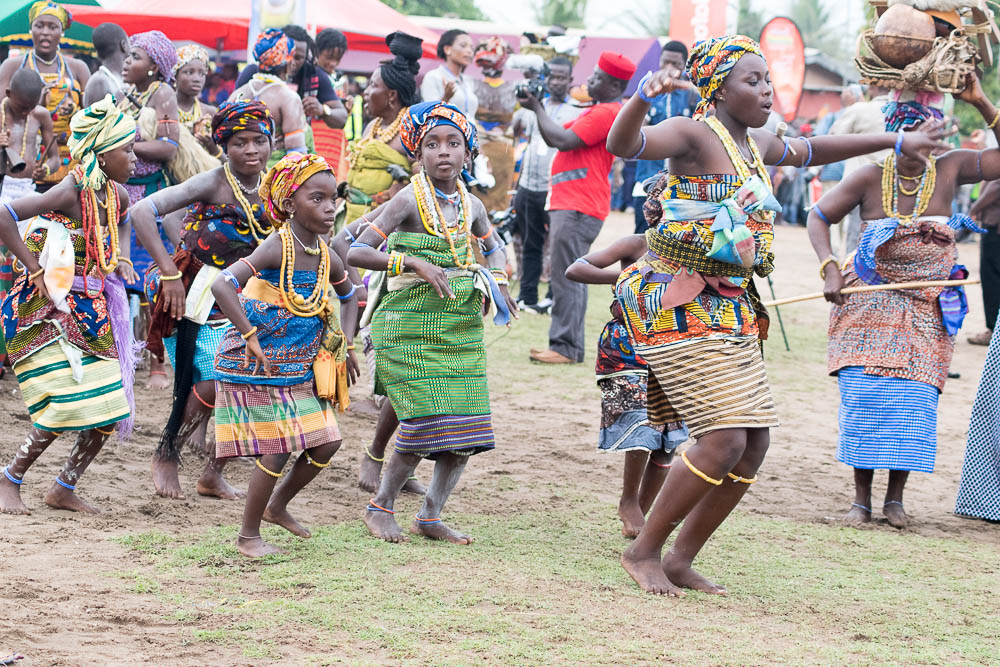 AgbadzaAn Ewe music and dance, born of war songs and kept for funerals, weddings and festivals
 HoronLine dances of Turkey's eastern Black Sea coast, danced with shaking shoulders
Good reading and sources
The facts on this page come from the Wikipedia article "Folk songs of Lithuania", written by its contributors and used under the CC BY-SA 4.0 licence, and from its Wikidata record (CC0). EveryParampara rewrote the text in its own words, with AI assistance, and compares every page with the article to make sure no passage is copied. It may be reused under the same CC BY-SA 4.0 licence with a link back.
It may contain mistakes. Traditions differ from one family, village and community to the next, and the people who keep them know them best. If something is wrong, tell us. Last refreshed 2026-10-05.
More from Lithuania
All the traditions of Lithuania 🇷🇺 Russia and 5 moreBread and saltхлеб-соль
Bread and salt offered to a guest: a welcome kept from Russia to AlbaniaEtiquette
🇷🇺 Russia and 5 moreBread and saltхлеб-соль
Bread and salt offered to a guest: a welcome kept from Russia to AlbaniaEtiquette
 🇵🇱 Poland and 5 moreChristmas Eve
The evening before Christmas, marked by church services, family meals, and gift preparations across Christian cultures.Festival · Dinner
🇵🇱 Poland and 5 moreChristmas Eve
The evening before Christmas, marked by church services, family meals, and gift preparations across Christian cultures.Festival · Dinner
 🇺🇦 Kyiv, Ukraine and 7 morePysankaписанка
A wax-resist egg decorating tradition kept by Slavic communities for Easter and spring renewal.Festival
🇺🇦 Kyiv, Ukraine and 7 morePysankaписанка
A wax-resist egg decorating tradition kept by Slavic communities for Easter and spring renewal.Festival
The same idea elsewhere
Weddings compared 🇼🇸 Samoa and 1 moreʻIe tōga
Precious woven mats exchanged in Samoan ceremonies to honor family ties and chiefly status.Dress
🇼🇸 Samoa and 1 moreʻIe tōga
Precious woven mats exchanged in Samoan ceremonies to honor family ties and chiefly status.Dress
 🇹🇱 Timor-LesteUma Lulik
Sacred ancestral clan houses and ritual shrines in East TimorSpiritual
🇹🇱 Timor-LesteUma Lulik
Sacred ancestral clan houses and ritual shrines in East TimorSpiritual
 🇮🇩 Indonesia and 2 moreKenduri
A communal prayer meal and gathering shared across Indonesia, Malaysia and BruneiSpiritual · Feasts and festival meals
🇬🇭 Ghana and 2 moreAgbadza
An Ewe music and dance, born of war songs and kept for funerals, weddings and festivalsPerformance
🇮🇩 Indonesia and 2 moreKenduri
A communal prayer meal and gathering shared across Indonesia, Malaysia and BruneiSpiritual · Feasts and festival meals
🇬🇭 Ghana and 2 moreAgbadza
An Ewe music and dance, born of war songs and kept for funerals, weddings and festivalsPerformance