Grameen check
In its own language: গ্রামীণ চেক
A woven plaid of coloured squares, made by handloom weavers in rural Bangladesh
Grameen check is a plaid cloth design from Bangladesh, named for the Bengali phrase meaning rural plaid and woven from dyed threads into squares and rectangles. Rural handloom weavers and cottage-industry workers make it into cotton clothing, and it is sold in Bangladesh and marketed abroad by Grameen Uddog.
Grameen check is a woven plaid from Bangladesh. Its Bengali name means rural plaid, and it is built from squares and rectangles of dyed thread. Cotton cloth is woven by hand by cottage workers in the countryside, then cut and sewn into clothing. People value it for its bright colour and its comfort, and it now reaches buyers far beyond Bangladesh.
What it is
Grameen check is a way of designing cloth, not a single garment. A weaver crosses threads dyed in different colours, and the crossing makes squares or rectangles across the surface. In Bengali the name is গ্রামীণ চেক, which the sources give as rural plaid. Most of it is cotton, woven by hand in the traditional manner by cottage-industry workers rather than in large mills. In Bangladesh the cloth is popular because the colours are bright and the cotton is comfortable to wear. Grameen Uddog markets it to buyers outside the country.
Where it began
The design is credited to Dr Muhammad Yunus, the founder of Grameen Bank and a Nobel Peace Prize winner. The clothes and the patterns grew out of the same small weaving businesses that he supported through the bank. Those workshops were already making cloth by hand, and the plaid gave them something recognisable of their own. Grameen Uddog then carried the fabric to a wider market, including buyers outside Bangladesh.
How the cloth is made
Thread is dyed first, in several colours, and then set on a handloom. The weaver passes threads across other threads in the traditional way, and where the colours meet, the plaid appears. Most of the fabric made this way reaches the market directly from traditional weavers in rural Bangladesh. The work happens in small workshops and in homes rather than in factories. Finished cloth is cut and sewn into clothing for sale in Bangladesh and abroad.
Weavers and earnings
Because grameen check sells well, the small weaving businesses behind it keep going. The people who make the cloth are mostly from traditional weaver families, and the work lets them earn money from a skill they already have. That matters in the countryside, where the alternative has often been to leave home and look for other work in towns and cities. The popularity of the plaid therefore keeps both income and craft in rural areas.
How Grameen check is kept
The work begins with thread, dyed in a range of colours. Weavers then set up their handlooms and cross the threads in the traditional way, so that squares and rectangles of colour appear in the cloth. Most of this is done by cottage-industry workers and traditional weaving families in rural Bangladesh. The finished cotton is cut and sewn into clothing. People in Bangladesh wear it because it is bright and comfortable, and Grameen Uddog sells it to buyers abroad.
When and where
Grameen check belongs to Bangladesh, where the cloth is woven and widely worn. The fabric comes mainly from traditional weavers in the countryside rather than from large mills. It is sold across the country and marketed abroad by Grameen Uddog, so garments in this pattern now reach buyers outside Bangladesh as well.
What Grameen check means
For the weavers and small workshops behind it, grameen check is work they can do near home. The design is tied to an idea that rural craft can earn a living, so weaving does not have to be given up for a move to the city. For the people who wear it, the plaid is bright, comfortable everyday cloth with a Bangladeshi name.
Questions people ask about Grameen check
What is grameen check?
It is a plaid design used on cloth in Bangladesh. Threads dyed in different colours are woven so that they cross and form squares or rectangles. Most grameen check fabric is cotton, made by hand in small rural workshops.
Where is it made and worn?
It belongs to Bangladesh. The fabric comes mainly from traditional weavers in the countryside, and the clothing is widely worn across the country. Grameen Uddog also markets it abroad, so the pattern reaches buyers outside Bangladesh.
Who started grameen check?
The design is credited to Dr Muhammad Yunus, founder of Grameen Bank and a Nobel Peace Prize winner. The clothes and the patterns came from the small weaving businesses he helped through the bank, and Grameen Uddog took them to a wider market.
Why do people in Bangladesh like it?
Two reasons the sources give are colour and comfort. The plaid uses bright dyed threads, and the cotton cloth is comfortable to wear. It is also made by local weavers, which keeps the money and the work inside rural communities.
See also
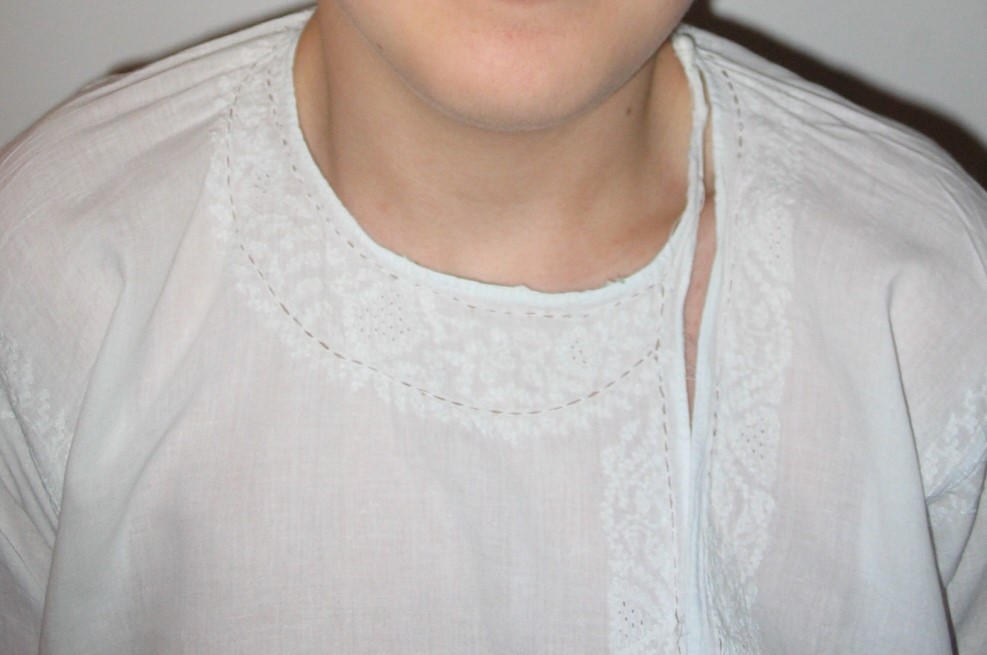 KurtaA loose collarless tunic from South Asia, worn plain or embroidered over pyjamas or jeans
 TurbanCloth wound around the head, worn for faith, rank, shade and identity
 SherwaniA long buttoned coat for men, worn at weddings and state occasions in South Asia
 Shalwar kameezLoose trousers and a long tunic, worn as one outfit across South Asia
Good reading and sources
The facts on this page come from the Wikipedia article "Grameen check", written by its contributors and used under the CC BY-SA 4.0 licence, and from its Wikidata record (CC0). EveryParampara rewrote the text in its own words, with AI assistance, and compares every page with the article to make sure no passage is copied. It may be reused under the same CC BY-SA 4.0 licence with a link back.
It may contain mistakes. Traditions differ from one family, village and community to the next, and the people who keep them know them best. If something is wrong, tell us. Last refreshed 2026-10-11.
More from Bangladesh
All the traditions of Bangladesh
🇵🇰 Multan, Pakistan and 3 moreShalwar kameez
Loose trousers and a long tunic, worn as one outfit across South AsiaDress
🇮🇳 Lucknow, India and 5 moreKurtaکرته (Persian), कुरता (Hindi)
A loose collarless tunic from South Asia, worn plain or embroidered over pyjamas or jeansDress
🇮🇳 Pune, India and 5 moreTurbanدولبند (dolband)
Cloth wound around the head, worn for faith, rank, shade and identityDress
🇮🇳 Lucknow, India and 3 moreSherwani
A long buttoned coat for men, worn at weddings and state occasions in South AsiaDress
The same idea elsewhere
All of this kind 🇳🇴 Norway and 3 moreGákti
A traditional coat worn by the Sámi people across northern Scandinavia and Russia, signaling origin and status through cDress
🇳🇴 Norway and 3 moreGákti
A traditional coat worn by the Sámi people across northern Scandinavia and Russia, signaling origin and status through cDress
 🇮🇱 Israel and 1 moreTzitzitצִיצִית
Knotted ritual fringes worn on a four-cornered garment, a reminder of the commandmentsDress
🇮🇱 Israel and 1 moreTzitzitצִיצִית
Knotted ritual fringes worn on a four-cornered garment, a reminder of the commandmentsDress
 🇼🇸 Samoa and 1 moreʻIe tōga
Precious woven mats exchanged in Samoan ceremonies to honor family ties and chiefly status.Dress
🇼🇸 Samoa and 1 moreʻIe tōga
Precious woven mats exchanged in Samoan ceremonies to honor family ties and chiefly status.Dress
 🇪🇬 Egypt and 5 moreTraditional tattooing
The ancient custom of marking the skin for protection, healing, status and sacred ritesDress
🇪🇬 Egypt and 5 moreTraditional tattooing
The ancient custom of marking the skin for protection, healing, status and sacred ritesDress