Kurta
In its own language: کرته (Persian), कुरता (Hindi)
A loose collarless tunic from South Asia, worn plain or embroidered over pyjamas or jeans
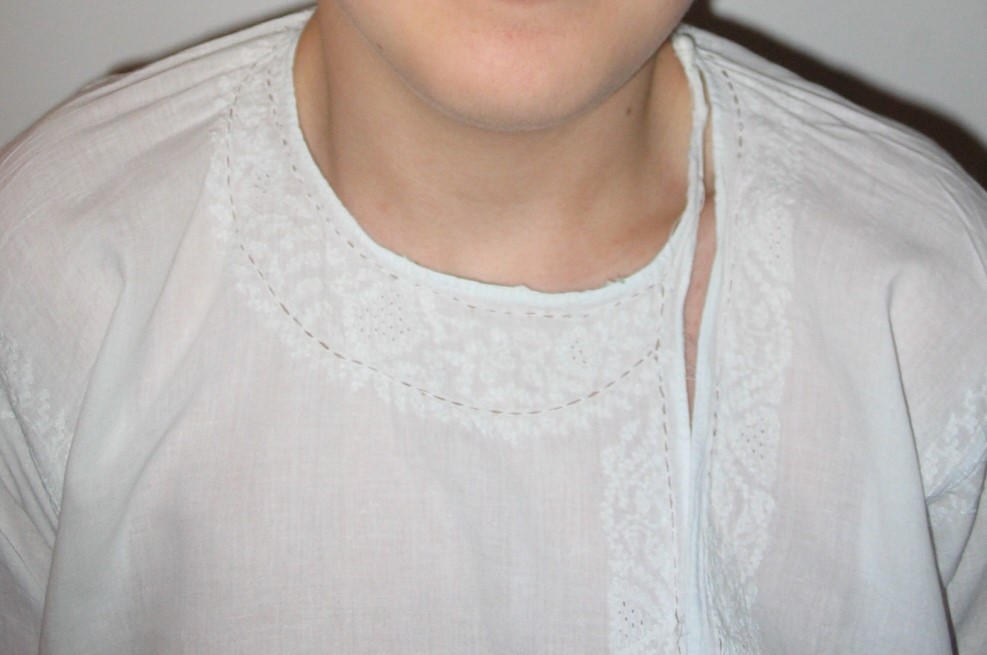
A loose, collarless shirt or tunic, the kurta is worn across South Asia and by South Asian communities abroad. It traces back to stitched tunics from Central Asia, and today it comes plain, embroidered or in local styles, worn over pyjamas, shalwars or jeans by men and women alike.
When is Kurta kept?
Kurta is kept on all year, for everyday wear and for formal occasions.
A kurta is a loose shirt or tunic without a collar, worn across South Asia and now in many other places too. It began as a stitched upper garment, a style that came to the region from Central Asia. People wear it plain or embroidered, for ordinary days and for formal occasions, over pyjamas, shalwars, churidars or jeans, and both men and women wear it.
What it is
A kurta is a loose shirt or tunic with no collar, made in many parts of South Asia and worn in other regions as well. It is usually cotton or silk. Most kurtas are plain, but embroidery is common, and the garment may hang just above the knee or lower. The front and back are cut from rectangular pieces, and the side seams stay open near the hem, which lets the wearer move easily. Sleeves reach the wrist and are hemmed rather than cuffed. A traditional kurta has no collar, though standing collars are growing more popular.
Origins and history
South Asia received stitched clothing, cloth that is cut and sewn, from Central Asia. A writer on costume, Roshen Alkazi, describes a trickle during the Scythian, Parthian and Kushan invasions of the late ancient period, then a much larger flow with Mahmud of Ghazni and the Muslim conquests from the late twelfth century. From then the kurta became common dress in the early modern era. Alkazi points to wall paintings at Lashkari Bazaar in Afghanistan, showing palace guards in a mid-calf tunic with narrow sleeves. That tunic closed on the left shoulder, and the same closing still appears on kurtas in some parts of India.
Local styles
Different regions give the kurta their own shape and decoration. The Bhopali kurta is loose, pleated at the waist, and falls like a skirt to somewhere between knee and ankle. The Hyderabadi kurta is a short top that sits near the waist, with a keyhole opening at the neck, and was once worn by local royal households, usually in white. The Lucknowi kurta may be short or long, sometimes using twelve yards of cloth, and the name now means a straight-cut kurta with Chikan embroidery from Lucknow. A kalidar kurta is built from several panels and looks like a frock. The straight-cut kind is called a panjabi in Bangladesh, West Bengal and Assam.
Cloth and making
Kurtas for summer are often thin silk or cotton. For winter, thicker cloth is used, such as wool or khadi silk, a coarse silk spun and woven by hand that may be blended with other fibres. Linen, or a linen and cotton mix, suits the kurta pyjama in either season. Tailors cut the cloth so that almost nothing is wasted, using rectangular pieces, sometimes with gusset inserts, and decorative work can be elaborate. Fastenings include tasselled ties, cloth balls, loops and buttons, often of wood or plastic. Formal kurtas may have metal buttons decorated with jewels or enamel, fixed into the cloth like cufflinks rather than sewn on.
Today and change
Urban young people increasingly wear kurtas over jeans, in South Asia and in the South Asian diaspora, both recently settled and long established. Young women and girls in cities often pick a kurti, a short hip-length kurta, with jeans or leggings, beside older lower-body garments. Kurtas also serve as blouses over jeans, and blue denim goes with most kurta colours. In 2014 a family court in Mumbai ruled that a husband who objected to his wife's kurta and jeans and forced her to wear a sari had been cruel, and she was granted a divorce.
How Kurta is kept
A person puts on the kurta as a top, then adds a lower garment: pyjamas, a loose shalwar, a churidar, leggings or jeans. The kurta is slipped over the head or fastened at the front, where a hemmed slit, or sometimes a placket, is closed with a tie or a button at the top. Some styles fasten at the shoulder seam instead. A scarf may be worn with it, as in Assam, where the panjabi goes with a gamosa. Both men and women wear the kurta, and a short version, the kurti, is common among women.
When and where
The kurta has no fixed day. It is worn through the year and on formal occasions. Summer kurtas are usually thin silk or cotton, while winter ones use heavier cloth such as wool or khadi silk. Linen or a linen and cotton blend works for the kurta pyjama in either season.
The kurta belongs to South Asia and is worn almost everywhere there, with India, Pakistan and Bangladesh among its strongest homes. It is also worn in Afghanistan. Communities from South Asia keep it in Singapore and Malaysia, and across a wider diaspora. The word itself came into English from Urdu and Persian.
What Kurta means
The kurta is not tied to one faith or ceremony. It holds a double place in daily life: common dress and formal dress at once, worn by men and women alike. Local decoration gives each version a regional face, so that Chikan from Lucknow, Phulkari from Punjab or Sindhi mirrorwork marks where a person comes from. The closing at the left shoulder, kept from old Central Asian tunics, is a quiet link to that past.


Questions people ask about Kurta
When is Kurta kept?
Kurta is kept on all year, for everyday wear and for formal occasions.
What is a kurta?
A kurta is a loose shirt or tunic without a collar. It is usually made of cotton or silk, worn plain or with embroidery, and it falls either just above the knee or lower. Both men and women wear it across South Asia and in many other places today.
Where does the kurta come from?
Stitched tunics reached South Asia from Central Asia. According to the costume writer Roshen Alkazi, they arrived in small numbers in the late ancient period and in far greater numbers with Mahmud of Ghazni and the Muslim conquests from the late twelfth century.
What is a kurti?
A kurti is a short kurta for women, reaching about the hips, and is often worn with jeans or leggings today. The older meaning was different: a waistcoat, jacket or blouse sitting above the waist with no side slits, said to descend from the tunic of the Shunga period.
Is the kurta worn only in India?
No. It is common in Pakistan and Bangladesh too, and in Afghanistan, and communities from South Asia wear it in Singapore and Malaysia and in the wider diaspora. Regional versions carry their own names, such as the panjabi in Bangladesh, West Bengal and Assam.
See also
 PaithaniA handwoven silk sari from Maharashtra, with a squared border and a peacock pallu
 KebayaA front-opening blouse and wrapped cloth, worn by women across Southeast Asia
 Eid al-FitrThe feast that ends Ramadan, opened with morning prayers, sweets and visits home
 DiwaliA five-day festival of lights celebrated across India and its diaspora to mark the victory of light over darkness.
Good reading and sources
- Comfort dressing is their mantraDeccan Herald, Article
- Pehran | UnknownV&A, Article
- Comfort dressing is their mantraDeccan Herald, Article
- Pehran | UnknownV&A, Article
- Kurta on WikipediaEncyclopedia
- More photos on Wikimedia CommonsPhotos and video
- Wikidata recordOpen data
The facts on this page come from the Wikipedia article "Kurta", written by its contributors and used under the CC BY-SA 4.0 licence, and from its Wikidata record (CC0). EveryParampara rewrote the text in its own words, with AI assistance, and compares every page with the article to make sure no passage is copied. It may be reused under the same CC BY-SA 4.0 licence with a link back.
It may contain mistakes. Traditions differ from one family, village and community to the next, and the people who keep them know them best. If something is wrong, tell us. Last refreshed 2026-10-05.
More from India
All the traditions of India
🇮🇳 Paithan, IndiaPaithani
A handwoven silk sari from Maharashtra, with a squared border and a peacock palluDress
 🇾🇪 Hadhramaut, Yemen and 1 moreJambiyaجنبية
A short curved dagger worn at the waist by Yemeni men, its handle a sign of statusDress
🇾🇪 Hadhramaut, Yemen and 1 moreJambiyaجنبية
A short curved dagger worn at the waist by Yemeni men, its handle a sign of statusDress
 🇮🇳 Lucknow, India and 3 moreSherwani
A long buttoned coat for men, worn at weddings and state occasions in South AsiaDress
🇮🇳 Lucknow, India and 3 moreSherwani
A long buttoned coat for men, worn at weddings and state occasions in South AsiaDress
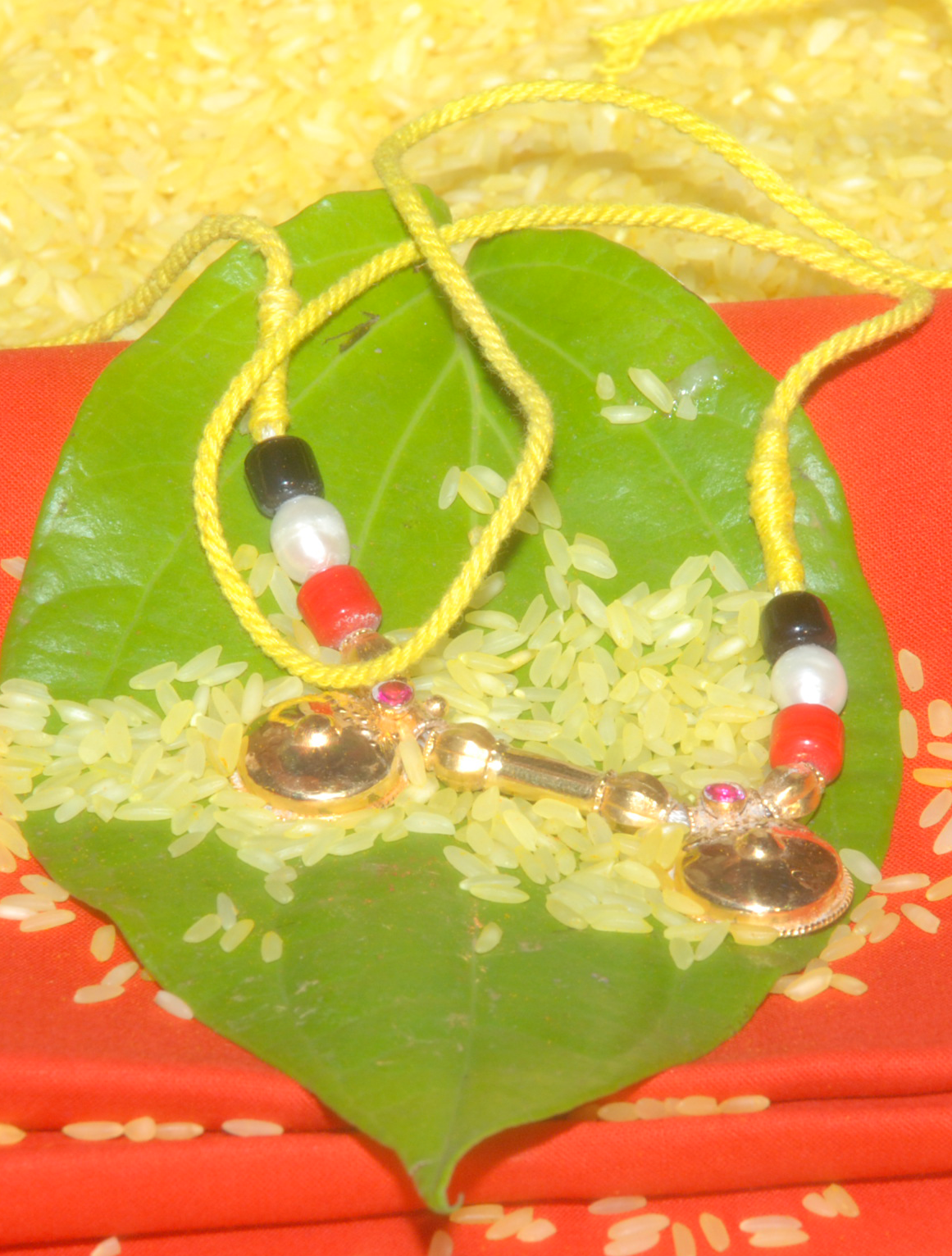 🇮🇳 India and 2 moreMangalasutraमङ्गलसूत्रम् (maṅgalasūtram)
A necklace tied by the groom at a wedding, worn through married lifeDress
🇮🇳 India and 2 moreMangalasutraमङ्गलसूत्रम् (maṅgalasūtram)
A necklace tied by the groom at a wedding, worn through married lifeDress
The same idea elsewhere
All of this kind 🇳🇴 Norway and 3 moreGákti
A traditional coat worn by the Sámi people across northern Scandinavia and Russia, signaling origin and status through cDress
🇳🇴 Norway and 3 moreGákti
A traditional coat worn by the Sámi people across northern Scandinavia and Russia, signaling origin and status through cDress
 🇮🇱 Israel and 1 moreTzitzitצִיצִית
Knotted ritual fringes worn on a four-cornered garment, a reminder of the commandmentsDress
🇮🇱 Israel and 1 moreTzitzitצִיצִית
Knotted ritual fringes worn on a four-cornered garment, a reminder of the commandmentsDress
 🇼🇸 Samoa and 1 moreʻIe tōga
Precious woven mats exchanged in Samoan ceremonies to honor family ties and chiefly status.Dress
🇼🇸 Samoa and 1 moreʻIe tōga
Precious woven mats exchanged in Samoan ceremonies to honor family ties and chiefly status.Dress
 🇪🇬 Egypt and 5 moreTraditional tattooing
The ancient custom of marking the skin for protection, healing, status and sacred ritesDress
🇪🇬 Egypt and 5 moreTraditional tattooing
The ancient custom of marking the skin for protection, healing, status and sacred ritesDress