Dress and adornmentSouth AsiaMuslimHindu
Shalwar kameez
Loose trousers and a long tunic, worn as one outfit across South Asia

A two-part outfit of loose trousers, the shalwar, and a tunic, the kameez, worn across South Asia and Central Asia by both men and women. Pakistan counts it as the national dress, and it is widely worn in Afghanistan and by people in India and Bangladesh, with many women adding the dupatta scarf.
The shalwar kameez is a two-part outfit: loose trousers called the shalwar and a tunic called the kameez. Men and women wear it across South Asia, and it is Pakistan's national dress. Many women add a long scarf, the dupatta. Styles differ from region to region, from the very full Balochi cut to the close-cut Punjabi suthan, and the outfit has travelled with migrant communities into new countries.
What it is
The trousers, the shalwar, are cut roomy at the waist and taper toward a cuff at the foot. A drawstring or a band of elastic keeps them in place, and that gathering throws the cloth into pleats around the middle. Some are very full, others are cut slim on the bias. Above them sits the kameez, a shirt-like tunic that hangs long. Its side seams often stop at the waist, leaving an opening known as the chaak that lets the wearer move easily. Collars range from European styles to Mandarin to none at all. Without a collar, a woman's kameez comes close to a kurta.
Origins and spread
Writers on the subject trace the shalwar and the kameez to Muslims who came into northern South Asia in the 13th century. Muslim women wore the pair first. Use of the outfit then widened, and it settled into regional life, most of all in the Punjab of earlier centuries. In Pakistan it is now the national dress, worn by men and women alike. Afghanistan keeps it as common clothing for both sexes. In India some men in the Punjab wear it, and women in many parts of the country have worn it since medieval times. It is also found more widely across South Asia.
Styles by region
Each region cuts the outfit its own way. In Peshawar and the rest of Khyber Pakhtunkhwa, the Peshawari shalwar hangs very loose down to the ankle and is worn with a khalqa, a gown open at the front, or with a shirt that stays closed. Balochi men wear a kameez that is long and loose with long sleeves, over a heavily gathered shalwar; the older form was a robe to the ankles with a shalwar that used as much as 40 yards of cloth. Pashtuns in northern Balochistan dress much as people do in Afghanistan. In Kashmir the set is a phiran, poots and shalwar. Sindhi men's shalwars come in several named types, among them the suthan, the kancha and the modern loose suthan.
The dupatta
Many women finish the outfit with a dupatta: a long scarf or shawl in light cloth. It goes over the shoulders, the neck or the head. Across South Asia it works as a way of keeping modest, since it hides the shape of the upper body even though the fabric is fine. Muslim women may treat it as an easier alternative to the chador or the burqa. Sikh and Hindu women reach for it where the head ought to be covered, whether inside a temple or in front of older people. In the plains of the Punjab the head scarf was traditionally large, more like a chador or a phulkari.
Tailoring and change
Tailors show their skill in the neckline and in the decoration of the kameez. Older tunics follow traditional cuts, while newer ones often take European set-in sleeves, and may be sewn in fine, filmy cloth, with sleeves cropped short or left off. Shalwars today often sit lower on the waist, and kameez have grown shorter, with longer splits and open necklines and backs. In Britain, women of Punjabi background have carried the dress into mainstream fashion. Punjabi suits became popular in India in the 1960s through Hindi films, and young women in Bangladesh wear them as well.
How Shalwar kameez is kept
The two pieces are worn together. The shalwar sits at the waist, gathered by a drawstring, and the pleats fall around the middle. The kameez goes over it, reaching to the thigh or further down, and its open side seams at the waist leave room to move. Many women add the dupatta across the shoulders, neck or head. There is no single ceremony attached to putting the outfit on; it belongs to ordinary days and to public life, from school to the fashion pages.
When and where
The outfit belongs to South Asia and Central Asia, and is strongest in Pakistan, where it is the national dress, and in Afghanistan. Within India it is worn in the Punjab and in many other regions. Sindh, Balochistan, Khyber Pakhtunkhwa, Kashmir and the Punjab each keep their own cut. Migrant Punjabi women have brought it into British fashion, and it is popular among young women in Bangladesh.
What Shalwar kameez means
For many people the outfit signals belonging: it is the national dress of Pakistan, and a familiar sign of South Asian and Central Asian life. The dupatta carries meaning too. Worn over the shoulders it covers the contours of the upper body, and the sources describe it as a lighter form of modesty than the chador or the burqa for Muslim women. Sikh and Hindu women use it when the head should be covered, in a temple or in front of elders. Region, cloth and cut can all mark where a wearer comes from.


Questions people ask about Shalwar kameez
What is a shalwar kameez?
It is a two-part outfit. The shalwar is a pair of loose trousers, gathered at the waist and closed at the foot. The kameez is the tunic worn over them, with side openings at the waist. Men and women wear the pair across South Asia and Central Asia, and many women add a dupatta scarf.
Where is it worn?
Pakistan treats it as the national dress, worn by men and women. In Afghanistan it is common clothing for both. In India it is worn by some men in the Punjab and by women in many regions, and it is popular among young women in Bangladesh. Migrant communities have taken it to Britain and elsewhere.
When did it reach South Asia?
According to the sources, Muslims who came into the north in the 13th century brought the shalwar and kameez with them. Muslim women wore them first. The style then spread, becoming regional dress, particularly in the historic Punjab. Women in much of India have worn it since medieval times.
What is the dupatta for?
It is a long, light scarf or shawl worn over the shoulders, neck or head. In South Asia it acts as a modest covering, hiding the shape of the upper body. Muslim women may see it as a lighter option than the chador or burqa; Sikh and Hindu women use it where the head should be covered, such as a temple.
Are there different styles?
Yes, and they are often named for places. Balochi, Peshawari, Sindhi, Punjabi, Multani, Bahawalpuri, Patiala and Kashmiri cuts all differ, and Afghanistan has its own forms. Longer tunics with a fitted bottom are called Anarkali suits, a name taken from a legendary Mughal courtesan.
See also
 PaithaniA handwoven silk sari from Maharashtra, with a squared border and a peacock pallu
 JambiyaA short curved dagger worn at the waist by Yemeni men, its handle a sign of status
 SherwaniA long buttoned coat for men, worn at weddings and state occasions in South Asia
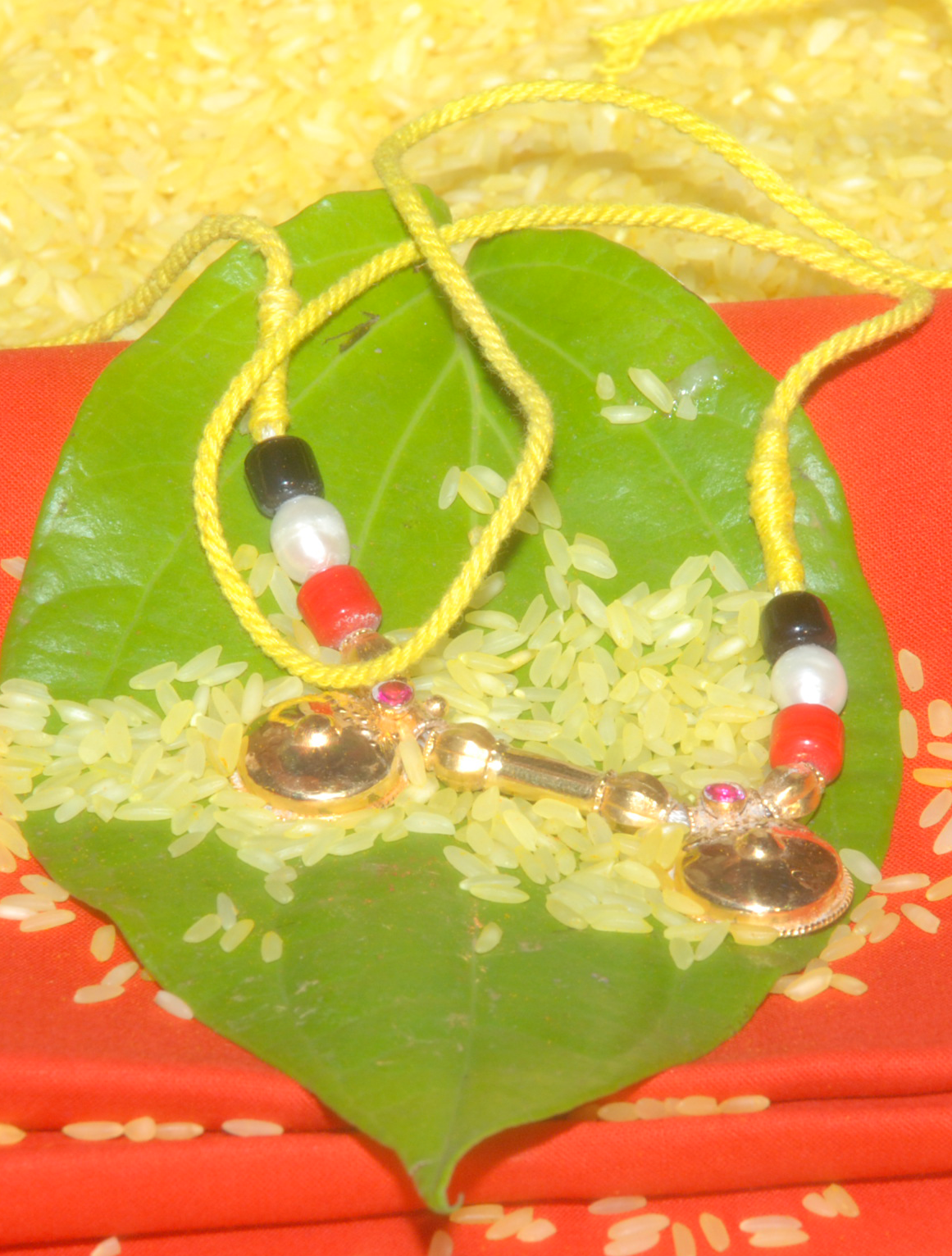 MangalasutraA necklace tied by the groom at a wedding, worn through married life
Good reading and sources
- Shalwar kameez on WikipediaEncyclopedia
- More photos on Wikimedia CommonsPhotos and video
- Wikidata recordOpen data
The facts on this page come from the Wikipedia article "Shalwar kameez", written by its contributors and used under the CC BY-SA 4.0 licence, and from its Wikidata record (CC0). EveryParampara rewrote the text in its own words, with AI assistance, and compares every page with the article to make sure no passage is copied. It may be reused under the same CC BY-SA 4.0 licence with a link back.
It may contain mistakes. Traditions differ from one family, village and community to the next, and the people who keep them know them best. If something is wrong, tell us. Last refreshed 2026-10-05.
More from Pakistan
All the traditions of Pakistan
🇮🇳 Lucknow, India and 3 moreSherwani
A long buttoned coat for men, worn at weddings and state occasions in South AsiaDress
 🇮🇳 Srinagar, India and 3 morePashmina
Ultra-fine wool of Himalayan goats, hand-woven in Kashmir into shawls of rankDress
🇮🇳 Srinagar, India and 3 morePashmina
Ultra-fine wool of Himalayan goats, hand-woven in Kashmir into shawls of rankDress
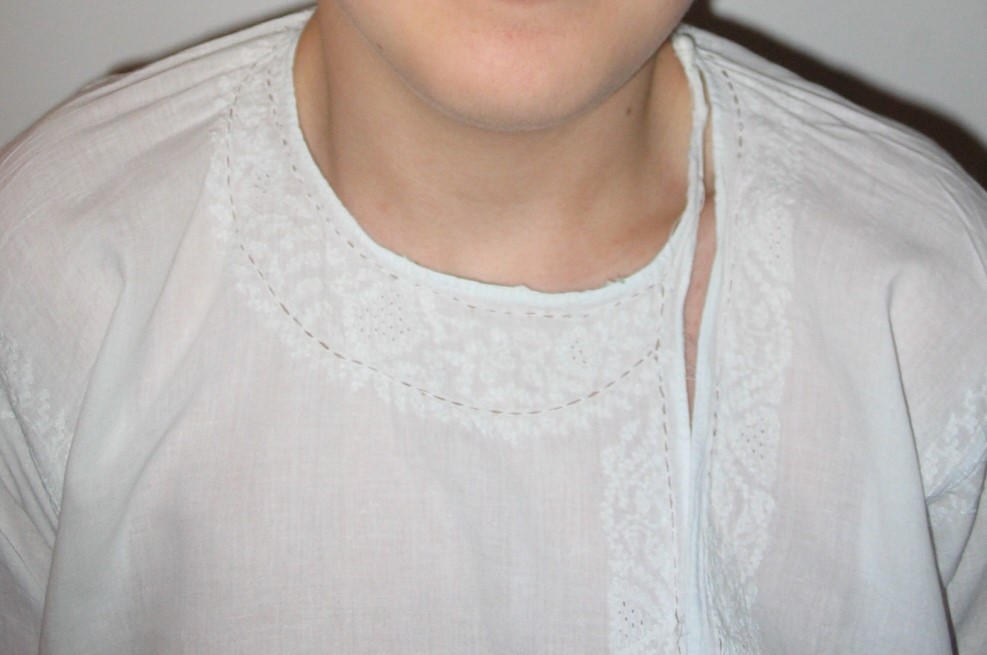 🇮🇳 Lucknow, India and 5 moreKurtaکرته (Persian), कुरता (Hindi)
A loose collarless tunic from South Asia, worn plain or embroidered over pyjamas or jeansDress
🇮🇳 Lucknow, India and 5 moreKurtaکرته (Persian), कुरता (Hindi)
A loose collarless tunic from South Asia, worn plain or embroidered over pyjamas or jeansDress
 🇮🇳 India and 4 moreSariसाड़ी
An unstitched length of cloth that women drape around the body, worn across South AsiaDress
🇮🇳 India and 4 moreSariसाड़ी
An unstitched length of cloth that women drape around the body, worn across South AsiaDress
The same idea elsewhere
All of this kind 🇳🇴 Norway and 3 moreGákti
A traditional coat worn by the Sámi people across northern Scandinavia and Russia, signaling origin and status through cDress
🇳🇴 Norway and 3 moreGákti
A traditional coat worn by the Sámi people across northern Scandinavia and Russia, signaling origin and status through cDress
 🇮🇱 Israel and 1 moreTzitzitצִיצִית
Knotted ritual fringes worn on a four-cornered garment, a reminder of the commandmentsDress
🇮🇱 Israel and 1 moreTzitzitצִיצִית
Knotted ritual fringes worn on a four-cornered garment, a reminder of the commandmentsDress
 🇼🇸 Samoa and 1 moreʻIe tōga
Precious woven mats exchanged in Samoan ceremonies to honor family ties and chiefly status.Dress
🇼🇸 Samoa and 1 moreʻIe tōga
Precious woven mats exchanged in Samoan ceremonies to honor family ties and chiefly status.Dress
 🇪🇬 Egypt and 5 moreTraditional tattooing
The ancient custom of marking the skin for protection, healing, status and sacred ritesDress
🇪🇬 Egypt and 5 moreTraditional tattooing
The ancient custom of marking the skin for protection, healing, status and sacred ritesDress