Himation
In its own language: ἱμάτιον
A wool or linen wrap worn across ancient Greece, later taken up in Rome and Byzantium
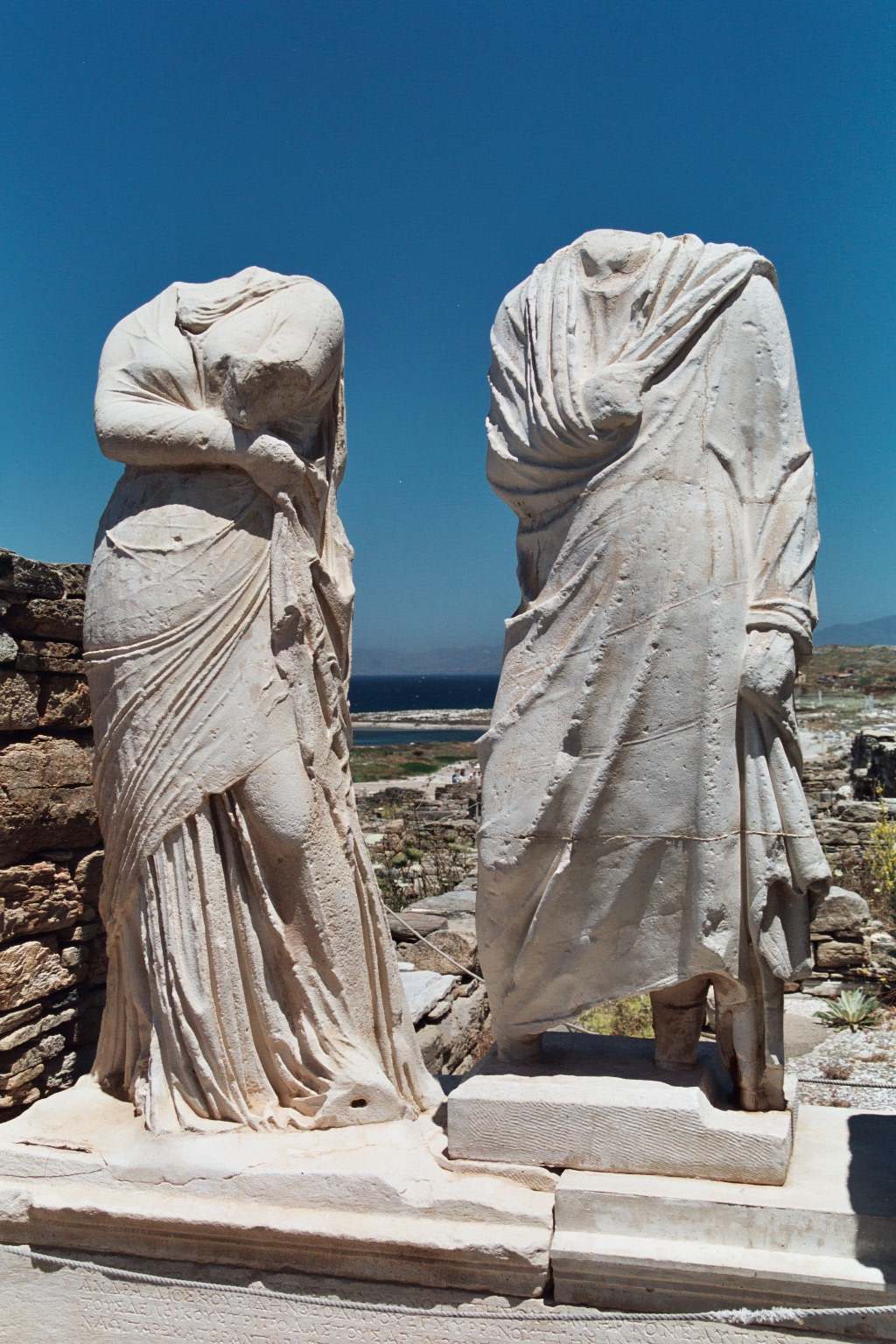
The himation was a large rectangular wrap worn by women and men in ancient Greece from the Archaic period to Hellenistic times, roughly 750 to 30 BC. It went over a chiton or peplos, could stand alone as both tunic and cloak, and was usually made of wool or linen, often white.
When is Himation kept?
Himation is kept in ancient Greece, between Archaic and Hellenistic times (c. 750 to 30 BC).
The himation was a mantle, a large wrap, worn by women and men in ancient Greece. It appears from the Archaic period down to Hellenistic times, and people usually put it over a chiton or peplos. A himation could also serve alone as both tunic and cloak. It was made mostly from wool or linen, often white, and no pins held it in place.
What it is
A himation is a rectangular piece of cloth, large enough to drape around the body. Ancient Greek men and women wore it from Archaic times to the Hellenistic age, a span of roughly 750 to 30 BC. It usually lay over a chiton or peplos, but it was heavier and worked like a cloak or shawl. When someone wore it without a chiton, it acted as both inner tunic and outer wrap. The garment was less bulky than the Roman toga. Vase paintings often show women using a himation as a face veil.
Origins and making
No physical himation survives, so knowledge comes from pottery, statues and decorations. The earliest evidence places it in the 6th century BCE. Wool and linen were the usual fabrics, and white was common. Women spun the fibres into yarn and wove them into a large rectangle, often at home. Professional weavers and dyers also worked in the trade. Fine linen cost more, so it belonged mainly to wealthy Greeks. Some himatia carried patterns or embroidery in strong colours, either woven into the cloth or painted onto it.
How it was worn
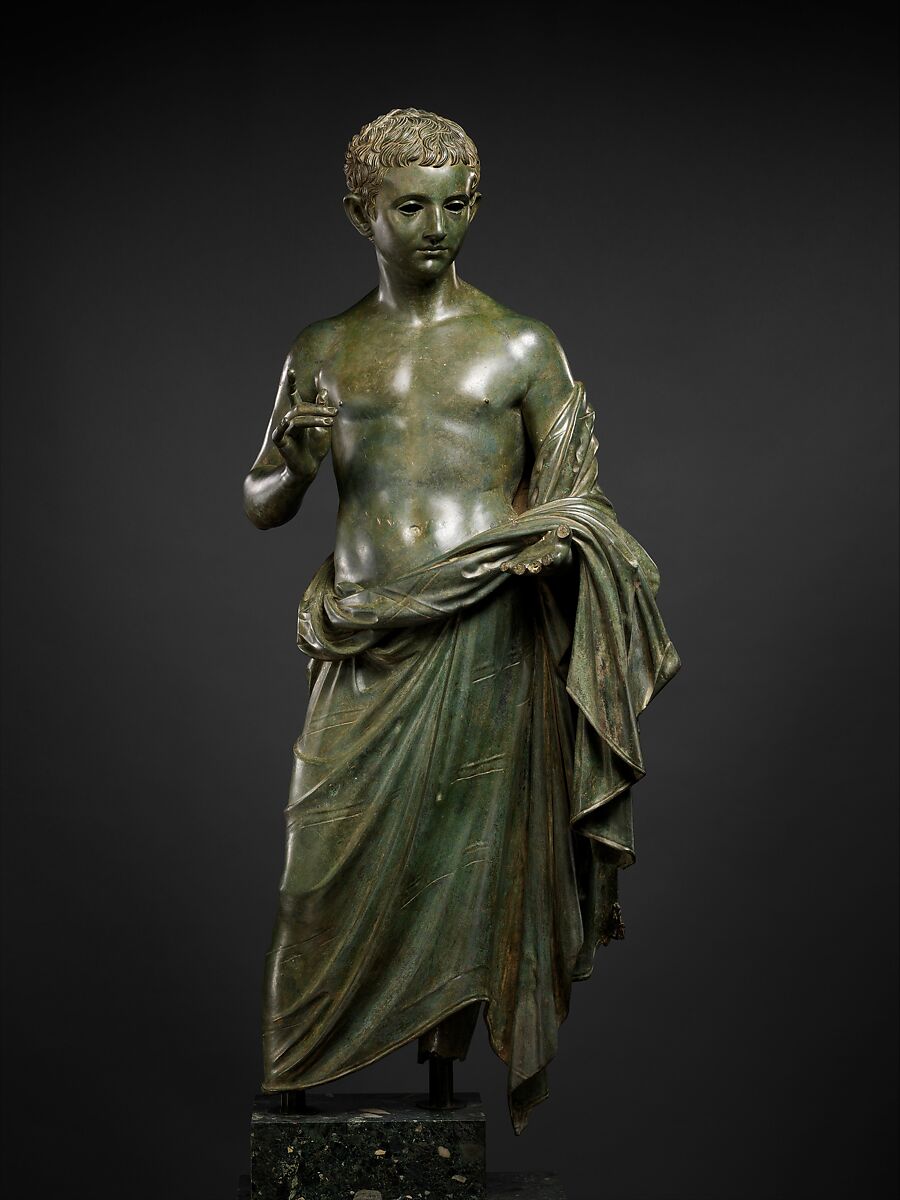
A himation was not fastened with pins. Men draped it over the left shoulder and wrapped it around the body, leaving the right arm free. Women could choose which arm to leave free. In Archaic Greece, men of every age and social rank wore it over a chiton, and women followed the same practice into Hellenistic times. Older boys past the age of ephebos sometimes covered themselves completely with a himation. The arrangement gave out social signals. A neat drape suggested high standing, while a disordered one could expose the body during courtship. Ancient philosophers wrote about these judgements.
Meaning and status
To ancient Greeks, the way a person arranged a himation spoke before they did. A well ordered garment marked elite rank. A careless drape invited comment, and could create chances for display in courtship between men or between men and women. Theophrastus, in his Characters, described a boorish man as one who sits with his himation pulled above his knees. Men followed unwritten rules. If the cloth dragged past the ankles, people thought it in poor taste. If the left shoulder showed, they called the man barbaric. Women used the wrap for personal style and to show social position, and in front of strangers it could serve as a veil.
In art and later use
Himation appears often on Greek gods. Athena is shown with a helmet from Attica, a peplos, an aegis bearing a small gorgoneion, and a himation. Dionysos wears a himation with an ivy wreath and holds a kantharos. The garment reached such popularity that historians use the word for several different Greek clothes. The Romans later took up the style in their own society. In the Byzantine era the same wrap continued in Christian images. It appeared on Christ and Mary and on figures from scripture, and poorer people also wore it.
How Himation is kept
In ancient Greece, both men and women wore the himation, and children had their own way of using it. A man placed the cloth over his left shoulder and wound it around his body, leaving the right arm out. A woman could choose to free her left or right arm. No pins held the fabric. It usually went on over a chiton or peplos. When worn alone, it covered the body like a tunic and cloak at once. Older boys might wrap themselves entirely. The final arrangement mattered: a tidy drape signalled status, a loose one sent a different message.
When and where
The himation belongs to ancient Greece, not to a single day. People wore it between Archaic and Hellenistic times, a span of about 750 to 30 BC. Evidence from the 6th century BCE shows it in use. No calendar date or festival is tied to it; it was ordinary dress and formal dress across those centuries.
It was kept most strongly in ancient Greece, where men and women wore it in public and private life. Vase paintings, pottery and statues from Greek lands show it. The style later reached ancient Rome, where Romans took it into their society. In the Byzantine era it continued in Christian art and among people of humble rank.
What Himation means
For those who wore it, a himation carried meaning beyond warmth. A properly arranged wrap marked elite standing. A disordered one could reveal the body and open space for courtship. Ancient Greek writers judged character from the drape, and Theophrastus used a badly worn himation to paint a boorish man. The garment also appeared on gods, which gave it a place in myth and image. For women, it could signal personal style, social rank, and modesty when it served as a veil.


Questions people ask about Himation
When is Himation kept?
Himation is kept in ancient Greece, between Archaic and Hellenistic times (c. 750 to 30 BC).
What is a himation?
A himation is a large rectangular wrap worn in ancient Greece. It was a mantle or cloak, usually made of wool or linen and often white. People wore it over a chiton or peplos, or alone as both tunic and cloak. It was less bulky than the Roman toga.
How was it worn?
No pins held it. Men draped it over the left shoulder and around the body, leaving the right arm free. Women could free either arm. It usually sat over a chiton or peplos. Older boys past ephebos sometimes covered their whole body with it.
What did the way it was worn mean?
The arrangement acted as nonverbal communication. A neat himation showed elite status. A disordered one could allow bodily display during courtship. Men had unwritten rules: a hem dragging past the ankles was in poor taste, and an exposed left shoulder was seen as barbaric.
Did gods wear himatia in art?
Yes. Ancient Greek gods are often described in himatia. Athena is shown with a helmet from Attica, a peplos, an aegis and himation. Dionysos appears in a himation with an ivy wreath, holding a kantharos. Byzantine images also show it on Christ, Mary and people from scripture.
See also
 TablionAn embroidered panel on the ceremonial mantle of Byzantine courtiers.PeronaiA long straight pin that fastened Greek clothing, and a weapon in Greek legend
 KynodesmeA cord ancient Greek athletes tied around the foreskin to stay modest in public.
 ChitonA draped tunic of wool or linen worn across ancient Greece and Rome
Good reading and sources
- Encyclopaedia BritannicaArticle
- Ancient Greek ClothingWorld History Encyclopedia, Article
- Ancient Greek ClothingWorld History Encyclopedia, Article
- Himation on WikipediaEncyclopedia
- More photos on Wikimedia CommonsPhotos and video
- Wikidata recordOpen data
The facts on this page come from the Wikipedia article "Himation", written by its contributors and used under the CC BY-SA 4.0 licence, and from its Wikidata record (CC0). EveryParampara rewrote the text in its own words, with AI assistance, and compares every page with the article to make sure no passage is copied. It may be reused under the same CC BY-SA 4.0 licence with a link back.
It may contain mistakes. Traditions differ from one family, village and community to the next, and the people who keep them know them best. If something is wrong, tell us. Last refreshed 2026-10-11.
More from Greece
All the traditions of Greece 🇬🇷 GreeceKausiaκαυσία
A flat hat of ancient Macedonia, worn by kings and later as sun cover in RomeDress
🇬🇷 GreeceTablionταβλίον
An embroidered panel on the ceremonial mantle of Byzantine courtiers.Dress
🇬🇷 GreecePeronaiπερόνη (perónē)
A long straight pin that fastened Greek clothing, and a weapon in Greek legendDress
🇬🇷 Sparta, GreeceChitonχιτών
A draped tunic of wool or linen worn across ancient Greece and RomeDress
🇬🇷 GreeceKausiaκαυσία
A flat hat of ancient Macedonia, worn by kings and later as sun cover in RomeDress
🇬🇷 GreeceTablionταβλίον
An embroidered panel on the ceremonial mantle of Byzantine courtiers.Dress
🇬🇷 GreecePeronaiπερόνη (perónē)
A long straight pin that fastened Greek clothing, and a weapon in Greek legendDress
🇬🇷 Sparta, GreeceChitonχιτών
A draped tunic of wool or linen worn across ancient Greece and RomeDress
The same idea elsewhere
All of this kind 🇮🇳 Paithan, IndiaPaithani
A handwoven silk sari from Maharashtra, with a squared border and a peacock palluDress
🇮🇳 Paithan, IndiaPaithani
A handwoven silk sari from Maharashtra, with a squared border and a peacock palluDress
 🇮🇱 Israel and 1 moreTzitzitצִיצִית
Knotted ritual fringes worn on a four-cornered garment, a reminder of the commandmentsDress
🇮🇱 Israel and 1 moreTzitzitצִיצִית
Knotted ritual fringes worn on a four-cornered garment, a reminder of the commandmentsDress
 🇼🇸 Samoa and 1 moreʻIe tōga
Precious woven mats exchanged in Samoan ceremonies to honor family ties and chiefly status.Dress
🇼🇸 Samoa and 1 moreʻIe tōga
Precious woven mats exchanged in Samoan ceremonies to honor family ties and chiefly status.Dress
 🇪🇬 Egypt and 5 moreTraditional tattooing
The ancient custom of marking the skin for protection, healing, status and sacred ritesDress
🇪🇬 Egypt and 5 moreTraditional tattooing
The ancient custom of marking the skin for protection, healing, status and sacred ritesDress