Kynodesme
In its own language: κυνοδέσμη
A cord ancient Greek athletes tied around the foreskin to stay modest in public.
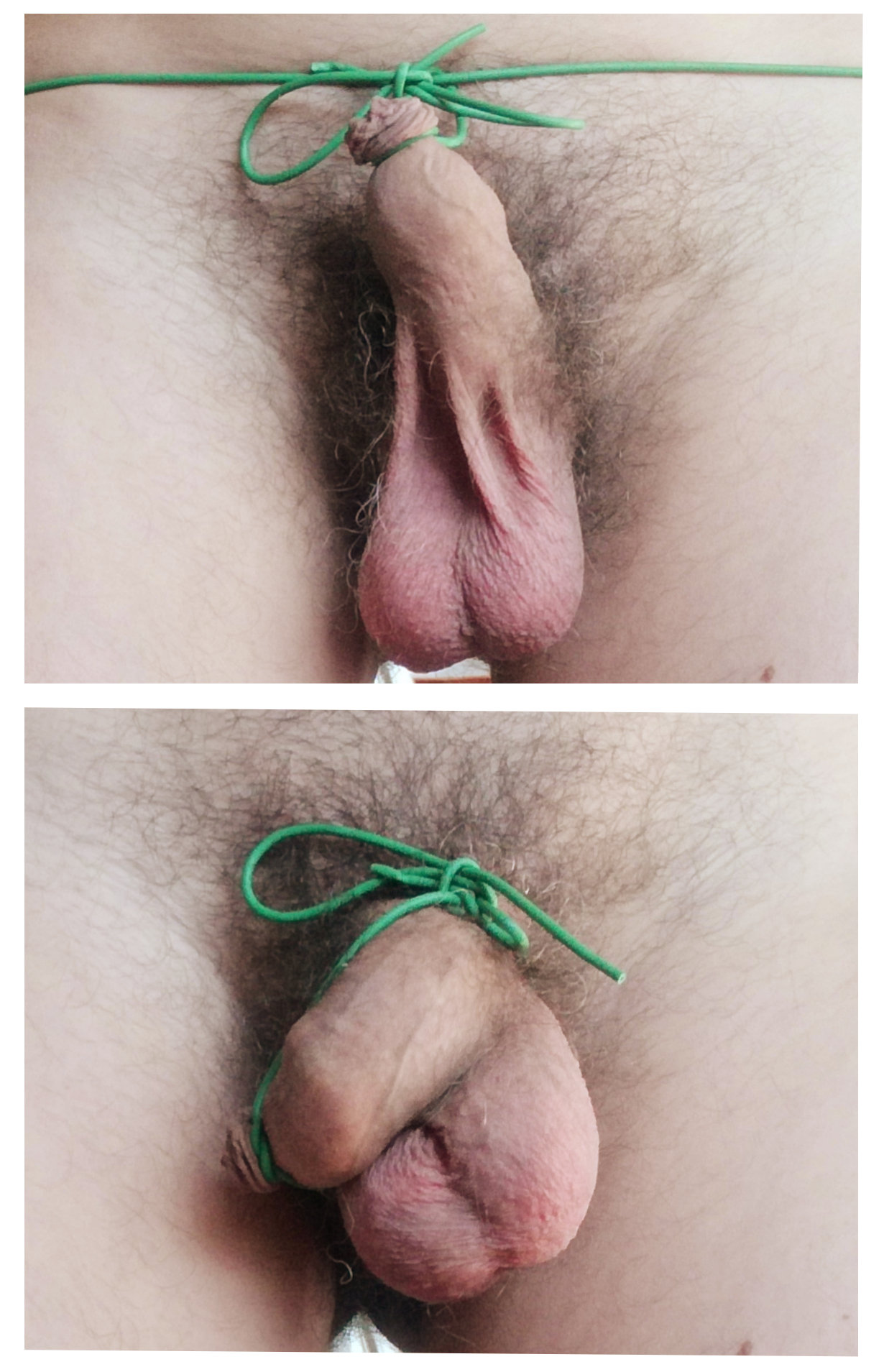
A cord or leather strip tied around the foreskin to keep the glans hidden, worn by athletes, actors and poets in ancient Greece and later Etruria and Rome. Showing the glans in public was thought shameful, so the cord covered it and could be knotted to a waist band or around the penis during sport.
When is Kynodesme kept?
Kynodesme is kept in antiquity, worn in public by men who appeared naked, and taken off at will afterwards.
In ancient Greece, a man who appeared naked in public was expected to keep the head of his penis covered; letting it show was read as a mark of a slave or a barbarian. Athletes, actors and poets managed this with the kynodesme, a cord tied around the foreskin. Simple as it looks, the tie carried real weight: it signalled modesty, decency and standing.
What it was
The name translates as dog tie, and the thing itself was plain: a cord, a length of string, now and then a strip of leather. A man knotted it around the akroposthion, the tubular tip of the foreskin that reaches past the glans, which kept that tip covered. Vase painters show athletes wearing it, and writers place it on actors, poets, symposiasts, the men reclining at a drinking party, and komasts, the revellers of such gatherings. It was not permanent. It went on when a man went out in public and came off again when he chose.
Why it mattered
For the Greeks, letting the glans show among strangers dishonoured the man who did it. They read it as the mark of a slave or a barbarian, so anyone who appeared without clothes in a public place, on the track or the stage, was expected to stay covered. There may have been a second aim: a cord worn often was thought to stretch the foreskin, and a longer one was counted handsome. Medicine added another reason. Greek and Roman doctors taught that semen lost without restraint weakened a man and coarsened his voice, and in Rome singers are said to have worn the tie to keep the voice in condition.
How it was tied
The knot sat at the end of the foreskin, drawn snug. What happened to the loose length of cord made the difference in look. Run it to a waist band and it drew the penis upward, leaving the scrotum bare. Wind it instead around the root of penis and scrotum together, and the penis seemed to bend down. Both arrangements appear in Greek art, so wearers evidently chose the effect they wanted. The cord held only for as long as it was needed; a man untied it at will, and nothing about it was fixed to the body.
In art and letters
The evidence is older than any text. Painted Greek pots show athletes with the cord in place long before a writer mentions it. The first surviving mention comes in the 5th century BC, in Theoroi, a satyr play by Aeschylus that survives only in part. The habit did not stay Greek. The Etruscans took it up as well, and the Romans knew it under the name ligatura praeputii, though they came to prefer a different device: a ring called a fibula, fastened with a pin through the foreskin above the glans, served them as a cover where the Greeks used a band.
How Kynodesme is kept
An athlete stripped for competition, an actor before an audience, or a guest at a drinking party tied the cord around the tip of the foreskin before appearing. With the knot set, he chose one of two finishes: the free end fastened to a waist band, which lifted the penis and left the scrotum showing, or the end wound around the root of penis and scrotum, which made the penis curve down. Singers in Rome used the same tie in the hope of protecting the voice. When the public moment passed, the wearer simply undid the cord and put it aside.
When and where
It belongs to classical antiquity. Greek vase paintings show it worn before any writer records it, and the earliest surviving mention in literature is the 5th century BC, in Aeschylus's Theoroi. Use continued among the Etruscans and the Romans.
It was kept wherever Greek men appeared naked together: the running track, the stage, the banquet. The sources also place it in Etruria and Rome, though Roman wearers favoured a metal ring instead of a cord. No particular city is named as its home.
What Kynodesme means
The tie made a public statement about the man wearing it. To show the glans was to lower oneself to the level the Greeks assigned to slaves and barbarians; to stay covered was to keep one's dignity in view of others. A foreskin drawn long by frequent wear counted as beautiful, so the cord also served appearance. And it spoke of restraint: in Greek and Roman medicine, semen spent without need was believed to drain a man's strength and spoil his voice, which is why singers in Rome are described wearing it as care for that voice.
Questions people ask about Kynodesme
When is Kynodesme kept?
Kynodesme is kept in antiquity, worn in public by men who appeared naked, and taken off at will afterwards.
What exactly is a kynodesme?
A cord, string or leather strip that men in ancient Greece tied around the tip of the foreskin so the glans stayed hidden in public. The Greek name means dog tie. Athletes wore it in competition, and art and literature also put it on actors, poets and guests at drinking parties.
Why did showing the glans matter so much?
Greeks treated an uncovered glans in public as dishonourable and shameful, a sight they associated with slaves and barbarians rather than free men. Anyone who appeared naked before others, on the track or the stage, was expected to conceal it, and the cord did that job without clothing.
Was it permanent?
No. The sources describe it as temporary wear for public occasions: a man tied it when he went out and took it off again at will. The related Roman ring, the fibula, was pinned through the foreskin and sat above the glans, but that was a separate device.
Do people still wear it?
The sources record it only as a practice of the ancient Greek, Etruscan and Roman world and say nothing about its use today. Similar coverings exist elsewhere, such as penis sheaths in New Guinea and Vanuatu, but those are separate traditions of other peoples, not continuations of the kynodesme.
See also
 Vyshyvanka DayAn annual day for wearing traditional Ukrainian embroidered shirts across the world
 DirndlA fitted dress with apron from the German-speaking Alps, worn for festivals and weddings.
 TablionAn embroidered panel on the ceremonial mantle of Byzantine courtiers.
 ChitonA draped tunic of wool or linen worn across ancient Greece and Rome
Good reading and sources
- Kynodesme on WikipediaEncyclopedia
- More photos on Wikimedia CommonsPhotos and video
- Wikidata recordOpen data
The facts on this page come from the Wikipedia article "Kynodesme", written by its contributors and used under the CC BY-SA 4.0 licence, and from its Wikidata record (CC0). EveryParampara rewrote the text in its own words, with AI assistance, and compares every page with the article to make sure no passage is copied. It may be reused under the same CC BY-SA 4.0 licence with a link back.
It may contain mistakes. Traditions differ from one family, village and community to the next, and the people who keep them know them best. If something is wrong, tell us. Last refreshed 2026-10-07.
More from Greece
All the traditions of Greece
🇬🇷 Sparta, GreeceChitonχιτών
A draped tunic of wool or linen worn across ancient Greece and RomeDress
 🇬🇷 Athens, GreecePeplosπέπλος
A draped woolen tunic worn by women in ancient Greece, central to Athenian religious festivals.Dress
🇬🇷 GreeceTablionταβλίον
An embroidered panel on the ceremonial mantle of Byzantine courtiers.Dress
🇬🇷 Athens, GreecePeplosπέπλος
A draped woolen tunic worn by women in ancient Greece, central to Athenian religious festivals.Dress
🇬🇷 GreeceTablionταβλίον
An embroidered panel on the ceremonial mantle of Byzantine courtiers.Dress
 🇪🇸 Spain and 5 moreSiesta
A short afternoon rest or sleep taken after the midday mealHome · Lunch
🇪🇸 Spain and 5 moreSiesta
A short afternoon rest or sleep taken after the midday mealHome · Lunch
The same idea elsewhere
All of this kind 🇮🇳 Paithan, IndiaPaithani
A handwoven silk sari from Maharashtra, with a squared border and a peacock palluDress
🇮🇳 Paithan, IndiaPaithani
A handwoven silk sari from Maharashtra, with a squared border and a peacock palluDress
 🇮🇱 Israel and 1 moreTzitzitצִיצִית
Knotted ritual fringes worn on a four-cornered garment, a reminder of the commandmentsDress
🇮🇱 Israel and 1 moreTzitzitצִיצִית
Knotted ritual fringes worn on a four-cornered garment, a reminder of the commandmentsDress
 🇼🇸 Samoa and 1 moreʻIe tōga
Precious woven mats exchanged in Samoan ceremonies to honor family ties and chiefly status.Dress
🇼🇸 Samoa and 1 moreʻIe tōga
Precious woven mats exchanged in Samoan ceremonies to honor family ties and chiefly status.Dress
 🇪🇬 Egypt and 5 moreTraditional tattooing
The ancient custom of marking the skin for protection, healing, status and sacred ritesDress
🇪🇬 Egypt and 5 moreTraditional tattooing
The ancient custom of marking the skin for protection, healing, status and sacred ritesDress