Royal, civic and national ceremonyNorth AmericaSecular and civic
Mexican Independence Day
In its own language: Día de la Independencia de México
An annual Mexican national holiday marking the 1810 uprising against Spanish rule

Mexican Independence Day is a nationwide civic holiday commemorating the 1810 call to revolt against the Spanish Empire. Every 15 and 16 September, communities across Mexico and abroad gather for patriotic shouts, bell ringing, parades, and fireworks.
When is Mexican Independence Day in 2027?
Mexican Independence Day 2027 runs from 15 to 16 September 2027. Other years: 2026, 15 to 16 September 2026; 2028, 15 to 16 September 2028.
Mexican Independence Day takes place each September to commemorate the start of Mexico's struggle for sovereignty from the Spanish Empire in 1810. Celebrations start on the evening of 15 September with ceremonial cries and bell ringing led by civic leaders, continuing the following day with civic parades, concerts, and public gatherings throughout the nation and in Mexican communities abroad.
Origins and history
In September 1810, the priest Miguel Hidalgo y Costilla issued a call to arms against Spanish colonial authorities, igniting the Mexican War of Independence. Over a decade later, in September 1821, the Army of the Three Guarantees marched into the capital under Agustin de Iturbide to conclude the conflict. A provisional governing council then drafted the formal Act of Independence. Legal recognition of the holiday followed in the Constitution of Apatzingan and early state treaties, leading to the first nationwide annual commemoration in 1825.
The night of the shout
The focal point of the celebration occurs late on 15 September. Near 11 p.m., the president appears at the capital's central seat of government to sound the bell once used by Hidalgo. The head of state delivers an adapted patriotic cry, praising the key figures of the rebellion and concluding with a threefold salute to the nation. Hundreds of thousands in the Zocalo repeat each praise, sing the national anthem alongside military musicians, and view fireworks alongside illuminated projections across the nearby cathedral.
Civic parades and local ceremonies
Festivities continue through 16 September with large civic and military processions. In the capital, forces march from the main plaza past the Hidalgo Memorial and along Paseo de la Reforma to the Angel of Independence. Similar ceremonies unfold across the republic, where state governors, municipal leaders, and school directors ring bells and repeat the traditional words for local crowds. Diplomatic posts and communities of Mexican heritage in the United States also organize matching events.
Distinction from Cinco de Mayo
A frequent misunderstanding outside Mexico confuses Independence Day with Cinco de Mayo. The fifth of May actually commemorates the 1862 Battle of Puebla, where republican troops defeated an invading French force. Cinco de Mayo is primarily observed in the state of Puebla and functions as a minor holiday elsewhere in the country. In contrast, the September holiday represents Mexico's foundational civic celebration, recognized everywhere as the anniversary of the uprising against Spanish imperial rule.
How Mexican Independence Day is kept
On the night of 15 September, crowds gather in town squares across Mexico and in foreign consulates. At 11 p.m., leaders ring a bell and recite a patriotic shout honoring the nation and its founding figures. The assembly answers each line, joins in singing the national anthem, and watches fireworks set to music. The next morning, armed forces and marching bands stage formal parades through major avenues, including Mexico City's central boulevard.
When and where
The holiday is observed every year on 16 September, though the primary civic gatherings begin on the evening of 15 September. Its calendar placement marks the exact date when Miguel Hidalgo initiated the rebellion in 1810.
Festivities take place throughout Mexico, centered on the Zócalo in the capital and town squares in every state. Reenactments also occur in Dolores Hidalgo, Guanajuato, at Mexican embassies abroad, and within Mexican communities in the United States.
What Mexican Independence Day means
The festival centers on the Cry of Dolores, which has become a primary symbol of self-determination. Repeating the call honors the heroes who fought to establish a sovereign nation free from colonial rule. Ringing the historic bell, waving the national flag, and joining in communal chants reaffirm civic identity and collective unity.


Mexican Independence Day dates: 2026, 2027, 2028
| Year | Mexican Independence Day date |
|---|---|
| 2026 | 15 to 16 September 2026 |
| 2027 | 15 to 16 September 2027 |
| 2028 | 15 to 16 September 2028 |
Questions people ask about Mexican Independence Day
When is Mexican Independence Day in 2027?
Mexican Independence Day 2027 runs from 15 to 16 September 2027. Other years: 2026, 15 to 16 September 2026; 2028, 15 to 16 September 2028.
What is Mexican Independence Day?
It is a national holiday marking the start of Mexico's war for independence from Spain in 1810. The observance includes public speeches, patriotic chants, bell ringing, musical performances, and military parades.
What happens during the Grito ritual?
A civic leader rings a historic bell, names the heroes of Mexican independence, and leads the crowd in cheering for the nation. The gathering echoes each cheer, sings the national anthem, and watches celebratory fireworks.
How does this holiday differ from Cinco de Mayo?
Cinco de Mayo commemorates a battle against French forces at Puebla in 1862 and is largely a local observance. Independence Day marks the national rebellion against the Spanish Empire in 1810 and is celebrated across the entire country.
See also
 Day of the DeadA Mexican remembrance of deceased family and friends with altars, marigolds and feasts
 Our Lady of GuadalupeA Marian apparition to Juan Diego in Mexico City in December 1531, celebrated on December 12.
 TapasSmall Spanish snacks or appetizers served hot or cold, often shared among friends.
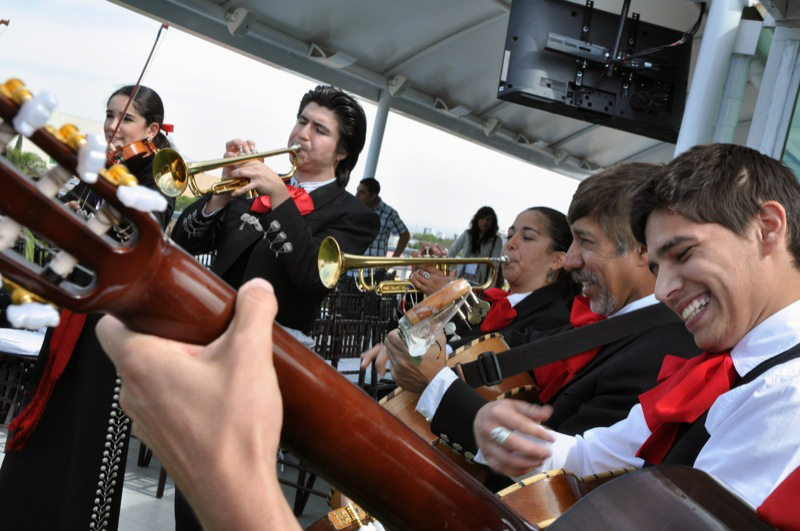 MariachiA Mexican string and trumpet music tradition featuring charro attire and communal singing.
Good reading and sources
The facts on this page come from the Wikipedia article "Independence Day (Mexico)", written by its contributors and used under the CC BY-SA 4.0 licence, and from its Wikidata record (CC0). EveryParampara rewrote the text in its own words, with AI assistance, and compares every page with the article to make sure no passage is copied. It may be reused under the same CC BY-SA 4.0 licence with a link back.
It may contain mistakes. Traditions differ from one family, village and community to the next, and the people who keep them know them best. If something is wrong, tell us. Last refreshed 2026-10-04.
More from Mexico
All the traditions of Mexico 🇲🇽 Mexico City, MexicoMexican Revolution DayDía de la Revolución Mexicana
A Mexican civic holiday marking the 1910 uprising with parades and public ceremoniesCeremony
🇲🇽 Mexico City, MexicoMexican Revolution DayDía de la Revolución Mexicana
A Mexican civic holiday marking the 1910 uprising with parades and public ceremoniesCeremony
 🇲🇽 Puebla, Mexico and 1 moreCinco de Mayo
May 5 observance honoring the 1862 Mexican victory over French troops near Puebla.Ceremony
🇲🇽 Puebla, Mexico and 1 moreCinco de Mayo
May 5 observance honoring the 1862 Mexican victory over French troops near Puebla.Ceremony
 🇺🇸 United States and 5 moreNational day of mourning
A day a government sets aside for national grief, often marked by flags at half-mastCeremony
🇺🇸 United States and 5 moreNational day of mourning
A day a government sets aside for national grief, often marked by flags at half-mastCeremony
 🇮🇪 Ireland and 5 moreHalloween
An annual observance on 31 October marking the eve of All Saints' Day, rooted in Christian tradition and Celtic heritageFestival · Sweets given and shared
🇮🇪 Ireland and 5 moreHalloween
An annual observance on 31 October marking the eve of All Saints' Day, rooted in Christian tradition and Celtic heritageFestival · Sweets given and shared
The same idea elsewhere
All of this kind 🇬🇷 Olympia, Greece and 1 moreOlympic torch relay
The ceremonial journey of the flame from Olympia to each host city of the Olympic GamesCeremony
🇬🇷 Olympia, Greece and 1 moreOlympic torch relay
The ceremonial journey of the flame from Olympia to each host city of the Olympic GamesCeremony
 🇮🇳 Kolkata, IndiaJana Gana Mana
India's national anthem, from a Bengali hymn of 1911, sung at civic occasionsCeremony
🇮🇳 Kolkata, IndiaJana Gana Mana
India's national anthem, from a Bengali hymn of 1911, sung at civic occasionsCeremony
 🇵🇱 Auschwitz-Birkenau, Poland and 1 moreMarch of the LivingMarsz Żywych (Polish) · מצעד החיים (Hebrew)
An annual two-week journey to Poland ending in a silent walk from Auschwitz to BirkenauCeremony
🇵🇱 Auschwitz-Birkenau, Poland and 1 moreMarch of the LivingMarsz Żywych (Polish) · מצעד החיים (Hebrew)
An annual two-week journey to Poland ending in a silent walk from Auschwitz to BirkenauCeremony
 🇳🇴 Bergen, NorwayBuekorps
Youth marching groups of Bergen's neighbourhoods, with drums, banners and a May paradeCeremony
🇳🇴 Bergen, NorwayBuekorps
Youth marching groups of Bergen's neighbourhoods, with drums, banners and a May paradeCeremony