Seasons, harvest and the calendarSoutheast AsiaIndigenous and traditional
Kaamatan
In its own language: Tadau Kaamatan
An annual May harvest celebration of thanksgiving and community across Sabah, Malaysia

Kaamatan is a May harvest festival celebrated by the Kadazan-Dusun and fellow Indigenous communities in Sabah, Malaysia. Commemorating the sacrificial gift of rice from the maiden Huminodun, people gather for ancestral rites, cultural pageants, music, traditional sports, and shared food.
When is Kaamatan kept?
Kaamatan is kept on annually throughout May, culminating on 30 and 31 May.
Kaamatan is a month-long harvest festival celebrated across the Malaysian state of Sabah, culminating on the final two days of May. Rooted in the indigenous belief system known as Momolianism, it gives thanks for the yearly rice yield. Communities gather to honour the spirit of the grain, reconnect with kin, hold customary rites, and take part in lively dance, singing, sports, and cultural pageants.
The story of Huminodun
Dusun accounts recall an ancient famine that placed early humanity in peril. To rescue the population from starvation, the creator Kinoingan gave his daughter Ponompuan, later named Huminodun, as an ultimate offering. Her sacrifice brought forth the first agricultural crops, including yams, tapioca, coconut, ginger, maize, and rice. She then became the spirit Bambaazon, who resides within harvested paddy. Tradition instructs harvesters to bind seven stalks of rice to a spliced bamboo pole placed in the center of the field, protecting this vital spirit and ensuring continued fertility for future seasons.
Customary rituals and feasts
Ritual specialists known as bobohizan lead ceremonies to protect the crop spirit and prevent future shortages. During the magavau rite, these priestesses recite invocations to gather stray rice grains left behind across the fields, keeping the Bambaazon whole. In seasons of exceptional bounty, families historically arranged a moginakan feast, a major communal gathering also used to celebrate the birth of a child, recovery from an illness, or the construction of a new home. These rites link spiritual devotion with agricultural work, ensuring blessings for the entire settlement.
Gatherings, pageantry, and games
Festivities occur across the region throughout May, with central events staged at the KDCA Hongkod Koisaan hall in Penampang. Audiences gather for traditional Sumazau dances, musical performances, and Sugandoi vocal competitions. Athletic contests feature customary folk games, including mipulos arm wrestling, mipadsa knuckle bouts, monopuk blowpipe target shooting, catapulting, and tug of war. A defining event is the Unduk Ngadau pageant, which celebrates young women in tribute to Huminodun, alongside related contests for men, married women, and children.
Communal food and drink
Feasting and hospitality remain central to every Kaamatan gathering. Relatives and guests toast one another with tapai, a traditional fermented rice wine served in specialized singgarung bamboo cups or sipped through slender sumbiling bamboo straws. Other customary alcoholic drinks include lihing, kinomol, bahar, and distilled spirits called montoku or talak. Across villages, public signs and banners display well wishes such as Kotobian Tadau Tagazo do Kaamatan, welcoming visitors to share food, drink, and companionship.
How Kaamatan is kept
Activities unfold through May, leading up to a two-day holiday on May 30 and 31. Priestesses called bobohizan conduct sacred rites such as the magavau to retrieve stray rice grains and honor the crop spirit. Communities assemble at village centers and the Hongkod Koisaan hall in Penampang for cultural showcases, food stalls, and Sumazau dances. Participants compete in folk sports like arm wrestling, knuckle wrestling, and blowpiping. The festivities culminate in the coronation of the Unduk Ngadau pageant winner alongside communal meals and toasts of rice wine.
When and where
Kaamatan takes place across the entire month of May, concluding with official public holiday celebrations on 30 and 31 May each year. Traditionally, local priestesses determined the final date for closing the festive period.
The festival is held throughout the state of Sabah in East Malaysia, with major state gatherings at the Hongkod Koisaan hall in Penampang District. Kadazan-Dusun diaspora communities also observe the tradition across Malaysia and internationally.
What Kaamatan means
Kaamatan honors Huminodun, whose sacrificial gift of rice and staple plants saved humanity from famine. By venerating her spirit, Bambaazon, through rituals and community feasts, participants express gratitude for the harvest, reinforce kinship ties, and celebrate cultural identity under the traditional philosophy of Momolianism.
On the table
- Tapai
- Lihing
- Kinomol
- Bahar
- Montoku
- Talak
- Rice
- Tapioca


Questions people ask about Kaamatan
When is Kaamatan kept?
Kaamatan is kept on annually throughout May, culminating on 30 and 31 May.
What is Kaamatan?
Kaamatan is an annual harvest festival celebrated by the Kadazan-Dusun and related Indigenous peoples in Sabah, Malaysia. It offers thanksgiving for the rice crop and commemorates the sacrifice of Huminodun through rituals, dancing, sports, and cultural pageantry.
What is the story behind the festival?
According to traditional belief, the creator's daughter Huminodun gave her life during a severe famine. Her body transformed into rice, yams, and other crops to sustain humanity, and her spirit, Bambaazon, continues to be venerated for abundant harvests.
What activities and drinks are part of the celebration?
Festivities feature Sumazau dancing, Sugandoi singing contests, Unduk Ngadau pageants, and traditional games like blowpiping and arm wrestling. Participants share customary drinks such as tapai rice wine, lihing, and bahar, often served in bamboo vessels.
See also
 Mid-Autumn FestivalAn annual harvest festival celebrating family reunions, full moons and mooncakes
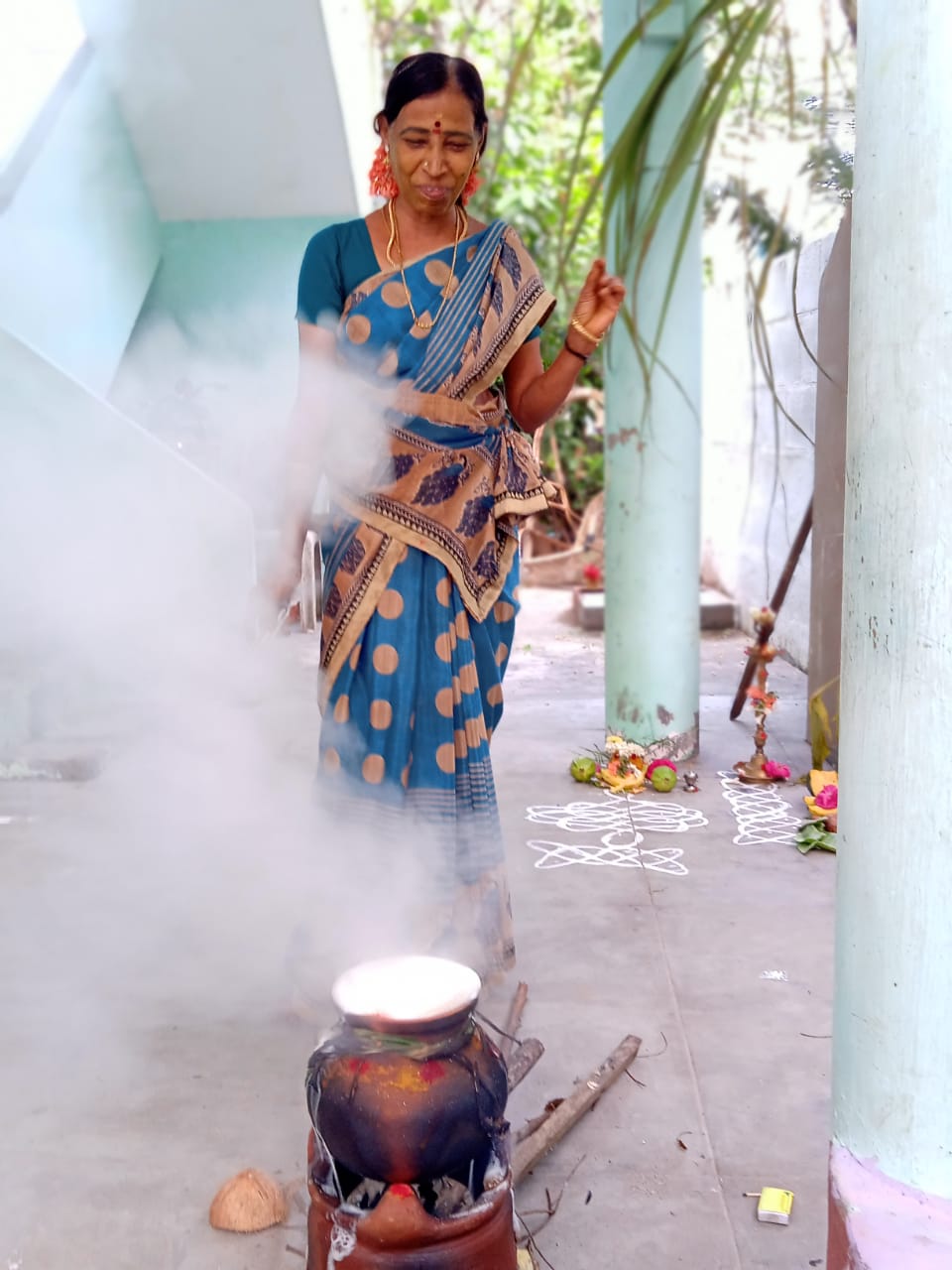 PongalA Tamil harvest festival honoring the sun and cattle with a boiling rice dish.
 OnamA ten-day harvest festival in Kerala celebrating the return of King Mahabali with feasts, flower carpets and boat races.
 Makar SankrantiA mid-winter harvest festival marking the sun's northward journey, celebrated across South and Southeast Asia with fairs
Good reading and sources
- Kaamatan on WikipediaEncyclopedia
- More photos on Wikimedia CommonsPhotos and video
- Wikidata recordOpen data
The facts on this page come from the Wikipedia article "Kaamatan", written by its contributors and used under the CC BY-SA 4.0 licence, and from its Wikidata record (CC0). EveryParampara rewrote the text in its own words, with AI assistance, and compares every page with the article to make sure no passage is copied. It may be reused under the same CC BY-SA 4.0 licence with a link back.
It may contain mistakes. Traditions differ from one family, village and community to the next, and the people who keep them know them best. If something is wrong, tell us. Last refreshed 2026-10-04.
More from Malaysia
All the traditions of Malaysia 🇲🇾 Malaysia and 1 moreGawai DayakAri Gawai
An annual harvest and thanksgiving festival of the Dayak peoples in BorneoSeasonal
🇲🇾 Malaysia and 1 moreGawai DayakAri Gawai
An annual harvest and thanksgiving festival of the Dayak peoples in BorneoSeasonal
 🇲🇾 Malaysia and 2 moreNgajatTanda Ngajat
A traditional folk dance of the Iban people in Sarawak and Borneo, mimicking birds and warriors.Performance
🇨🇳 China and 5 moreMid-Autumn Festival中秋節
An annual harvest festival celebrating family reunions, full moons and mooncakesFestival · Sweets given and shared
🇮🇳 India and 4 morePongal
A Tamil harvest festival honoring the sun and cattle with a boiling rice dish.Festival · Feasts and festival meals
🇲🇾 Malaysia and 2 moreNgajatTanda Ngajat
A traditional folk dance of the Iban people in Sarawak and Borneo, mimicking birds and warriors.Performance
🇨🇳 China and 5 moreMid-Autumn Festival中秋節
An annual harvest festival celebrating family reunions, full moons and mooncakesFestival · Sweets given and shared
🇮🇳 India and 4 morePongal
A Tamil harvest festival honoring the sun and cattle with a boiling rice dish.Festival · Feasts and festival meals
The same idea elsewhere
Harvest and thanksgiving compared 🇮🇳 Ayodhya, India and 7 moreDiwaliदीपावली (Dīpāvalī)
A five-day festival of lights celebrated across India and its diaspora to mark the victory of light over darkness.Festival · Feasts and festival meals
🇮🇳 Ayodhya, India and 7 moreDiwaliदीपावली (Dīpāvalī)
A five-day festival of lights celebrated across India and its diaspora to mark the victory of light over darkness.Festival · Feasts and festival meals
 🇮🇱 Jerusalem, IsraelPassoverפסח
A Jewish spring festival celebrating freedom from slavery with ritual mealsSpiritual · Dinner
🇮🇱 Jerusalem, IsraelPassoverפסח
A Jewish spring festival celebrating freedom from slavery with ritual mealsSpiritual · Dinner
 🇮🇱 Jerusalem, IsraelSukkotסוכות
A seven-day autumn Jewish festival of temporary booths, harvest prayers and hospitalitySpiritual
🇮🇱 Jerusalem, IsraelSukkotסוכות
A seven-day autumn Jewish festival of temporary booths, harvest prayers and hospitalitySpiritual
 🇵🇪 Cusco, Peru and 4 moreIntiinti (Quechua)
The Inca sun deity, honoured with temples, offerings and the June festival Inti RaymiSpiritual
🇵🇪 Cusco, Peru and 4 moreIntiinti (Quechua)
The Inca sun deity, honoured with temples, offerings and the June festival Inti RaymiSpiritual