Music, dance and storytellingSouth AsiaBuddhistHindu
Kandyan dance
In its own language: උඩරට නැටුම්
The sacred dance of Sri Lanka's hill country, kept in temple and on the stage

Kandyan dance is the dance tradition of the Udarata, the hill country around Kandy in Sri Lanka, where it grew out of the Kohomba kankariya, a healing rite for the deity Kohomba. Dancers who served the Temple of the Tooth kept it, and today it is taught in village schools, danced at the yearly Dalada Perahera and staged around the world.
When is Kandyan dance kept?
Kandyan dance is kept on yearly at the Dalada Perahera in Kandy, and at temple occasions; the full Kohomba kankariya rite is seldom held now.
Kandyan dance is the dance of Sri Lanka's central hills, the region called Udarata, and it takes its name from its home city of Kandy. It began as a sacred rite and a healing ceremony, danced by men of a hereditary caste for the Temple of the Tooth. Today it is taught in village schools and staged across the world, and it remains the country's best known cultural export.
What it is
Kandyan dance is the dance of the Udarata, the hill country of Sri Lanka whose main town is Kandy. It covers a group of dance forms that belong to that region, though they have since travelled to other parts of the island. Sri Lankans often treat it as the country's finest sacred art, and it is the form most closely identified with the nation abroad. A dancer had to master the eighteen vannam before the Ves costume came to him. The dance is not only entertainment: for centuries it was tied to temple ritual and to the court of the Kandyan kings.
Origins and legend
Dance masters trace the tradition to the Kohomba kankariya, a rite named for the deity Kohomba and also called the Kohomba yak kankariya. Tradition holds that a king of a place called Malaya Rata and his brothers danced it first, and some place that land in India. In the story the god Śakra sent King Malaya to the island to cure King Panduwasdev, who was ill with a strange sickness, a repeated dream of a leopard turning its tongue on him, taken to be the black magic of Kuveni, first wife of King Vijaya. The rite ended the illness, and many islanders took up the dance. Dancers later formed a caste of their own and served the Temple of the Tooth.
The main dances
Several dances sit under the Kandyan name. The Ves dance is the best known. It comes from an old purification rite, was danced only by men, and was offered as a plea to the gods rather than for show. Naiyandi dancers appear at the start of the Kohomba kankariya, when lamps are lit and food is set out for demons; their graceful steps are also seen at the Vishnu and Kataragama devales, the temple shrines of those gods. The Udekki dance takes its name from a small hourglass drum, said to have come from the gods, and the dancer sings while he plays. Pantheru dancers carry an instrument sacred to the goddess Pattini.
Vannam, song and drum
A vannam was first a recitation, and many describe how animals behave: elephants, monkeys, hares, peacocks, cocks and serpents. In time dancers used the words as a song behind their steps. Eighteen vannam belong to the Kandyan form, and in the past a dancer had to learn all of them before receiving the Ves costume. The best loved are those for the monkey, the eagle and the elephant. The Sinhala word comes from varnana, meaning descriptive praise. King Sri Weeraparakrama Narendrasinghe gave the art strong support, and contests of song and poetry were held in a decorated arena called the kavikara maduwa. The eighteen were said to be composed by an old sage, Ganithalankara, helped by a Buddhist priest of the Kandy temple.
Costume and music
The Ves costume is the most striking. The chest is covered only by a net of beads, and the headdress carries a metal front that makes the dancer appear taller. Anklets rattle as he moves. Only men may wear the headdress, and only after the Ves mangalaya, the ceremony at which a dancer puts the Ves costume on and dances in it for the first time. Legend warns of bad luck or illness for anyone else who wears it. Women have a separate ceremony, the Kala Eli mangalya. Kandyan dance is normally drummed rather than sung: the Geta Beraya drum is used for it alone, the small Thalampota cymbals mark time, and the twin Thammattama drums are beaten with cane sticks.
Today
The dance lost the backing of the Kandyan court under British rule and shrank, then returned in a new shape. Chitrasena Dias arranged it for the stage in the 1970s, using its movements in ballets and drawing an urban audience, which loosened some of the caste lines around the art. His school is among the largest. Village schools in the Kandy area still teach the ritual forms. Women now train as dancers, though there is no settled Ves costume for them and many have altered the men's. Full Kohomba kankariya performances are rare. The Dalada Perahera in Kandy keeps the traditional dance in public view, and many contemporary dancers borrow from the Kandyan form.
How Kandyan dance is kept
Men of the dancer caste once carried the tradition, serving the Temple of the Tooth and taking part each year in the Dalada Perahera. In the Kohomba kankariya, lamps are lit and offerings of food are made before the dancing begins. Naiyandi dancers open the proceedings in white cloth and turban. A Ves dancer, once he has been through the Ves mangalaya, may wear the sacred headdress and perform the animal vannam. Drummers keep time on the Geta Beraya, with cymbals and the twin Thammattama. Women now train and perform in schools, and stage programmes set the same steps to a theatre running order.
When and where
The sources describe only two fixed moments. The Kohomba kankariya is a ritual held when it is needed, and it is rarely staged now. The Dalada Perahera procession takes place once a year in Kandy, and the traditional dance is still performed there. Ves dancers were first invited outside the Kankariya Temple at that same annual festival, near the end of the 19th century.
Kandy is the home of the dance, and the villages around it are where the ritual teaching survives; the tradition belongs to the Udarata, the central hills of Sri Lanka. From there it has spread to other parts of the island and, through touring and teaching, well beyond it. Performances also take place at the Vishnu and Kataragama devales, at the Temple of the Tooth and on the country's stages.
What Kandyan dance means
For those who keep it, the dance is sacred work rather than spectacle. The Ves costume and its headdress are thought to belong to the deity Kohomba, and the dance itself began as a plea to the gods, never as entertainment. Vannam carry praise of animals, of kings, of the gods and of the Buddha, and each is danced in a particular mood. The Kohomba kankariya was a healing rite, and dancers still speak of it as the root of everything they do. To many Sri Lankans the costumed Ves dancer stands for the island's culture as a whole.


Questions people ask about Kandyan dance
When is Kandyan dance kept?
Kandyan dance is kept on yearly at the Dalada Perahera in Kandy, and at temple occasions; the full Kohomba kankariya rite is seldom held now.
What is Kandyan dance?
It is the dance tradition of the Udarata, the hill country around Kandy in Sri Lanka. Under the name sit several forms, including the Ves, Naiyandi, Udekki and Pantheru dances, along with eighteen vannam songs. Sri Lankans treat it as a sacred art and as the country's best known cultural export.
Who is allowed to wear the Ves headdress?
Only men, and only after the Ves mangalaya, the ceremony at which a dancer first puts on the Ves costume and dances. Legend says a woman who wears it will meet bad luck or fall ill, and the same is said of men who have not been through the ceremony. Women dancers have their own rite, the Kala Eli mangalya.
What are the vannam?
They began as recitations, many of them describing how an animal moves or behaves, and dancers later used them as songs behind their steps. Eighteen belong to the Kandyan form. In the past a dancer learned all of them before he could be given the Ves costume. The monkey, eagle and elephant vannam are the best known.
Where does the dance come from?
Legend places its beginning in the Kohomba kankariya, a rite for the deity Kohomba. Dance masters say a king of a land called Malaya Rata danced it first, and some think that land lay in India. In the story it cured King Panduwasdev of a strange illness. Dancers later formed a caste of their own and served the Temple of the Tooth.
See also
 KathinaA Buddhist season of offering new robes and gifts to monks after the rains retreat
 DashainA fifteen-day festival of family gatherings, blessings, and feasts across Nepal
 Royal Ploughing CeremonyA royal agricultural rite opening the rice season across mainland Southeast Asia
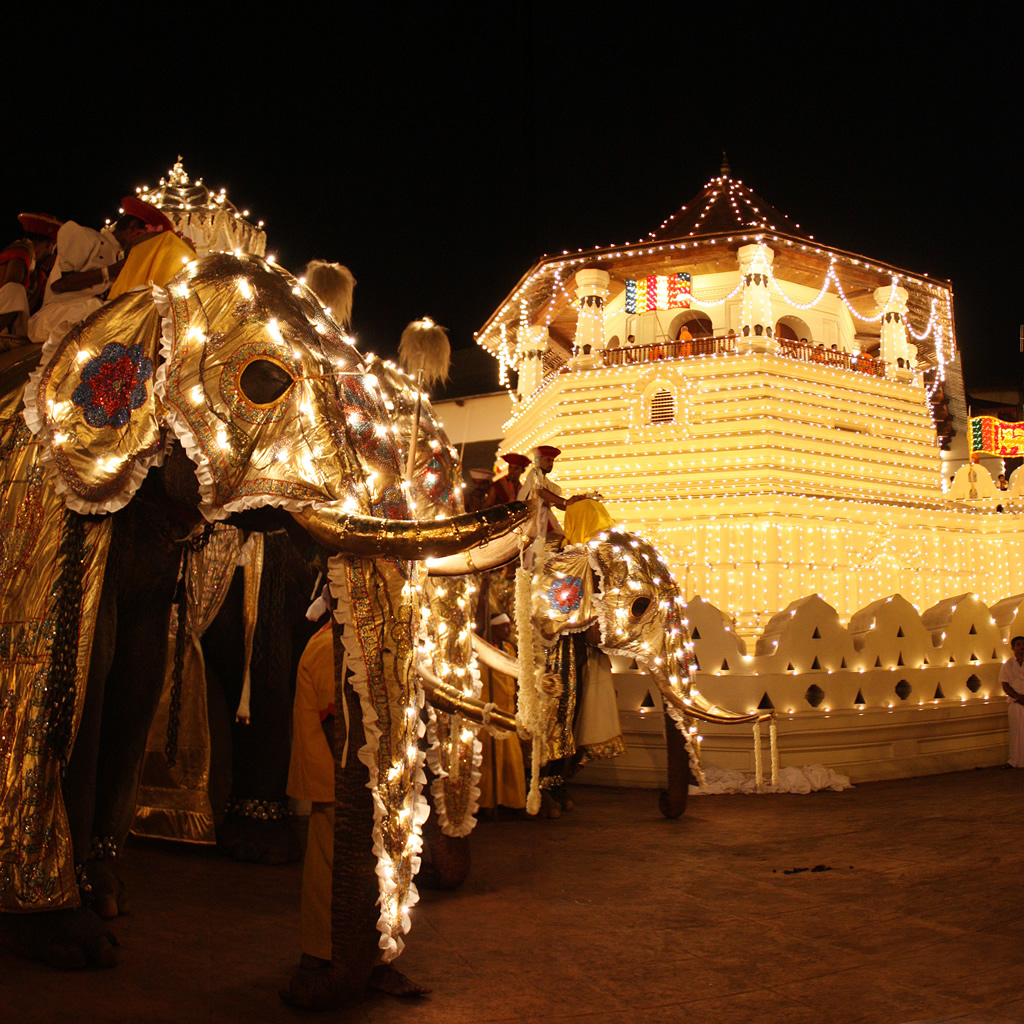 Esala PeraheraA Sri Lankan procession of sacred relics, drummers and elephants honouring the Buddha
Good reading and sources
- Kandyan dance on WikipediaEncyclopedia
- More photos on Wikimedia CommonsPhotos and video
- Wikidata recordOpen data
The facts on this page come from the Wikipedia article "Kandyan dance", written by its contributors and used under the CC BY-SA 4.0 licence, and from its Wikidata record (CC0). EveryParampara rewrote the text in its own words, with AI assistance, and compares every page with the article to make sure no passage is copied. It may be reused under the same CC BY-SA 4.0 licence with a link back.
It may contain mistakes. Traditions differ from one family, village and community to the next, and the people who keep them know them best. If something is wrong, tell us. Last refreshed 2026-10-05.
More from Sri Lanka
All the traditions of Sri Lanka 🇮🇳 India and 2 moreKoothu
Tamil street theatre with dance, music and epic stories, staged at temple festivals.Performance
🇹🇭 Thailand and 5 moreKathina
A Buddhist season of offering new robes and gifts to monks after the rains retreatSpiritual
🇳🇵 Kathmandu, Nepal and 4 moreDashainबडादशैँ
A fifteen-day festival of family gatherings, blessings, and feasts across NepalFestival
🇰🇭 Cambodia and 4 moreRoyal Ploughing Ceremonyព្រះរាជពិធីបុណ្យច្រត់ព្រះនង្គ័ល
A royal agricultural rite opening the rice season across mainland Southeast AsiaCeremony
🇮🇳 India and 2 moreKoothu
Tamil street theatre with dance, music and epic stories, staged at temple festivals.Performance
🇹🇭 Thailand and 5 moreKathina
A Buddhist season of offering new robes and gifts to monks after the rains retreatSpiritual
🇳🇵 Kathmandu, Nepal and 4 moreDashainबडादशैँ
A fifteen-day festival of family gatherings, blessings, and feasts across NepalFestival
🇰🇭 Cambodia and 4 moreRoyal Ploughing Ceremonyព្រះរាជពិធីបុណ្យច្រត់ព្រះនង្គ័ល
A royal agricultural rite opening the rice season across mainland Southeast AsiaCeremony
The same idea elsewhere
Healing, luck and protection compared 🇬🇧 United Kingdom and 5 moreTwelfth Night
The closing evening of the Christmas season, kept with cake, carols and wassailSpiritual · Feasts and festival meals
🇬🇧 United Kingdom and 5 moreTwelfth Night
The closing evening of the Christmas season, kept with cake, carols and wassailSpiritual · Feasts and festival meals
 🇬🇭 Cape Coast, GhanaFetu Afahye
A harvest festival of cleansing, boat races and royal durbars in Cape Coast, GhanaFestival · Feasts and festival meals
🇬🇭 Cape Coast, GhanaFetu Afahye
A harvest festival of cleansing, boat races and royal durbars in Cape Coast, GhanaFestival · Feasts and festival meals
 🇮🇩 Yogyakarta, IndonesiaSekatenꦱꦼꦏꦠꦺꦤ꧀
A week-long Javanese royal festival and market honouring the birth of the ProphetFestival
🇮🇩 Yogyakarta, IndonesiaSekatenꦱꦼꦏꦠꦺꦤ꧀
A week-long Javanese royal festival and market honouring the birth of the ProphetFestival
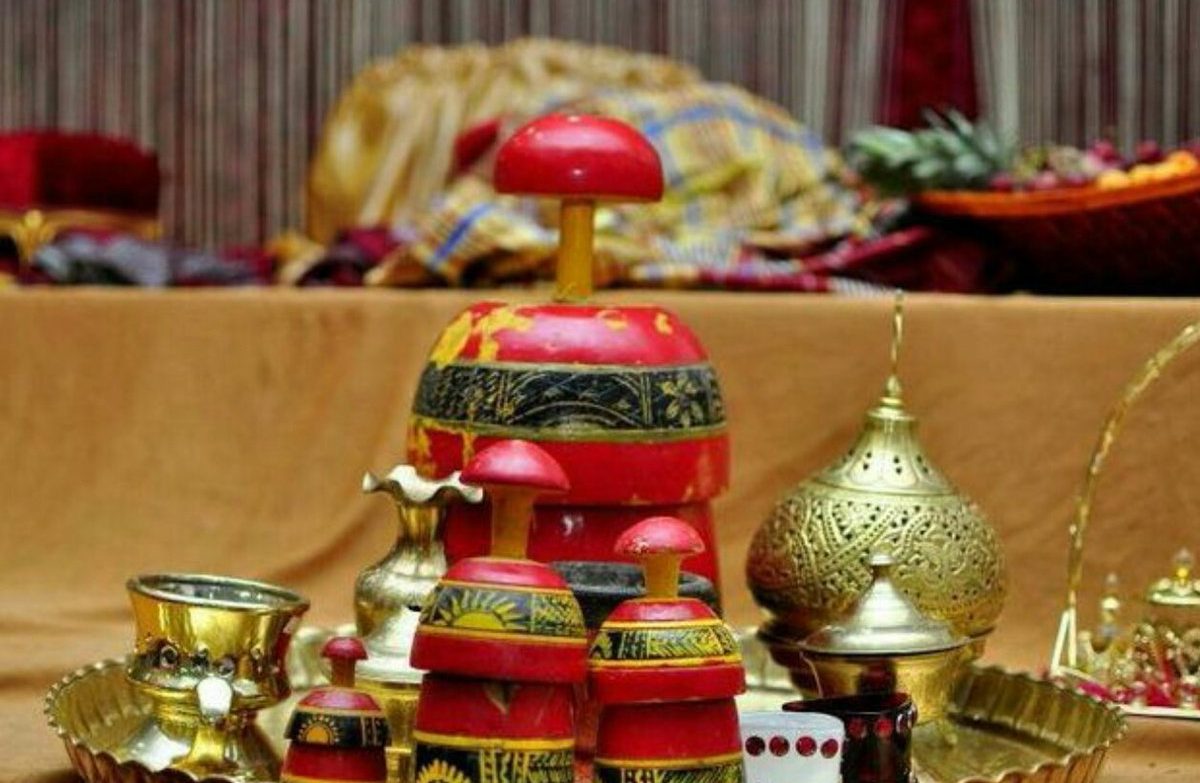 🇸🇩 SudanJirtigالجَرْتِقْ
A Sudanese wedding ritual of regal adornment, protection, and blessings of fertilityRite of passage
🇸🇩 SudanJirtigالجَرْتِقْ
A Sudanese wedding ritual of regal adornment, protection, and blessings of fertilityRite of passage