Jirtig
In its own language: الجَرْتِقْ
A Sudanese wedding ritual of regal adornment, protection, and blessings of fertility
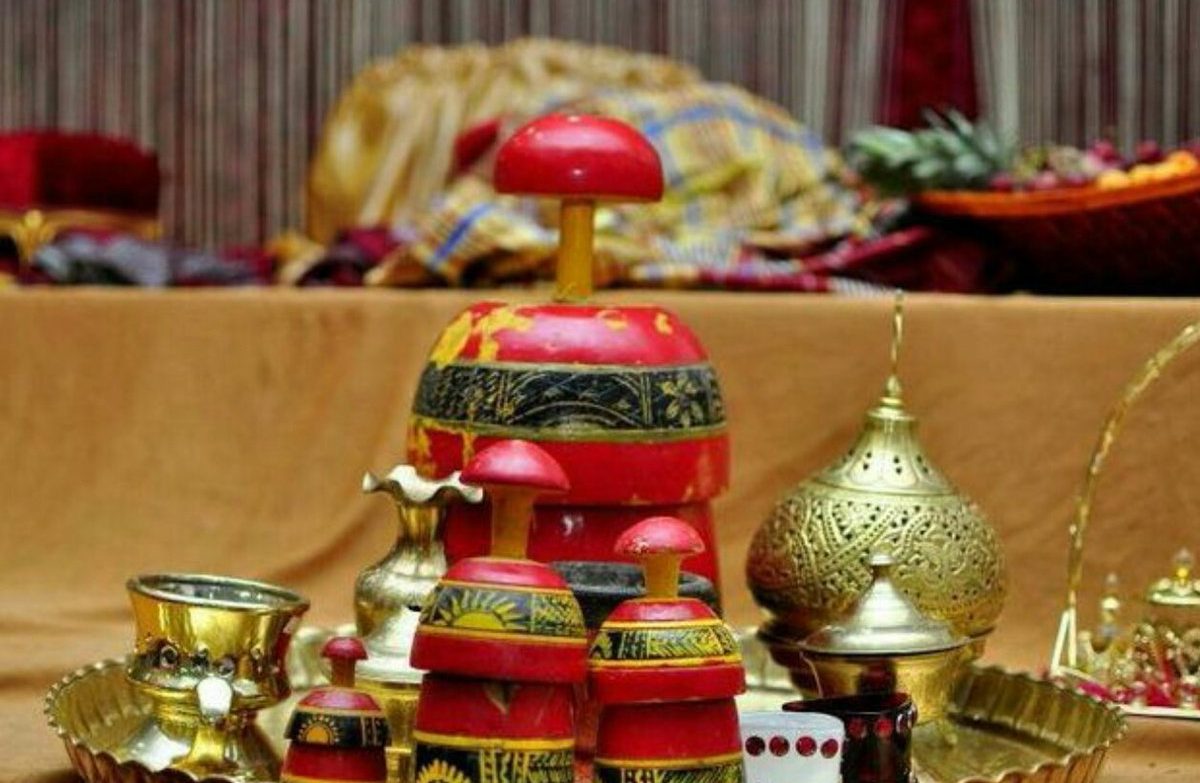
The jirtig is a Sudanese ceremonial custom held mainly during weddings to bestow protection, fertility, and royal honours on the couple. Practised along the Nile in northern and central Sudan, the ritual sees the bride and groom dressed in red, anointed with scented oils, and seated like royalty on an angarib bed.
When is Jirtig kept?
Jirtig is kept during wedding celebrations, boys' circumcisions, and the seventh month of pregnancy.
In Sudan, the jirtig turns a wedding into a royal coronation. Rooted in ancient Nubian traditions, this protective ceremony envelops the bride and groom in red garments, scented oils, and regal ornaments. Family members gather around the couple to ward off harm, celebrate fertility, and symbolically crown them as monarchs before their new shared life begins.
Origins in ancient Nubia
The customs of the jirtig trace back thousands of years to the civilisations of Kerma, Meroe, and Soba along the Nile. Archaeological finds, such as an engraved gold ring belonging to Queen Amanishakheto from the first century BCE, show figures wearing ritual crowns and holding ceremonial vessels in poses still recognisable today. Linguistic history suggests the word itself comes from Meroitic terms associated with kingship. Over successive eras, from Christian Nubia to the Islamic Funj period, communities kept these coronation symbols alive. UNESCO inscribed the custom in 2025 to safeguard its role in Sudanese cultural identity.
The ceremonial throne
Central to the ritual is the angarib, a traditional wooden bed woven with ropes. Once used in ancient royal and funerary rites, it serves as a throne during the wedding. A special red spread or carpet covers the bed, where the couple sits facing each other. Respected women from the family attend to the bride and groom, anointing their skin with perfumed oils and placing protective talismans upon them. Red fabric dominates the scene, reflecting ancient beliefs in protection against the evil eye and spiritual harm.
Regalia and adornment
Both partners wear clothes that mirror sovereign dignity. The bride wears an embroidered red and gold toub, while the groom dons fine royal attire. Ornaments play a vital role. Grooms wear headbands decorated with feathers or crescents, reminiscent of Meroitic royal headdresses. Necklaces of amber, coral, or precious beads, known as sumit, are fastened around the neck, alongside heavy bracelets. In several communities, the groom also carries a sword in its scabbard and a traditional whip, completing his role as a ruler stepping into his household.
Blessings and fertility rites
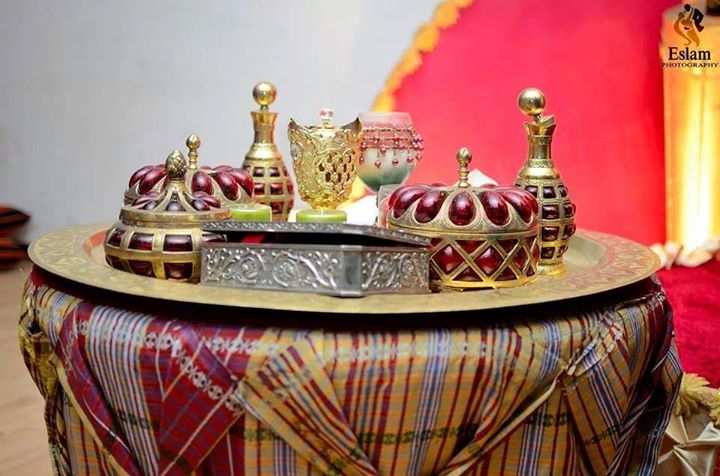
During the ceremony, symbolic items are exchanged to invite abundance and well-being. A tightly woven palm vessel called an umrah is used to share milk, an offering linked to peace and good fortune. Plates piled with grains, legumes, and dates are presented to signify fertility in the coming marriage. By deliberately matching colours and styles, the ritual also blurs gender distinctions in dress, an ancient safeguard intended to shield both partners from harm as they transition into family life.
How Jirtig is kept
The ceremony takes place at the groom's family home before he journeys to his bride's household. The couple sits upon an angarib bed covered in red fabric. Trusted female relatives apply fragrant oils to their skin and present them with symbolic jewellery, including sumit bead necklaces and headbands. Relatives present woven palm bowls of milk alongside plates of dates, grains, and legumes as offerings for fertility and auspicious beginnings. At the conclusion, the groom rises carrying a sword and whip, formally assuming his role before the celebration continues.
When and where
The jirtig takes place during wedding festivities, usually just before the groom departs for the bride's family home. Beyond marriages, smaller versions of the ritual are sometimes observed during the seventh month of pregnancy or at a boy's circumcision.
Practised across Sudan, the custom is concentrated in central and northern regions along the Nile River. It is maintained by Nubian and riverine communities such as the Danagla, Ja'aliyin, Rubatab, Mirfab, Manasir, and Shaigiya.
What Jirtig means
The ritual represents the symbolic crowning of the bride and groom as monarchs of their new household. Wearing red garments and matching ornaments offers protection against harm and misfortune. Offerings of milk, dates, and agricultural grains invoke fertility, prosperity, and auspicious beginnings, tying the new couple to centuries of Nile heritage.
On the table
- Milk
- Dates
- Grains
- Legumes


Questions people ask about Jirtig
When is Jirtig kept?
Jirtig is kept during wedding celebrations, boys' circumcisions, and the seventh month of pregnancy.
What is the Jirtig?
The jirtig is a traditional Sudanese ritual rooted in ancient Nubian coronation ceremonies. Celebrated mainly during weddings, it symbolically installs the bride and groom as monarchs through red garments, scented oils, and protective adornments.
Where is the Jirtig practised?
The tradition is kept throughout northern and central Sudan along the Nile River. It is especially prominent among Nubian and riverine groups including the Danagla, Ja'aliyin, Rubatab, Mirfab, Manasir, and Shaigiya.
What objects are used during the ceremony?
The ritual uses an angarib wooden bed covered in red fabric, beaded sumit necklaces, headbands with feathers, bracelets, swords, and whips, alongside palm bowls filled with milk and plates of dates and grains.
On what occasions is the Jirtig held?
While primarily a marriage ritual, elements of the jirtig are also performed during a boy's circumcision and in the seventh month of a woman's pregnancy.
See also


Good reading and sources
- Jirtig on WikipediaEncyclopedia
- More photos on Wikimedia CommonsPhotos and video
- Wikidata recordOpen data
The facts on this page come from the Wikipedia article "Jirtig", written by its contributors and used under the CC BY-SA 4.0 licence, and from its Wikidata record (CC0). EveryParampara rewrote the text in its own words, with AI assistance, and compares every page with the article to make sure no passage is copied. It may be reused under the same CC BY-SA 4.0 licence with a link back.
It may contain mistakes. Traditions differ from one family, village and community to the next, and the people who keep them know them best. If something is wrong, tell us. Last refreshed 2026-10-04.
More from Sudan
All the traditions of Sudan 🇿🇦 Cape Town, South Africa and 5 moreTooth ablation
A global custom of deliberately removing healthy teeth for social, ritual, or aesthetic reasons.Rite of passage
🇸🇦 Mecca, Saudi Arabia and 2 moreBay'ahبَيْعَة
An Islamic oath of allegiance pledged to a ruler or spiritual guideCeremony
🇿🇦 Cape Town, South Africa and 5 moreTooth ablation
A global custom of deliberately removing healthy teeth for social, ritual, or aesthetic reasons.Rite of passage
🇸🇦 Mecca, Saudi Arabia and 2 moreBay'ahبَيْعَة
An Islamic oath of allegiance pledged to a ruler or spiritual guideCeremony
 🇴🇲 Salalah, Oman and 3 moreKhareefخَرِيْف
The monsoon season of Dhofar and Al Mahrah, welcomed with a festival in SalalahSeasonal
🇴🇲 Salalah, Oman and 3 moreKhareefخَرِيْف
The monsoon season of Dhofar and Al Mahrah, welcomed with a festival in SalalahSeasonal
 🇪🇬 Luxor, Egypt and 1 moreMelaya leff
A traditional wrapped Egyptian mantle once worn for modesty and now famous on stageDress
🇪🇬 Luxor, Egypt and 1 moreMelaya leff
A traditional wrapped Egyptian mantle once worn for modesty and now famous on stageDress
The same idea elsewhere
Weddings compared 🇪🇸 SpainThe Water of LifeL'aigua de vida
A Catalan folk tale of a quest for magic water, a fragrant branch and a talking birdPerformance
🇪🇸 SpainThe Water of LifeL'aigua de vida
A Catalan folk tale of a quest for magic water, a fragrant branch and a talking birdPerformance
 🇮🇩 Bali, Indonesia and 5 moreIkat
A resist-dyeing craft from Southeast Asia, where yarns are tied and dyed before weavingCraft
🇮🇩 Bali, Indonesia and 5 moreIkat
A resist-dyeing craft from Southeast Asia, where yarns are tied and dyed before weavingCraft
 🇨🇳 China and 2 moreChinese knotting中國結 (Zhōngguó jié)
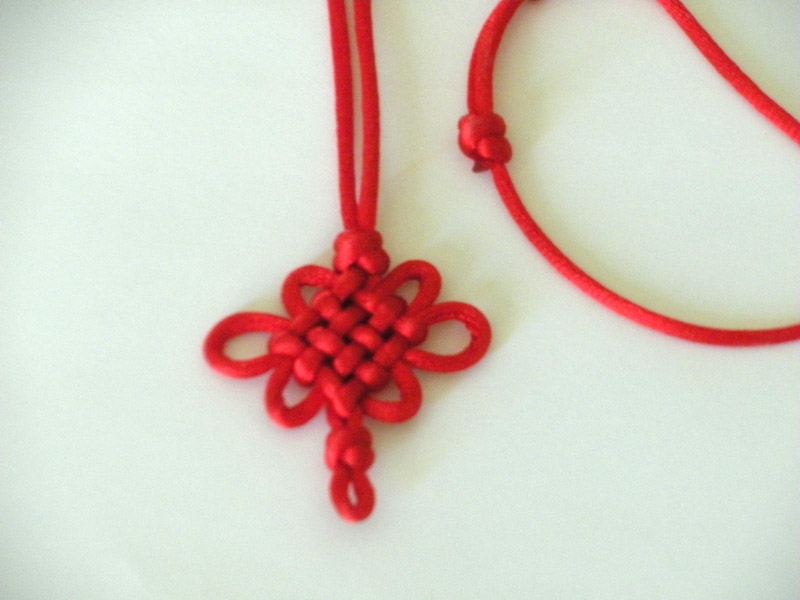
A folk craft of cord tied into lucky shapes, made in China and given as charmsCraft
🇨🇳 China and 2 moreChinese knotting中國結 (Zhōngguó jié)
A folk craft of cord tied into lucky shapes, made in China and given as charmsCraft
 🇱🇰 Kandy, Sri LankaKandyan danceඋඩරට නැටුම්
The sacred dance of Sri Lanka's hill country, kept in temple and on the stagePerformance
🇱🇰 Kandy, Sri LankaKandyan danceඋඩරට නැටුම්
The sacred dance of Sri Lanka's hill country, kept in temple and on the stagePerformance