Music, dance and storytellingEast Asia
Komagaku
In its own language: 高麗楽
Court music and dance from Japan's imperial tradition, played on bamboo flute and drums
Komagaku is one of the styles of gagaku, the music performed at the Japanese imperial court. It took shape in the early Heian period from material brought to Japan from Koguryeo and other Korean kingdoms, and today it is heard mostly as accompaniment for masked court dances.
Komagaku is one strand of gagaku, the music kept at Japan's imperial court. It is played on wind and percussion instruments only, with no plucked strings, which sets it apart from togaku. Its melodies trace back to music carried to Japan from Koguryeo and the other Korean kingdoms, reworked at the court in the early Heian period. Today it is heard mainly as music for bugaku, the masked court dance.
What it is
Komagaku is one branch of gagaku, the music of the Japanese imperial court. What marks it off from the other branches is the ensemble: it uses winds and drums, and leaves out the plucked strings heard elsewhere. Its pieces sit beside the court dances rather than standing alone, and the dance is usually where a listener meets them. The style draws its name and much of its melodic material from Koguryeo, one of the Korean kingdoms, though it was the Japanese court that shaped it into a fixed repertoire. A second gagaku branch, togaku, invites comparison, because the two differ in sound.
Origins and history
The style belongs to the early Heian period, when the court reorganized the music it had inherited and set it into formal categories. Music that had arrived from the Korean peninsula and nearby regions was sorted, renamed and folded into an official repertoire for the palace. A set of pieces traced to Koguryeo and to the other Korean kingdoms was known together as sankangaku, and komagaku grew out of that group. Two things gave the new category its shape: where its music came from, and which instruments played it. From then on it stayed close to particular ceremonies and dances of the imperial court.
Instruments and sound
A komagaku ensemble is made up of wind and percussion only. The komabue, a transverse bamboo flute, carries the melodic line. Three drums sit alongside it: the taiko, the kakko and the shōko. With no plucked string instrument in the group, the blend of sound differs from togaku, the other large gagaku style, where strings have a place. Rhythms tend to be lively, with firm percussive patterns, a quality that suits their use behind dancing.
Dance and performance
Most often komagaku is played for bugaku, the court dance. The dancers wear masks and elaborate costumes, and their movement is energetic and stylized, matched to the brisk drumming. These performances were once given at ceremonies of the imperial court, and they have continued in that setting. Imperial and cultural institutions in Japan are the bodies that preserve both the music and the dance today. Because the two are so tightly joined, a piece is usually understood as part of a staged ceremony rather than as concert music on its own.
Repertoire and change
Compared with the other gagaku styles, komagaku holds a small number of pieces. Many of them are thought to carry musical structures that came from ancient Korean court music, though centuries of use in Japan have altered them. The melodies were adapted as the court repertoire settled, so what survives is a Japanese reading of an older import rather than a copy of it. The tradition has stayed small and closely held, kept within the institutions responsible for the court's music.
How Komagaku is kept
The keepers are court musicians and dancers working within Japan's imperial and cultural institutions. In a performance the wind and percussion players take their places, the drums set a firm beat, and the flute lays out the melody. Masked dancers in elaborate costume then move through stylized, energetic steps timed to the music. What was once part of court ceremony is still staged in that setting, so the pieces are heard within a ceremony or a dance programme rather than as free-standing concert items.
When and where
Komagaku belongs to Japan, where it grew out of the court music system and remains part of it. Its home is the imperial court, and it is kept alive there by imperial and cultural institutions. The melodic material it draws on came from Koguryeo and other regions of the Korean peninsula, but the style itself took shape in Japan and is performed there.
What Komagaku means
For those who keep it, komagaku stands for a particular line of the court's musical inheritance. Its identity rests on two things the tradition itself marks: where the melodies came from, the Korean kingdoms, and how they are played, with winds and drums rather than strings. That pairing shapes how the style is set apart from togaku and why it belongs with the masked dances of the court.
Questions people ask about Komagaku
What is komagaku?
It is one style of gagaku, the music of the Japanese imperial court. Komagaku is built on wind and percussion instruments, with no plucked strings, and it is usually played as accompaniment for court dances, above all bugaku.
Where is it kept?
In Japan, at the imperial court and in the cultural institutions that preserve the court's music. The style took shape there in the early Heian period, and its melodies draw on music brought from Koguryeo and other Korean kingdoms.
Which instruments does it use?
The komabue, a transverse bamboo flute, along with the taiko, kakko and shōko drums. Plucked string instruments are left out entirely, and that choice gives komagaku a sound of its own next to togaku.
When is it performed?
It has no fixed date of its own. Komagaku was historically presented at court ceremonies, and it survives today mainly as accompaniment to bugaku, the court dance, in performances maintained by imperial and cultural institutions in Japan.
See also
 IkebanaThe Japanese art of arranging cut branches and flowers in a vessel
 RakugoJapanese solo comic storytelling told from a cushion using a fan and a cloth
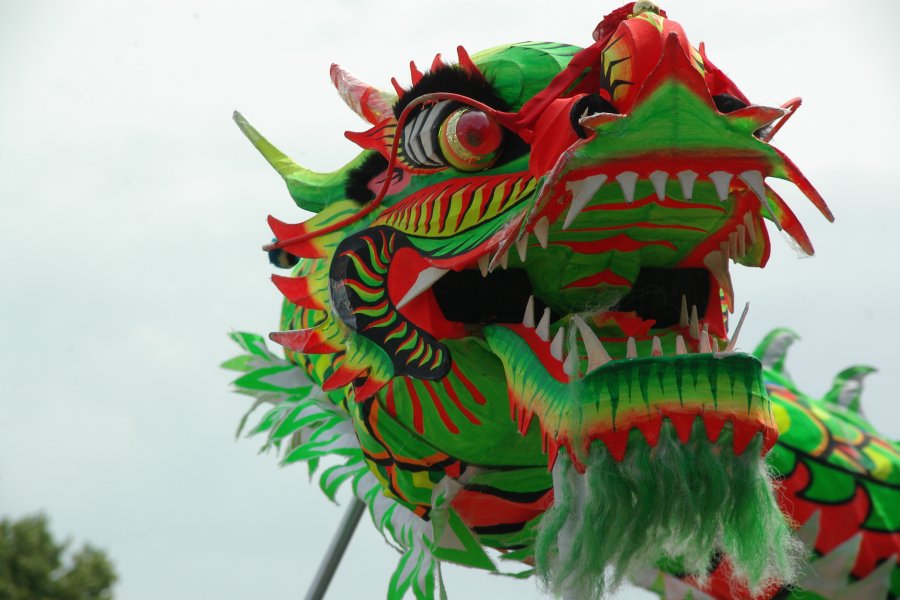 Dragon danceA long dragon puppet on poles, danced by a team at Chinese New Year and other festivals
 KyōgenA traditional Japanese comic theatre of short farces, spoken dialogue and satire
Good reading and sources
- Komagaku on WikipediaEncyclopedia
- More photos on Wikimedia CommonsPhotos and video
- Wikidata recordOpen data
The facts on this page come from the Wikipedia article "Komagaku", written by its contributors and used under the CC BY-SA 4.0 licence, and from its Wikidata record (CC0). EveryParampara rewrote the text in its own words, with AI assistance, and compares every page with the article to make sure no passage is copied. It may be reused under the same CC BY-SA 4.0 licence with a link back.
It may contain mistakes. Traditions differ from one family, village and community to the next, and the people who keep them know them best. If something is wrong, tell us. Last refreshed 2026-10-12.
More from Japan
All the traditions of Japan 🇨🇳 China and 5 moreLion dance舞獅
A dynamic ritual dance featuring costumed lions, drums and martial acrobaticsPerformance
🇯🇵 Kyoto, JapanKyōgen狂言
A traditional Japanese comic theatre of short farces, spoken dialogue and satirePerformance
🇯🇵 Tokyo, JapanRakugo落語
Japanese solo comic storytelling told from a cushion using a fan and a clothPerformance
🇨🇳 China and 3 moreDragon dance舞龍 / 舞龙
A long dragon puppet on poles, danced by a team at Chinese New Year and other festivalsPerformance
🇨🇳 China and 5 moreLion dance舞獅
A dynamic ritual dance featuring costumed lions, drums and martial acrobaticsPerformance
🇯🇵 Kyoto, JapanKyōgen狂言
A traditional Japanese comic theatre of short farces, spoken dialogue and satirePerformance
🇯🇵 Tokyo, JapanRakugo落語
Japanese solo comic storytelling told from a cushion using a fan and a clothPerformance
🇨🇳 China and 3 moreDragon dance舞龍 / 舞龙
A long dragon puppet on poles, danced by a team at Chinese New Year and other festivalsPerformance
The same idea elsewhere
All of this kind 🇵🇭 Philippines and 1 morePangalay
A traditional fingernail dance of the Tausūg and Bajau peoples in the Sulu Archipelago and Sabah.Performance
🇵🇭 Philippines and 1 morePangalay
A traditional fingernail dance of the Tausūg and Bajau peoples in the Sulu Archipelago and Sabah.Performance
 🇮🇳 Jammu, IndiaBhangra
A Punjabi harvest dance, first kept by farmers and now performed worldwidePerformance
🇮🇳 Jammu, IndiaBhangra
A Punjabi harvest dance, first kept by farmers and now performed worldwidePerformance
 🇺🇦 Kyiv, UkraineBanduraБандура
A Ukrainian plucked string instrument played to accompany epic songs and folk balladsPerformance
🇦🇴 Luanda, Angola and 2 moreKuduro
An energetic Angolan music and dance style born in Luanda that mixes African rhythms with electronic beats.Performance
🇺🇦 Kyiv, UkraineBanduraБандура
A Ukrainian plucked string instrument played to accompany epic songs and folk balladsPerformance
🇦🇴 Luanda, Angola and 2 moreKuduro
An energetic Angolan music and dance style born in Luanda that mixes African rhythms with electronic beats.Performance