Music, dance and storytellingEast AsiaBuddhistSecular and civic
Lion dance
In its own language: 舞獅
A dynamic ritual dance featuring costumed lions, drums and martial acrobatics

Performed across China and East and Southeast Asia, the lion dance combines energetic martial steps, loud percussion and vivid animal costumes. Troupe members mimic a lion to drive away bad spirits and welcome good fortune at new year celebrations and festive gatherings.
When is Lion dance marked?
Lion dance is kept as part of Lunar New Year, which runs from 7 to 21 February 2027.
The lion dance is an energetic performance tradition found throughout China and across many diaspora communities. Dancers wear elaborate lion suits, mimicking the animal's antics and agile leaps to clear out evil influences and usher in prosperity. Accompanied by loud drums, gongs and cymbals, the spectacle regularly enlivens Lunar New Year gatherings, weddings, cultural festivals and grand business launches.
Origins and history
Lions are not native to China, having arrived historically through diplomatic gifts and trade along Central Asian routes from regions like Persia. Masked animal performances had existed in Chinese antiquity, but the lion dance gradually took distinct shape during early imperial eras. Third-century records mention lion acts, and sixth-century Buddhist temple parades in Luoyang featured lions clearing the route of evil spirits. By the Tang dynasty, the dance flourished at court as grand musical entertainment with dozens of attendants, while poet Bai Juyi described performers wearing wooden lion heads with gilded eyes and moving ears.
Northern and southern styles
Over centuries, two prominent branches emerged. The Northern Lion, often appearing in male and female pairs, resembles a playful guardian dog with shaggy red and yellow fur. These troupes highlight tumbling, balancing on elevated spheres, and scaling towers of wooden benches. In contrast, the Southern Lion arose in Guangdong, featuring a single horn linked to the legendary monster Nian. Craftsmen build Southern lion heads using papier-mâché over bamboo frames. Its major styles include Fo Shan, tied closely to kung fu schools, and Hok San, designed with feline grace.
Music and martial movement
A standard performance demands close coordination between two dancers under one fabric body. The lead performer holds the head, pulling levers to blink the eyes, wiggle ears, and snap open the jaws, while the second performer arches beneath the tail. Dancers train extensively in martial stances to execute swift charges, balance atop narrow platforms, and lift the lead dancer overhead. The entire routine follows a driving acoustic rhythm played live on large drums, brass cymbals and ringing gongs, matching the lion's changing emotions from curiosity to fierce bravery.
Global spread and local forms
Emigration from southern Chinese provinces introduced the Southern Lion across Southeast Asia, establishing enduring strongholds in Malaysia, Singapore and Indonesia. In Singapore, local guilds created new hybrid variations such as Fut-Hok. Distinct sister traditions also developed across East Asia, including the shishimai of Japan and sajachum in South Korea, alongside Vietnamese styles. Regional groups in China have their own adaptations, such as the Green Lion of Fujian, the Wen Lion among Henan Muslim communities, and mythical beast dances like the Hakka Qilin dance.
How Lion dance is kept
A performance begins with musicians establishing a pulsing rhythm on a drum, cymbals, and a gong. Two dancers inside the lion suit move in sync: the lead dancer handles the head, working the eyelids and mouth, while the rear dancer controls the back and tail. Following the percussion, the lion expresses moods such as curiosity, sleepiness, or anger. Performers execute low martial stances, leap onto raised platforms or wooden benches, and perform acrobatic shoulder lifts to delight onlookers and scatter blessings across the venue.
When and where
The dance is most prominent during Lunar New Year festivities to open the year with auspicious energy. Troupes also perform throughout the calendar year for temple celebrations, weddings, and commercial shop launches.
Practised widely across mainland China and Taiwan, the tradition is especially strong in Guangdong. Chinese diaspora communities maintain active troupes throughout Southeast Asia, particularly in Malaysia and Singapore, alongside parallel traditions in Japan and Vietnam.
What Lion dance means
To those who perform and watch it, the lion embodies courage, power and good fortune. In folk belief, the roaring creature and loud percussive music frighten away evil spirits and negative energy. Welcoming a lion dance to a home, festival, or business is believed to bestow prosperity, harmony and good luck on the community.


Days Lion dance is marked
Questions people ask about Lion dance
When is Lion dance marked?
Lion dance is kept as part of Lunar New Year, which runs from 7 to 21 February 2027.
What is the lion dance?
The lion dance is a traditional East Asian performance where two acrobatic dancers animate a lion costume to drum and cymbal rhythms. It is staged to repel bad luck and attract prosperity.
How does it differ from the dragon dance?
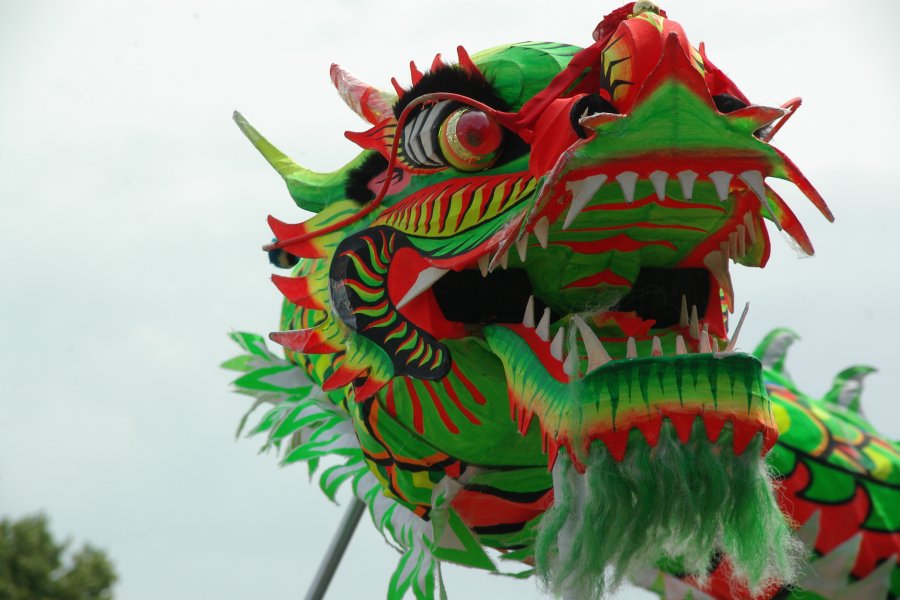
A lion dance is animated by two dancers inside one costume using martial arts footwork. A dragon dance involves a much longer fabric creature manipulated by an entire line of performers on poles.
What are the main styles of lion dance?
The two primary Chinese forms are the Northern Lion, known for acrobatic balancing and shaggy fur, and the single-horned Southern Lion, which uses martial postures and includes the Fo Shan and Hok San styles.
See also
 BarongA sacred Balinese masked dance drama depicting the eternal struggle of good and evil
 ShehnaiA traditional reed instrument played at weddings and temple festivals across India
 HalloweenAn annual observance on 31 October marking the eve of All Saints' Day, rooted in Christian tradition and Celtic heritage
 DiwaliA five-day festival of lights celebrated across India and its diaspora to mark the victory of light over darkness.
Good reading and sources
- Encyclopaedia BritannicaArticle
- Who will be The Lion (dance) King?The Straits Times, Article
- Who will be The Lion (dance) King?The Straits Times, Article
- Lion dance on WikipediaEncyclopedia
- More photos on Wikimedia CommonsPhotos and video
- Wikidata recordOpen data
The facts on this page come from the Wikipedia article "Lion dance", written by its contributors and used under the CC BY-SA 4.0 licence, and from its Wikidata record (CC0). EveryParampara rewrote the text in its own words, with AI assistance, and compares every page with the article to make sure no passage is copied. It may be reused under the same CC BY-SA 4.0 licence with a link back.
It may contain mistakes. Traditions differ from one family, village and community to the next, and the people who keep them know them best. If something is wrong, tell us. Last refreshed 2026-10-04.
More from China
All the traditions of China 🇦🇴 Luanda, Angola and 4 moreKizomba
A close, slow couple dance from Angola, named after a Kimbundu word for partyPerformance
🇦🇴 Luanda, Angola and 4 moreKizomba
A close, slow couple dance from Angola, named after a Kimbundu word for partyPerformance
 🇨🇳 China and 3 moreDragon dance舞龍 / 舞龙
A long dragon puppet on poles, danced by a team at Chinese New Year and other festivalsPerformance
🇨🇳 China and 3 moreDragon dance舞龍 / 舞龙
A long dragon puppet on poles, danced by a team at Chinese New Year and other festivalsPerformance
 🇨🇳 Yining, China and 1 moreMeshrepمەشرەپ
A Uyghur gathering of music, poetry, dance and moral counsel at harvest and weddingsPerformance
🇨🇳 Yining, China and 1 moreMeshrepمەشرەپ
A Uyghur gathering of music, poetry, dance and moral counsel at harvest and weddingsPerformance
 🇨🇳 China and 5 moreShadow play
A storytelling art using flat puppets and light to cast moving silhouettes on a screen.Performance
🇨🇳 China and 5 moreShadow play
A storytelling art using flat puppets and light to cast moving silhouettes on a screen.Performance
The same idea elsewhere
New Year compared 🇮🇩 IndonesiaSlametan
A short communal meal on Java where neighbours share food, prayer and a wish for peaceSpiritual · Feasts and festival meals
🇮🇩 IndonesiaSlametan
A short communal meal on Java where neighbours share food, prayer and a wish for peaceSpiritual · Feasts and festival meals
 🇷🇺 Russia and 5 moreBread and saltхлеб-соль
Bread and salt offered to a guest: a welcome kept from Russia to AlbaniaEtiquette
🇷🇺 Russia and 5 moreBread and saltхлеб-соль
Bread and salt offered to a guest: a welcome kept from Russia to AlbaniaEtiquette
 🇮🇳 India and 2 morePandal
Temporary decorated pavilions and arches built for festivals and gatheringsFestival
🇮🇳 India and 2 morePandal
Temporary decorated pavilions and arches built for festivals and gatheringsFestival
 🇮🇳 India and 5 moreKolamகோலம்
A rice-flour floor drawing made at South Indian doorsteps before sunriseCraft
🇮🇳 India and 5 moreKolamகோலம்
A rice-flour floor drawing made at South Indian doorsteps before sunriseCraft