Music, dance and storytellingEast AsiaBuddhistShinto, Taoist and folk Chinese
Ikebana
In its own language: 生け花
The Japanese art of arranging cut branches and flowers in a vessel

Ikebana is the Japanese art of arranging flowers in a container, also called kadō, the way of flowers. It grew out of older practices, evergreen trees dressed with blossoms to invite the gods, and flowers laid at Buddhist altars, and it is still taught in schools, mostly based in Japan, where an arrangement follows the season.
When is Ikebana kept?
Ikebana is kept on all year round, each arrangement chosen for the season at hand.
Ikebana is a Japanese practice of arranging cut branches, leaves and flowers in a container so that the whole thing reads as a scene. People keep it as an art and as a discipline: it asks for attention to season, line and balance. The name means roughly giving life to flowers, and those who follow it are called kadōka.
What it is
Ikebana is the Japanese art of arranging flowers, known too as kadō, the way of flowers. Cutting and placing are only part of it: an arrangement is meant to hold the season and the maker's intention. Along with kōdō, the appreciation of incense, and chadō, the way of tea, it belongs to a small group of refined arts that Japanese tradition prizes. The word itself joins ikeru, to arrange or to be living, with hana, flower, so it carries the sense of bringing blossoms to life rather than simply putting them in a vase.
Older roots
Long before schools and rules, people in Japan set evergreen trees in place and dressed them with blossoms. These were yorishiro, a resting place meant to draw the gods near. Aristocrats also watched plants change through the year, and the Heian-period poetry collections Man'yōshū and Kokin Wakashū hold many verses about flowers. When Buddhism arrived, blossoms were laid on altars, and in Japan the choice fell on native flowers of each season rather than the lotus favoured in India, where that religion began. For a long stretch these offerings simply stood in vases, with no system behind them.
First systems
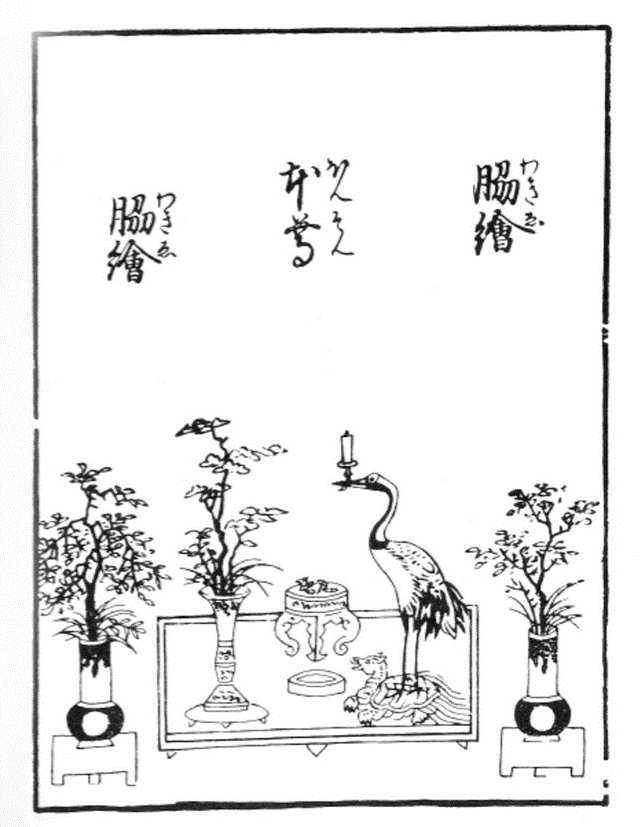
Early arrangements followed a plan called shin-no-hana, the central flower. A tall pine or cryptomeria branch stood upright in the middle, with three or five flowers of the season set around it, and no curve was added by hand. Such symmetrical scenes, recorded in religious paintings in the fourteenth century, read as landscape: the big tree for distance, plum or cherry for the middle ground, small flowering plants for the near view. In the Kamakura and Nanboku-chō periods, three objects, a candle, a censer and a vase of flowers, were set together as mitsu-gusoku before Buddhist altars. The earliest arrangement style, tatebana or standing flowers, grew from such settings.
Schools and styles
The eighth shōgun, Ashikaga Yoshimasa, who lived from 1436 to 1490, supported the arts and did much to spread both the tea ceremony and flower arranging. He stepped down from office to give his time to them, and set out ideas that later became rules, among them that flowers offered on ceremonial occasions should carry time and thought rather than being tossed down loosely. His friend, the painter Sōami, pictured an arrangement as heaven, human and earth, a scheme many schools still use. Two broad styles emerged: rikka, formal and decorative, and nageirebana, looser and more natural. Printed manuals followed in the seventeenth century, among them the Sendenshō, said to be the oldest.
Today and beyond
There are many schools of ikebana, each usually led by an iemoto, a headship often handed down through one family. The oldest, Ikenobō, traces its start to the eighth century, in the Heian period. The best known today include Ikenobō, Enshū-ryū and Mishō-ryū, while teachers in Tokyo and Kyoto also pass on the plainer forms of Ko-ryū and Ko-Shin-ryū. Ikebana International, formed in 1956, is the oldest organisation of its kind, with Princess Takamado as honorary president. Practitioners include Toshiro Kawase, whose online project One Day, One Flower began after the 2011 earthquake and tsunami, and the actress Marcia Gay Harden.
How Ikebana is kept
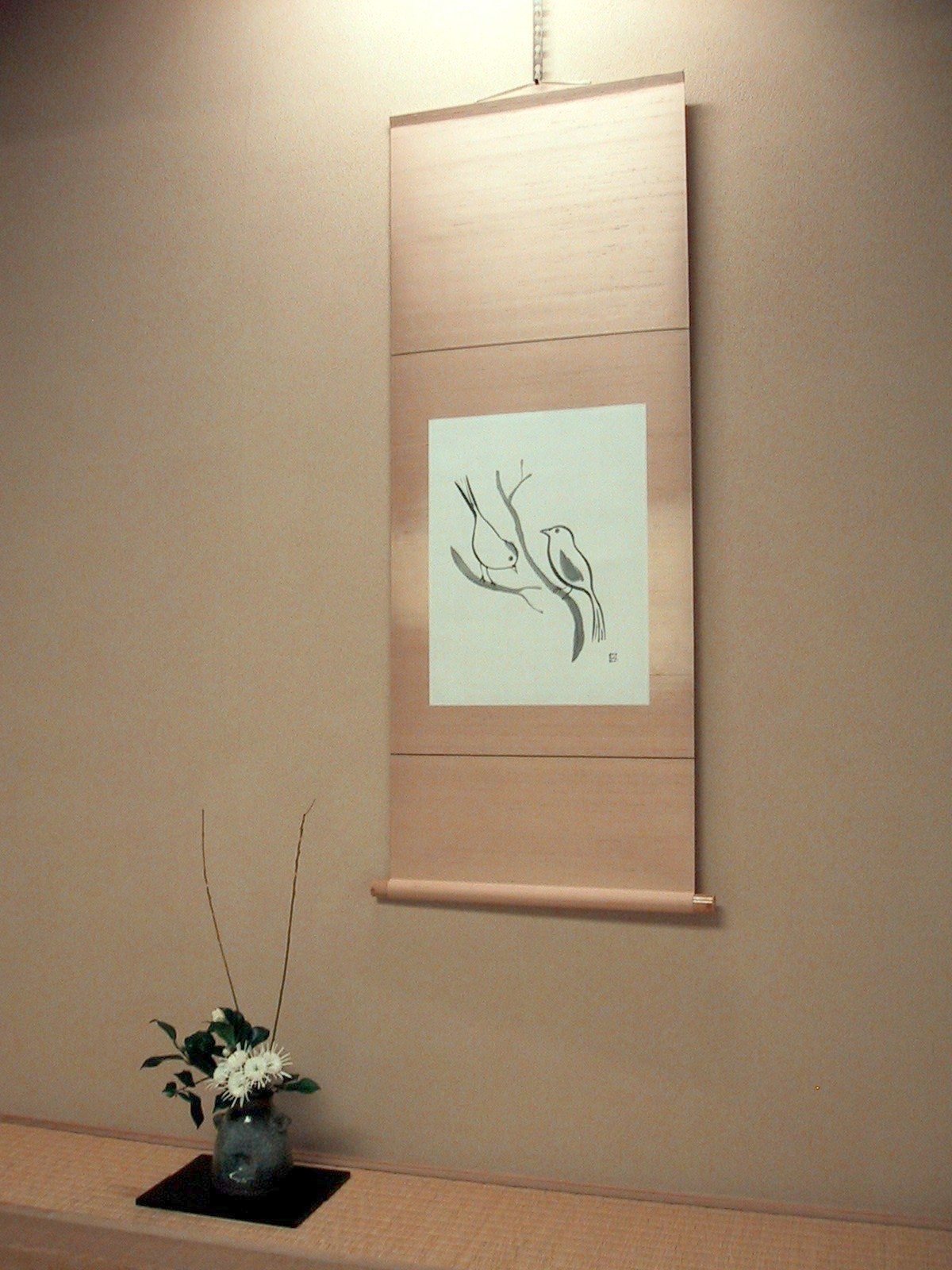
Those who follow ikebana are kadōka, and a teacher is addressed as sensei. A student learns within a school, working under a master and often taking years over the basic forms. An arrangement is built in a container, with branches and stems set in upright or angled lines, and the flowers chosen are usually those in season. Where a home has a tokonoma, an alcove for display, the finished work may stand there. Practice is quiet and deliberate: records note that celebrated Japanese generals took it up and found it calmed their minds.
When and where
Ikebana has no single date in the year. It is practised the whole year round, and the calendar shows up in the choice of material, since an arrangement is meant to match whichever season is at hand. Each school sets its own occasions for exhibitions and ceremonies, so the timing varies from one group to another.
The practice belongs to Japan and is strongest there, above all in Kyoto, where it was developed at the Silver Pavilion, and in Tokyo, where many masters teach. Schools based in Japan have members in other countries, and Ikebana International, founded in 1956, links practitioners abroad, including a chapter in Washington, DC.
What Ikebana means
The oldest layer of meaning is religious. Evergreen branches dressed with blossoms served as yorishiro, a seat to invite the gods, and flowers laid before Buddhist altars were offerings rather than decoration. Ashikaga Yoshimasa held that blossoms given on ceremonial days should stand for time and thought, not be placed carelessly. Sōami's scheme of heaven, human and earth gives an arrangement a small ordered world, and many schools still build their forms on those three parts.


Questions people ask about Ikebana
When is Ikebana kept?
Ikebana is kept on all year round, each arrangement chosen for the season at hand.
What is ikebana?
It is the Japanese art of arranging cut flowers and branches in a container. The word joins ikeru, to arrange or to be living, with hana, flower, and the practice is also called kadō, the way of flowers. The aim is an arrangement that holds the season and the maker's intention.
Where did it begin?
In Japan. Its roots lie in the old custom of setting evergreen trees in place and dressing them with flowers as yorishiro, a spot to invite the gods, and in blossoms offered at Buddhist altars. The arranged forms grew out of those offerings.
Who practises it?
Practitioners are called kadōka and they learn within schools, each headed by an iemoto, a post often passed down in one family. Teachers take the title sensei. The oldest school, Ikenobō, traces itself to the eighth century, and members also join Ikebana International, formed in 1956.
What are rikka and nageirebana?
They are the two branches into which ikebana divided. Rikka is the older, more formal and decorative style, first used for room decoration on ceremonial occasions. Nageirebana is looser and closer to how plants grow, and in time it took the name ikebana.
See also
 KyōgenA traditional Japanese comic theatre of short farces, spoken dialogue and satire
 RakugoJapanese solo comic storytelling told from a cushion using a fan and a cloth
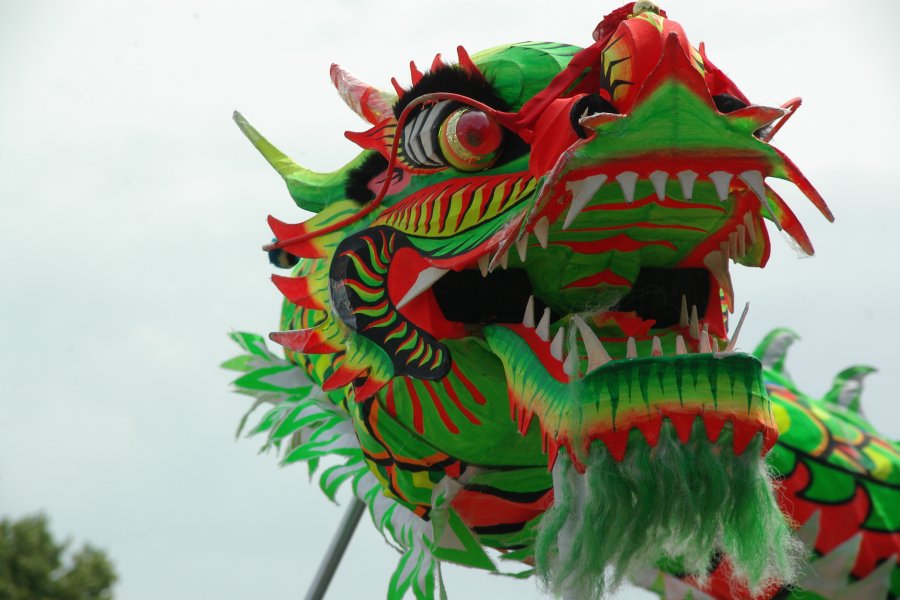 Dragon danceA long dragon puppet on poles, danced by a team at Chinese New Year and other festivals
 Lion danceA dynamic ritual dance featuring costumed lions, drums and martial acrobatics
Good reading and sources
- Ikebana on WikipediaEncyclopedia
- More photos on Wikimedia CommonsPhotos and video
- Wikidata recordOpen data
The facts on this page come from the Wikipedia article "Ikebana", written by its contributors and used under the CC BY-SA 4.0 licence, and from its Wikidata record (CC0). EveryParampara rewrote the text in its own words, with AI assistance, and compares every page with the article to make sure no passage is copied. It may be reused under the same CC BY-SA 4.0 licence with a link back.
It may contain mistakes. Traditions differ from one family, village and community to the next, and the people who keep them know them best. If something is wrong, tell us. Last refreshed 2026-10-05.
More from Japan
All the traditions of Japan
🇨🇳 China and 5 moreLion dance舞獅
A dynamic ritual dance featuring costumed lions, drums and martial acrobaticsPerformance
🇯🇵 Kyoto, JapanKyōgen狂言
A traditional Japanese comic theatre of short farces, spoken dialogue and satirePerformance
🇯🇵 Tokyo, JapanRakugo落語
Japanese solo comic storytelling told from a cushion using a fan and a clothPerformance
🇨🇳 China and 3 moreDragon dance舞龍 / 舞龙
A long dragon puppet on poles, danced by a team at Chinese New Year and other festivalsPerformance
The same idea elsewhere
All of this kind 🇹🇷 Kayseri, Turkey and 4 moreHalay
A traditional line and circle folk dance kept across Turkey, Azerbaijan, Armenia, Iran, and Syria.Performance
🇧🇷 BrazilBaião
A syncopated folk rhythm and partnered dance from northeastern BrazilPerformance
🇹🇷 Kayseri, Turkey and 4 moreHalay
A traditional line and circle folk dance kept across Turkey, Azerbaijan, Armenia, Iran, and Syria.Performance
🇧🇷 BrazilBaião
A syncopated folk rhythm and partnered dance from northeastern BrazilPerformance
 🇺🇦 Kyiv, UkraineBanduraБандура
A Ukrainian plucked string instrument played to accompany epic songs and folk balladsPerformance
🇺🇦 Kyiv, UkraineBanduraБандура
A Ukrainian plucked string instrument played to accompany epic songs and folk balladsPerformance
 🇳🇿 Auckland, New ZealandPoi
A Māori performing art of swinging tethered weights in rhythmical patterns.Performance
🇳🇿 Auckland, New ZealandPoi
A Māori performing art of swinging tethered weights in rhythmical patterns.Performance