Koningsmantel
The Dutch royal cloak of red velvet and ermine, brought out when a monarch is sworn in

One garment leads at a Dutch inauguration: a red velvet mantle lined with white ermine and worked with gold lions. Since Dutch sovereigns are installed by oath rather than crowned, the piece is called a royal mantle and not a coronation mantle, and King Willem-Alexander is the most recent wearer.
When is Koningsmantel kept?
Koningsmantel is kept on when a new Dutch monarch is inaugurated..
In the Netherlands a monarch is not crowned but inaugurated, and the Koningsmantel, or royal mantle, is the garment kept for that moment. It is red velvet on the outside and white ermine inside, with eighty-three lions stitched in gold. Nobody but the sovereign wears it, and no event but an inauguration calls for it, which is why the Dutch speak of a royal mantle rather than a coronation mantle.
What it is
The Koningsmantel is a mantle, a long cloak worn over other clothes. The one kept in the Netherlands is a red velvet coat lined with white ermine, and eighty-three lions are embroidered on it in gold thread. It has one purpose: the inauguration of a Dutch king or queen. The Dutch royal house installs its sovereigns with an oath instead of a crown, so the garment is a royal mantle and not a coronation mantle. It is not part of ordinary royal dress, and the accession of a monarch is the moment that brings it out.
The swearing-in
A Dutch inauguration is an oath-taking rather than a crowning, and the mantle belongs to that day. The incoming monarch swears the oath while wearing it over other dress. Amsterdam is the city where the ceremony is held. The most recent occasion was the inauguration of King Willem-Alexander, the reigning monarch, and he is the latest figure to have appeared in the garment. The article's bibliography shows how the subject has been studied: Elzinga on state ceremony and old traditions in a young monarchy from 1990, Fasseur on the young Queen Wilhelmina from 1998, and Grijpma on Dutch couturiers and their clients between 1882 and 2000.
Velvet, ermine and gold
Velvet is a soft cloth with a dense pile, and red velvet gives the mantle its colour. Ermine, the pale winter coat of the stoat, forms the lining, and the source describes the coat as trimmed as well as lined, so the white fur can be seen at the edges. Gold thread carries eighty-three lions, which the source calls Dutch lions, across the garment. Together the deep red cloth, the white fur and the shining animals give the mantle its strong red, white and gold appearance.
The latest mantle
King Willem-Alexander is the most recent monarch to wear the mantle. Among the article's external links is a headline from the Dutch newspaper de Volkskrant that described the version he wore as a poor copy, made with fur from a clothing chain. The article also points readers to a German page about the mantle of King William I of the Netherlands, which links the garment to older Dutch royal mantles. The bibliography, in turn, treats such clothing as part of the wider history of Dutch court dress and ceremony.
How Koningsmantel is kept
The monarch is the only person who wears the mantle. It appears when a new sovereign is installed: the incoming king or queen puts it on over other dress for the swearing-in, which is held in Amsterdam. Once the ceremony is over, the garment goes back to the royal collection and stays there until a reign ends and another monarch is inaugurated. Nothing in the rite involves a crown, since the Dutch hold an inauguration rather than a coronation.
When and where
The mantle has no fixed day in the year. It belongs to the inauguration of a new monarch, an event that comes only when a reign ends. Dutch sovereigns are installed by oath, and the garment is brought out for that ceremony alone.
The tradition belongs to the Netherlands, and Amsterdam is the city where the ceremony is held. Elsewhere the mantle is known mainly through photographs and news reports of the day. It is not part of ordinary royal dress; the inauguration is the occasion that brings it out.
What Koningsmantel means
The mantle marks a change of reign. When a monarch puts it on, the country watches a person take up the highest office in the kingdom, and the red velvet, white fur and gold lions carry that weight rather than a crown. Its name says something about the Dutch way of doing things: because there is no coronation, there is no coronation mantle either, and the plain word for a king's cloak is the one that fits.

Questions people ask about Koningsmantel
When is Koningsmantel kept?
Koningsmantel is kept on when a new Dutch monarch is inaugurated..
What is the Koningsmantel?
It is the royal mantle of the Netherlands, a cloak of red velvet lined with white ermine and embroidered with eighty-three gold lions. Dutch kings and queens wear it when they take office, and the source describes it as the garment kept for that ceremony.
Why is it not called a coronation mantle?
Because the Dutch never crown their sovereigns. A king or queen is installed through an inauguration and an oath instead, so the article says it is more accurate to name the garment a royal mantle.
What is it made of?
Red velvet forms the outer layer, white ermine lines it, and eighty-three lions are embroidered in gold thread. The source calls it a trimmed coat, so the pale fur shows at the edges as well as inside the garment.
Where does the ceremony take place?
Amsterdam is the city where the Dutch inauguration is held, and the Netherlands is the country the mantle belongs to. Outside that occasion the garment is known mostly from photographs and reports.
See also
 Twelfth NightThe closing evening of the Christmas season, kept with cake, carols and wassail
 Liberation DayA Dutch national holiday on 5 May marking the end of German occupation in 1945
 OmmegangMedieval town processions of the Low Countries, with giants, guilds and horses
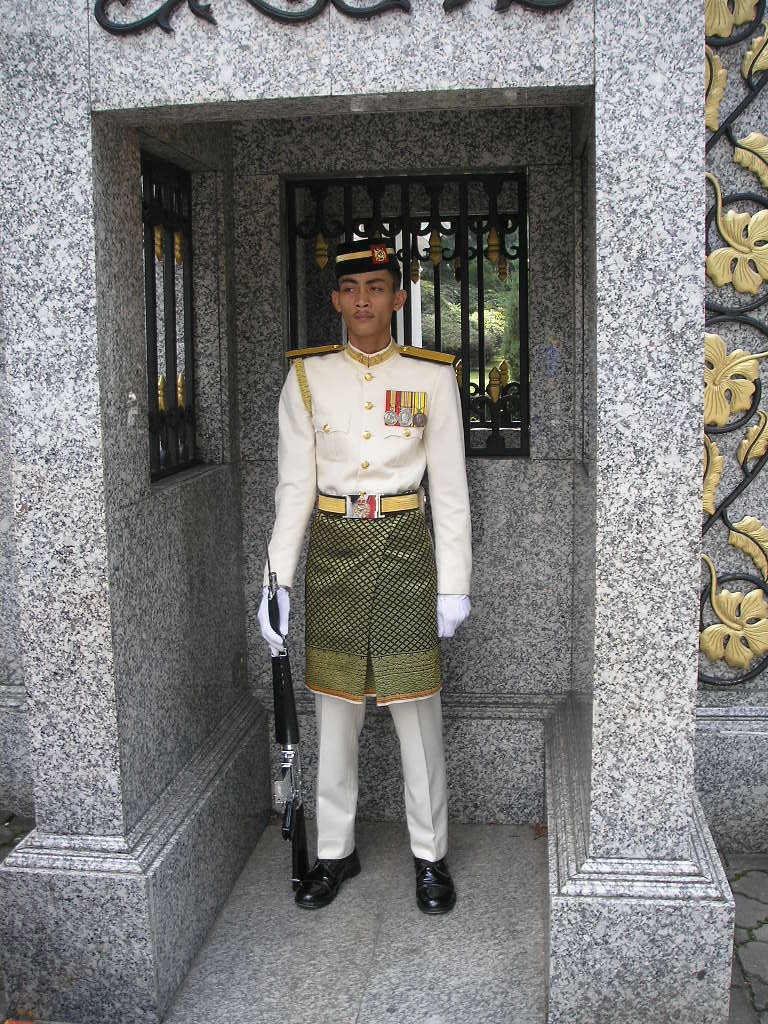 SampingA traditional Malay waist cloth worn over festive attire in Southeast Asia
Good reading and sources
- Koningsmantel (Netherlands) on WikipediaEncyclopedia
- More photos on Wikimedia CommonsPhotos and video
- Wikidata recordOpen data
The facts on this page come from the Wikipedia article "Koningsmantel (Netherlands)", written by its contributors and used under the CC BY-SA 4.0 licence, and from its Wikidata record (CC0). EveryParampara rewrote the text in its own words, with AI assistance, and compares every page with the article to make sure no passage is copied. It may be reused under the same CC BY-SA 4.0 licence with a link back.
It may contain mistakes. Traditions differ from one family, village and community to the next, and the people who keep them know them best. If something is wrong, tell us. Last refreshed 2026-10-10.
More from the Netherlands
All the traditions of the Netherlands
🇬🇧 United Kingdom and 5 moreTwelfth Night
The closing evening of the Christmas season, kept with cake, carols and wassailSpiritual · Feasts and festival meals
🇧🇪 Antwerp, Belgium and 2 moreOmmegangommegang (Dutch)
Medieval town processions of the Low Countries, with giants, guilds and horsesCeremony
🇳🇱 Wageningen, NetherlandsLiberation DayBevrijdingsdag
A Dutch national holiday on 5 May marking the end of German occupation in 1945Ceremony
 🇬🇧 United Kingdom and 5 moreMorris dance
A rhythmic English folk dance performed in costume with bells, sticks and handkerchiefsPerformance
🇬🇧 United Kingdom and 5 moreMorris dance
A rhythmic English folk dance performed in costume with bells, sticks and handkerchiefsPerformance
The same idea elsewhere
Royalty and coronation compared 🇮🇱 IsraelRosh Hashanahרֹאשׁ הַשָּׁנָה
The Jewish New Year marked by shofar horn blasts, prayer and sweet foodsSpiritual
🇹🇭 ThailandThai solar calendarปฏิทินสุริยคติไทย
The official solar calendar of Thailand, numbered in the Buddhist EraSeasonal
🇮🇱 IsraelRosh Hashanahרֹאשׁ הַשָּׁנָה
The Jewish New Year marked by shofar horn blasts, prayer and sweet foodsSpiritual
🇹🇭 ThailandThai solar calendarปฏิทินสุริยคติไทย
The official solar calendar of Thailand, numbered in the Buddhist EraSeasonal
 🇵🇪 Cusco, Peru and 4 moreIntiinti (Quechua)
The Inca sun deity, honoured with temples, offerings and the June festival Inti RaymiSpiritual
🇵🇪 Cusco, Peru and 4 moreIntiinti (Quechua)
The Inca sun deity, honoured with temples, offerings and the June festival Inti RaymiSpiritual
 🇺🇸 United StatesTalking stick
A carved staff that shows who may speak at a Northwest Coast gatheringCeremony
🇺🇸 United StatesTalking stick
A carved staff that shows who may speak at a Northwest Coast gatheringCeremony