Spiritual and religiousSouth AsiaHindu
Kumbh Mela
In its own language: Kumbha Mēlā
A major Hindu riverside pilgrimage held across four rotating holy cities in India

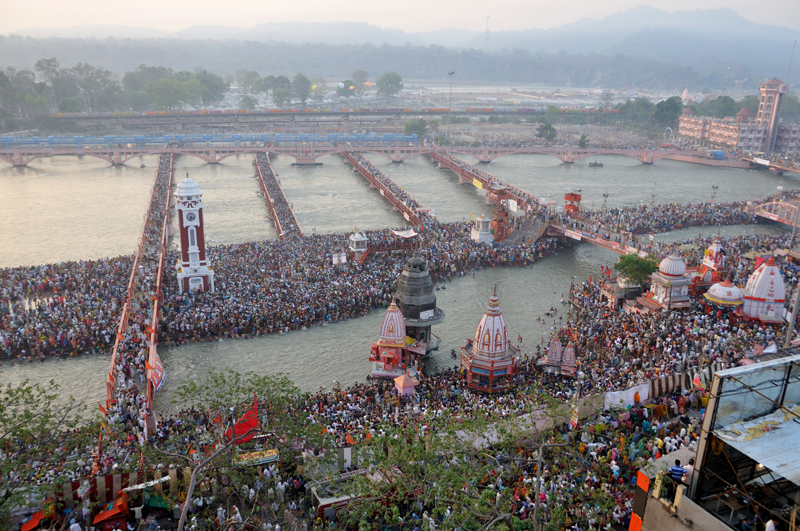
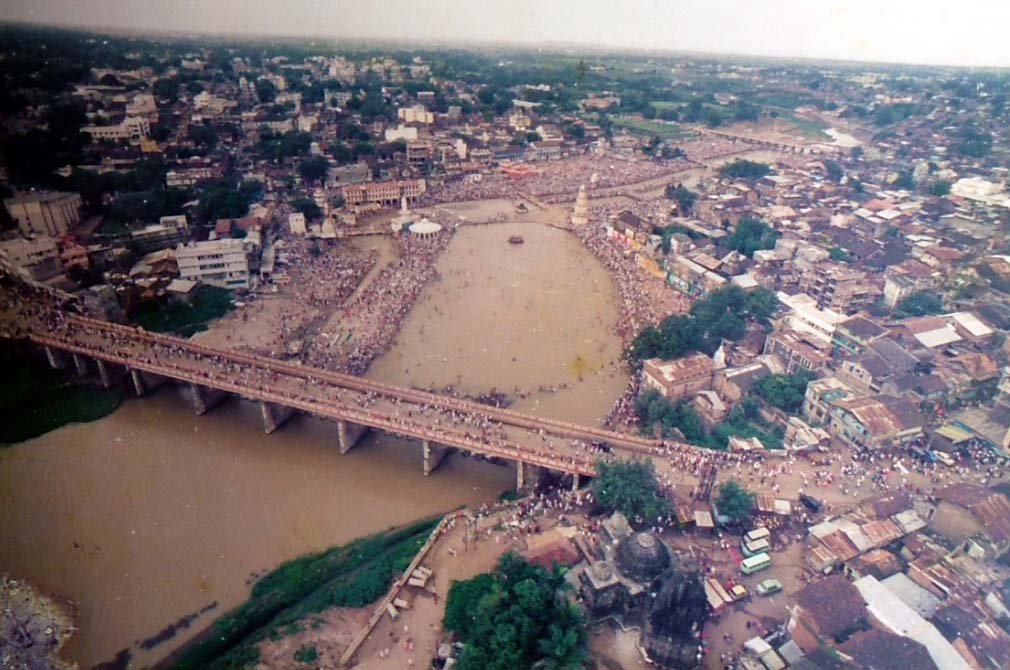
Kumbh Mela is an enormous Hindu pilgrimage where millions of devotees travel to sacred riverbanks to bathe in holy waters. The gathering rotates between Haridwar, Prayagraj, Nashik, and Ujjain on astronomical cycles determined by the position of Jupiter, the Sun, and the Moon.
When is Kumbh Mela kept?
Kumbh Mela is kept every three to twelve years, aligned with planetary movements.
Kumbh Mela is a vast Hindu gathering that draws millions of pilgrims to the banks of sacred rivers. Worshippers assemble to perform ritual immersion, seeking spiritual purification and atonement for past deeds. The festival moves between four major locations in India on a multi-year cycle linked to planetary movements. Alongside the holy bathing rites, the grounds host religious assemblies, monastic processions, scholastic debates, and cultural fairs that unite ascetics, scholars, and ordinary families.
Sacred waters and myth
Hindu tradition links the festival to the myth of the ocean churning, when gods and demons contended over a vessel containing the elixir of life. According to this story, drops of the nectar fell upon four earthly sites: Prayagraj, Haridwar, Nashik, and Ujjain. While ancient scriptures celebrate riverside bathing and pilgrimages to Prayag, the direct connection between the myth and the formal gathering developed over subsequent centuries. Early historical records from visiting travellers and classical epic texts describe large bathing festivals at sacred confluences, where devotees gathered for spiritual merit, alms giving, and ethical renewal.
Ritual immersion and assembly
The central observance of the mela is entering the sanctified river currents. Devotees believe this ritual bath cleanses spiritual impurities, provides penance, and brings religious merit. The new moon day, known as Amavasya, draws the heaviest attendance as masses seek to enter the water at auspicious moments. Beyond the riverbanks, vast temporary tent settlements emerge to shelter the crowds. Monastic orders, including akhara groups of ascetics, march in ceremonial processions. Scholars and holy figures deliver public discourses, engage in theological debates, and instruct seekers, while communal kitchens feed travellers and cultural events entertain families.
The astronomical cycle
The schedule of the gathering follows the positions of Jupiter, the Sun, and the Moon in the traditional luni-solar calendar. Because specific planetary configurations recur periodically, the festival rotates among its four primary locations roughly every twelve years. Intermediate gatherings occur at six-year intervals between major events at Prayagraj and Haridwar. Prayagraj hosts the largest assemblies where the Ganga and Yamuna meet. Haridwar welcomes bathers where the Ganga emerges from the mountains, while Nashik along the Godavari and Ujjain beside the Shipra river celebrate in related astrological years.
Scale of the gathering
Over recent centuries, the mela has evolved into one of the largest peaceful gatherings on earth. Colonial-era agreements in the nineteenth century formalised the administrative organisation of the Prayag festival under civic oversight, helping it grow steadily. By the twenty-first century, attendance at single occurrences reached hundreds of millions of people over several weeks. Similar regional gatherings also take place at holy water bodies in places such as Kumbakonam and Kurukshetra, maintaining the custom of collective river bathing and spiritual discussion across different parts of the region.
How Kumbh Mela is kept
Pilgrims travel to the host city and settle into temporary camps set up along the riverfront. At designated auspicious hours, especially on major bathing days such as the new moon, participants walk to the riverbanks to immerse themselves in the sacred water. Monastic orders and ascetic akhara groups lead grand processions to the bathing ghats. Throughout the weeks of the festival, devotees attend spiritual discourses by religious leaders, listen to sacred texts, participate in philosophical debates, give charity to ascetics and the needy, and share communal meals before returning home.
When and where
The festival takes place over several weeks according to the Hindu luni-solar calendar. Dates are determined by astrological alignments involving Jupiter, the Sun, and the Moon. Full festivals recur at each primary location roughly every twelve years, with half-cycle events held every six years at Prayagraj and Haridwar.
The primary gatherings rotate across four riverside locations in India: Haridwar on the Ganga, Prayagraj at the confluence of the Ganga and Yamuna, Nashik along the Godavari, and Ujjain beside the Shipra. Related regional bathing fairs occur at other water bodies, such as Kumbakonam in Tamil Nadu.
What Kumbh Mela means
The festival symbolises spiritual renewal, the pursuit of immortality, and inner purification. Entering the sacred water represents washing away moral faults and seeking atonement for past deeds. The gathering also reflects unity across diverse traditions, bringing together ascetics, scholars, and householders to exchange knowledge, practise charity, and reaffirm shared spiritual values.


Questions people ask about Kumbh Mela
When is Kumbh Mela kept?
Kumbh Mela is kept every three to twelve years, aligned with planetary movements.
What is the Kumbh Mela?
It is a major Hindu pilgrimage and riverside festival where millions of people gather to take a ritual bath in sacred waters, listen to religious teachings, and participate in spiritual assemblies.
Where does the festival take place?
The gathering rotates between four primary holy sites in India: Haridwar, Prayagraj, Nashik, and Ujjain. Devotees assemble at the riverbanks and confluences associated with these ancient cities.
How often is the Kumbh Mela held?
The main festival is held at each of the four locations on a twelve-year cycle governed by planetary positions. Half-cycle gatherings also take place every six years at Prayagraj and Haridwar.
Why do pilgrims bathe in the river?
Pilgrims believe that stepping into the consecrated river waters serves as an act of penance for past mistakes. The ritual bath is understood to cleanse spiritual impurities and bring lasting religious merit to the devotee.
See also
 Krishna JanmashtamiA Hindu festival celebrating the birth of Krishna with fasting, singing and night vigils
 ThaipusamA Tamil Hindu festival honoring Murugan through devotional burdens and pilgrimage
 Govardhan PujaA Hindu festival of piled vegetarian foods and sculpted earth, honouring Krishna
 Karthika DeepamA Tamil and Malayali Hindu festival of lights honouring Shiva, Kartikeya and Parvati
Good reading and sources
- Encyclopaedia BritannicaArticle
- Over three crore devotees take the dip at SangamThe Hindu, Article
- India's Hindu Kumbh Mela festival begins in AllahabadBBC, Article
- 70 mn to take holy dip during Ardh KumbhHindustan Times, Article
- Over three crore devotees take the dip at SangamThe Hindu, Article
- India's Hindu Kumbh Mela festival begins in AllahabadBBC, Article
- 70 mn to take holy dip during Ardh KumbhHindustan Times, Article
- Kumbh Mela on WikipediaEncyclopedia
- More photos on Wikimedia CommonsPhotos and video
- Wikidata recordOpen data
The facts on this page come from the Wikipedia article "Kumbh Mela", written by its contributors and used under the CC BY-SA 4.0 licence, and from its Wikidata record (CC0). EveryParampara rewrote the text in its own words, with AI assistance, and compares every page with the article to make sure no passage is copied. It may be reused under the same CC BY-SA 4.0 licence with a link back.
It may contain mistakes. Traditions differ from one family, village and community to the next, and the people who keep them know them best. If something is wrong, tell us. Last refreshed 2026-10-04.
More from India
All the traditions of India 🇮🇳 Mumbai, India and 1 moreFire templeآتشکده
A consecrated sanctuary where Zoroastrians tend sacred fires and gather for worshipSpiritual
🇮🇳 Mumbai, India and 1 moreFire templeآتشکده
A consecrated sanctuary where Zoroastrians tend sacred fires and gather for worshipSpiritual
 🇮🇳 India and 1 moreKailash Mansarovar Yatraकैलाश मानसरोवर यात्रा (Hindi); ཀཱའི་ལ་ཤ་མན་ས་རོ་ཝར་ཡ་ཏྲ། (Tibetan)
A high-altitude pilgrimage to Mount Kailash and Lake Manasarovar in TibetSpiritual
🇮🇳 Badrinath, IndiaChota Char Dham
Four Himalayan shrines in Uttarakhand, visited in one season each yearSpiritual
🇮🇳 India and 1 moreKailash Mansarovar Yatraकैलाश मानसरोवर यात्रा (Hindi); ཀཱའི་ལ་ཤ་མན་ས་རོ་ཝར་ཡ་ཏྲ། (Tibetan)
A high-altitude pilgrimage to Mount Kailash and Lake Manasarovar in TibetSpiritual
🇮🇳 Badrinath, IndiaChota Char Dham
Four Himalayan shrines in Uttarakhand, visited in one season each yearSpiritual
 🇨🇳 China and 1 morePrayer wheelའཁོར་ལོ།
A cylindrical wheel spun in Tibetan Buddhist practice to accumulate merit and wisdomSpiritual
🇨🇳 China and 1 morePrayer wheelའཁོར་ལོ།
A cylindrical wheel spun in Tibetan Buddhist practice to accumulate merit and wisdomSpiritual
The same idea elsewhere
Pilgrimage compared 🇺🇸 United States and 5 moreMother's Day
A worldwide annual celebration dedicated to mothers, maternal bonds and family careHome
🇺🇸 United States and 5 moreMother's Day
A worldwide annual celebration dedicated to mothers, maternal bonds and family careHome
 🇮🇱 Jerusalem, IsraelPassoverפסח
A Jewish spring festival celebrating freedom from slavery with ritual mealsSpiritual · Dinner
🇮🇱 Jerusalem, IsraelPassoverפסח
A Jewish spring festival celebrating freedom from slavery with ritual mealsSpiritual · Dinner
 🇵🇱 Poland and 5 moreChristmas Eve
The evening before Christmas, marked by church services, family meals, and gift preparations across Christian cultures.Festival · Dinner
🇵🇱 Poland and 5 moreChristmas Eve
The evening before Christmas, marked by church services, family meals, and gift preparations across Christian cultures.Festival · Dinner
 🇮🇱 Jerusalem, IsraelSukkotסוכות
A seven-day autumn Jewish festival of temporary booths, harvest prayers and hospitalitySpiritual
🇮🇱 Jerusalem, IsraelSukkotסוכות
A seven-day autumn Jewish festival of temporary booths, harvest prayers and hospitalitySpiritual