Games, sport and playEast AsiaSecular and civic
Cuju
In its own language: 蹴鞠
An ancient Chinese kicking game played without hands using a stuffed or air-filled ball

Cuju is an ancient Chinese kicking sport that originated during the Warring States period and flourished in imperial courts and cities. Opposing sides or solo performers kept an inflated or stuffed ball aloft and aimed it through central goals without using their hands.
Cuju is an ancient Chinese kicking game recognised by historians as an early ancestor of modern football. Originating as a military training drill and imperial pastime, the sport involves propelling a ball using feet, head, and torso while keeping it off the ground. Over many dynasties, it developed from a palace spectacle into a popular urban game with dedicated clubs, professional performers, and formal competitive rules.
Origins and history
Early historical records trace the game to the state of Qi during the Warring States period. Military commanders in the Han dynasty used competitive matches to keep cavalry soldiers agile and fit. Over time, the sport entered the imperial court, where Emperor Wu Di watched matches staged in custom arenas. During the Tang dynasty, craftsmen replaced feather-filled spheres with air-inflated leather casings, and palace grounds filled with practice pitches. Play peaked under the Song dynasty, giving rise to professional leagues before fading under the Ming dynasty.
How it is played
Historic play followed two primary traditions: zhuqiu and baida. Zhuqiu was a team sport commonly staged at royal celebrations, where opposing squads tried to guide the ball through an elevated net opening. In contrast, baida focused on personal technique within a cordoned boundary. In baida, participants took turns controlling the sphere with feet, knees, chest, and head without handling it. Points were subtracted for inaccurate passes, errant kicks, or bad footwork, and the competitor with the fewest penalty deductions won.
Clubs and culture
By the Song era, the sport supported a thriving professional culture in urban centres. An association called Qi Yun She organized national tournaments and set standards for practitioners across the realm. Amateurs paid tuition to learn proper form under registered masters. Performers entertained common citizens on city streets and delighted aristocrats during state banquets. The practice spread along trade networks into neighbouring lands, leaving a lasting mark on East Asian culture and inspiring the traditional Japanese court recreation kemari.
How Cuju is kept
Matches were played on dedicated rectangular grounds or open courtyards. Depending on the format, teams of twelve to sixteen participants or smaller groups of two to ten took the field. Players kept an air-filled or feather-stuffed ball airborne by striking it with feet, knees, or shoulders, strictly avoiding hand contact. In competitive formats, squads passed the ball back and forth to launch it through an elevated central target, while in individual display formats, referees judged footwork and deducted points for errors.
When and where
Originating in ancient China, the sport was played in royal palaces, military barracks, and public grounds across cities such as Linzi and the Tang capital of Chang'an. It also spread to Korea and Japan.


Questions people ask about Cuju
What is cuju?
Cuju is an ancient Chinese ball sport where players kick and volley a sphere without using their hands, aiming either to pass through a goal or showcase technical control.
When and where did cuju originate?
The game arose in China during the Warring States period, with written records linking early matches to the ancient state of Qi and Han dynasty military training.
How does cuju differ from modern football?
While both prohibit handling the ball, ancient cuju often featured a single shared central goal or judged players on individual precision and technical penalties rather than simple goal counts.
Is cuju still played today?
Although traditional cuju declined during the Ming dynasty, its Japanese variant kemari is still played on ceremonial occasions, and cultural exhibitions in historic costume are occasionally staged in China.
See also
 Manchu-Han Imperial FeastA grand multi-day banquet uniting Manchu and Han culinary traditions in China
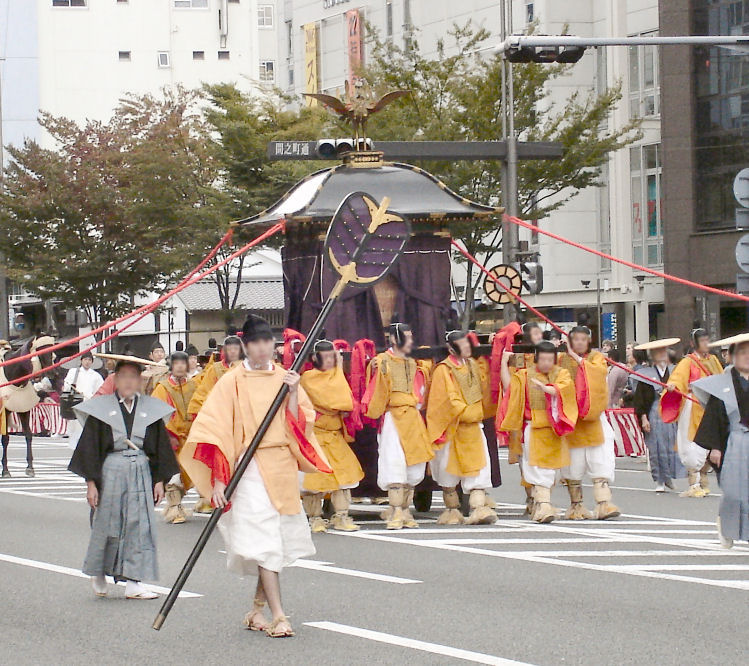 Jidai MatsuriAn autumn costume procession celebrating Kyoto's imperial heritage and history
 Aoi MatsuriA classical Kyoto festival with an imperial procession and ancient shrine rituals
 Hunting with eaglesThe Central Asian tradition of hunting foxes and hares from horseback with golden eagles.
Good reading and sources
- Cuju on WikipediaEncyclopedia
- More photos on Wikimedia CommonsPhotos and video
- Wikidata recordOpen data
The facts on this page come from the Wikipedia article "Cuju", written by its contributors and used under the CC BY-SA 4.0 licence, and from its Wikidata record (CC0). EveryParampara rewrote the text in its own words, with AI assistance, and compares every page with the article to make sure no passage is copied. It may be reused under the same CC BY-SA 4.0 licence with a link back.
It may contain mistakes. Traditions differ from one family, village and community to the next, and the people who keep them know them best. If something is wrong, tell us. Last refreshed 2026-10-04.
More from China
All the traditions of China
🇲🇳 Ölgii, Mongolia and 3 moreHunting with eagles
The Central Asian tradition of hunting foxes and hares from horseback with golden eagles.Game
 🇲🇳 Ulaanbaatar, Mongolia and 2 moreMongolian wrestlingBökh
A traditional folk wrestling style of the Mongols, kept as a central part of Naadam festivals across Mongolia and neighbGame
🇲🇳 Ulaanbaatar, Mongolia and 2 moreMongolian wrestlingBökh
A traditional folk wrestling style of the Mongols, kept as a central part of Naadam festivals across Mongolia and neighbGame
 🇨🇳 China and 1 moreXiangqi象棋
A two-player game of armies and cannons, played on the points of a nine-by-ten boardGame
🇨🇳 China and 1 moreXiangqi象棋
A two-player game of armies and cannons, played on the points of a nine-by-ten boardGame
 🇨🇳 Ningbo, China and 2 moreMahjong麻將
A tile game from China, played by two to four people at a tableGame
🇨🇳 Ningbo, China and 2 moreMahjong麻將
A tile game from China, played by two to four people at a tableGame
The same idea elsewhere
Royalty and coronation compared 🇮🇱 IsraelRosh Hashanahרֹאשׁ הַשָּׁנָה
The Jewish New Year marked by shofar horn blasts, prayer and sweet foodsSpiritual
🇮🇱 IsraelRosh Hashanahרֹאשׁ הַשָּׁנָה
The Jewish New Year marked by shofar horn blasts, prayer and sweet foodsSpiritual
 🇸🇪 Mora, SwedenVasaloppet
A 90 km cross-country ski race from Sälen to Mora, run every March since 1922Game
🇸🇪 Mora, SwedenVasaloppet
A 90 km cross-country ski race from Sälen to Mora, run every March since 1922Game
 🇵🇪 Cusco, Peru and 4 moreIntiinti (Quechua)
The Inca sun deity, honoured with temples, offerings and the June festival Inti RaymiSpiritual
🇹🇭 ThailandThai solar calendarปฏิทินสุริยคติไทย
The official solar calendar of Thailand, numbered in the Buddhist EraSeasonal
🇵🇪 Cusco, Peru and 4 moreIntiinti (Quechua)
The Inca sun deity, honoured with temples, offerings and the June festival Inti RaymiSpiritual
🇹🇭 ThailandThai solar calendarปฏิทินสุริยคติไทย
The official solar calendar of Thailand, numbered in the Buddhist EraSeasonal