Crafts and makingEuropeChristian
Lithuanian cross crafting
In its own language: Lietuvos kryždirbystė
A Lithuanian folk art of carving wooden crosses that blend Christian faith with ancient Baltic symbols.

This tradition involves the creation of ornate stone or wooden crosses by skilled artisans called kryždirbiai. It serves as a marker of Roman Catholic faith and a symbol of national identity for the Lithuanian people.
When is Lithuanian cross crafting kept?
Lithuanian cross crafting is kept on throughout the year, whenever a memorial is needed.
Lithuanian cross crafting represents a deep cultural practice where artisans carve intricate monuments from wood, stone, or metal. These structures serve as expressions of Roman Catholic devotion and markers of remembrance. The craft emerged when Christianity arrived in the region, merging religious iconography with older local beliefs about nature and spirits.
Origins and history
The practice began in the fifteenth century following the introduction of Christianity to Lithuania. Artisans combined Christian artistic motifs with elements from Baltic mythology. During the nineteenth century, under Russian rule, these monuments became powerful symbols of national resistance and identity. A famous practitioner was Vincas Svirskis, who worked between eighteen thirty-five and nineteen sixteen. His self-taught carvings are now preserved in national museums.
Design and materials
Craftsmen known as kryždirbiai build crosses ranging from one to five meters tall. They typically use oak wood but may also add iron details. The designs often feature floral patterns, geometric shapes, sun symbols, birds, or the tree of life. Some include small statues. Regional styles vary; Dzūkija crosses might wear ribbons and aprons, while Samogitia ones often display Virgin Mary figures dressed in jewelry. Another form is the chapel-pole, which stacks small roofed chapels on a single post.
Purpose and placement
People erect these monuments to seek protection, ask for mercy, or honor the deceased. They appear along roadsides, in cemeteries, near homes, and at sacred springs or stones. Families build them to remember specific events, anniversaries, or victims of accidents. Travelers view them as spiritual guardians. The tradition includes rituals like consecration, chanting, and visiting the sites. Even today, over two hundred craftsmen continue this work across the country.
How Lithuanian cross crafting is kept
Skilled artisans travel throughout Lithuania to create these monuments. They select materials like oak and shape them into towering structures. Communities then place these crosses in significant locations such as graveyards, roadside shrines, or near natural landmarks. The process involves carving, sometimes adding metalwork, and installing the piece. People maintain the sites through visits and offerings, keeping the connection between the living and the remembered active.
When and where
The craft has existed since the fifteenth century. Modern recognition came when UNESCO listed it in two thousand one and Lithuania added it to its heritage inventory in two thousand seventeen.
This tradition is centered in Lithuania. Crosses stand nationwide in villages, towns, and cemeteries. Notable concentrations exist at sites like the Hill of Crosses.
What Lithuanian cross crafting means
These crosses merge Christian faith with ancient Baltic reverence for nature. They represent spiritual protection, gratitude, and memory. For many, they symbolize resilience and national unity, especially during periods of foreign occupation. They mark sacred spaces and connect the community to their ancestors and the land.

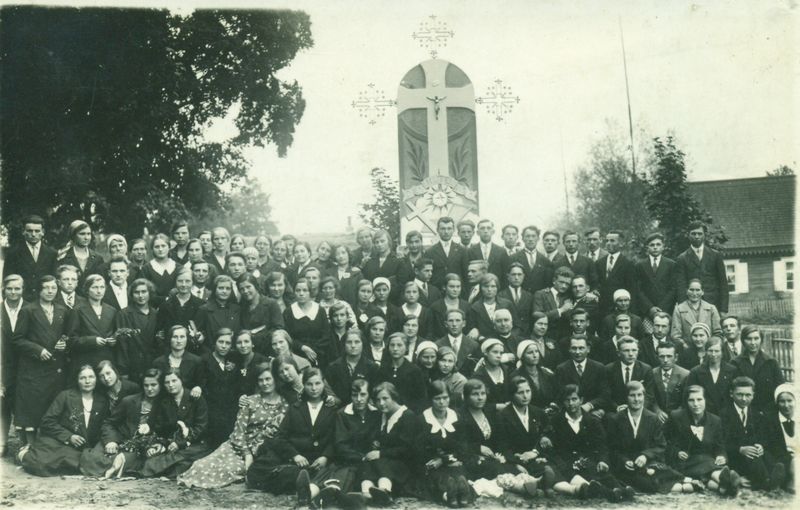


Questions people ask about Lithuanian cross crafting
When is Lithuanian cross crafting kept?
Lithuanian cross crafting is kept on throughout the year, whenever a memorial is needed.
What is Lithuanian cross crafting?
It is a traditional art form where artisans carve intricate crosses from wood, stone, or metal. These monuments express Roman Catholic faith and honor the dead, blending Christian symbols with older Baltic traditions.
Where can I see these crosses?
They are found throughout Lithuania in cemeteries, along roads, and near homes. The most famous collection stands at the Hill of Crosses. Many individual examples are also held in national museums.
Why are these crosses important?
They serve as memorials for the deceased and markers of spiritual protection. Historically, they also became symbols of Lithuanian national identity and resistance against foreign rule during the nineteenth century.
See also
 Father's DayA day to honour fathers and fatherhood, kept on many different dates worldwideVėlinėsA Lithuanian remembrance day honouring deceased souls with cemetery prayers and candles
 PysankaA wax-resist egg decorating tradition kept by Slavic communities for Easter and spring renewal.
 DziadyA Slavic tradition of feeding and welcoming the spirits of ancestors to ensure family fertility and peace.
Good reading and sources
- Lithuanian cross crafting on WikipediaEncyclopedia
- More photos on Wikimedia CommonsPhotos and video
- Wikidata recordOpen data
The facts on this page come from the Wikipedia article "Lithuanian cross crafting", written by its contributors and used under the CC BY-SA 4.0 licence, and from its Wikidata record (CC0). EveryParampara rewrote the text in its own words, with AI assistance, and compares every page with the article to make sure no passage is copied. It may be reused under the same CC BY-SA 4.0 licence with a link back.
It may contain mistakes. Traditions differ from one family, village and community to the next, and the people who keep them know them best. If something is wrong, tell us. Last refreshed 2026-10-08.
More from Lithuania
All the traditions of Lithuania 🇱🇹 Vilnius, Lithuania and 3 moreSaint Casimir's FairKaziuko mugė
A spring craft market and folk celebration across the historic streets of VilniusCraft
🇱🇹 LithuaniaVėlinės
A Lithuanian remembrance day honouring deceased souls with cemetery prayers and candlesSpiritual
🇺🇦 Kyiv, Ukraine and 7 morePysankaписанка
A wax-resist egg decorating tradition kept by Slavic communities for Easter and spring renewal.Festival
🇧🇾 Belarus and 4 moreDziadyДзяды (Belarusian); Діди (Ukrainian); Dziady (Polish)
A Slavic tradition of feeding and welcoming the spirits of ancestors to ensure family fertility and peace.Spiritual
🇱🇹 Vilnius, Lithuania and 3 moreSaint Casimir's FairKaziuko mugė
A spring craft market and folk celebration across the historic streets of VilniusCraft
🇱🇹 LithuaniaVėlinės
A Lithuanian remembrance day honouring deceased souls with cemetery prayers and candlesSpiritual
🇺🇦 Kyiv, Ukraine and 7 morePysankaписанка
A wax-resist egg decorating tradition kept by Slavic communities for Easter and spring renewal.Festival
🇧🇾 Belarus and 4 moreDziadyДзяды (Belarusian); Діди (Ukrainian); Dziady (Polish)
A Slavic tradition of feeding and welcoming the spirits of ancestors to ensure family fertility and peace.Spiritual
The same idea elsewhere
Remembering the ancestors compared 🇮🇳 Ayodhya, India and 7 moreDiwaliदीपावली (Dīpāvalī)
A five-day festival of lights celebrated across India and its diaspora to mark the victory of light over darkness.Festival · Feasts and festival meals
🇮🇳 Ayodhya, India and 7 moreDiwaliदीपावली (Dīpāvalī)
A five-day festival of lights celebrated across India and its diaspora to mark the victory of light over darkness.Festival · Feasts and festival meals
 🇮🇷 Iran and 7 moreNowruzنوروز
The Iranian new year at the March equinox, kept with fire, greenery and picnicsSeasonal
🇮🇷 Iran and 7 moreNowruzنوروز
The Iranian new year at the March equinox, kept with fire, greenery and picnicsSeasonal
 🇮🇱 Jerusalem, Israel and 1 moreHanukkahחֲנֻכָּה
An eight-day Jewish festival marking the rededication of the Second Temple in Jerusalem and the miracle of a single day'Festival
🇮🇱 Jerusalem, Israel and 1 moreHanukkahחֲנֻכָּה
An eight-day Jewish festival marking the rededication of the Second Temple in Jerusalem and the miracle of a single day'Festival
 🇮🇳 Mathura, India and 5 moreHoliहोली (Hindi)
A spring festival of colours and bonfires that marks the end of winter and the triumph of good over evil.Festival
🇮🇳 Mathura, India and 5 moreHoliहोली (Hindi)
A spring festival of colours and bonfires that marks the end of winter and the triumph of good over evil.Festival