Luanchari
In its own language: लोआंचरी
A traditional one-piece flared garment worn by Gaddi women in Himachal Pradesh
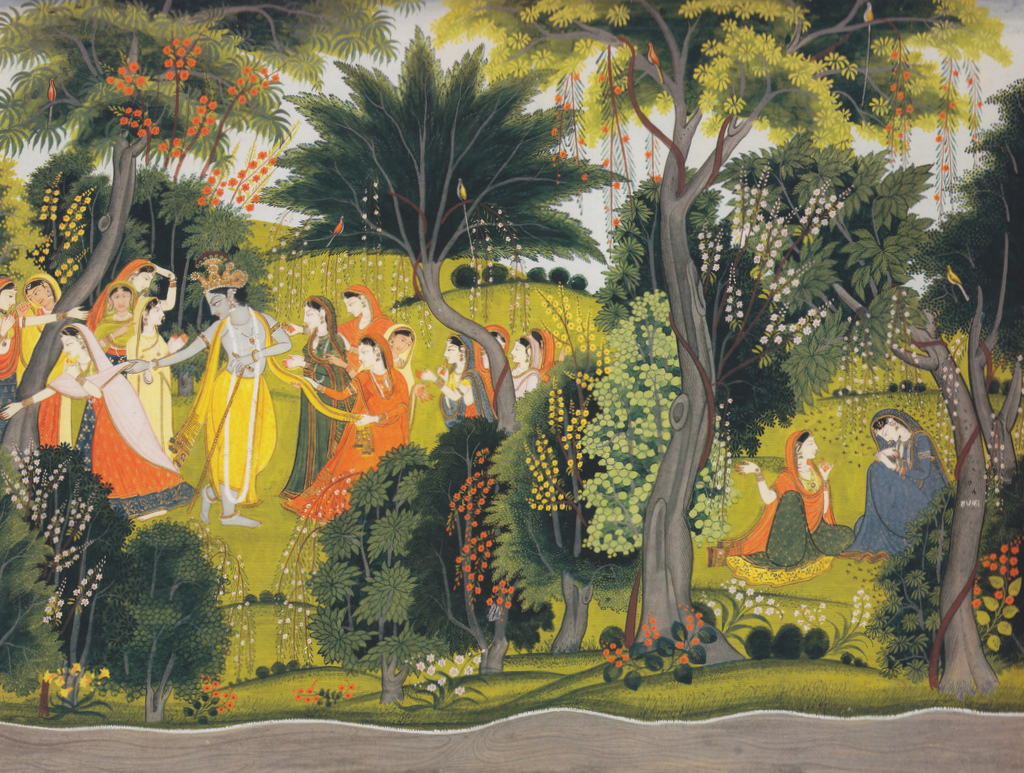
The luanchari is a traditional Indian attire worn by Gaddi women in Himachal Pradesh. Sewn from a generous span of cloth, it combines a fitted bodice with a full flowing skirt into a single long dress, frequently seen in historic regional artwork.
The luanchari is a full-length traditional dress worn by Gaddi women, also known as Gaddnis or Gaddans, in Himachal Pradesh, India. Constructed by joining a fitted top with an expansive skirt, this outfit demands a remarkably large amount of cloth. It forms a distinct element of local cultural attire and frequently appears in the classical Pahari miniature paintings of the northern mountain regions.
Form and structure
A luanchari brings together two main garment components into a unified full-length dress. The upper section, known as a choli, functions as a tailored bodice or blouse. Below it, a voluminous lower section called a lehanga drops down as a long skirt. Stitching these elements together produces a continuous silhouette that resembles a separate skirt and top. Tailors generally craft both portions from identical textile material, although the shades or dye colors used for each part can sometimes differ.
Cloth and craftsmanship
Creating a single complete luanchari demands an immense quantity of material. Stitching one piece requires more than sixteen to twenty-one yards of textile, giving the skirt its dense gathers and generous drape. The volume of woven yardage creates a flowing shape around the wearer while keeping the joined bodice secure. This lavish use of yardage gives the garment its characteristic resemblance to a classic flared skirt while remaining a single stitched outfit.
Community and art
This style of dress is closely associated with Gaddi women across the state of Himachal Pradesh, where women in the community are known as Gaddnis or Gaddans. Beyond its place among the Gaddi people, the attire holds a recognized position in regional artistic history. Historical painters frequently depicted women dressed in the luanchari in Pahari miniature art, documenting its distinctive silhouette, layered folds, and graceful movement across mountain painting schools.
How Luanchari is kept
The luanchari is put on as a unified full-length garment. Its fitted bodice covers the torso, while the attached skirt flares outward from the seamline at the waist. Gaddi women wear the dress as part of their cultural attire in Himachal Pradesh. The extensive yardage gathers neatly around the body, creating deep folds as the wearer moves, preserving a style seen both in daily custom and classic regional paintings.
When and where
The luanchari is worn across Himachal Pradesh in northern India, where Gaddi communities reside, and is depicted in the Pahari miniature painting tradition of the region.
Questions people ask about Luanchari
What is a luanchari?
It is a traditional Indian full-length dress worn by Gaddi women in Himachal Pradesh, consisting of a bodice joined directly to a wide skirt.
Who traditionally wears the luanchari?
This garment is traditionally worn by Gaddi women, who are also referred to as Gaddnis or Gaddans, living in the state of Himachal Pradesh in India.
How much cloth is needed to make a luanchari?
Constructing a complete luanchari requires an extensive amount of cloth, taking in excess of sixteen to twenty-one yards of material to join the bodice and create the wide skirt.
Where does the luanchari appear in historic art?
The garment is frequently portrayed on women depicted in traditional Pahari miniature paintings, reflecting the distinctive regional clothing styles found across northern India.
See also
 PaithaniA handwoven silk sari from Maharashtra, with a squared border and a peacock pallu
 JambiyaA short curved dagger worn at the waist by Yemeni men, its handle a sign of status
 SherwaniA long buttoned coat for men, worn at weddings and state occasions in South Asia
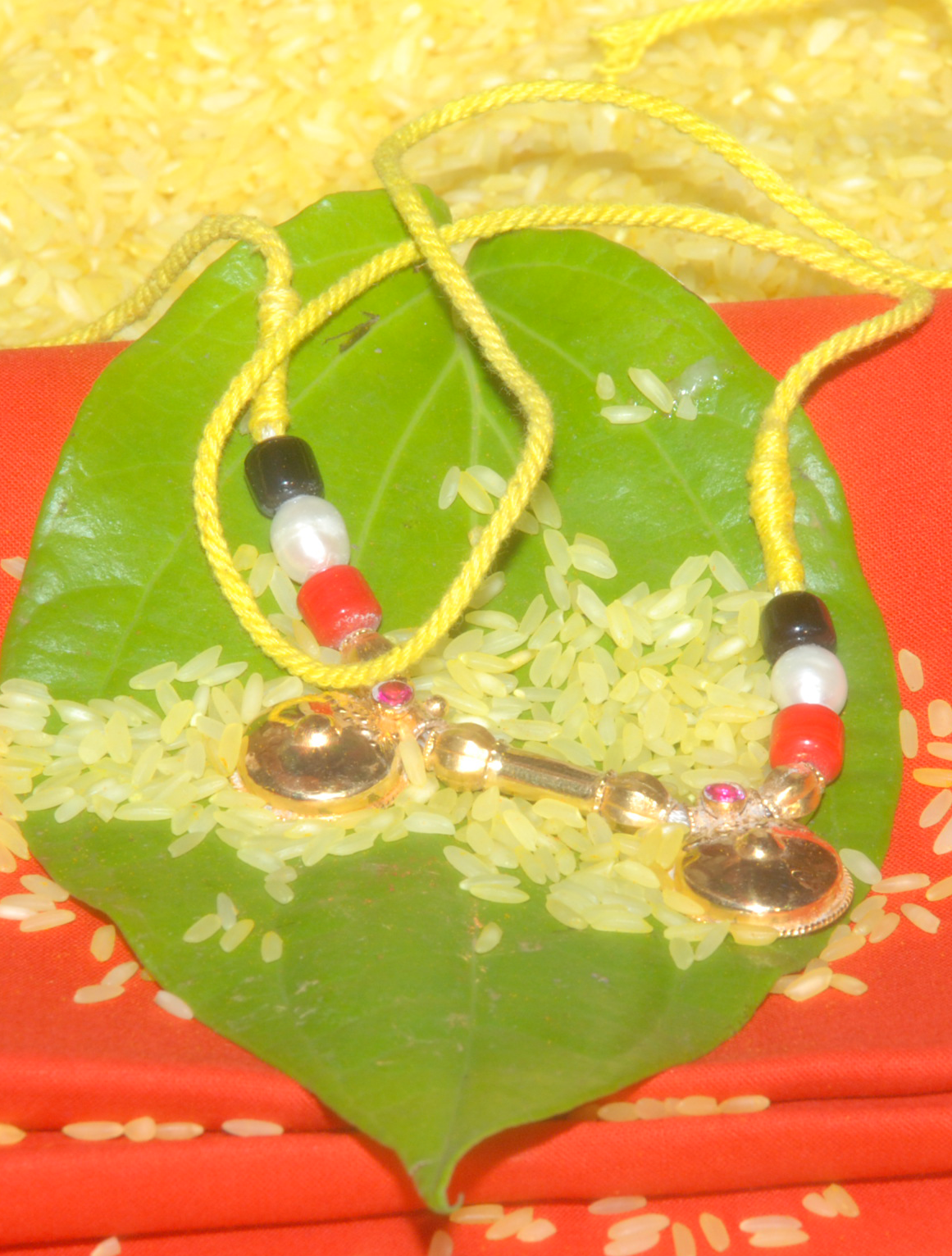 MangalasutraA necklace tied by the groom at a wedding, worn through married life
Good reading and sources
The facts on this page come from the Wikipedia article "Luanchari", written by its contributors and used under the CC BY-SA 4.0 licence, and from its Wikidata record (CC0). EveryParampara rewrote the text in its own words, with AI assistance, and compares every page with the article to make sure no passage is copied. It may be reused under the same CC BY-SA 4.0 licence with a link back.
It may contain mistakes. Traditions differ from one family, village and community to the next, and the people who keep them know them best. If something is wrong, tell us. Last refreshed 2026-10-07.
More from India
All the traditions of India
🇮🇳 Paithan, IndiaPaithani
A handwoven silk sari from Maharashtra, with a squared border and a peacock palluDress
🇾🇪 Hadhramaut, Yemen and 1 moreJambiyaجنبية
A short curved dagger worn at the waist by Yemeni men, its handle a sign of statusDress
🇮🇳 Lucknow, India and 3 moreSherwani
A long buttoned coat for men, worn at weddings and state occasions in South AsiaDress
🇮🇳 India and 2 moreMangalasutraमङ्गलसूत्रम् (maṅgalasūtram)
A necklace tied by the groom at a wedding, worn through married lifeDress
The same idea elsewhere
All of this kind 🇳🇴 Norway and 3 moreGákti
A traditional coat worn by the Sámi people across northern Scandinavia and Russia, signaling origin and status through cDress
🇳🇴 Norway and 3 moreGákti
A traditional coat worn by the Sámi people across northern Scandinavia and Russia, signaling origin and status through cDress
 🇮🇱 Israel and 1 moreTzitzitצִיצִית
Knotted ritual fringes worn on a four-cornered garment, a reminder of the commandmentsDress
🇮🇱 Israel and 1 moreTzitzitצִיצִית
Knotted ritual fringes worn on a four-cornered garment, a reminder of the commandmentsDress
 🇼🇸 Samoa and 1 moreʻIe tōga
Precious woven mats exchanged in Samoan ceremonies to honor family ties and chiefly status.Dress
🇼🇸 Samoa and 1 moreʻIe tōga
Precious woven mats exchanged in Samoan ceremonies to honor family ties and chiefly status.Dress
 🇪🇬 Egypt and 5 moreTraditional tattooing
The ancient custom of marking the skin for protection, healing, status and sacred ritesDress
🇪🇬 Egypt and 5 moreTraditional tattooing
The ancient custom of marking the skin for protection, healing, status and sacred ritesDress