Royal, civic and national ceremonyEast Asia
Marine Day
In its own language: 海の日
A Japanese summer holiday to thank the ocean and mark the country's ties to the sea

Marine Day is a public holiday in Japan, kept on the third Monday of July. It gives thanks for what the ocean provides, and it asks people to think about how much the sea has meant to a country that lives by it.
When is Marine Day kept?
Marine Day is kept on the third Monday of July, with one-off dates in 2020 and 2021.
Marine Day is a Japanese public holiday that honours the sea. It falls on the third Monday of July, at the point when the rainy season is ending across much of the mainland. Families head for the coast to swim, snorkel, surf or dive, and aquariums run water-themed events. The day gives thanks for what the ocean provides and asks people to remember how much Japan relies on the sea.
Origins and history
In 1941 the communications minister Shōzō Murata chose a day to remember the Meiji Emperor's sea voyage of 1876. The emperor travelled in the Meiji Maru, an iron steamship built in Scotland in 1874. The route went around the Tōhoku region, took on a lighthouse boat at Aomori, stopped briefly at Hakodate, and reached Yokohama on 20 July. The occasion was called Marine Memorial Day. It only became a national holiday in 1995, the first one in the summer months, and was first kept on 20 July 1996.
How the date moved
From 2003, under the Happy Monday System, the holiday stopped being tied to a fixed date and moved to the third Monday of July. The 2020 Games brought a one-off change: the day was kept on Thursday 23 July that year, as a special arrangement to support the opening of the Tokyo Olympics. When the Olympics and Paralympics were postponed to 2021 because of COVID-19, the government kept the change for 2020 and altered the law so a matching one-time shift applied in 2021, putting the holiday on Thursday 22 July.
How it is kept
Summer weather and a day off send many people to the coast. Families may visit beaches such as Isshiki Beach at Hayama and spend the day swimming, snorkeling, surfing or diving. An event known as mud-ball throwing is another way people join in. National aquariums put on special events about water. The timing helps: the holiday arrives about when the rainy season, called tsuyu, is ending over most of the mainland.
What it means
The day carries two layers of meaning. One is gratitude: the ocean is thanked for what it gives, and people are asked to consider how much it matters to Japan as a maritime nation. The other is memory, since the holiday grew out of a day set aside for the Meiji Emperor's voyage. Placing it just as the rainy season closes gives it a feeling of early summer, when the shore is at its most inviting.
How Marine Day is kept
Families and individuals take the day off. Many go to the beach, and swimming, snorkeling, surfing and diving are common. At Hayama's Isshiki Beach, for example, people come for the sand and the water. Some join a mud-ball throwing event. National aquariums run water-themed programs. Elsewhere, ocean-related festivities take place. The holiday comes at the end of the rainy season in most of the mainland, so the weather often suits a day outdoors, and beach trips are a popular use of the free time.
When and where
It is usually the third Monday of July. The Happy Monday System has set it that way since 2003, instead of a fixed date. Two years broke the pattern: 2020 and 2021, when it was held on Thursday 23 July and Thursday 22 July to fit the Tokyo Olympics.
Marine Day is a national public holiday, so it is kept throughout Japan. Its pull is strongest on the coast, and Isshiki Beach at Hayama is named as a place families visit. Aquariums around the country hold events for it. The story behind the holiday also ties it to the ports of the Meiji Maru voyage: Yokohama, Aomori and Hakodate.
What Marine Day means
To those who keep it, the day is about gratitude and awareness. The ocean is thanked for what it provides, and people are asked to consider how the sea shapes Japan's life and work as a maritime nation. The date sits at the close of the rainy season, which gives it a feeling of early summer. Its older purpose, remembering the Meiji Emperor's 1876 voyage, is still part of the background.

Questions people ask about Marine Day
When is Marine Day kept?
Marine Day is kept on the third Monday of July, with one-off dates in 2020 and 2021.
What is Marine Day?
It is a public holiday in Japan that honours the ocean. It is held so that people can give thanks for what the sea provides and think about how important it is to Japan as a maritime nation. It is usually kept on the third Monday of July.
How do people spend the day?
Many take a beach trip, because the holiday comes near the end of the rainy season. Swimming, snorkeling, surfing and diving are popular. Some people join a mud-ball throwing event, and national aquariums hold special events about water.
Where did the holiday come from?
It started in 1941 as Marine Memorial Day, chosen by the communications minister Shōzō Murata to remember the Meiji Emperor's 1876 voyage in the Meiji Maru. It became a national holiday in 1995 and was first kept under the new rule in 1996.
Why did the date change in 2020 and 2021?
The 2020 date was moved to 23 July to help the opening of the Tokyo Olympics. When the Games were postponed to 2021 because of COVID-19, the government changed the law so the holiday shifted too, to 22 July 2021.
See also
 HalloweenAn annual observance on 31 October marking the eve of All Saints' Day, rooted in Christian tradition and Celtic heritage
 Water lanternSmall lamps floated on water to honour the dead and ask for good fortune
 KarutaJapanese playing cards from the 16th century, still raced over poems each New Year
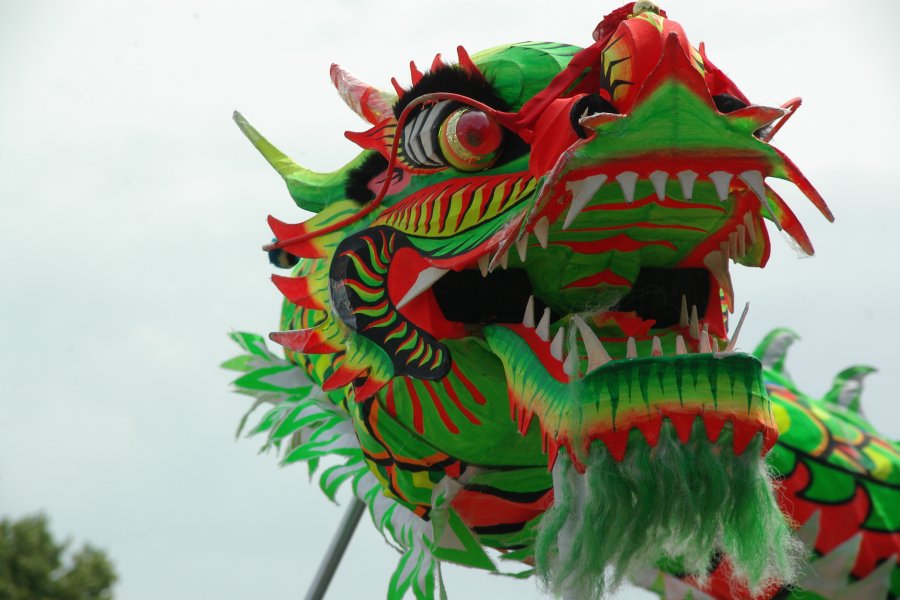 Dragon danceA long dragon puppet on poles, danced by a team at Chinese New Year and other festivals
Good reading and sources
The facts on this page come from the Wikipedia article "Marine Day", written by its contributors and used under the CC BY-SA 4.0 licence, and from its Wikidata record (CC0). EveryParampara rewrote the text in its own words, with AI assistance, and compares every page with the article to make sure no passage is copied. It may be reused under the same CC BY-SA 4.0 licence with a link back.
It may contain mistakes. Traditions differ from one family, village and community to the next, and the people who keep them know them best. If something is wrong, tell us. Last refreshed 2026-10-05.
More from Japan
All the traditions of Japan 🇨🇦 Canada and 5 moreBuy Nothing Day
An annual 24-hour pause on shopping to protest consumerism and overconsumptionCeremony
🇨🇦 Canada and 5 moreBuy Nothing Day
An annual 24-hour pause on shopping to protest consumerism and overconsumptionCeremony
 🇹🇷 Van, Turkey and 5 moreChildren's Day
An international observance supporting youth welfare, education and children's rightsCeremony
🇮🇪 Ireland and 5 moreHalloween
An annual observance on 31 October marking the eve of All Saints' Day, rooted in Christian tradition and Celtic heritageFestival · Sweets given and shared
🇹🇷 Van, Turkey and 5 moreChildren's Day
An international observance supporting youth welfare, education and children's rightsCeremony
🇮🇪 Ireland and 5 moreHalloween
An annual observance on 31 October marking the eve of All Saints' Day, rooted in Christian tradition and Celtic heritageFestival · Sweets given and shared
 🇨🇳 China and 5 morePostpartum confinement
A period of rest, nourishment, and seclusion for mothers after giving birth.Rite of passage
🇨🇳 China and 5 morePostpartum confinement
A period of rest, nourishment, and seclusion for mothers after giving birth.Rite of passage
The same idea elsewhere
All of this kind 🇺🇸 Philadelphia, United States and 1 moreIndependence Day
The United States' national day of parades, barbecues and fireworks, kept each July 4Ceremony
🇺🇸 Philadelphia, United States and 1 moreIndependence Day
The United States' national day of parades, barbecues and fireworks, kept each July 4Ceremony
 🇺🇸 United StatesTalking stick
A carved staff that shows who may speak at a Northwest Coast gatheringCeremony
🇺🇸 United StatesTalking stick
A carved staff that shows who may speak at a Northwest Coast gatheringCeremony
 🇺🇸 Washington, United StatesState of the Union address
The US president's yearly report to Congress and the nation, given in the House chamberCeremony
🇺🇸 Washington, United StatesState of the Union address
The US president's yearly report to Congress and the nation, given in the House chamberCeremony
 🇮🇳 Kolkata, IndiaJana Gana Mana
India's national anthem, from a Bengali hymn of 1911, sung at civic occasionsCeremony
🇮🇳 Kolkata, IndiaJana Gana Mana
India's national anthem, from a Bengali hymn of 1911, sung at civic occasionsCeremony