Life-cycle ritesNorth AmericaMuslim
Islamic marriage
In its own language: نِكَاح
The sacred contract, agreement and wedding celebration forming an Islamic marriage

Islamic marriage is a formal covenant centered on the nikah, a legally binding contract between bride and groom. Practiced across Muslim communities worldwide, it requires mutual consent, witnesses, a marital gift called mahr, and celebration through the walimah feast.
When is Islamic marriage kept?
Islamic marriage is kept on when a couple decides to marry.
Marriage in Islam is a legal and spiritual agreement between two partners, establishing rights and responsibilities for family life. At its heart is the nikah, a formal contract requiring mutual consent, the presentation of a mandatory bridal gift known as mahr, and the presence of witnesses. Regarded as a religious duty and a source of domestic peace, the union is celebrated with family gatherings and a communal feast called the walimah.
The marriage contract
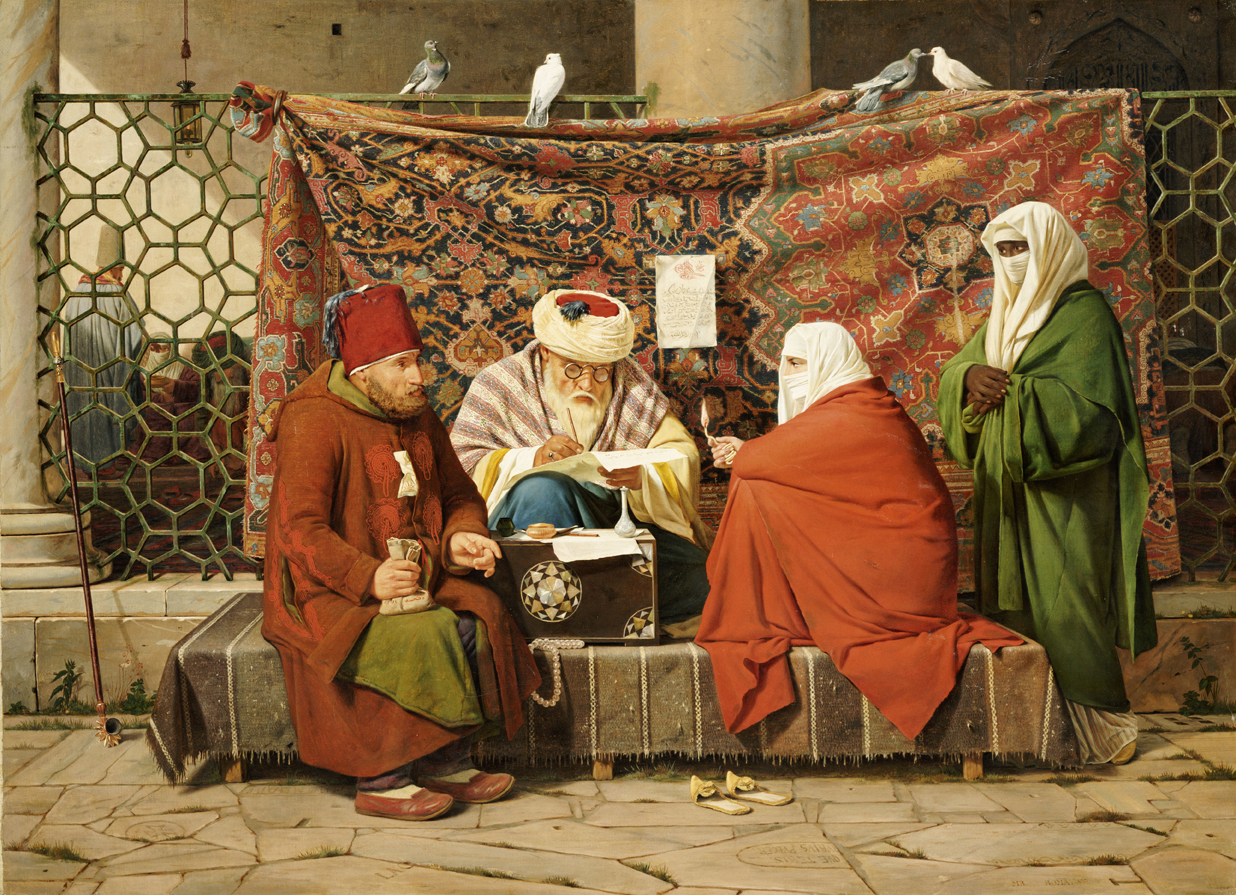
The core of an Islamic wedding is the nikah, an agreement that outlines legal obligations and personal rights. During this ceremony, the groom makes a proposal and the bride signals her acceptance, known as qubul. This agreement is sealed before at least two witnesses and recorded orally or in writing on documents such as a nikah nama. A fundamental element is the mahr, an obligatory gift of wealth given directly from the groom to the bride. This payment remains her personal property for her exclusive use, offering financial security. Marriages may also incorporate custom terms to protect either partner.
Steps and celebrations
Traditional wedding proceedings involve several distinct phases beyond the contract signing. Families typically begin with khitbah, a series of introductory meetings where potential partners become acquainted and discuss future terms. Once the contract is concluded, the community gathers for the walimah, a celebratory banquet hosted to mark the occasion and share hospitality with guests. Finally, the festivities culminate in the zifaf or rukhsati, the formal send-off where the bride departs her family home to start life with her husband. Across different languages and regions, these joyful gatherings are known by names such as shaadi, arusi, biye, or dugun.
Origins and early reforms
Before the seventh century CE, diverse customs existed in pre-Islamic Arabia, ranging from marriage by capture to arrangements where women were inherited as property. With the revelation of the Quran and the teachings of Muhammad, marriage was fundamentally restructured. Islam outlawed marriage by inheritance and transformed the institution into a negotiated contract requiring personal consent. The bride's status shifted from a passive subject to an active partner. Dowries, previously paid to a bride's father, became personal nuptial gifts for the woman herself. Furthermore, men were restricted to a maximum of four wives, with strict requirements of equal support and separate accommodation.
Consent and representation
Mutual agreement remains a central pillar of Islamic marriage jurisprudence. While classical legal schools interpret the mechanics of consent differently, modern Shia authorities such as Khomeini and Ali al-Sistani affirm that a wedding is completely invalid without the bride's voluntary agreement. Sunni traditions often involve a walī, a male guardian such as a father or paternal grandfather who represents the bride in negotiations. However, once a woman reaches adulthood, her approval is widely expected across major legal schools. Contracts can be written to safeguard specific freedoms, ensuring both spouses enter the union willingly and with clear mutual expectations.
How Islamic marriage is kept
The process begins with preliminary meetings called khitbah to discuss terms. At the formal wedding, the bride, groom, a guardian or representative, and at least two witnesses gather for the nikah. The groom offers the mahr, a designated gift of money or property, which the bride accepts. Once the contract is signed or spoken, the union becomes legally binding. The families then host a walimah feast to share food with the wider community, concluding with the zifaf or rukhsati, when the bride is sent off to her new home.
When and where
Islamic weddings do not follow a fixed annual calendar date. Couples choose any mutually suitable time throughout the year to hold the ceremony and its associated feasts, aligning the event with family schedules.
The tradition is practiced worldwide within Muslim communities across the Middle East, South Asia, Southeast Asia, Africa, and Western diasporas. Ceremonies take place in private homes, community halls, or registered venues.
What Islamic marriage means
Islamic tradition views marriage as a blessing, a shelter against sin, and the building block of family stability. Religious texts describe spouses as finding peace in one another and fulfilling half of their faith through their union. The contract and mahr underscore mutual accountability, protecting the woman's financial independence and defining the legal rights of future generations.

Questions people ask about Islamic marriage
When is Islamic marriage kept?
Islamic marriage is kept on when a couple decides to marry.
What is an Islamic marriage?
It is a religious and legal contract between a man and a woman, established through mutual consent, witnesses, and the transfer of a bridal gift called mahr. It establishes rights, family responsibilities, and lawful companionship.
What is the mahr?
The mahr is a mandatory gift given by the groom directly to the bride at the time of marriage. It remains her exclusive property and provides financial security, acting as a safeguard in case of future hardship or divorce.
What is the walimah?
The walimah is a traditional celebratory banquet hosted after the nikah contract is finalized. It allows the families of the couple to share a meal with relatives, friends, and the broader community to celebrate the marriage.
Where and when do Islamic weddings take place?
Islamic marriages occur worldwide across Muslim communities at any agreeable time of the year. The contract signing and subsequent feast can be held in private residences, community centres, or legal offices.
See also
 Jumping the broomA wedding ritual where newlyweds leap over a broom to mark their union
 Persian gardenAn ancient tradition of creating walled, geometric sanctuaries of shade and flowing water
 Akhand PathThe unbroken, continuous reading of the entire Sikh scripture over two days
 PotlatchA ceremonial feast of gift-giving and wealth distribution among First Nations on the Northwest Coast.
Good reading and sources
- 'Are you concerned by sharia law?': Trump canvasses supporters for 2020 | Donald TrumpThe Guardian, Article
- I do... for now. UK Muslims revive temporary marriagesBBC, Article
- 'Are you concerned by sharia law?': Trump canvasses supporters for 2020 | Donald TrumpThe Guardian, Article
- I do... for now. UK Muslims revive temporary marriagesBBC, Article
- Marriage in Islam on WikipediaEncyclopedia
- More photos on Wikimedia CommonsPhotos and video
- Wikidata recordOpen data
The facts on this page come from the Wikipedia article "Marriage in Islam", written by its contributors and used under the CC BY-SA 4.0 licence, and from its Wikidata record (CC0). EveryParampara rewrote the text in its own words, with AI assistance, and compares every page with the article to make sure no passage is copied. It may be reused under the same CC BY-SA 4.0 licence with a link back.
It may contain mistakes. Traditions differ from one family, village and community to the next, and the people who keep them know them best. If something is wrong, tell us. Last refreshed 2026-10-04.
More from the United States
All the traditions of the United States 🇺🇸 United States and 5 moreRite of passage
A ceremony that marks leaving one group and entering another, with a new statusRite of passage
🇺🇸 United States and 3 moreJumping the broom
A wedding ritual where newlyweds leap over a broom to mark their unionRite of passage
🇺🇸 United StatesRehearsal dinner
A meal the night before a US wedding, when the wedding party gathers to toast and thankRite of passage · Dinner
🇺🇸 United States and 5 moreRite of passage
A ceremony that marks leaving one group and entering another, with a new statusRite of passage
🇺🇸 United States and 3 moreJumping the broom
A wedding ritual where newlyweds leap over a broom to mark their unionRite of passage
🇺🇸 United StatesRehearsal dinner
A meal the night before a US wedding, when the wedding party gathers to toast and thankRite of passage · Dinner
 🇺🇸 United States and 4 moreBridal shower
A gift-giving party for a bride before her wedding, best known in North AmericaRite of passage
🇺🇸 United States and 4 moreBridal shower
A gift-giving party for a bride before her wedding, best known in North AmericaRite of passage
The same idea elsewhere
Weddings compared 🇼🇸 Samoa and 1 moreʻIe tōga
Precious woven mats exchanged in Samoan ceremonies to honor family ties and chiefly status.Dress
🇼🇸 Samoa and 1 moreʻIe tōga
Precious woven mats exchanged in Samoan ceremonies to honor family ties and chiefly status.Dress
 🇹🇱 Timor-LesteUma Lulik
Sacred ancestral clan houses and ritual shrines in East TimorSpiritual
🇹🇱 Timor-LesteUma Lulik
Sacred ancestral clan houses and ritual shrines in East TimorSpiritual
 🇮🇩 Indonesia and 2 moreKenduri
A communal prayer meal and gathering shared across Indonesia, Malaysia and BruneiSpiritual · Feasts and festival meals
🇺🇬 UgandaKwanjula
A formal marriage introduction ritual of the Baganda people in Uganda, where families meet to exchange gifts and seek blRite of passage
🇮🇩 Indonesia and 2 moreKenduri
A communal prayer meal and gathering shared across Indonesia, Malaysia and BruneiSpiritual · Feasts and festival meals
🇺🇬 UgandaKwanjula
A formal marriage introduction ritual of the Baganda people in Uganda, where families meet to exchange gifts and seek blRite of passage