Crafts and makingMiddle EastZoroastrianMuslim
Persian garden
In its own language: باغ ایرانی
An ancient tradition of creating walled, geometric sanctuaries of shade and flowing water

Originating in ancient Iran during the Achaemenid era, the Persian garden is a landscape tradition that arranges water, trees and pavilions within enclosed geometric walls. Designed to evoke an earthly paradise, these quiet spaces balance structural symmetry with practical cooling techniques.
The Persian garden is an ancient tradition of landscape design developed across Iran and later carried across Central and South Asia. Rooted in the concept of an earthly paradise, each garden creates an enclosed green retreat amidst arid surroundings. Builders use geometric symmetry, running water and lush trees to offer shade, quiet reflection and aesthetic balance, while also celebrating royal authority, spiritual order and protection.
Origins and history
Archaeological pottery suggests early geometric garden patterns existed millennia ago, though the formal tradition began during the Achaemenid dynasty in the sixth century BCE. Cyrus the Younger took personal pride in planting his orchards, laying out parks that Greek observers noted for their exact symmetry and sweet scents. Under Sasanian rule, Zoroastrian thought heightened the artistic prominence of fountains and pools. Following the Umayyad and Abbasid eras, the fourfold layout known as chahar bagh flourished, representing the four rivers of paradise. Centring on geometric order, this method later travelled with the Timurids and Mughals to Afghanistan, Pakistan and India, shaping monuments such as the Taj Mahal.
Layout and engineering
Water and shade form the core of every Persian garden. In dry climates, subterranean canals known as qanat transport water from underground aquifers directly into the grounds, where animal-powered wheels or stone channels direct the flow into rectangular basins and fountains. Trees are set into ditches to reduce surface evaporation and feed roots quickly. Pavilions, stone arches and perimeter walls frame the interior, connecting indoor rooms with breezy courtyards. High trellises and deep foliage filter strong daylight, creating cooler microclimates where people can walk, rest or gather away from the desert heat.
Meaning and purpose
The old Iranian term for an enclosed garden gave rise to the word paradise, capturing the belief that human hands can mirror divine harmony on earth. Traditionally, designing such spaces displayed political authority, marked conquered territory and honoured royal alliances during weddings or state receptions. Starting in the medieval period, monumental tombs were built inside garden grounds so visitors could seek spiritual blessings near revered figures. Beyond formal diplomacy and memorial rites, these sanctuaries were made to provide four essential elements: refreshing shade, sweet fruit, pleasant fragrance and the calming presence of running water.
Living styles and traditions
Across Iran, historic sites preserve diverse expressions of this craft, ranging from palace grounds in Isfahan to desert retreats in Yazd, Shiraz and Kashan. Public courtyards often feature stone-paved paths, broad bathing pools and simple tree lines designed for civic enjoyment. Private residences incorporate interior water basins and shaded arcades that blend household life with nature. Although European garden concepts introduced new flower species and bedding styles during recent centuries, contemporary Iranian landscape designers continue to build upon classical geometric axes, flowing canals and protective walls.
How Persian garden is kept
Creating and maintaining a Persian garden relies on careful geometric planning and water management. Designers divide walled enclosures into four balanced quadrants separated by walking paths and stone waterways. Water flows continuously through central canals, fountains and reflective pools before irrigating orchards of pomegranate, citrus and ornamental flowers. Residents and guests use the space for contemplation, evening strolls, family gatherings and state ceremonies beneath shaded pavilions.
When and where
Persian gardens are maintained and visited throughout the entire year. Their shaded pavilions, cooling water channels and lush foliage offer shelter during hot summers, while public and private courtyards serve as venues for daily rest, celebrations and seasonal gatherings.
This tradition developed across the Iranian plateau, with renowned surviving examples in Shiraz, Isfahan, Yazd and Kashan. Through historical dynasties, the architectural style also expanded across Central and South Asia, including sites in Afghanistan, Pakistan and northern India.
What Persian garden means
The Persian garden represents an earthly paradise and an image of divine order. Its fourfold layout reflects sacred rivers dividing the world into balanced quadrants. Walled perimeters signify safety and sanctuary from harsh outer elements, while the deliberate combination of moving water, fruit trees, floral scent and dense shade symbolises renewal, spiritual peace and eternal life.


Questions people ask about Persian garden
What is a Persian garden?
It is a traditional landscape style from Iran that arranges water channels, fruit trees, shaded paths and pavilions inside a walled, geometric enclosure, designed to evoke an earthly paradise.
Where are Persian gardens found today?
Major historical examples exist throughout Iran, including Shiraz, Isfahan, Kashan and Yazd. The style also spread across South Asia, inspiring royal gardens and tomb complexes in India, Pakistan and Afghanistan.
What is the meaning behind the four-part chahar bagh layout?
The chahar bagh divides the garden into four quadrants using intersecting waterways. This pattern represents the four rivers of paradise and symbolises harmony, divine order and the four quarters of the world.
How do Persian gardens stay green in dry climates?
Builders direct water from mountain aquifers using underground tunnels called qanats. Water wheels and stone canals then channel this flow into surface basins, while sunken ditches nourish tree roots with minimal evaporation.
See also
 Kolhapuri chappalHandcrafted braided leather slip-on sandals from western India
 PhulkariGeometric and floral threadwork embroidered by Punjabi women on handwoven cotton.
 Persian miniatureA tradition of small, brightly coloured paintings created for books and albums.DhrupadThe foundational vocal and instrumental classical music tradition of northern India
Good reading and sources
- Bagh-e BaburUNESCO, Heritage listing
- Restored Mughal Gardens Bloom Once More Along Agra's RiverfrontSmithsonian Magazine, Article
- BBC TwoBBC, Article
- Bagh-e BaburUNESCO, Article
- Restored Mughal Gardens Bloom Once More Along Agra's RiverfrontSmithsonian Magazine, Article
- BBC TwoBBC, Article
- Persian gardens on WikipediaEncyclopedia
- More photos on Wikimedia CommonsPhotos and video
- Wikidata recordOpen data
The facts on this page come from the Wikipedia article "Persian gardens", written by its contributors and used under the CC BY-SA 4.0 licence, and from its Wikidata record (CC0). EveryParampara rewrote the text in its own words, with AI assistance, and compares every page with the article to make sure no passage is copied. It may be reused under the same CC BY-SA 4.0 licence with a link back.
It may contain mistakes. Traditions differ from one family, village and community to the next, and the people who keep them know them best. If something is wrong, tell us. Last refreshed 2026-10-04.
More from Iran
All the traditions of Iran 🇮🇷 Iran and 4 moreZardoziزردوزی (zarduzi)
Heavy gold and silver embroidery on silk or velvet, worked in Iran, India and beyondCraft
🇮🇷 Tabriz, Iran and 3 morePersian miniatureنگارگری ایرانی
A tradition of small, brightly coloured paintings created for books and albums.Craft
🇮🇷 Iran and 4 moreZardoziزردوزی (zarduzi)
Heavy gold and silver embroidery on silk or velvet, worked in Iran, India and beyondCraft
🇮🇷 Tabriz, Iran and 3 morePersian miniatureنگارگری ایرانی
A tradition of small, brightly coloured paintings created for books and albums.Craft
 🇹🇲 Ashgabat, Turkmenistan and 2 moreTurkmen rugTürkmen haly
Handmade textiles woven by Turkmen tribes, featuring geometric patterns and natural dyes.Craft
🇮🇷 IranGabbehگبه
A thick, boldly simple wool rug, hand-woven by women in Iran's Zagros MountainsCraft
🇹🇲 Ashgabat, Turkmenistan and 2 moreTurkmen rugTürkmen haly
Handmade textiles woven by Turkmen tribes, featuring geometric patterns and natural dyes.Craft
🇮🇷 IranGabbehگبه
A thick, boldly simple wool rug, hand-woven by women in Iran's Zagros MountainsCraft
The same idea elsewhere
Royalty and coronation compared 🇮🇩 Bali, Indonesia and 5 moreIkat
A resist-dyeing craft from Southeast Asia, where yarns are tied and dyed before weavingCraft
🇮🇩 Bali, Indonesia and 5 moreIkat
A resist-dyeing craft from Southeast Asia, where yarns are tied and dyed before weavingCraft
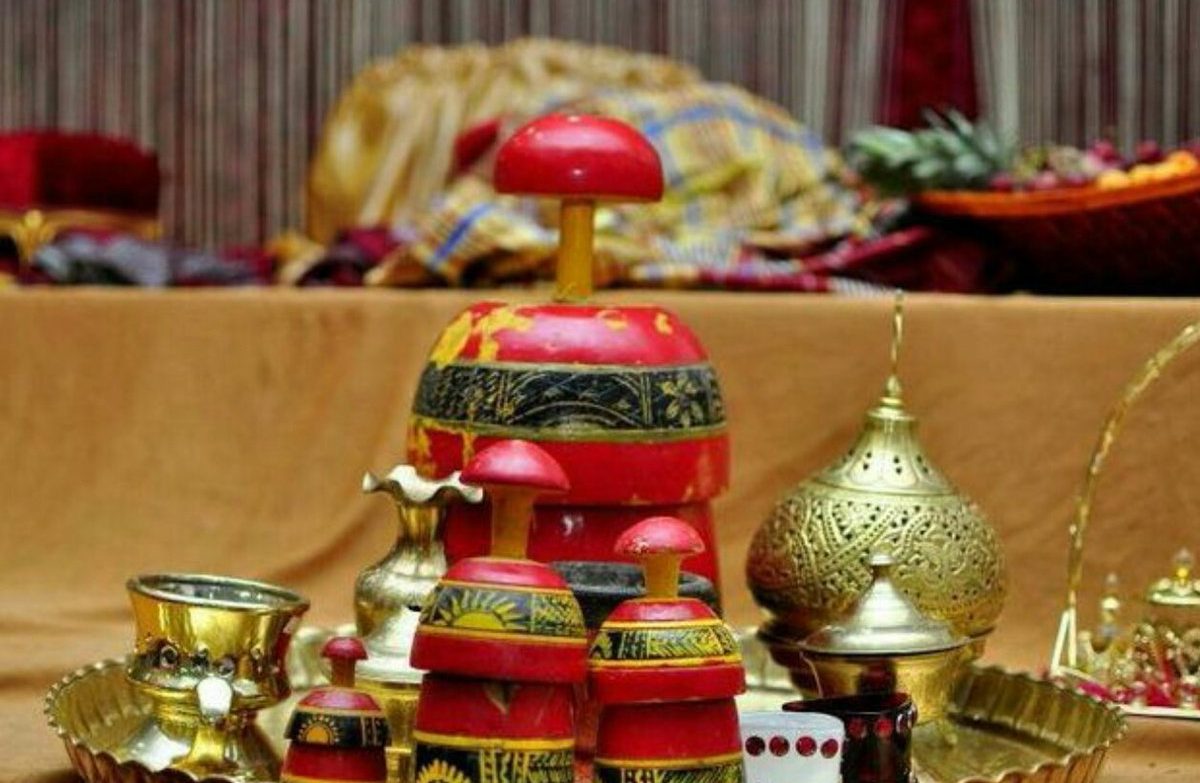 🇸🇩 SudanJirtigالجَرْتِقْ
A Sudanese wedding ritual of regal adornment, protection, and blessings of fertilityRite of passage
🇸🇩 SudanJirtigالجَرْتِقْ
A Sudanese wedding ritual of regal adornment, protection, and blessings of fertilityRite of passage
 🇹🇴 Tonga and 1 moreTaʻovala
A waist mat worn in Tonga for weddings, funerals and formal daysDress
🇹🇴 Tonga and 1 moreTaʻovala
A waist mat worn in Tonga for weddings, funerals and formal daysDress
 🇮🇳 Lucknow, India and 3 moreSherwani
A long buttoned coat for men, worn at weddings and state occasions in South AsiaDress
🇮🇳 Lucknow, India and 3 moreSherwani
A long buttoned coat for men, worn at weddings and state occasions in South AsiaDress