Festivals and celebrationsNorth AmericaSecular and civic
Mummers Parade
An annual New Year's Day street parade in Philadelphia featuring music and costumed clubs
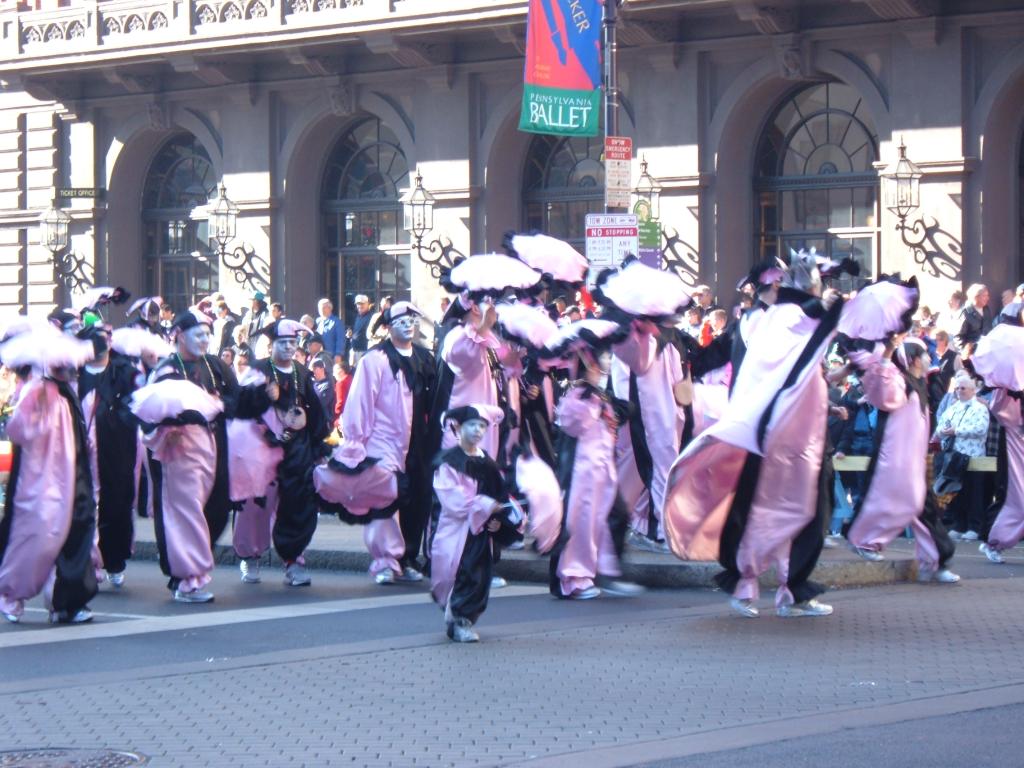
Held every New Year's Day in Philadelphia, the Mummers Parade is the oldest continuously run folk procession in the United States. Local clubs spend months creating heavy costumes, musical routines, and stage sets, parading along Broad Street before taking part in an informal neighborhood march.
When is Mummers Parade kept?
Mummers Parade is kept on annually on January 1.
Each January first, the Mummers Parade fills the streets of Philadelphia with music and costume. Established formally in 1901, the event brings together neighborhood clubs who spend months rehearsing music, constructing scenery, and tailoring handmade outfits. Participants march down city avenues, perform choreographed routines for judges, and celebrate the start of the year through song, satire, and communal street walking.
Origins and early history
The event grew out of customs carried to the Delaware Valley by Swedish, Finnish, English, German, and Irish settlers in the seventeenth century. Early colonists in Tinicum marked the day after Christmas by traveling between homes in disguise, reciting verses, and requesting drinks or hot pepper pot soup. Over time, these house visits merged with seasonal play-acting, firearm salutes, and the German practice of belsnickling, where masked adults questioned neighborhood children. During his presidency in Philadelphia, George Washington welcomed callers on New Year's Day, and roving performers modified traditional British folk plays to feature Washington instead of King George.
Streets and city control
During the nineteenth century, working-class men marched through city streets on New Year's Day, firing guns into the air, calling into taverns for free drinks, and defying polite civic standards. Pennsylvania passed a statute banning masquerades in 1808, yet authorities could not enforce the rule, finally repealing it in 1859. By the 1880s, city leaders chose to organize rather than prohibit the festivities. They required groups to secure permits and appoint responsible heads. Early associations like the Chain Gang and Golden Crown paved the way for an officially sponsored city parade in 1901. Soon after, performers adopted James A. Bland's song about golden slippers as their enduring anthem.
Costumes and club life
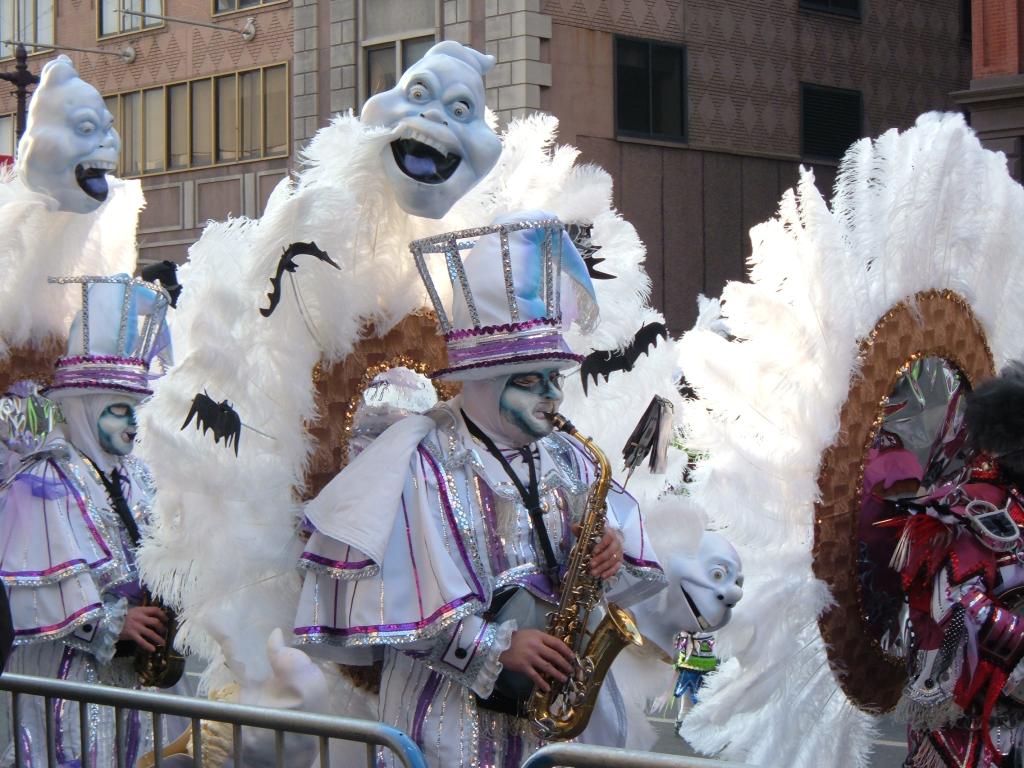
Preparations occupy members throughout the calendar year. Much of this work unfolds inside private clubhouses centered in South Philadelphia, particularly along Second Street in the Pennsport neighborhood. Members belong to brigades and associations that design movable backdrops, practice music, and assemble immense suits of clothing. Some of these outfits weigh more than one hundred pounds and require thousands of dollars in feathers, fabric, and framework. Because municipal prize purses ended in 2010, troupes pay their own way. They cover expenses by holding raffles, hosting social gatherings with food and beer, collecting membership dues, and playing paid musical engagements at summer parades or private celebrations.
Changes across the decades
The lineup has shifted with the city's population. Irish immigrants and Italian Americans joined the ranks in large numbers during the twentieth century. African American troupes also competed in earlier decades, such as the Golden Eagle Club, but faced severe judging bias and withdrew by 1929. Female participants were barred from joining officially until the 1970s, leaving men in drag to play female comedic parts. The city has cancelled the formal parade only three times: during the 1919 influenza outbreak, amid the economic hardship of 1934, and during the 2021 pandemic. Today, regional television and digital streams carry the performances to audiences far beyond Philadelphia.
How Mummers Parade is kept
On New Year's morning, performers assemble near Philadelphia City Hall and the Benjamin Franklin Parkway. The troupes march along Broad Street, presenting rehearsed skits, dances, and musical numbers before a panel of judges. The procession features several distinct performance styles, including comic sketches, satchel-bearing brigades, costumed pantomime troupes, and string musicians playing banjos, saxophones, and glockenspiels. When the formal parade reaches Washington Avenue in the afternoon, many participants turn eastward toward Second Street in South Philadelphia. There, clubs continue an informal, open-air celebration among neighborhood residents and supporters well into the evening.
When and where
The parade takes place every year on January 1. Festivities generally begin in the morning and run throughout the afternoon. If severe rain, snow, or excessive winds threaten to damage the fragile, feather-laden costumes, organizers typically postpone the entire procession to the following Saturday or Sunday.
Philadelphia hosts the parade along its central corridor, primarily moving along Broad Street between City Hall and Washington Avenue. Indoor performances and preparations also occur at the Pennsylvania Convention Center. The cultural heart of the tradition remains in the Pennsport area of South Philadelphia, particularly along Second Street.
What Mummers Parade means
To the neighborhood clubs that keep it alive, the parade represents a fierce commitment to working-class identity and local solidarity. Rooted in ancient midwinter revelry where social rules were playfully inverted, the day allows ordinary residents to display elaborate artistry, wit, and musical craft. Marching is an expression of deep neighborhood attachment, binding families and clubhouses across generations as they ring in the new year together on public streets.



Questions people ask about Mummers Parade
When is Mummers Parade kept?
Mummers Parade is kept on annually on January 1.
What is the Mummers Parade?
It is an annual New Year's Day folk parade held in Philadelphia. Formally organized in 1901, it is the nation's longest continuously operating folk procession, bringing together local neighborhood clubs that compete with elaborate handmade costumes, movable scenery, and musical routines.
What happens on Two Street after the parade?
After the judged procession concludes along Broad Street, many club members head east to Second Street, known locally as Two Street, in South Philadelphia. They celebrate informally outside their clubhouses alongside neighbors, friends, and family until late at night.
How do the participating clubs pay for their expenses?
Clubs raise their own funds through member dues, social events like raffles and dinners, bank loans, and paid musical gigs throughout the year. With official municipal prize money discontinued in 2010, troupes rely entirely on their own fundraising to finance their elaborate outfits.
See also
 ChristmasA festival of Jesus's birth, kept on 25 December with gifts, lights and shared meals
 HalloweenAn annual observance on 31 October marking the eve of All Saints' Day, rooted in Christian tradition and Celtic heritage
 Christmas treeA decorated evergreen or artificial tree placed indoors to mark the Christmas season.
 HanukkahAn eight-day Jewish festival marking the rededication of the Second Temple in Jerusalem and the miracle of a single day'
Good reading and sources
- Mummers Parade on WikipediaEncyclopedia
- More photos on Wikimedia CommonsPhotos and video
- Wikidata recordOpen data
The facts on this page come from the Wikipedia article "Mummers Parade", written by its contributors and used under the CC BY-SA 4.0 licence, and from its Wikidata record (CC0). EveryParampara rewrote the text in its own words, with AI assistance, and compares every page with the article to make sure no passage is copied. It may be reused under the same CC BY-SA 4.0 licence with a link back.
It may contain mistakes. Traditions differ from one family, village and community to the next, and the people who keep them know them best. If something is wrong, tell us. Last refreshed 2026-10-04.
More from the United States
All the traditions of the United States
🇮🇱 Jerusalem, Israel and 1 moreHanukkahחֲנֻכָּה
An eight-day Jewish festival marking the rededication of the Second Temple in Jerusalem and the miracle of a single day'Festival
 🇺🇸 New York, United StatesRockefeller Center Christmas Tree
A towering spruce lit annually in New York City to mark the start of the holiday season.Festival
🇺🇸 New York, United StatesRockefeller Center Christmas Tree
A towering spruce lit annually in New York City to mark the start of the holiday season.Festival
 🇳🇴 Norway and 3 moreJulebukkingGå julebukk
A Scandinavian Christmas custom where masked visitors go door to door for songs and treats.Festival
🇳🇴 Norway and 3 moreJulebukkingGå julebukk
A Scandinavian Christmas custom where masked visitors go door to door for songs and treats.Festival
 🇺🇸 United States and 1 moreTrunk-or-treating
A safer Halloween alternative where treats are handed out from decorated car trunks in parking lots.Festival
🇺🇸 United States and 1 moreTrunk-or-treating
A safer Halloween alternative where treats are handed out from decorated car trunks in parking lots.Festival
The same idea elsewhere
New Year compared 🇮🇳 Ayodhya, India and 7 moreDiwaliदीपावली (Dīpāvalī)
A five-day festival of lights celebrated across India and its diaspora to mark the victory of light over darkness.Festival · Feasts and festival meals
🇮🇳 Ayodhya, India and 7 moreDiwaliदीपावली (Dīpāvalī)
A five-day festival of lights celebrated across India and its diaspora to mark the victory of light over darkness.Festival · Feasts and festival meals
 🇮🇷 Iran and 7 moreNowruzنوروز
The Iranian new year at the March equinox, kept with fire, greenery and picnicsSeasonal
🇮🇷 Iran and 7 moreNowruzنوروز
The Iranian new year at the March equinox, kept with fire, greenery and picnicsSeasonal
 🇪🇬 Egypt and 5 moreMawlidمولد (Mawlid)
An annual festival marking the birth of the Prophet Muhammad, marked by poetry, processions and feasts.Festival · Feasts and festival meals
🇪🇬 Egypt and 5 moreMawlidمولد (Mawlid)
An annual festival marking the birth of the Prophet Muhammad, marked by poetry, processions and feasts.Festival · Feasts and festival meals
 🇮🇳 Mathura, India and 5 moreHoliहोली (Hindi)
A spring festival of colours and bonfires that marks the end of winter and the triumph of good over evil.Festival
🇮🇳 Mathura, India and 5 moreHoliहोली (Hindi)
A spring festival of colours and bonfires that marks the end of winter and the triumph of good over evil.Festival