Festivals and celebrationsSouth AsiaHindu
Mysore Dasara
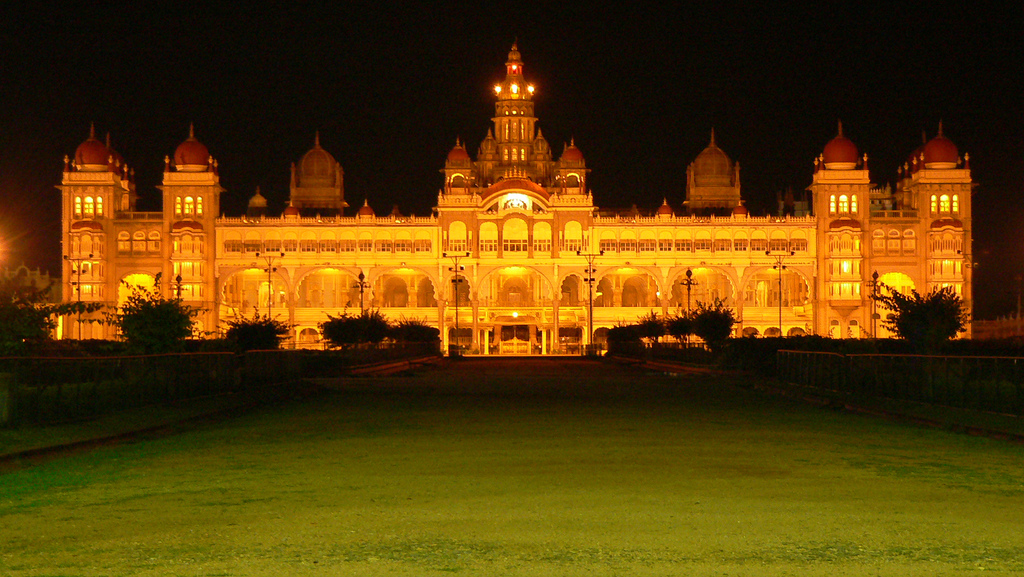
Karnataka's ten-day Dasara, with the lit Mysuru Palace and a Vijayadashami procession
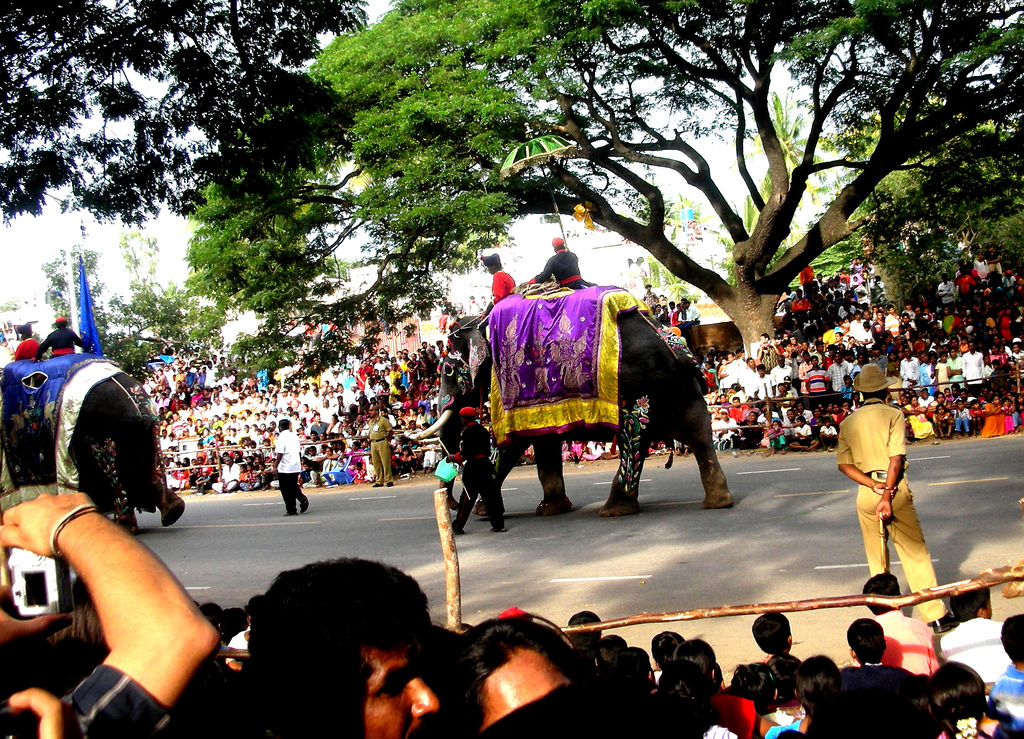
Mysore Dasara is the state festival of Karnataka in India, kept over ten days that begin with the nine nights of Navaratri and end on Vijayadashami. It celebrates good defeating evil, honours the goddess Chamundeshwari, and is centred on the city of Mysuru, where the palace is lit and a great procession is held.
When is Mysore Dasara marked?
Mysore Dasara is kept as part of Navratri, which runs from 11 to 19 October 2026.
Mysore Dasara is the state festival of Karnataka in India, kept over ten days that begin with the nine nights of Navaratri and close on Vijayadashami. People keep it to mark good defeating evil, and because tradition holds that the goddess Chamundeshwari killed the demon Mahishasura here. Mysuru lights its palace, holds a royal durbar and sends a great procession through the streets.
What it is
Mysore Dasara is the state festival of Karnataka, in southern India. It lasts ten days. The first nine nights are Navaratri and the last day is Vijayadashami, which falls on the tenth day of the Hindu month Ashvina and usually lands in September or October. The festival is about good defeating evil. Tradition says the goddess Chamundeshwari, a form of Durga, killed the demon Mahishasura, and that the city of Mysuru takes its name from that demon. In Mysuru the festival also honours warriors and the state's soldiers, and the Wadiyar royal family plays a leading part.
Origins and history
The exact origin is not known. Festivities of this kind were held by Vijayanagara kings as early as the fourteenth and fifteenth centuries, when the festival was called Mahanavami. Carvings on the outer wall of the Hazara Rama temple at Hampi show it. An Italian traveller, Niccolò de' Conti, wrote about the festival as a religious and martial occasion with royal backing. After Vijayanagara fell to the Deccan Sultanates, these celebrations stopped under Muslim rulers. The Wodeyars then formed a kingdom in the south of the old empire and carried the festival on. Raja Wodeyar I began the Mysore tradition in mid September 1610 at Srirangapatna.
Lights and durbar
During Dasara the Mysore Palace is lit every evening with nearly 100,000 bulbs, from seven to ten at night, on all ten days. Dancers, musicians and other performers from Karnataka appear in front of the lit building. A special durbar, or royal assembly, is held in the palace. Krishnaraja Wodeyar III began that practice in 1805, and royal family members, invited guests, officials and members of the public attended. After Srikanta Wadiyar died in December 2013, the 2014 Dasara was held with the Pattada Katti, the royal sword, placed on the golden throne. Since 2015 Yaduveer Krishnadatta Chamaraja Wadiyar has led the celebrations and the durbar.
The final procession
On Vijayadashami the Dasara procession goes through the streets of Mysore. It is known locally as Jumboo Savari. The name comes from British rule in the state; the older name was Jumbi Savari, meaning the going to the banni tree. An idol of the goddess Chamundeshwari sits on a golden mantapa, a platform holding about 750 kilograms of gold, carried on a decorated elephant. The royal couple and invited guests worship the idol before it sets out. Tableaux, dance troupes, bands, elephants, horses and camels join in. The route starts at the palace and ends at Bannimantap, where the banni tree is worshipped. The night closes with Panjina Kavayatthu, a torchlight parade.
Today and change
The Dasara exhibition opposite the palace began in 1880 under Maharaja Chamarajendra Wadiyar X to show the people of Mysore new developments. It opens during Dasara and runs to December, run now by the Karnataka Exhibition Authority. Concerts of music and dance fill halls across the city for all ten days, with artists invited from all over India, and a wrestling competition, Kusti Spardhe, draws wrestlers from around the country. The procession also draws criticism. Campaigners want the elephants to be dropped, and elephants and their handlers have died in incidents. Petitions against inviting the writer Banu Mushtaq to open the 2025 celebrations were dismissed by the courts.
How Mysore Dasara is kept
The festival runs ten days in Mysuru. The first nine nights are Navaratri. Each evening the palace is lit and cultural programmes are held in front of it. A special durbar, a royal assembly, is held in the palace. On the ninth day, Mahanavami, the royal sword is worshipped and carried in a procession with elephants, camels and horses. On the tenth day, Vijayadashami, the royal couple and invited guests worship the idol of Chamundeshwari, and the great procession leaves the palace with decorated elephants, horses, camels, tableaux and bands. It reaches Bannimantap, where the banni tree is worshipped, and a torchlight parade closes the night.
When and where
Dasara falls on the tenth day of the Hindu month Ashvina, which usually means September or October. The ten days begin with the nine nights of Navaratri. The festival follows the Hindu calendar, so the Gregorian dates shift from year to year. The old Mysore tradition was started in mid September 1610.
Mysore Dasara is kept across Karnataka, and its home is the city of Mysuru, where the palace, the durbar and the procession are centred. The tradition began at Srirangapatna under Raja Wodeyar I. Earlier festivities of this kind were held in the Vijayanagara Empire, and carvings at Hampi record them.
What Mysore Dasara means
The festival stands for good defeating evil. For those who keep it, it recalls the day Chamundeshwari killed Mahishasura, and the city's own name is tied to that story. In Mysuru the meaning is also martial and civic: the rituals honour warriors and the state that fights for the good, and the sword, the weapons, the horses and the elephants are shown and worshipped. For the royal house it is a duty and a public role; for the people of Karnataka it is the state's own festival.


Days Mysore Dasara is marked
Questions people ask about Mysore Dasara
When is Mysore Dasara marked?
Mysore Dasara is kept as part of Navratri, which runs from 11 to 19 October 2026.
What is Mysore Dasara?
It is the state festival of Karnataka, in India. It lasts ten days, beginning with the nine nights of Navaratri and ending on Vijayadashami. It marks good defeating evil and recalls the goddess Chamundeshwari killing the demon Mahishasura. Mysuru city and its palace are at the centre of it.
Where is it kept?
Its main home is Mysuru, in the state of Karnataka, India, where the palace is lit and the Vijayadashami procession is held. The tradition began at Srirangapatna in 1610 under Raja Wodeyar I.
What is Jumboo Savari?
Jumboo Savari is the local name for the procession on Vijayadashami, the last day of Dasara. It goes through the streets of Mysore, led by an idol of the goddess Chamundeshwari on a golden platform carried by an elephant. The name comes from British rule; the older name was Jumbi Savari.
Who leads the celebrations?
The Wadiyar royal family has long presided. Krishnaraja Wodeyar III began the palace durbar in 1805. After Srikanta Wadiyar died in 2013, the 2014 festival was held with the royal sword on the throne. Since 2015, Yaduveer Krishnadatta Chamaraja Wadiyar has held the Dasara celebration and durbar.
See also
 Thrissur PooramA grand Kerala temple gathering with elephant pageantry, percussion, and fireworks
 DashainA fifteen-day festival of family gatherings, blessings, and feasts across Nepal
 GoluAn autumn festival display of stepped dolls and figurines in South Indian homes
 IkatA resist-dyeing craft from Southeast Asia, where yarns are tied and dyed before weaving
Good reading and sources
- Emotional start to private DasaraThe Hindu, Article
- Banu Mushtaq: Why is India's International Booker Prize winner at the centre of a political row?BBC, Article
- Emotional start to private DasaraThe Hindu, Article
- Banu Mushtaq: Why is India's International Booker Prize winner at the centre of a political row?BBC, Article
- Mysore Dasara on WikipediaEncyclopedia
- More photos on Wikimedia CommonsPhotos and video
- Wikidata recordOpen data
The facts on this page come from the Wikipedia article "Mysore Dasara", written by its contributors and used under the CC BY-SA 4.0 licence, and from its Wikidata record (CC0). EveryParampara rewrote the text in its own words, with AI assistance, and compares every page with the article to make sure no passage is copied. It may be reused under the same CC BY-SA 4.0 licence with a link back.
It may contain mistakes. Traditions differ from one family, village and community to the next, and the people who keep them know them best. If something is wrong, tell us. Last refreshed 2026-10-05.
More from India
All the traditions of India
🇮🇳 Thrissur, IndiaThrissur Pooramതൃശ്ശൂര് പൂരം
A grand Kerala temple gathering with elephant pageantry, percussion, and fireworksFestival
🇳🇵 Kathmandu, Nepal and 4 moreDashainबडादशैँ
A fifteen-day festival of family gatherings, blessings, and feasts across NepalFestival
🇮🇳 Madurai, IndiaGoluபொம்மை கொலு
An autumn festival display of stepped dolls and figurines in South Indian homesFestival · Sweets given and shared
 🇮🇳 Ayodhya, India and 7 moreDiwaliदीपावली (Dīpāvalī)
A five-day festival of lights celebrated across India and its diaspora to mark the victory of light over darkness.Festival · Feasts and festival meals
🇮🇳 Ayodhya, India and 7 moreDiwaliदीपावली (Dīpāvalī)
A five-day festival of lights celebrated across India and its diaspora to mark the victory of light over darkness.Festival · Feasts and festival meals
The same idea elsewhere
Royalty and coronation compared 🇮🇱 IsraelRosh Hashanahרֹאשׁ הַשָּׁנָה
The Jewish New Year marked by shofar horn blasts, prayer and sweet foodsSpiritual
🇹🇭 ThailandThai solar calendarปฏิทินสุริยคติไทย
The official solar calendar of Thailand, numbered in the Buddhist EraSeasonal
🇮🇱 IsraelRosh Hashanahרֹאשׁ הַשָּׁנָה
The Jewish New Year marked by shofar horn blasts, prayer and sweet foodsSpiritual
🇹🇭 ThailandThai solar calendarปฏิทินสุริยคติไทย
The official solar calendar of Thailand, numbered in the Buddhist EraSeasonal
 🇵🇪 Cusco, Peru and 4 moreIntiinti (Quechua)
The Inca sun deity, honoured with temples, offerings and the June festival Inti RaymiSpiritual
🇵🇪 Cusco, Peru and 4 moreIntiinti (Quechua)
The Inca sun deity, honoured with temples, offerings and the June festival Inti RaymiSpiritual
 🇸🇪 Mora, SwedenVasaloppet
A 90 km cross-country ski race from Sälen to Mora, run every March since 1922Game
🇸🇪 Mora, SwedenVasaloppet
A 90 km cross-country ski race from Sälen to Mora, run every March since 1922Game