Crafts and makingSoutheast Asia
Ikat
A resist-dyeing craft from Southeast Asia, where yarns are tied and dyed before weaving

Ikat is a resist-dyeing craft from Southeast Asia, most closely associated today with Indonesia. Yarns are bound into bundles, dyed, rebound for each new colour, and only then woven, so the pattern sits in the threads themselves.
Long before a loom is set up, an ikat weaver decides a pattern by tying thread. Bundles of yarn are bound where the colour should not reach, dipped in dye, bound again for the next colour, and finally woven. The slight blur where dyed yarns meet is the mark of the technique, which belongs above all to Southeast Asia and to Indonesia in particular.
What the name means
Ikat is a Malay word. Depending on the sentence it can mean cord, thread, knot or bundle, and it also names the finished cloth and the acts of tying and binding. Related words are found in Indonesian languages spoken from Sumatra and Java to Bali, Sulawesi, Sumba, Flores, Timor and Maluku. The name describes what happens to the threads: they are tied before they are dipped in dye and then woven. Rouffaer is credited with bringing the term into European use. In Indonesian the plural stays ikat; English speakers often write ikats, and both are accepted. Today the word covers the method and the cloth, wherever either is made.
How the cloth is made
Work begins with yarn of cotton, silk, wool or another fibre wound onto a tying frame and separated into bundles. Each bundle is wrapped tightly with thread or another dye-resistant material, following the shape of the pattern, so dye cannot enter the bound parts. The bundle is dyed, the bindings are changed, and the yarn is dyed again for each further colour. Warp ikat needs the least work; weft ikat is slower, because the weft must be nudged into place after every pass of the shuttle. In double ikat both sets of yarns are bound and dyed. Only at the end are the bindings removed and the yarns woven.
Three kinds of ikat
In warp ikat only the lengthwise yarns are patterned and the crosswise weft is a single colour; the design can be seen on the loom before weaving starts. Weft ikat reverses this: the pattern travels with the crosswise yarn and appears only as the cloth grows, which is why weavers adjust each pass. In Bali, weft ikat is called endek. Double ikat binds and dyes both sets of yarns, and is the hardest and costliest to make. It is still woven in three countries: India, Japan and Indonesia. Where warp and weft motifs sit exactly on top of one another the result is double ikat; if they do not, it is called compound ikat.
Where it is woven
Indonesia is the country most closely linked with ikat today, and pieces are made across the archipelago, from Sumatra to Timor, New Guinea, Kalimantan and Sulawesi. In Southeast Asia the older traditions divide into two families: Daic-speaking peoples in Laos, northern Vietnam and Hainan, and the larger Austronesian group in Indonesia, the Philippines, Malaysia, Brunei and Timor-Leste, which travelled as far as Madagascar. India and Japan rank with Indonesia as places where ikat is most common, and double ikat survives in all three. Related, separately developed traditions exist in Central Asia, Iran, Africa and the Americas. In Central Asia's desert oases, the fine silk ikat of Bukhara, Samarkand, Hotan and Kashgar was famous in the 19th century.
Cloth that carries meaning
Because the pattern is tied and dyed before weaving, every ikat holds the weaver's decisions, and any small shift in alignment is visible in the finished cloth. Some traditions prize that blurred edge, and collectors of textiles often value it. Others, in South America and Indonesia, work for a crisp, exact alignment. Weights of meaning attach to particular cloths. A Torajan funeral shroud from Sulawesi is woven in ikat. Uyghur atlas has named types for older women, married women, girls and rulers, including a khan's or royal atlas. In Iran the fabric called daraee, from a word for wealth, was placed in a bride's dowry and bought by those who could afford it.
How Ikat is kept
A weaver starts by winding yarn of cotton, silk or wool onto a frame and dividing it into bundles. The bundles are folded so a basic motif repeats, and thread is wound tightly around every part of the yarn that should stay pale. The yarn is dipped in dye. The bindings are loosened or moved, and the yarn is dyed again for each further colour. After dyeing, the bindings are taken off and the yarn is set on the loom as warp, with thin bamboo strips lashed across to hold the motifs in line. Weft ikat instead treats the crosswise yarn, and two weavers often work together, one passing the shuttle while the other lays the yarn. Double ikat does both.
When and where
Ikat has no fixed date in the year. It is made when a weaver has yarn ready to bind and dye. Certain pieces belong to particular moments of life: a funeral shroud among the Toraja of Sulawesi, a cloth for a bride's dowry in Iran, atlas for the dress of Uyghur women.
Today ikat is made across Indonesia, from Sumatra and Java to Bali, Sulawesi, Sumba, Flores, Timor, Kalimantan and New Guinea. India and Japan are the other places where it is most common, and those three countries are the only ones still producing double ikat. Weaving with ikat also continues in Cambodia, Myanmar, the Philippines, Thailand, Iran, Uzbekistan, Guatemala, Mexico, Argentina, Bolivia and Ecuador.
What Ikat means
The word itself carries the idea of binding, and the cloth keeps the record of that work. Designs in some traditions mirror each other along a central line of warp threads. Motifs in the double ikat of Tenganan, in east Bali, are drawn from the patola textiles of Gujarat, which reached the island through trade, so a local sacred cloth can hold the memory of a long sea route. In Iran, daraee takes its name from wealth. In Central Asia, some atlas patterns were reserved for rulers, married women or girls.


Questions people ask about Ikat
What is ikat?
It is a resist-dyeing technique from Southeast Asia used to pattern cloth. Yarns are bound tightly in the places that should stay undyed and then dipped in dye. The bindings are changed and the yarn dyed again for each colour, and only after that is the cloth woven. The word is Malay and means to tie or bind.
Where is ikat made?
It is most common in Indonesia, India and Japan, and those three countries are the only ones where double ikat is still woven. Ikat is also produced in Cambodia, Myanmar, the Philippines, Thailand, Iran and Uzbekistan, and in Guatemala, Mexico, Argentina, Bolivia and Ecuador.
How is ikat different from batik or tie-dye?
In batik the resist, usually wax, is put on finished cloth, and in tie-dye the cloth itself is tied. Ikat works the other way round: the bindings go on the yarn before it is woven. That is why ikat patterns sit inside the threads, and why both faces of the fabric are patterned.
Why is ikat often slightly blurred?
Because dyed yarns have to be lined up again on the loom, thread by thread, and small shifts are almost impossible to avoid. Finer yarn and greater skill reduce the blur. Some traditions aim for exact alignment, while others, such as Central Asian and Guatemalan weavers, treat the blur as part of the design.
Who keeps ikat weaving today?
Weavers across Indonesia, India and Japan are the main keepers, and double ikat survives only in those three countries. Ikat is also woven in Cambodia, Myanmar, the Philippines, Thailand, Iran and Uzbekistan, and in Guatemala, Mexico, Argentina, Bolivia and Ecuador.
See also
 PhulkariGeometric and floral threadwork embroidered by Punjabi women on handwoven cotton.
 Kolhapuri chappalHandcrafted braided leather slip-on sandals from western India
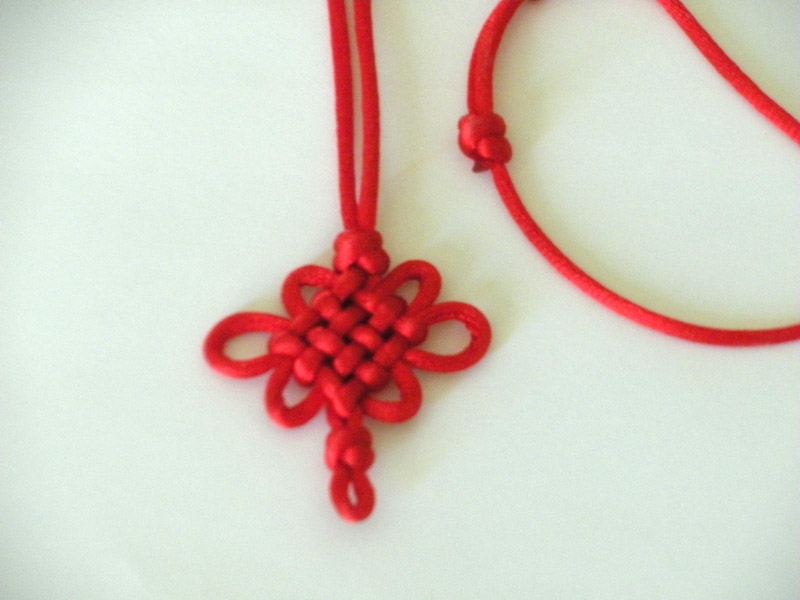 Chinese knottingA folk craft of cord tied into lucky shapes, made in China and given as charms
 Persian gardenAn ancient tradition of creating walled, geometric sanctuaries of shade and flowing water
Good reading and sources
- Encyclopaedia BritannicaArticle
- Textiles – Explore the Collections · V&AV&A, Article
- Textiles – Explore the Collections · V&AV&A, Article
- Ikat on WikipediaEncyclopedia
- More photos on Wikimedia CommonsPhotos and video
- Wikidata recordOpen data
The facts on this page come from the Wikipedia article "Ikat", written by its contributors and used under the CC BY-SA 4.0 licence, and from its Wikidata record (CC0). EveryParampara rewrote the text in its own words, with AI assistance, and compares every page with the article to make sure no passage is copied. It may be reused under the same CC BY-SA 4.0 licence with a link back.
It may contain mistakes. Traditions differ from one family, village and community to the next, and the people who keep them know them best. If something is wrong, tell us. Last refreshed 2026-10-05.
More from Indonesia
All the traditions of Indonesia 🇺🇬 Uganda and 4 moreBarkcloth
Cloth beaten from tree bark across Africa, Asia and the PacificCraft
🇺🇬 Uganda and 4 moreBarkcloth
Cloth beaten from tree bark across Africa, Asia and the PacificCraft
 🇮🇳 India and 5 moreKolamகோலம்
A rice-flour floor drawing made at South Indian doorsteps before sunriseCraft
🇮🇳 India and 5 moreKolamகோலம்
A rice-flour floor drawing made at South Indian doorsteps before sunriseCraft
 🇮🇩 Indonesia and 5 moreBatikꦧꦛꦶꦏ꧀ (bathik)
A Javanese wax-resist way of patterning cloth, and the textiles made that wayCraft
🇮🇩 Indonesia and 5 moreBatikꦧꦛꦶꦏ꧀ (bathik)
A Javanese wax-resist way of patterning cloth, and the textiles made that wayCraft
 🇮🇳 Goa, India and 2 moreShehnai
A traditional reed instrument played at weddings and temple festivals across IndiaPerformance
🇮🇳 Goa, India and 2 moreShehnai
A traditional reed instrument played at weddings and temple festivals across IndiaPerformance
The same idea elsewhere
Weddings compared 🇲🇬 MadagascarLamba
A rectangular cloth wrapped around the body, worn across Madagascar and at burialsDress
🇲🇬 MadagascarLamba
A rectangular cloth wrapped around the body, worn across Madagascar and at burialsDress
 🇬🇭 GhanaAdowa
A Ghanaian Akan dance where hands and feet carry the mood of the occasionPerformance
🇬🇭 GhanaAdowa
A Ghanaian Akan dance where hands and feet carry the mood of the occasionPerformance
 🇹🇴 Tonga and 1 moreTaʻovala
A waist mat worn in Tonga for weddings, funerals and formal daysDress
🇹🇴 Tonga and 1 moreTaʻovala
A waist mat worn in Tonga for weddings, funerals and formal daysDress
 🇺🇬 UgandaGomesi
A floor-length, brightly coloured dress tied with a sash, worn by women in UgandaDress
🇺🇬 UgandaGomesi
A floor-length, brightly coloured dress tied with a sash, worn by women in UgandaDress