Festivals and celebrationsEast AsiaBuddhist
Obon
In its own language: お盆 (Obon)
A Japanese Buddhist festival honoring the spirits of ancestors through dance, light, and family reunion.

Obon is a syncretic folk Buddhist custom in Japan that honors the spirits of one's ancestors. It has been celebrated for over five hundred years as a time for families to reunite, clean graves, and welcome visiting souls. The festival features traditional dances called Bon Odori and rituals involving lights to guide the spirits back and forth between worlds.
When is Obon in 2027?
Obon 2027 runs from 13 to 15 August 2027. Other years: 2026, 13 to 15 August 2026; 2028, 13 to 15 August 2028.
Obon is a Japanese Buddhist festival dedicated to honoring the spirits of deceased ancestors. Families return to their hometowns to visit graves and prepare household altars. The event combines ancient ancestor veneration with Buddhist teachings, creating a period of reunion and remembrance that lasts for several days each summer.
Origins and history
The tradition blends early Japanese beliefs about ancestral spirits with Buddhist practices introduced from China. Records indicate it was established as a court holiday by 733 CE under Empress Suiko. The core story involves the disciple Maha Maudgalyayana, who used his powers to find his mother suffering in a lower realm. The Buddha instructed him to make offerings to monks on the fifteenth day of the seventh month, which led to her release. This act of gratitude inspired the first Bon Odori dance.
When and where it falls
The festival spans three days, but the specific dates vary across Japan due to historical calendar changes. Most regions observe it on August 15, known as Hachigatsu Bon. Tokyo and some urban areas follow the Gregorian calendar strictly, celebrating on July 15. Other localities stick to the original lunar calendar date. Although not an official public holiday, many employers grant leave so workers can travel to their ancestral homes.
How it is kept
Families clean graves and set up butsudan altars with flowers and food offerings. On the first evening, small fires called mukaebi are lit to guide the spirits home. Special figures made of cucumber and eggplant represent horses and cows to help ancestors travel quickly. On the final night, okuribi fires send the spirits back, often accompanied by floating lanterns on rivers. People wear light cotton yukata during these summer events.
Dance and music
Bon Odori is a folk dance performed in circles around a wooden scaffold called a yagura. Each region has unique songs and movements that reflect local history or work, such as mining or fishing. Dancers may use fans, towels, or clappers. While originally religious, the dance has become a popular summer entertainment. Famous styles include the Awa Odori in Tokushima and the Gujo Odori in Gifu, which features all-night dancing.
How Obon is kept
Families gather at ancestral homes to clean graves and arrange altar offerings. Small fires mark the arrival and departure of spirits. Communities hold Bon Odori dances in streets or parks, wearing yukata and moving to regional folk songs. In diaspora communities, festivals often include taiko drumming and serve as fundraisers for local temples or cultural centers.
When and where
Observed annually for three days in July or August. Dates depend on whether a region follows the lunar calendar or the modern Gregorian system.
Primarily celebrated throughout Japan, with major observances in Tokyo, Tokushima, and Kyoto. Significant communities also celebrate in Brazil, Argentina, and the Philippines.
What Obon means
The festival emphasizes gratitude toward ancestors for their sacrifices and guidance. The spirit animals symbolize swift travel between worlds, while the guiding fires ensure safe passage. The dance expresses joy and relief at the ancestors' temporary return and eventual peaceful departure.


Days Obon is marked
Obon dates: 2026, 2027, 2028
| Year | Obon date |
|---|---|
| 2026 | 13 to 15 August 2026 |
| 2027 | 13 to 15 August 2027 |
| 2028 | 13 to 15 August 2028 |
Questions people ask about Obon
When is Obon in 2027?
Obon 2027 runs from 13 to 15 August 2027. Other years: 2026, 13 to 15 August 2026; 2028, 13 to 15 August 2028.
What is Obon?
Obon is a Japanese Buddhist festival honoring the spirits of ancestors. It involves family reunions, grave cleaning, and traditional dances to welcome and send off visiting souls.
What is Bon Odori?
Bon Odori is a traditional folk dance performed during Obon. People dance in circles around a scaffold to regional music, with styles varying by location to reflect local history.
Why do people light fires?
Fires called mukaebi guide ancestor spirits to their homes on the first night. Okuribi fires on the last night help them find their way back to the other world.
See also
 HalloweenAn annual observance on 31 October marking the eve of All Saints' Day, rooted in Christian tradition and Celtic heritage
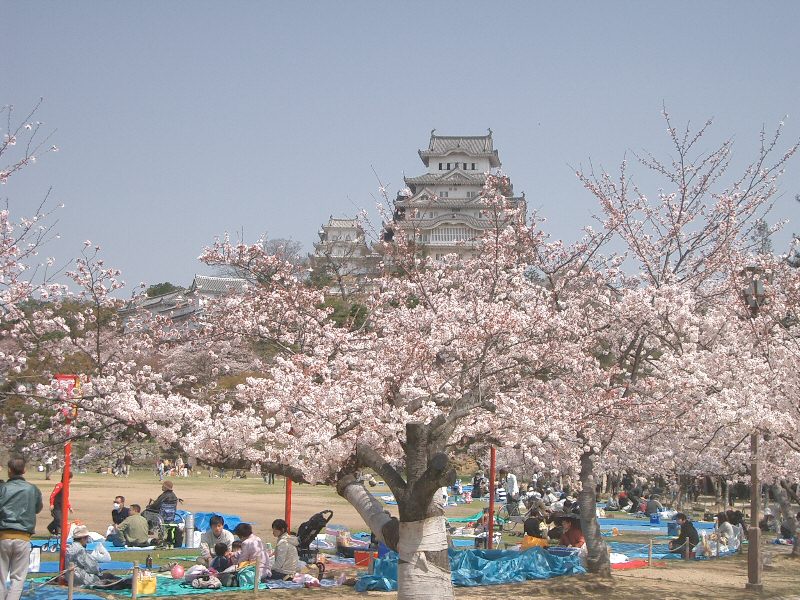 HanamiA Japanese spring custom of gathering under blooming cherry trees to eat, drink, and celebrate the fleeting beauty of th
 KwanzaaA seven-day African American celebration of heritage, family and community values
 Buddha's BirthdayA festival marking the birth of Siddhartha Gautama, observed across Asia with temple rituals and community gatherings.
Good reading and sources
- Obon on WikipediaEncyclopedia
- More photos on Wikimedia CommonsPhotos and video
- Wikidata recordOpen data
The facts on this page come from the Wikipedia article "Obon", written by its contributors and used under the CC BY-SA 4.0 licence, and from its Wikidata record (CC0). EveryParampara rewrote the text in its own words, with AI assistance, and compares every page with the article to make sure no passage is copied. It may be reused under the same CC BY-SA 4.0 licence with a link back.
It may contain mistakes. Traditions differ from one family, village and community to the next, and the people who keep them know them best. If something is wrong, tell us. Last refreshed 2026-10-04.
More from Japan
All the traditions of Japan
🇮🇪 Ireland and 5 moreHalloween
An annual observance on 31 October marking the eve of All Saints' Day, rooted in Christian tradition and Celtic heritageFestival · Sweets given and shared
 🇮🇳 India and 4 moreWater lantern
Small lamps floated on water to honour the dead and ask for good fortuneFestival
🇯🇵 Kyoto, Japan and 4 moreHanami花見
A Japanese spring custom of gathering under blooming cherry trees to eat, drink, and celebrate the fleeting beauty of thFestival · Lunch
🇮🇳 India and 6 moreBuddha's Birthday佛诞 (Fódàn)
A festival marking the birth of Siddhartha Gautama, observed across Asia with temple rituals and community gatherings.Festival
🇮🇳 India and 4 moreWater lantern
Small lamps floated on water to honour the dead and ask for good fortuneFestival
🇯🇵 Kyoto, Japan and 4 moreHanami花見
A Japanese spring custom of gathering under blooming cherry trees to eat, drink, and celebrate the fleeting beauty of thFestival · Lunch
🇮🇳 India and 6 moreBuddha's Birthday佛诞 (Fódàn)
A festival marking the birth of Siddhartha Gautama, observed across Asia with temple rituals and community gatherings.Festival
The same idea elsewhere
Remembering the ancestors compared 🇮🇳 Ayodhya, India and 7 moreDiwaliदीपावली (Dīpāvalī)
A five-day festival of lights celebrated across India and its diaspora to mark the victory of light over darkness.Festival · Feasts and festival meals
🇮🇳 Ayodhya, India and 7 moreDiwaliदीपावली (Dīpāvalī)
A five-day festival of lights celebrated across India and its diaspora to mark the victory of light over darkness.Festival · Feasts and festival meals
 🇮🇷 Iran and 7 moreNowruzنوروز
The Iranian new year at the March equinox, kept with fire, greenery and picnicsSeasonal
🇮🇷 Iran and 7 moreNowruzنوروز
The Iranian new year at the March equinox, kept with fire, greenery and picnicsSeasonal
 🇮🇱 Jerusalem, Israel and 1 moreHanukkahחֲנֻכָּה
An eight-day Jewish festival marking the rededication of the Second Temple in Jerusalem and the miracle of a single day'Festival
🇮🇱 Jerusalem, Israel and 1 moreHanukkahחֲנֻכָּה
An eight-day Jewish festival marking the rededication of the Second Temple in Jerusalem and the miracle of a single day'Festival
 🇮🇳 Mathura, India and 5 moreHoliहोली (Hindi)
A spring festival of colours and bonfires that marks the end of winter and the triumph of good over evil.Festival
🇮🇳 Mathura, India and 5 moreHoliहोली (Hindi)
A spring festival of colours and bonfires that marks the end of winter and the triumph of good over evil.Festival