Folklore and beliefNorth AmericaIndigenous and traditional
Ogopogo
In its own language: Nx̌ax̌aitkʷ
A lake serpent of British Columbia, known from Syilx stories and reported sightings

Ogopogo is a lake monster in Canadian folklore, said to live in Okanagan Lake in British Columbia. The Syilx and Secwepemc peoples tell of a powerful water being there, and settlers, visitors and searchers have added reported sightings, films and sonar sweeps since the 1800s.
When is Ogopogo kept?
Ogopogo is kept on no set date. Reports have been made at intervals since 1855, most recently in 2024..
Okanagan Lake in British Columbia is home to a story about a long, dark water being. The Syilx and Secwepemc peoples have their own names and understandings of it, while settlers later called it Ogopogo and turned it into a local emblem. People keep telling the story, and each new photograph or sonar reading starts the argument again.
What it is
Ogopogo is described as a serpent-like animal with smooth dark skin. Its body is said to be broader than a telephone pole and as much as 15 metres long. It moves fast, according to these accounts, coiling itself in upright waves and driving forward with a strong tail. Writers have compared it with Cadborosaurus, another reported creature, and with Basilosaurus, a whale that died out long ago. Okanagan Lake itself ranks as the biggest of five freshwater fjord lakes, joined one to another, in the Okanagan Valley. It runs 127.1 kilometres, reaches 232.3 metres at its deepest, and in the past 110 years has iced over eight times.
Older accounts
The Secwepemc and Syilx peoples knew the being as Naitaka. One widely repeated reading calls it an evil supernatural power, and says it demanded a life before anyone crossed the water. For hundreds of years, small animals were offered before people went into the lake. Oral traditions remember a visiting chief, Timbasket, who refused the offering and denied that such a being existed. He set out by canoe with his family, and the story says the water rose, the canoe was pulled down and all aboard were lost. In 1855 a settler, John MacDougal, said his horses were dragged under, and his own canoe nearly followed before he cut the rope. The name given to the being is rendered in English in several ways, among them water demon, water god and a sacred creature belonging to the water.
Naming the creature
The historian Mark M. Orkin traced the colonial name to a night in 1924, when a music-hall song from England was heard for the first time in Vernon, British Columbia. The closing line of that song gives the creature its name. Orkin also notes that a different version of the song had already been printed in the Vancouver Province, and that the name was said to have been used as early as 1912. Today people sometimes shorten it to Oggy, and speak of smaller ones as Ogopups. A play structure made in the creature's likeness stands in Kelowna.
Sightings and searches
Reports have come in from shore, road and boat. Susan Allison's account of 1872 was the first detailed one from a white settler. In 1968 Art Folden filmed a wake from Highway 97. About fifty tourists watched something off a Kelowna beach in 1980. Later sightings were dismissed by biologists as beavers, otters, birds or drifting timber. Searches have used sonar, boats, divers and thermal cameras. A Japanese expedition in 2000 recorded a sonar image of an object near Rattlesnake Island. In 2009 a dive team brought up a decomposed snake-like carcass; DNA testing showed it was a Kokanee, a landlocked salmon. Okanagan Lake holds tens of thousands of logs from the timber industry floating below the surface.
Meaning and respect
Pat Raphael of the Westbank First Nation, part of the Okanagan Nation Alliance, says the idea of a demon came from misunderstandings between early European settlers and the Syilx. In Syilx understanding the being is n̓x̌ax̌aitkʷ, a sacred spirit that guards the valley, living in caves beneath Rattlesnake Island or close to Squally Point. Jordan Coble, also of the Westbank First Nation, says it is a being to be respected rather than feared, and that the concept takes in everything in the valley. He notes that it has been reported on land as well as in water. Knowledge keeper Richard Armstrong, in Penticton, said that Western culture tends to explain things away, while for First Nations people the creature's existence is not in doubt.
How Ogopogo is kept
There is no ceremony. The being belongs to stories and to the watching of the lake. In older accounts, travellers offered small animals before entering the water. Today people along the shore keep an eye out and report what they see, and photographers, tourists and enthusiasts follow up with cameras. Search efforts have taken the form of sonar sweeps, helicopters with thermal cameras, chase boats and dive teams, often heading out at dawn. Each report is examined by biologists and video analysts, and most are explained as ordinary animals, debris or logs.
When and where
There is no fixed date. The oral accounts reach back hundreds of years, the first detailed settler report is from 1872, and sightings were still being reported in 2018 and 2024. Searches happen when a sighting or a question prompts one.
Okanagan Lake, in the Okanagan Valley of British Columbia, Canada, is the centre of it. The being is said to rest in caves beneath Rattlesnake Island, also called Monster Island, and near Squally Point. The towns around the water, among them Vernon, Kelowna, Peachland and Penticton, are where most reports come from.
What Ogopogo means
For the Syilx, the being is a guardian spirit of the valley, and the word for it covers the creature and everything else that lives there. It is to be treated with respect, not fear. Others have read it as a dangerous power that must be paid off before the water can be crossed safely. Outside these understandings, it has become a regional emblem, used in advertising, television programmes and the naming of local things.


Questions people ask about Ogopogo
When is Ogopogo kept?
Ogopogo is kept on no set date. Reports have been made at intervals since 1855, most recently in 2024..
What is the Ogopogo?
It is a lake monster in Canadian folklore, said to live in Okanagan Lake in British Columbia. Accounts describe a long, dark, serpent-like animal. The Syilx and Secwepemc peoples have their own names and teachings about a powerful water being in the same lake.
Where does it live?
Okanagan Lake in the Okanagan Valley of British Columbia. Traditional accounts place it in caves under Rattlesnake Island, also known as Monster Island, and near Squally Point.
Is the story Indigenous or settler?
Both strands exist. Some scholars have traced the being's development back to Syilx and Secwepemc teachings, along with water-monster stories found widely. The name Ogopogo came later, from a music-hall song heard in Vernon in 1924, and later sightings came mostly from settlers, visitors and searchers.
Has anyone proved it exists?
No. Searches with sonar, divers and thermal cameras have produced no proof. In 2009 a snake-like carcass pulled from the lake turned out to be a Kokanee salmon, and video analysts have matched most footage to animals or floating timber.
See also
 Fortune-tellingReading cards, palms or tea leaves to tell a client what may lie ahead
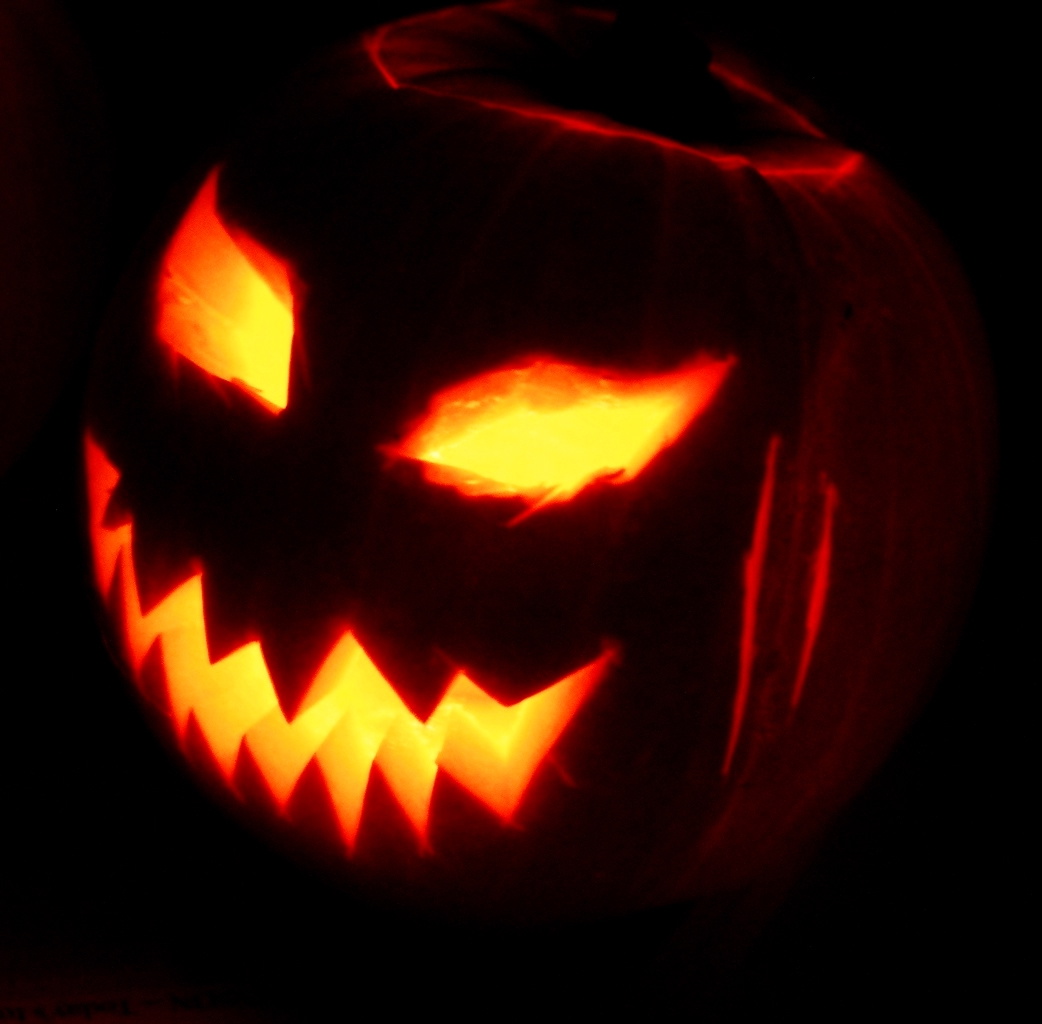 Jack-o'-lanternA carved pumpkin lantern lit with a candle to brighten and protect Halloween nights
 Fairy ringA natural ring of mushrooms formed by fungal growth, surrounded by folklore across Europe and beyond.
 MaximónA folk saint of the Guatemalan highlands, asked for health, crops and protection
Good reading and sources
- Canada’s mysterious lake monsterBBC, Article
- It could be a lot colder: Kelowna historian remembers Okanagan Lake freezing over completelyCBC, Article
- Canada’s mysterious lake monsterBBC, Article
- It could be a lot colder: Kelowna historian remembers Okanagan Lake freezing over completelyCBC, Article
- Ogopogo on WikipediaEncyclopedia
- More photos on Wikimedia CommonsPhotos and video
- Wikidata recordOpen data
The facts on this page come from the Wikipedia article "Ogopogo", written by its contributors and used under the CC BY-SA 4.0 licence, and from its Wikidata record (CC0). EveryParampara rewrote the text in its own words, with AI assistance, and compares every page with the article to make sure no passage is copied. It may be reused under the same CC BY-SA 4.0 licence with a link back.
It may contain mistakes. Traditions differ from one family, village and community to the next, and the people who keep them know them best. If something is wrong, tell us. Last refreshed 2026-10-11.
More from Canada
All the traditions of Canada
🇺🇸 New York, United States and 1 moreFortune-telling
Reading cards, palms or tea leaves to tell a client what may lie aheadFolklore
🇮🇪 Ireland and 2 moreJack-o'-lantern
A carved pumpkin lantern lit with a candle to brighten and protect Halloween nightsFolklore
🇬🇹 Santiago Atitlán, Guatemala and 3 moreMaximón
A folk saint of the Guatemalan highlands, asked for health, crops and protectionFolklore
 🇨🇦 Canada and 1 moreMemphre
A creature of Quebec and Vermont folklore, reported at Lake Memphremagog since 1816Folklore
🇨🇦 Canada and 1 moreMemphre
A creature of Quebec and Vermont folklore, reported at Lake Memphremagog since 1816Folklore
The same idea elsewhere
All of this kind 🇸🇳 Senegal and 1 moreKumpo
A palm-leaf figure of the Diola, danced at village festivals to urge good conductFolklore
🇦🇺 Sydney, AustraliaSongline
A navigational and spiritual path across Australia that links ancestral stories to the physical landscape.Folklore
🇸🇳 Senegal and 1 moreKumpo
A palm-leaf figure of the Diola, danced at village festivals to urge good conductFolklore
🇦🇺 Sydney, AustraliaSongline
A navigational and spiritual path across Australia that links ancestral stories to the physical landscape.Folklore
 🇬🇧 South Queensferry, United KingdomThe Burryman
A man clad in burdock burrs walks a Scottish town for a day, bringing luck as he goesFolklore
🇬🇧 South Queensferry, United KingdomThe Burryman
A man clad in burdock burrs walks a Scottish town for a day, bringing luck as he goesFolklore
 🇨🇳 Puyang, ChinaFeng shui風水
The Chinese spatial practice of aligning homes and graves with natural energyFolklore
🇨🇳 Puyang, ChinaFeng shui風水
The Chinese spatial practice of aligning homes and graves with natural energyFolklore