Folklore and beliefOceaniaIndigenous and traditional
Songline
A navigational and spiritual path across Australia that links ancestral stories to the physical landscape.
Songlines are paths across the Australian land or sky marked by creator-beings in Aboriginal belief systems. They serve as living maps, preserving oral histories, navigation knowledge, and ceremonial obligations through song cycles and art.
When is Songline kept?
Songline is kept on continuously, as part of daily life and ceremonial practice.
Songlines are sacred pathways across the Australian continent that connect ancestral creation events with the physical landscape. For Aboriginal communities, these routes are not merely geographical markers but living repositories of law, history, and survival knowledge. They are maintained through song, dance, and story, ensuring a continuous link between people and their country.
What songlines are
A songline represents a trajectory followed by creator-beings during the Dreaming. These paths record the journeys of ancestors who shaped the land, created animals, and established laws. The routes are encoded in traditional song cycles, which describe landmarks, waterholes, and natural features. By singing these songs in sequence, knowledgeable individuals can navigate vast distances, often crossing deserts and different language territories. The melodic contour reflects the terrain, while the rhythm carries the essential meaning. This system acts as a cultural passport, showing respect to the people of the region when sung correctly.
How they are kept
Knowledge of songlines is passed down through families and community members. Each person holds obligations to their birthplace and the specific parts of the songline associated with their mob. Ceremonies are enacted at sites along these paths to maintain the connection to country. Singing the songs keeps the land alive and preserves the stories of the ancestors. Neighbouring groups interact based on shared beliefs and reciprocal relationships defined by these tracks. Walking the wrong way along a line can be sacrilegious, highlighting the strict protocols involved in maintaining these sacred connections.
Examples of tracks
The Yolngu people of Arnhem Land tell of Barnumbirr, a creator-being linked to Venus, who guided humans and named the land from east to west. In the Victoria River Valley, the Yarralin people venerate Walujapi, the black-headed python spirit, whose physical marks remain on cliff faces. A major route spans 3,500 kilometres, connecting the Central Desert to Byron Bay on the east coast. In the Sydney region, soft sandstone ridges often guide songlines, where sacred rock engravings are found. These examples show how diverse landscapes and language groups share interconnected spiritual geography.
Meaning and significance
Songlines express a deep connection to country, linking Aboriginal identity to language groups and ancestral lands. They function as libraries storing critical knowledge for survival, including social behaviour, gender relations, and resource locations. The Dreaming is viewed as a continuous process, not just a past event. Ancestors deposited the spirits of unborn children and determined societal forms through these tracks. This framework establishes tribal law and totemic paradigms, ensuring that every aspect of life remains tied to the land and its creators.
How Songline is kept
Knowledgeable elders and community members sing the songs in sequence to navigate and teach others. Ceremonies are performed at significant sites along the paths to honour the ancestors and keep the land alive. Families pass down specific sections of the songlines, maintaining obligations to their birthplaces and language groups. Interaction between neighbouring groups occurs through shared recognition of these tracks and their associated laws.
When and where
Songlines are observed continuously as part of daily life, navigation, and ceremonial practice. They are not limited to specific dates but are integral to the ongoing relationship between people and their country.
Songlines span the entire Australian continent, crossing deserts, coasts, and valleys. They connect diverse Aboriginal peoples across thousands of kilometres, from the Central Desert to the east coast and Arnhem Land to the Victoria River Valley.
What Songline means
Songlines symbolize the inseparable link between the physical landscape and ancestral creation. They represent a living map that stores survival knowledge, law, and history. Singing them maintains the vitality of the land and affirms identity, belonging, and respect for the people of that country.
Questions people ask about Songline
When is Songline kept?
Songline is kept on continuously, as part of daily life and ceremonial practice.
What is a songline?
A songline is a path across the Australian land or sky marked by creator-beings in the Dreaming. It records the journey of ancestors and serves as a navigational tool and repository of cultural knowledge, preserved through song and story.
Where are songlines found?
Songlines are found throughout Australia, spanning diverse landscapes from deserts to coasts. They connect various Aboriginal regions, such as the Central Desert, Arnhem Land, and the Sydney area, often crossing hundreds of kilometres.
How do songlines help with navigation?
By singing the songs in the correct sequence, knowledgeable people can identify landmarks, waterholes, and terrain features. The melody describes the land's nature, allowing travelers to traverse vast distances safely.
Why are songlines important today?
They maintain a continuous connection to country, preserving law, history, and survival knowledge. Songlines affirm Aboriginal identity and facilitate respectful interaction between different language groups across the continent.
See also
 OnamA ten-day harvest festival in Kerala celebrating the return of King Mahabali with feasts, flower carpets and boat races.
 Tartan DayAn annual celebration of Scottish culture, clan tartans, and diaspora heritageWalkaboutA rite of passage involving travel through the Australian landscape to learn ancestral lore.
 Feng shuiThe Chinese spatial practice of aligning homes and graves with natural energy
Good reading and sources
- Encyclopaedia BritannicaArticle
- Songlines: the Indigenous memory codeABC News Australia, Article
- Songlines: the Indigenous memory codeABC News Australia, Article
The facts on this page come from the Wikipedia article "Songline", written by its contributors and used under the CC BY-SA 4.0 licence, and from its Wikidata record (CC0). EveryParampara rewrote the text in its own words, with AI assistance, and compares every page with the article to make sure no passage is copied. It may be reused under the same CC BY-SA 4.0 licence with a link back.
It may contain mistakes. Traditions differ from one family, village and community to the next, and the people who keep them know them best. If something is wrong, tell us. Last refreshed 2026-10-04.
More from Australia
All the traditions of Australia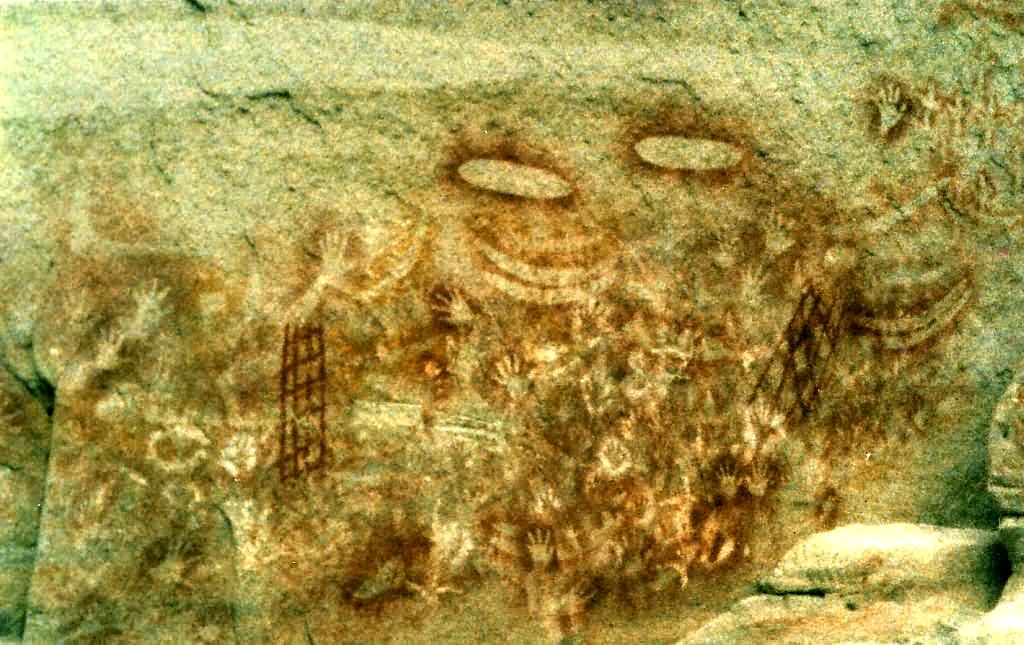 🇦🇺 AustraliaThe Dreaming
A living spiritual worldview and law connecting Aboriginal Australians to ancestors, land, and community.Spiritual
🇮🇳 Kochi, India and 5 moreOnamഓണം
A ten-day harvest festival in Kerala celebrating the return of King Mahabali with feasts, flower carpets and boat races.Festival · Feasts and festival meals
🇦🇺 AustraliaThe Dreaming
A living spiritual worldview and law connecting Aboriginal Australians to ancestors, land, and community.Spiritual
🇮🇳 Kochi, India and 5 moreOnamഓണം
A ten-day harvest festival in Kerala celebrating the return of King Mahabali with feasts, flower carpets and boat races.Festival · Feasts and festival meals
The same idea elsewhere
Remembering the ancestors compared 🇮🇪 Ireland and 5 moreHalloween
An annual observance on 31 October marking the eve of All Saints' Day, rooted in Christian tradition and Celtic heritageFestival · Sweets given and shared
🇮🇪 Ireland and 5 moreHalloween
An annual observance on 31 October marking the eve of All Saints' Day, rooted in Christian tradition and Celtic heritageFestival · Sweets given and shared
 🇮🇳 Ayodhya, India and 7 moreDiwaliदीपावली (Dīpāvalī)
A five-day festival of lights celebrated across India and its diaspora to mark the victory of light over darkness.Festival · Feasts and festival meals
🇮🇳 Ayodhya, India and 7 moreDiwaliदीपावली (Dīpāvalī)
A five-day festival of lights celebrated across India and its diaspora to mark the victory of light over darkness.Festival · Feasts and festival meals
 🇮🇷 Iran and 7 moreNowruzنوروز
The Iranian new year at the March equinox, kept with fire, greenery and picnicsSeasonal
🇮🇷 Iran and 7 moreNowruzنوروز
The Iranian new year at the March equinox, kept with fire, greenery and picnicsSeasonal
 🇮🇱 Jerusalem, Israel and 1 moreHanukkahחֲנֻכָּה
An eight-day Jewish festival marking the rededication of the Second Temple in Jerusalem and the miracle of a single day'Festival
🇮🇱 Jerusalem, Israel and 1 moreHanukkahחֲנֻכָּה
An eight-day Jewish festival marking the rededication of the Second Temple in Jerusalem and the miracle of a single day'Festival