Folklore and beliefEast AsiaShinto, Taoist and folk Chinese
Feng shui
In its own language: 風水
The Chinese spatial practice of aligning homes and graves with natural energy

Feng shui is an ancient Chinese spatial tradition used to determine the orientation of dwellings, tombs, and cities. Practitioners align buildings and landscapes with the flow of universal energy to foster harmony and good fortune for the living.
When is Feng shui kept?
Feng shui is kept on when designing, constructing, or situating homes, tombs, and settlements.
Feng shui is an ancient Chinese system of geomancy focused on directing the flow of qi, or universal energy, through landscapes, buildings, and graves. Originating thousands of years ago, it seeks to place human environments in harmony with the cosmos. People rely on its principles to select auspicious building sites, arrange living spaces, and position family tombs, aiming to bring balance, comfort, and material success to the living.
Origins in early astronomy
Long before the invention of the magnetic compass, early communities in China relied on astronomical observations to orient their homes. Neolithic sites dating back to 4000 BC show dwellings aligned with stars after the winter solstice for optimal sunlight. Early tombs in Puyang incorporated mosaic star maps depicting constellations such as the Dragon, Tiger, and Big Dipper on a north-to-south axis. Ancient builders combined circular and square cosmography to reflect concepts of heaven and earth. Over time, diviners employed sighting boards known as liuren astrolabes to chart celestial movements, establishing a long relationship between the night sky and terrestrial layouts.
Imperial architecture and city planning
From the Han dynasty onward, Chinese emperors made geomancy an official part of statecraft. Dynastic courts relied on specialized bureaus, such as the Imperial Astronomical Bureau during the Ming and Qing eras, to site imperial tombs, palaces, and capital cities. Major imperial projects, including the Forbidden City in Beijing, were built along strict north-to-south axes, with artificial hills placed to the north to satisfy geomantic rules. Siting state structures correctly was viewed as visible proof that a ruling dynasty held the Mandate of Heaven. Later, imperial officials also invoked these principles to oppose foreign infrastructure, arguing that railway tracks and telegraph lines disturbed local natural balances.
Energy and natural balance
Central to the practice is qi, a cosmic current of life energy moving through the world. The aim is to locate a favorable spot where a person or building can attain harmony with the surrounding universe. This balance relies on the interplay of yin and yang polarities, alongside the five elements of metal, earth, fire, water, and wood. Practitioners treat these elements as fundamental active forces rather than static physical matter. Traditional practice also has deep roots in honoring ancestors. By selecting a peaceful, auspicious burial ground, families believed they could show proper respect to departed spirits while securing good fortune and prosperity for future generations.
Instruments and compasses
Early practitioners used simple gnomons to measure shadows and track circumpolar stars, which helped settle the primary axis of ancient towns. As techniques evolved, diviners developed the liuren astrolabe, a two-sided lacquered board marked with celestial sightlines. Following the invention of magnetism, specialized tools emerged, including the south-pointing spoon and the multi-ringed luopan compass. These instruments allowed practitioners to measure landforms, calculate angles, and evaluate the environmental forces surrounding a property. In later centuries, builders also used specialized rulers to take measurements during construction, ensuring that doorways, rooms, and structural dimensions followed auspicious proportions.
How Feng shui is kept
When planning a new building, home, or burial site, a practitioner examines the surrounding topography, waterways, and celestial alignments. Using instruments such as the luopan compass or astronomical sightlines, the diviner assesses the directional flow of qi. The expert then identifies an auspicious position and orientation for the structure, balancing yin and yang forces and aligning the physical space with cosmic principles to foster prosperity and well-being.
When and where
Feng shui is consulted whenever a significant physical change takes place. This includes planning city layouts, building new homes, selecting burial sites for family members, or reorienting interior spaces. The timing of construction was historically calculated using astronomical markers and seasonal calendars.
Originating in ancient China, feng shui has been practiced across Chinese cities, imperial capitals, and rural farming communities for thousands of years. Today, it remains widely used across China, as well as in East Asian and Southeast Asian regions and global diaspora communities.
What Feng shui means
The words feng shui translate literally to wind and water, representing fluid forces that move across the earth. The practice reflects the belief that the outer physical environment directly shapes inner human fortunes. Achieving harmony between the two allows individuals to live in comfort, honor ancestral spirits, and channel cosmic currents toward good health and prosperity.


Questions people ask about Feng shui
When is Feng shui kept?
Feng shui is kept on when designing, constructing, or situating homes, tombs, and settlements.
What does feng shui mean?
The name feng shui translates literally as 'wind-water'. It represents the fluid flow of cosmic energy, known as qi, through natural landscapes and man-made structures.
Where and when did feng shui originate?
Feng shui originated in ancient China, with archaeological evidence dating back to Neolithic cultures around 4000 BC. Early builders aligned dwellings and graves with celestial asterisms such as the Big Dipper.
What tools do practitioners use?
Practitioners historically used astronomical gnomons and liuren astrolabes. Later, they adopted magnetic devices, including the south-pointing spoon and the luopan compass, alongside specialized feng shui rulers to measure spatial dimensions.
Why were tombs aligned using feng shui?
Traditional practice is closely connected to ancestor worship. Proper burial sites were chosen to capture vital qi, placating ancestral spirits and securing harmony, luck, and material well-being for living descendants.
See also
 Manchu-Han Imperial FeastA grand multi-day banquet uniting Manchu and Han culinary traditions in China
 CujuAn ancient Chinese kicking game played without hands using a stuffed or air-filled ball
 Traditional tattooingThe ancient custom of marking the skin for protection, healing, status and sacred rites
 PretaOfferings and rites for spirits enduring deep hunger across Asian traditions.
Good reading and sources
- Feng shui on WikipediaEncyclopedia
- More photos on Wikimedia CommonsPhotos and video
- Wikidata recordOpen data
The facts on this page come from the Wikipedia article "Feng shui", written by its contributors and used under the CC BY-SA 4.0 licence, and from its Wikidata record (CC0). EveryParampara rewrote the text in its own words, with AI assistance, and compares every page with the article to make sure no passage is copied. It may be reused under the same CC BY-SA 4.0 licence with a link back.
It may contain mistakes. Traditions differ from one family, village and community to the next, and the people who keep them know them best. If something is wrong, tell us. Last refreshed 2026-10-04.
More from China
All the traditions of China 🇯🇵 Tokyo, Japan and 2 moreManeki-neko招き猫
A lucky cat figurine, paw raised, kept by shop doors and in homes across JapanFolklore
🇯🇵 Tokyo, Japan and 2 moreManeki-neko招き猫
A lucky cat figurine, paw raised, kept by shop doors and in homes across JapanFolklore
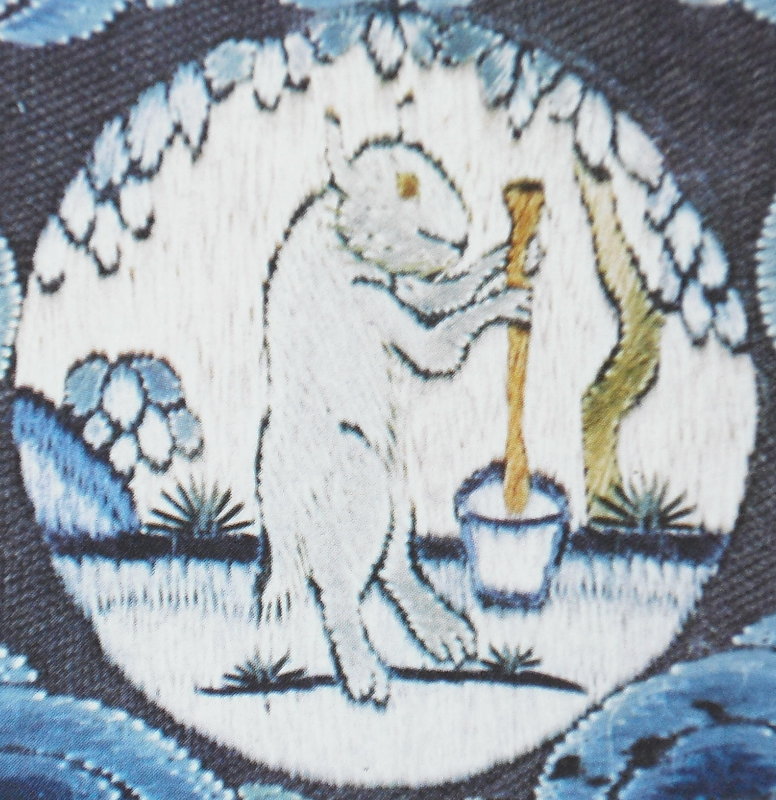 🇨🇳 China and 5 moreMoon rabbit月兔
A hare seen in the Moon's dark patches, pounding rice cakes or the elixir of lifeFolklore
🇨🇳 ChinaSymbolic stars神煞
Helpful and harmful influences read from the Chinese calendar's stems and branchesFolklore
🇨🇳 China and 5 moreMoon rabbit月兔
A hare seen in the Moon's dark patches, pounding rice cakes or the elixir of lifeFolklore
🇨🇳 ChinaSymbolic stars神煞
Helpful and harmful influences read from the Chinese calendar's stems and branchesFolklore
 🇨🇳 Luoyang, China and 1 moreYin and yang陰陽
Two opposite but complementary forces that Chinese thought sees in all thingsFolklore
🇨🇳 Luoyang, China and 1 moreYin and yang陰陽
Two opposite but complementary forces that Chinese thought sees in all thingsFolklore
The same idea elsewhere
Remembering the ancestors compared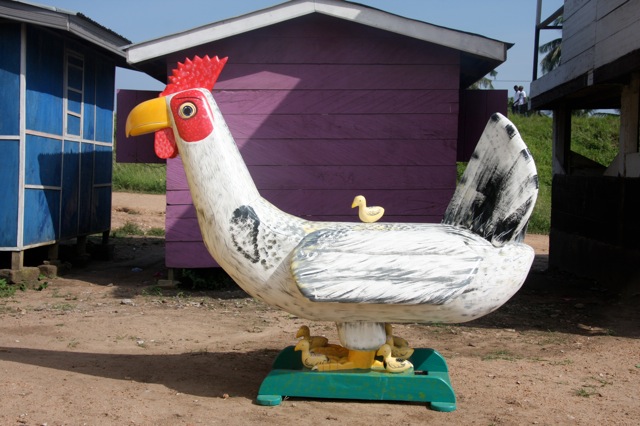 🇬🇭 Accra, GhanaFantasy coffinsAbebuu adekai
Custom hand-carved burial caskets shaped as animals, tools and symbols in southern GhanaRite of passage
🇬🇭 Accra, GhanaFantasy coffinsAbebuu adekai
Custom hand-carved burial caskets shaped as animals, tools and symbols in southern GhanaRite of passage
 🇳🇬 Lagos, NigeriaEyo FestivalAdamu Orisha Play
A Yoruba masquerade procession honouring departed leaders and royalty in LagosFestival
🇳🇬 Lagos, NigeriaEyo FestivalAdamu Orisha Play
A Yoruba masquerade procession honouring departed leaders and royalty in LagosFestival
 🇬🇭 Akropong, GhanaOdwira Festival
An annual harvest and purification festival celebrated by the Akuapem in GhanaFestival · Feasts and festival meals
🇬🇭 Akropong, GhanaOdwira Festival
An annual harvest and purification festival celebrated by the Akuapem in GhanaFestival · Feasts and festival meals
 🇹🇴 Tonga and 1 moreTaʻovala
A waist mat worn in Tonga for weddings, funerals and formal daysDress
🇹🇴 Tonga and 1 moreTaʻovala
A waist mat worn in Tonga for weddings, funerals and formal daysDress