Qeleshe
A white brimless felt cap worn by Albanian men as a symbol of national identity.

The qeleshe is a traditional white skull cap made from wool felt. It is worn by Albanian men across Albania and Kosovo. The shape varies by region, with southern caps being taller than northern ones. It serves as a key element of traditional dress and a national symbol.
When is Qeleshe kept?
Qeleshe is kept on year-round as part of traditional attire.
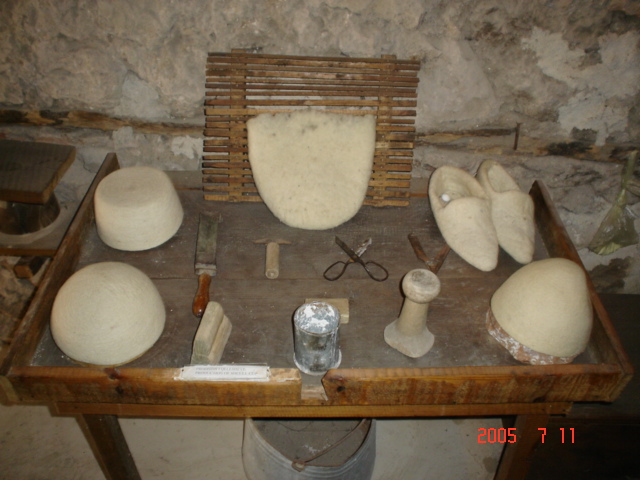
The qeleshe is a white brimless felt cap worn by Albanian men. It represents a long-standing tradition of headwear in the Balkans. The cap is crafted from wool and shaped by hand. It appears in various forms across different regions of Albania and Kosovo. Many Albanians view it as a powerful national symbol.
What it is
The qeleshe is a skull cap made from white wool felt. It has no brim and fits closely to the head. The name comes from the Albanian word for wool. People also call it plis or qylaf. The cap is a central part of traditional Albanian clothing. Men wear it during daily life and special events. The design changes depending on where the wearer lives. In the north, the cap sits low and round. In the south, it stands taller. Some versions have a small point at the top. The material is soft but durable.
How it is made
Artisans make every qeleshe by hand. They start with raw wool fibers. In Kosovo, makers use soap to help process the wool. In Krujë, workers beat the wool with a stone tool until the strands knot together. They press the wool flat using wooden instruments. The material goes through hot water and salt baths. Makers seal the wool in a flattener for a day. They then soak it again. Two flattened pieces form the cap. Soap acts as glue to join the fibers. The hat dries on a wooden model to set its shape. A razor smooths the surface.
History and origins
This headwear traces back to Illyrian times. Iron Age graves show both men and women wearing similar hemispherical caps. Ancient monuments depict figures in these hats. A traveler named Simon Fitzsimons wrote about them in 1322. He noted that Albanians wore white hats distinct from their neighbors. Later records describe tall conical shapes. Painters in the eighteenth century depicted subjects wearing the cap. It became a common sight during the struggle for independence. Soldiers wore it into battle. It also appeared in official military uniforms later.
Regional styles
The cap looks different across the land. Northern highlanders wear a low, round version. People in Kukës prefer a truncated shape. Those in Gjirokastër and Vlorë wear taller caps. The Myzeqe plain has its own local style. Some southern areas feature a small protrusion. Despite these differences, all are recognized as qeleshe. The white color remains standard. This uniformity helps identify the wearer as Albanian. The style evolved over centuries to meet local needs.
Cultural meaning
The qeleshe stands as a national symbol. It connects modern Albanians to their ancestors. Wearing it shows pride in heritage. It appears in weddings and formal gatherings. Artists and photographers captured it to preserve culture. The cap distinguishes Albanians from other groups in the region. It represents resilience and identity. Today, it remains a respected part of traditional dress. Many see it as an essential piece of Albanian history.
How Qeleshe is kept
Men wear the qeleshe as part of their daily or ceremonial attire. Artisans craft each cap by hand using wool, soap, and wooden tools. The process involves beating, pressing, and shaping the felt. Regional variations dictate the final height and silhouette. The cap is worn during weddings, festivals, and formal occasions. It serves as a visible marker of Albanian identity and cultural continuity.
When and where
It is worn year-round as traditional dress. There is no specific calendar date for wearing it. It appears whenever formal traditional clothing is required.
It is strongest in Albania and Kosovo. Specific styles exist in Tirana, Gjirokastër, Vlorë, and Krujë. The northern highlands favor lower caps. Southern regions prefer taller designs. It is less common in lowland plains.
What Qeleshe means
It represents Albanian national identity and heritage. The cap links wearers to Illyrian ancestors. It signifies dignity and cultural pride. Distinguishing it from neighboring styles highlights unique ethnic roots. It is a badge of belonging to the Albanian community.



Questions people ask about Qeleshe
When is Qeleshe kept?
Qeleshe is kept on year-round as part of traditional attire.
Where is Qeleshe kept?
Qeleshe belongs to the traditions of Albania and Kosovo, and is tied most closely to Tirana.
Who keeps Qeleshe?
As our sources describe it, Qeleshe is kept by Albanians. Many other communities and families now share it too.
See also
 XhubletaA rippling bell-shaped skirt made by Albanian women of the northern highlands
 GymnastyorkaA loose pullover smock that began as a peasant shirt and became a soldier's uniform
 TurbanCloth wound around the head, worn for faith, rank, shade and identity
 Serbian traditional clothingThe regional folk attire of Serbs, featuring wool, linen, and leather, worn for celebrations and cultural identity.
Good reading and sources
- Qeleshe on WikipediaEncyclopedia
- More photos on Wikimedia CommonsPhotos and video
- Wikidata recordOpen data
The facts on this page come from the Wikipedia article "Qeleshe", written by its contributors and used under the CC BY-SA 4.0 licence, and from its Wikidata record (CC0). EveryParampara rewrote the text in its own words, with AI assistance, and compares every page with the article to make sure no passage is copied. It may be reused under the same CC BY-SA 4.0 licence with a link back.
It may contain mistakes. Traditions differ from one family, village and community to the next, and the people who keep them know them best. If something is wrong, tell us. Last refreshed 2026-10-13.
More from Albania
All the traditions of Albania
🇮🇳 Pune, India and 5 moreTurbanدولبند (dolband)
Cloth wound around the head, worn for faith, rank, shade and identityDress
🇦🇱 Albania and 3 moreXhubleta
A rippling bell-shaped skirt made by Albanian women of the northern highlandsDress
🇷🇺 Russia and 4 moreGymnastyorkaгимнастёрка
A loose pullover smock that began as a peasant shirt and became a soldier's uniformDress
 🇮🇷 Iran and 21 moreNowruzنوروز
The Iranian new year at the March equinox, kept with fire, greenery and picnicsSeasonal
🇮🇷 Iran and 21 moreNowruzنوروز
The Iranian new year at the March equinox, kept with fire, greenery and picnicsSeasonal
The same idea elsewhere
All of this kind 🇮🇱 Israel and 1 moreTzitzitצִיצִית
Knotted ritual fringes worn on a four-cornered garment, a reminder of the commandmentsDress
🇮🇱 Israel and 1 moreTzitzitצִיצִית
Knotted ritual fringes worn on a four-cornered garment, a reminder of the commandmentsDress
 🇪🇬 Egypt and 5 moreTraditional tattooing
The ancient custom of marking the skin for protection, healing, status and sacred ritesDress
🇪🇬 Egypt and 5 moreTraditional tattooing
The ancient custom of marking the skin for protection, healing, status and sacred ritesDress
 🇼🇸 Samoa and 1 moreʻIe tōga
Precious woven mats exchanged in Samoan ceremonies to honor family ties and chiefly status.Dress
🇼🇸 Samoa and 1 moreʻIe tōga
Precious woven mats exchanged in Samoan ceremonies to honor family ties and chiefly status.Dress
 🇱🇸 LesothoMokorotlo
A conical straw hat that serves as the national symbol of Lesotho and a key element of Basotho traditional dress.Dress
🇱🇸 LesothoMokorotlo
A conical straw hat that serves as the national symbol of Lesotho and a key element of Basotho traditional dress.Dress