🇽🇰 Traditions of Kosovo
17 traditions from Kosovo, best known first, across 8 cities and towns.
Kosovan life centers on the Albanian majority, blending Balkan warmth with local customs. The year turns through seasons of pickling and baking, while faith and family mark the key rites. Food is a daily ritual of bread, dairy, and slow-cooked meats.
In Kosovo, culture flows from the Albanian majority, shaped by centuries of mountain life and crossroads history. People measure time by the harvest, preserving summer’s abundance for winter’s long cold. Daily meals revolve around shared bread and simple dairy. Festivals bring communities together to sing, dance, and honor ancestors. This guide explores how Kosovans live, eat, and remember.
The turning year
The calendar follows the land. Summer brings fresh vegetables to the table, eaten raw in salads with tomatoes, cucumbers, and onions. As autumn cools, families pickle green tomatoes, cauliflower, and cabbage to last through winter. This preservation is a quiet act of care. Winter meals shift to heartier fare. Pickled items accompany appetizers year-round. Coffee shops stay open as social hubs where people gather to talk and drink Turkish coffee or espresso. The rhythm is steady, grounded in seasonal availability rather than grand public holidays alone.
Faith and memory
National identity leans more on language and shared culture than on religion, though faith remains present. Many follow Islam, while others practice Orthodox Christianity. Rituals at home often blend older folk beliefs with formal religious observance. Births are celebrated with prayers and community visits. Marriages involve extended family gatherings, music, and feasting that can last days. Death is marked by quiet mourning and communal support, with neighbors bringing food to the grieving household. These rites reinforce bonds between kin and neighbors, keeping the community intact through life’s transitions.
The daily table
Bread is sacred, baked in varieties like pitalka, pita, and cornbread called Leqenik. Breakfast is light: croissants, scrambled eggs, or petulla fried dough. Lunch often features pies such as burek with meat or cheese, or spanakopita with spinach. Dinner may include qebapa, small grilled sausages served with sour cream and ajvar, a spicy pepper condiment. Stuffed peppers and sarma, meat wrapped in leaves, are common in colder months. Dairy plays a central role. A thick spread made from milk fat, known as lang, is eaten with bread, sometimes warm with roasted peppers. Soup like pasulj, made with white beans and beef, comforts on chilly evenings.
Music and gathering
Music accompanies most celebrations. Traditional songs echo in village squares during weddings and festivals. Dance circles form, with participants holding hands and moving to rhythmic beats. Instruments like the çifteli, a two-stringed lute, provide melody. In cities, modern cafes host live performances blending folk and contemporary styles. Hospitality is key. Guests are always offered coffee, tea, or rakia, a fruit brandy. Refusing these drinks can be seen as impolite. The home is a place of welcome, where strangers are treated with respect and generosity.
The facts in this overview come from the Wikipedia article "Culture of Kosovo", written by its contributors and used under the CC BY-SA 4.0 licence. EveryParampara rewrote the text in its own words, with AI assistance, and compares every page with the article to make sure no passage is copied. It may be reused under the same CC BY-SA 4.0 licence with a link back.
Cities, towns and villages of Kosovo
 🇷🇸 Serbia and 1 moreVidovdanВидовдан
A Serbian church feast on 28 June, kept in memory of those who died at KosovoSpiritual
🇷🇸 Serbia and 1 moreVidovdanВидовдан
A Serbian church feast on 28 June, kept in memory of those who died at KosovoSpiritual
 🇦🇱 Elbasan, Albania and 3 moreDita e Verës
An Albanian spring festival of bonfires, sweets and nature renewal on March 14Seasonal
🇦🇱 Elbasan, Albania and 3 moreDita e Verës
An Albanian spring festival of bonfires, sweets and nature renewal on March 14Seasonal
 🇦🇱 Albania and 1 moreKanunKanû
Albanian customary law kept by word of mouth, centred on honour and the given wordEtiquette
🇦🇱 Albania and 1 moreKanunKanû
Albanian customary law kept by word of mouth, centred on honour and the given wordEtiquette
 🇮🇳 Pune, India and 5 moreTurbanدولبند (dolband)
Cloth wound around the head, worn for faith, rank, shade and identityDress
🇦🇱 Albania and 2 moreBesaBesë
A pledge of honour that an Albanian gives once and must never breakEtiquette
🇮🇳 Pune, India and 5 moreTurbanدولبند (dolband)
Cloth wound around the head, worn for faith, rank, shade and identityDress
🇦🇱 Albania and 2 moreBesaBesë
A pledge of honour that an Albanian gives once and must never breakEtiquette
 🇦🇱 Albania and 5 moreSworn virginburrnesha
A vow of chastity that lets a woman of the northern Balkans live as a manRite of passage
🇦🇱 Albania and 5 moreSworn virginburrnesha
A vow of chastity that lets a woman of the northern Balkans live as a manRite of passage
 🇦🇱 Albania and 3 moreXhubleta
A rippling bell-shaped skirt made by Albanian women of the northern highlandsDress
🇦🇱 Albania and 3 moreXhubleta
A rippling bell-shaped skirt made by Albanian women of the northern highlandsDress
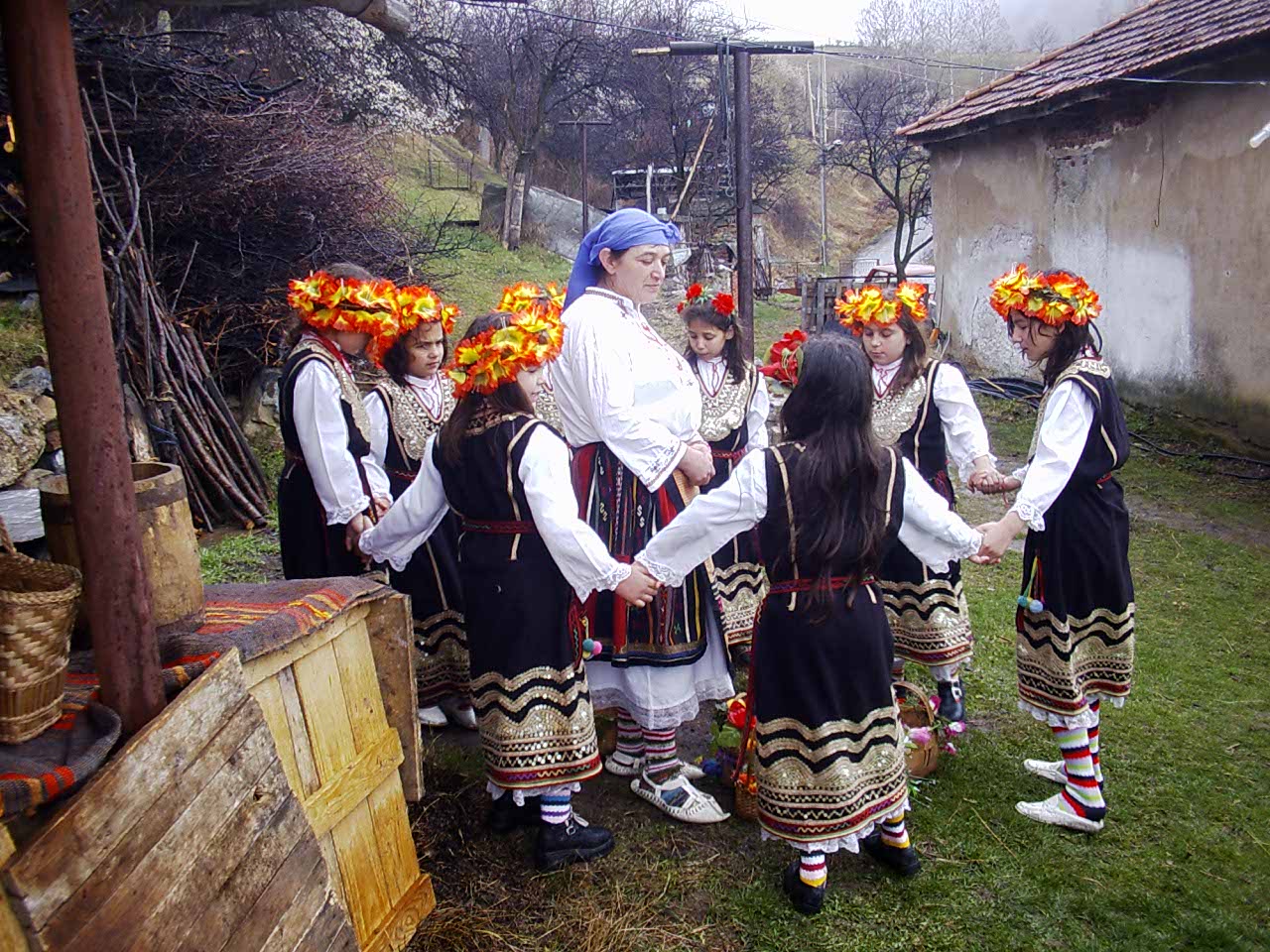 🇷🇸 Serbia and 3 moreLazariceлазарице
A spring procession of girls in flower wreaths, singing door to door before Palm SundaySpiritual
🇷🇸 Serbia and 3 moreLazariceлазарице
A spring procession of girls in flower wreaths, singing door to door before Palm SundaySpiritual
 🇷🇸 Belgrade, Serbia and 5 moreSerbian traditional clothingсрпска народна ношња (srpska narodna nošnja)
The regional folk attire of Serbs, featuring wool, linen, and leather, worn for celebrations and cultural identity.Dress
🇷🇸 Belgrade, Serbia and 5 moreSerbian traditional clothingсрпска народна ношња (srpska narodna nošnja)
The regional folk attire of Serbs, featuring wool, linen, and leather, worn for celebrations and cultural identity.Dress
 🇳🇱 Netherlands and 5 moreManifesta
A roving European contemporary art festival held in a new host city every two yearsPerformance
🇳🇱 Netherlands and 5 moreManifesta
A roving European contemporary art festival held in a new host city every two yearsPerformance
 🇽🇰 Prizren, KosovoAutostrada Biennale
A biennial contemporary art festival and cultural exhibition in Prizren, KosovoPerformance
🇽🇰 Prizren, KosovoAutostrada Biennale
A biennial contemporary art festival and cultural exhibition in Prizren, KosovoPerformance
 🇽🇰 Pristina, KosovoDAM Festival Pristina
An annual gathering in Pristina showcasing emerging classical and contemporary musiciansPerformance
🇽🇰 Pristina, KosovoDAM Festival Pristina
An annual gathering in Pristina showcasing emerging classical and contemporary musiciansPerformance
 🇽🇰 Prizren, KosovoDokuFest
An annual summer gathering in Prizren dedicated to non-fiction cinema and short filmsFestival
🇽🇰 Prizren, KosovoDokuFest
An annual summer gathering in Prizren dedicated to non-fiction cinema and short filmsFestival
 🇽🇰 Gjilan, KosovoFlaka e Janarit
A winter arts festival in Kosovo honoring national martyrs through music, drama and verseFestival
🇽🇰 Gjilan, KosovoFlaka e Janarit
A winter arts festival in Kosovo honoring national martyrs through music, drama and verseFestival
 🇽🇰 Vushtrri, Kosovo and 1 moreGatherings of Poetesses in VushtrriTakimet e Poeteshave në Vushtrri
An annual literary festival celebrating female poets in Vushtrri, KosovoPerformance
🇽🇰 Kosovo and 2 morePodruga
A Balkan custom in which a childless wife agreed to a second wife joining the householdRite of passage
🇽🇰 Vushtrri, Kosovo and 1 moreGatherings of Poetesses in VushtrriTakimet e Poeteshave në Vushtrri
An annual literary festival celebrating female poets in Vushtrri, KosovoPerformance
🇽🇰 Kosovo and 2 morePodruga
A Balkan custom in which a childless wife agreed to a second wife joining the householdRite of passage
Photo credits on this page
The small pictures above come from Wikimedia Commons under free licences. Some are cropped to fit.
- Dita e Verës: Bibiomn, CC BY-SA 4.0, source
- Kanun: Lekë Dukagjini & Shtjefën Gjeçovi, Public domain, source
- Turban: pxhere, CC0, source
- Vidovdan: Радосав Стојановић at Serbian Wikipedia, Public domain, source
- Sworn virgin: Edith Durham, Public domain, source
- Xhubleta: Albinfo, CC BY-SA 4.0, source
- Lazarice: Svetlina bov at Bulgarian Wikipedia, Public domain, source
- Manifesta: Manifesta8 manifesta 8, CC BY-SA 3.0, source
- Autostrada Biennale: Lajmmoore, CC BY-SA 4.0, source
- DAM Festival Pristina: Lyra Cela, CC BY-SA 3.0, source
- DokuFest: Fallbackintoreality, CC BY-SA 4.0, source
- Flaka e Janarit: E Sadiku, CC BY-SA 3.0, source
- Gatherings of Poetesses in Vushtrri: Drenisa, CC BY-SA 4.0, source
- Serbian traditional clothing: Kolega2357, CC BY-SA 4.0, source