Spiritual and religiousEuropeChristian
Reformation Day
An annual Christian observance marking the start of the Protestant Reformation
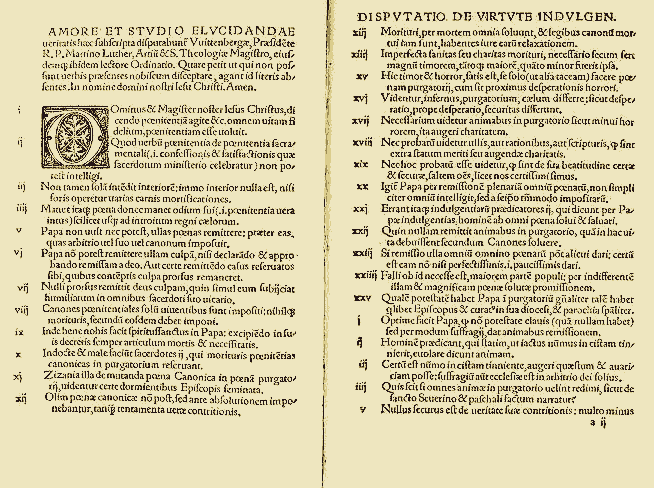
Reformation Day is an annual Christian observance held on 31 October to commemorate Martin Luther's challenge to church practices in 1517. Observed across Protestant denominations such as Lutheran and Reformed churches, the day features church services, ecumenical gatherings, and in some areas, civic parades.
When is Reformation Day kept?
Reformation Day is kept every year on 31 October.
Reformation Day is an annual Protestant holiday observed on 31 October. It marks the historical moment in 1517 when Martin Luther challenged the sale of papal indulgences by sending his Ninety-five Theses to the Archbishop of Mainz and allegedly posting them in Wittenberg. Lutheran and Reformed communities observe the date through special worship services, while modern gatherings increasingly bring together Protestant and Roman Catholic leaders in an ecumenical spirit of reconciliation.
Origins in Wittenberg
The observance traces back to 31 October 1517, when the German monk Martin Luther sent his Ninety-five Theses to Albrecht, Archbishop of Mainz. The document contested the sale of indulgences, which were being promoted by Johann Tetzel to fund the rebuilding of St Peter's Basilica in Rome. Luther insisted that divine forgiveness could not be purchased with money. According to his colleague Philipp Melanchthon, Luther also pinned the list of grievances to the door of All Saints' Church in Wittenberg. Quickly translated from Latin into German and printed widely, the theses ignited debates across Europe, sparking the religious transformation known as the Protestant Reformation.
Growth of the observance
Commemorations initially varied by region and calendar date. Some early German ordinances scheduled remembrances on St Martin's Day or specific Sundays in October. A major centenary took place in 1617 across Protestant territories under Elector John George I of Saxony. Fifty years later, in 1667, John George II made the commemoration an annual official event across his realm. The fixed date of 31 October became standard throughout German lands following the bicentenary in 1717. Over subsequent centuries, the anniversary reflected shifting political contexts, moving from theological debates to patriotic themes during the nineteenth and early twentieth centuries.
Modern worship and marches
Today, Lutheran and Reformed congregations mark the occasion with church services dedicated to faith, scripture, and church renewal. In the United States, congregations often move the observance to the nearest Sunday, designating it Reformation Sunday. In Northern Ireland, Ulster Protestants organize marching band parades on the final weekend of October, concluding with a service at St Anne's Cathedral. A similar annual procession is organized on the third Sunday of the month in Merseyside, England. In countries such as Chile and Slovenia, as well as several German states, the observance holds official public holiday status.
Ecumenical reconciliation
Recent decades have seen a shift from historical divisions toward dialogue between denominations. In 1999, the Lutheran World Federation and the Roman Catholic Church signed an agreement addressing long-standing theological differences on justification, later endorsed by the World Methodist Council. In 2016, Pope Francis joined international Lutheran leaders for a joint service at Lund Cathedral in Sweden to mark the 499th year since the Reformation started. Rather than focusing on old grievances, contemporary observances often emphasize mutual repentance, shared Christian witness, and gratitude for ongoing theological cooperation across different branches of Christianity.
How Reformation Day is kept
Observances center around church worship services held on 31 October or an adjacent Sunday. Congregations gather to pray, reflect on the core teachings of the Reformation, and sing hymns. In parts of the United Kingdom, members of the Orange Order take part in independent lodge parades accompanied by marching bands before joining a shared cathedral service. In several nations, civic authorities grant a public day off work. Where ecumenical gatherings take place, leaders and members from Catholic, Lutheran, and other Christian denominations convene together for shared prayers, dialogue, and acts of repentance.
When and where
Reformation Day falls annually on 31 October. In several regions, including many congregations in the United States, the liturgical celebration is transferred to the Sunday on or before 31 October, commonly referred to as Reformation Sunday. Certain regional parades take place on specific October weekends.
The observance is kept worldwide wherever Protestant communities live, with deep roots in Germany, Switzerland, and across northern Europe. It is a legal public holiday in Slovenia, Chile, and multiple German federal states, and is also recognized in national laws governing Protestant churches in Austria and Switzerland.
What Reformation Day means
For Protestant believers, the day symbolizes the recovery of fundamental scriptural principles, individual faith, and the belief that salvation is a gift from God rather than something earned or bought. In modern times, the observance has also come to represent an opportunity for reconciliation, repentance for past religious strife, and joint commitment to common Christian values across divided traditions.


Questions people ask about Reformation Day
When is Reformation Day kept?
Reformation Day is kept every year on 31 October.
What is Reformation Day?
Reformation Day is an annual Christian religious observance commemorating the beginning of the Protestant Reformation in 1517, when Martin Luther protested against the sale of church indulgences.
Where is Reformation Day an official public holiday?
It is recognized as a legal public holiday in Slovenia, Chile, and several states in Germany. Other countries, including Switzerland and Austria, grant specific legal recognition to Protestant churches for the day.
Do Roman Catholics participate in Reformation Day?
In recent years, Roman Catholic leaders have participated in ecumenical commemoration services alongside Protestants, emphasizing dialogue, shared faith, and mutual forgiveness for historical divisions.
See also
 Good FridayA solemn Christian holy day commemorating the crucifixion and death of Jesus Christ.
 Holy WeekThe solemn seven days leading to Easter, recalling the final week and Passion of Jesus
 Feast of the AscensionThe fortieth day of Easter, when Christians remember Jesus being taken up into heaven
 Feast of Corpus ChristiA Christian feast celebrating the presence of Christ in the bread and wine of the Eucharist
Good reading and sources
- Encyclopaedia BritannicaArticle
- How Martin Luther's ideas lasted 500 yearsBBC, Article
- Catholics and Lutherans sign joint declarationThe Guardian, Article
- How Martin Luther's ideas lasted 500 yearsBBC, Article
- Catholics and Lutherans sign joint declarationThe Guardian, Article
- Reformation Day on WikipediaEncyclopedia
- More photos on Wikimedia CommonsPhotos and video
- Wikidata recordOpen data
The facts on this page come from the Wikipedia article "Reformation Day", written by its contributors and used under the CC BY-SA 4.0 licence, and from its Wikidata record (CC0). EveryParampara rewrote the text in its own words, with AI assistance, and compares every page with the article to make sure no passage is copied. It may be reused under the same CC BY-SA 4.0 licence with a link back.
It may contain mistakes. Traditions differ from one family, village and community to the next, and the people who keep them know them best. If something is wrong, tell us. Last refreshed 2026-10-05.
More from Germany
All the traditions of Germany
🇦🇺 Australia and 5 moreGood Friday
A solemn Christian holy day commemorating the crucifixion and death of Jesus Christ.Spiritual · Fasting and breaking the fast
🇪🇸 Valencia, Spain and 5 moreFeast of Corpus ChristiCorpus Domini
A Christian feast celebrating the presence of Christ in the bread and wine of the EucharistSpiritual
 🇫🇷 France and 5 moreCandlemas
A Christian feast of candle blessings marking the end of the Christmas seasonSpiritual
🇫🇷 France and 5 moreCandlemas
A Christian feast of candle blessings marking the end of the Christmas seasonSpiritual
 🇪🇸 Santiago de Compostela, Spain and 7 moreCamino de SantiagoEl Camino de Santiago
A Christian walking pilgrimage across Europe to the shrine of Saint James in SpainSpiritual
🇪🇸 Santiago de Compostela, Spain and 7 moreCamino de SantiagoEl Camino de Santiago
A Christian walking pilgrimage across Europe to the shrine of Saint James in SpainSpiritual
The same idea elsewhere
All of this kind 🇮🇱 Jerusalem, IsraelPassoverפסח
A Jewish spring festival celebrating freedom from slavery with ritual mealsSpiritual · Dinner
🇵🇭 Philippines and 5 moreHoly WeekἉγία καὶ Μεγάλη Ἑβδομάς
The solemn seven days leading to Easter, recalling the final week and Passion of JesusSpiritual · Fasting and breaking the fast
🇮🇱 Jerusalem, IsraelPassoverפסח
A Jewish spring festival celebrating freedom from slavery with ritual mealsSpiritual · Dinner
🇵🇭 Philippines and 5 moreHoly WeekἉγία καὶ Μεγάλη Ἑβδομάς
The solemn seven days leading to Easter, recalling the final week and Passion of JesusSpiritual · Fasting and breaking the fast
 🇮🇱 Jerusalem, IsraelYom Kippurיוֹם כִּפּוּר
The holiest day in Judaism, dedicated to fasting, prayer and atonementSpiritual · Fasting and breaking the fast
🇮🇱 Jerusalem, IsraelYom Kippurיוֹם כִּפּוּר
The holiest day in Judaism, dedicated to fasting, prayer and atonementSpiritual · Fasting and breaking the fast
 🇮🇱 IsraelRosh Hashanahרֹאשׁ הַשָּׁנָה
The Jewish New Year marked by shofar horn blasts, prayer and sweet foodsSpiritual
🇮🇱 IsraelRosh Hashanahרֹאשׁ הַשָּׁנָה
The Jewish New Year marked by shofar horn blasts, prayer and sweet foodsSpiritual