Spiritual and religiousMiddle EastMuslim
Sa'ee
In its own language: السعي
The ritual walk between the twin hills of Safa and Marwa during Islamic pilgrimage

Sa'ee is a core Islamic ritual performed by Muslim pilgrims in Mecca during the journeys of Hajj and Umrah. Pilgrims travel back and forth seven times across a covered corridor connecting the two hills of Safa and Marwa to honour Hajar's search for water.
When is Sa'ee marked?
Sa'ee is kept as part of Hajj, which runs from 14 to 18 May 2027.
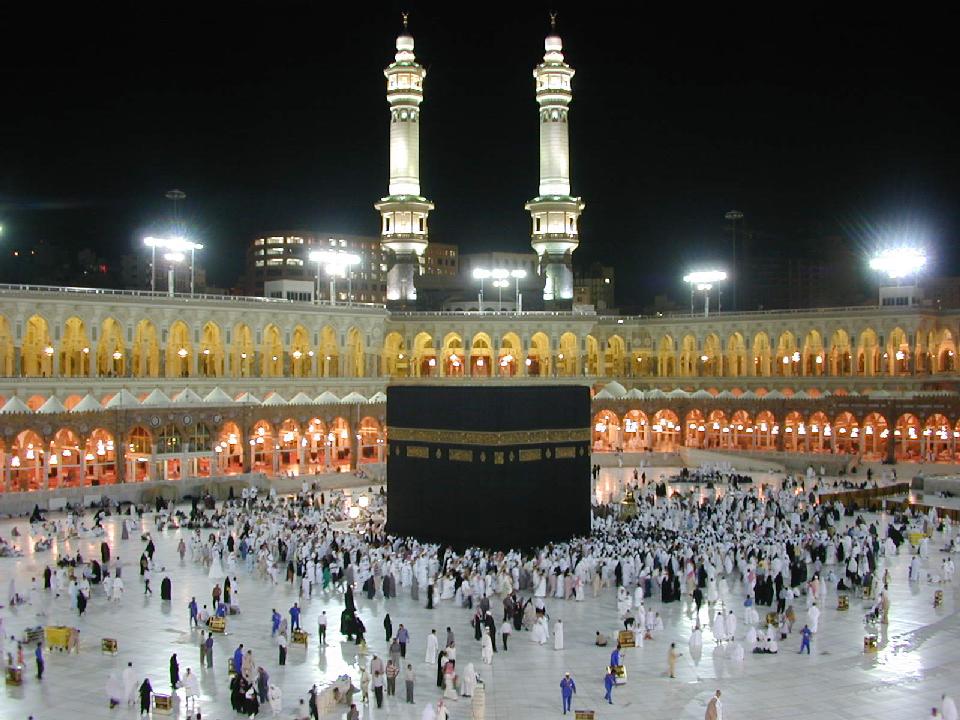
Sa'ee is a foundational rite of the Islamic pilgrimages of Hajj and Umrah in Mecca. Pilgrims walk back and forth seven times between the two hilltops of Safa and Marwa inside the Grand Mosque. This ritual retraces the footsteps of Hajar, who traversed the desert valley in desperate search of sustenance for her infant son, Ismail, before a miraculous spring burst forth from the earth.
The search of Hajar
According to Islamic tradition, the prophet Ibrahim brought his wife Hajar and their baby Ismail to an uninhabited valley under divine instruction. After their supplies ran out, Hajar sought water for her thirsty child. Leaving Ismail on the ground, she climbed Safa to scan the horizon. Seeing nobody, she crossed the valley to Mount Marwa to look again. She moved at a normal pace on the slopes where her child was visible, but ran across the low ground where he was out of sight. After completing seven crossings, the angel Jibril arrived, and the freshwater spring of Zamzam miraculously emerged from the earth.
Hesitations and revelation
In the pre-Islamic era, local tribes had placed idols on the hills, which caused early Muslims to feel deep reluctance about walking between them. Figures such as Anas ibn Malik and early Ansar believers worried that crossing between Safa and Marwa was a remnant of pagan custom. Aisha confirmed that early followers feared the practice was sinful because of older associations with the idol Manat. These hesitations were resolved when Quranic verse 2:158 was revealed to the Prophet Muhammad, establishing the journey between the two elevations as a blessed and valid rite of pilgrimage rather than an act of idolatry.
The modern Mas'aa
Originally located in the open air outside the mosque, the passage between the hills was formally integrated into Al-Masjid al-Haram during expansion works in the mid-1950s. Today, the space is an enclosed, climate-controlled corridor known as the Mas'aa. It spans roughly 450 metres between the reddish stone of Safa and the lighter stone of Marwa. The complete ritual covers around three kilometres. The modern structure features dedicated directional pathways to guide the flow of worshippers, alongside central lanes set aside specifically for elderly pilgrims and individuals with physical disabilities.
How Sa'ee is kept
Pilgrims begin the ritual at Mount Safa, situated southeast of the Ka'bah. They walk the full length of the corridor to Mount Marwa, which counts as the first lap of the journey. From Marwa, they return to Safa to complete the second lap, repeating this crossing until seven individual laps are finished at Marwa. Pilgrims walk steadily across the course, quickening their pace in specific sections of the valley. Along the route, water from the Zamzam Well is available to refresh travellers as they complete their devotional walk.
When and where
Sa'ee is observed during the major pilgrimage of Hajj, which occurs annually on set dates in the Islamic calendar, as well as during the minor pilgrimage of Umrah, which worshippers can undertake at any point throughout the year.
The rite takes place exclusively inside Al-Masjid al-Haram in Mecca, Saudi Arabia. It is conducted along the Mas'aa, a covered walkway that connects the historic hills of Safa and Marwa.
What Sa'ee means
The practice commemorates maternal devotion, resilience and trust in divine providence. By following the path of Hajar through the barren landscape, worshippers remember her determined search for water for her infant son. It represents an enduring tribute to divine mercy, recalling how sincere human effort and prayer were answered by the miraculous appearance of the Zamzam Well.


Days Sa'ee is marked
Questions people ask about Sa'ee
When is Sa'ee marked?
Sa'ee is kept as part of Hajj, which runs from 14 to 18 May 2027.
What is Sa'ee?
Sa'ee is an essential Islamic ritual where pilgrims walk back and forth seven times between the hills of Safa and Marwa in Mecca. It commemorates Hajar's desperate search for water for her infant son, Ismail.
Where does Sa'ee take place?
The ritual is performed exclusively in Mecca, Saudi Arabia, inside the Grand Mosque known as Al-Masjid al-Haram. Pilgrims walk along the Mas'aa, an air-conditioned corridor that links Mount Safa to Mount Marwa.
How long is the walk between Safa and Marwa?
The distance between the two hills is roughly 450 metres. Completing the full seven laps between Safa and Marwa amounts to a total journey of approximately 3.15 kilometres.
See also
 IhramA sacred state and simple dress that Muslims enter for Hajj and Umrah
 Day of ArafahA holy day of prayer, repentance, and vigil on the second day of the Hajj pilgrimage
 UmrahA pilgrimage to Mecca that Muslims may make at most times of year, unlike the Hajj
 Eid al-FitrThe feast that ends Ramadan, opened with morning prayers, sweets and visits home
Good reading and sources
- Safa and Marwa on WikipediaEncyclopedia
- More photos on Wikimedia CommonsPhotos and video
- Wikidata recordOpen data
The facts on this page come from the Wikipedia article "Safa and Marwa", written by its contributors and used under the CC BY-SA 4.0 licence, and from its Wikidata record (CC0). EveryParampara rewrote the text in its own words, with AI assistance, and compares every page with the article to make sure no passage is copied. It may be reused under the same CC BY-SA 4.0 licence with a link back.
It may contain mistakes. Traditions differ from one family, village and community to the next, and the people who keep them know them best. If something is wrong, tell us. Last refreshed 2026-10-06.
More from Saudi Arabia
All the traditions of Saudi Arabia
🇸🇦 Mecca, Saudi ArabiaIhramإِحْرَام
A sacred state and simple dress that Muslims enter for Hajj and UmrahSpiritual
🇸🇦 Mecca, Saudi ArabiaUmrahعُمْرَة
A pilgrimage to Mecca that Muslims may make at most times of year, unlike the HajjSpiritual
🇸🇦 Mecca, Saudi Arabia and 1 moreDay of Arafahيوم عرفة
A holy day of prayer, repentance, and vigil on the second day of the Hajj pilgrimageSpiritual
 🇸🇦 Saudi ArabiaManasikمناسك
The complete set of Islamic pilgrimage rites performed in and around Mecca.Spiritual
🇸🇦 Saudi ArabiaManasikمناسك
The complete set of Islamic pilgrimage rites performed in and around Mecca.Spiritual
The same idea elsewhere
Pilgrimage compared 🇺🇸 United States and 5 moreMother's Day
A worldwide annual celebration dedicated to mothers, maternal bonds and family careHome
🇺🇸 United States and 5 moreMother's Day
A worldwide annual celebration dedicated to mothers, maternal bonds and family careHome
 🇵🇱 Poland and 5 moreChristmas Eve
The evening before Christmas, marked by church services, family meals, and gift preparations across Christian cultures.Festival · Dinner
🇵🇱 Poland and 5 moreChristmas Eve
The evening before Christmas, marked by church services, family meals, and gift preparations across Christian cultures.Festival · Dinner
 🇮🇳 India and 1 moreKailash Mansarovar Yatraकैलाश मानसरोवर यात्रा (Hindi); ཀཱའི་ལ་ཤ་མན་ས་རོ་ཝར་ཡ་ཏྲ། (Tibetan)
A high-altitude pilgrimage to Mount Kailash and Lake Manasarovar in TibetSpiritual
🇮🇳 India and 1 moreKailash Mansarovar Yatraकैलाश मानसरोवर यात्रा (Hindi); ཀཱའི་ལ་ཤ་མན་ས་རོ་ཝར་ཡ་ཏྲ། (Tibetan)
A high-altitude pilgrimage to Mount Kailash and Lake Manasarovar in TibetSpiritual
 🇵🇭 Marinduque, PhilippinesMoriones Festival
A Holy Week reenactment in Marinduque where masked participants search for the Roman centurion Longinus.Festival
🇵🇭 Marinduque, PhilippinesMoriones Festival
A Holy Week reenactment in Marinduque where masked participants search for the Roman centurion Longinus.Festival