Spiritual and religiousMiddle EastMuslim
Umrah
In its own language: عُمْرَة
A pilgrimage to Mecca that Muslims may make at most times of year, unlike the Hajj
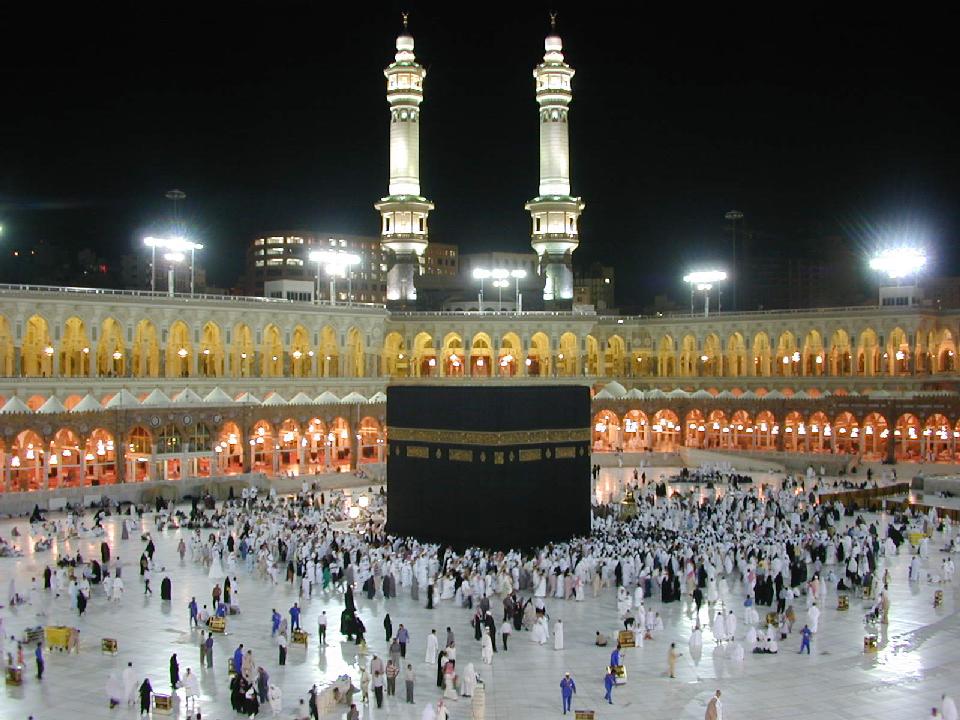
Umrah is a Muslim pilgrimage to Mecca in Saudi Arabia, made at most times of year rather than on fixed dates. Pilgrims take on a state of purity, circle the Kaaba seven times, walk between Safa and Marwah, and cut their hair, a rite many complete in a few hours.
When is Umrah marked?
Umrah is kept as part of Hajj, which runs from 14 to 18 May 2027.
Umrah is a pilgrimage that Muslims make to Mecca in Saudi Arabia. Unlike the Hajj, which falls on fixed dates in the lunar calendar, it may be performed at most times of the year. Pilgrims enter a state of purity, walk around the Kaaba, and re-enact Hagar's search for water. Many Muslims call it the lesser pilgrimage: not required in every school of law, but strongly encouraged.
What it is
Umrah is a journey of worship to Mecca, the city Muslims hold holiest, in the Hejazi region of Saudi Arabia. Its Arabic name carries the sense of visiting a settled place. A pilgrim carries out a set of rites inside the Great Mosque. Muslims often speak of it as the lesser pilgrimage, because it is less binding than the Hajj and can be finished within a few hours rather than spread over days. It is never treated as a replacement for the Hajj. Both, in Muslim understanding, express the unity of the faithful and their surrender to God.
Rites and rituals
Before entering the sacred area, a pilgrim takes on ihram, a state of purity. This means washing, putting on the clothing set aside for pilgrims, and giving up certain ordinary actions. Ihram begins at a miqat, one of the boundary stations on the routes into the city, such as Dhu 'l-Hulaifah, Juhfah, Qarnu 'l-Manazil, Yalamlam, Zat-i-'Irq, Ibrahim Mursiyah, or a point in Al-Hill. Those arriving by air take on ihram once they cross a set limit near the city. At the Kaaba the pilgrim walks around it seven times, then walks between Safa and Marwah. The visit closes with halq, the cutting of hair.
Origins and history
Muslim traditional accounts say access to Mecca was not always open to the early community. In 628 CE, according to these accounts, Muhammad told his companions of a dream in which he was carrying out the rites of Umrah, and they set out from Medina. At Hudaibiya the Quraysh, his own tribe, stopped them. He said they meant only to worship and then leave. Talks followed, as he would not force his way in out of respect for the Kaaba. The treaty signed that year gave Muslims three days of access each year for ten years. In 629 CE about two thousand of them returned and completed what is remembered as the first Umrah, lasting three days. Muhammad pardoned former enemies, naming ten who were spared.
Obligation and opinion
Muslim legal schools differ over how binding Umrah is. In the Hanbali and Shafi'i schools it is held to be obligatory, while other schools treat it as strongly recommended rather than required. Most pilgrims finish the rites within a few hours, whereas the Hajj stretches over several days. Because it is not compulsory in every school, the name lesser pilgrimage has stuck. Saudi authorities limit it during the Hajj season: in Dhu al-Hijjah only those performing the Hajj are permitted to do it, a rule meant to keep crowds manageable and keep people safe.
Today and change
The pandemic interrupted the pilgrimage. On 26 February 2020 Saudi Arabia stopped travel into the country for Umrah because of COVID-19. After the kingdom recorded its first case on 4 March 2020, the authorities in Riyadh barred the pilgrimage to Mecca and Medina for citizens, visitors and residents alike. Foreign pilgrims were welcomed back from 10 August 2021. Since then much of the paperwork has moved online. The Ministry of Hajj and Umrah brought in Nusuk in 2022 in place of the Eatmarna app, covering permits, visas and bookings for the Prophet's Mosque, and Nusuk Umrah in 2025 lets pilgrims abroad apply for a visa and arrange services themselves, with accredited local agents still available.
How Umrah is kept
A pilgrim first enters ihram at one of the boundary stations on the way to Mecca, or, for those flying, at a set line near the city. Ihram means washing, wearing the pilgrim clothing and avoiding certain acts. Inside the Great Mosque the pilgrim performs tawaf, circling the Kaaba seven times. Then comes sa'i, the walk back and forth between the hills of Safa and Marwah, recalling Hagar's search for water for Ishmael and God's answer to her. The rites close with halq, shortening or shaving the hair.
When and where
Umrah can be performed across most of the year, since it is not fixed to particular dates in the Islamic lunar calendar the way the Hajj is. The exception is the Hajj season in Dhu al-Hijjah, when Saudi regulations reserve the rites for those on the Hajj itself, so that crowds stay safe.
The pilgrimage belongs to Mecca in the Hejazi region of Saudi Arabia, and its rites take place in the Great Mosque around the Kaaba and between Safa and Marwah. Mecca is where the rites happen, and Medina is closely linked, through visits to the Prophet's Mosque and through the 2020 suspension, which covered both cities.
What Umrah means
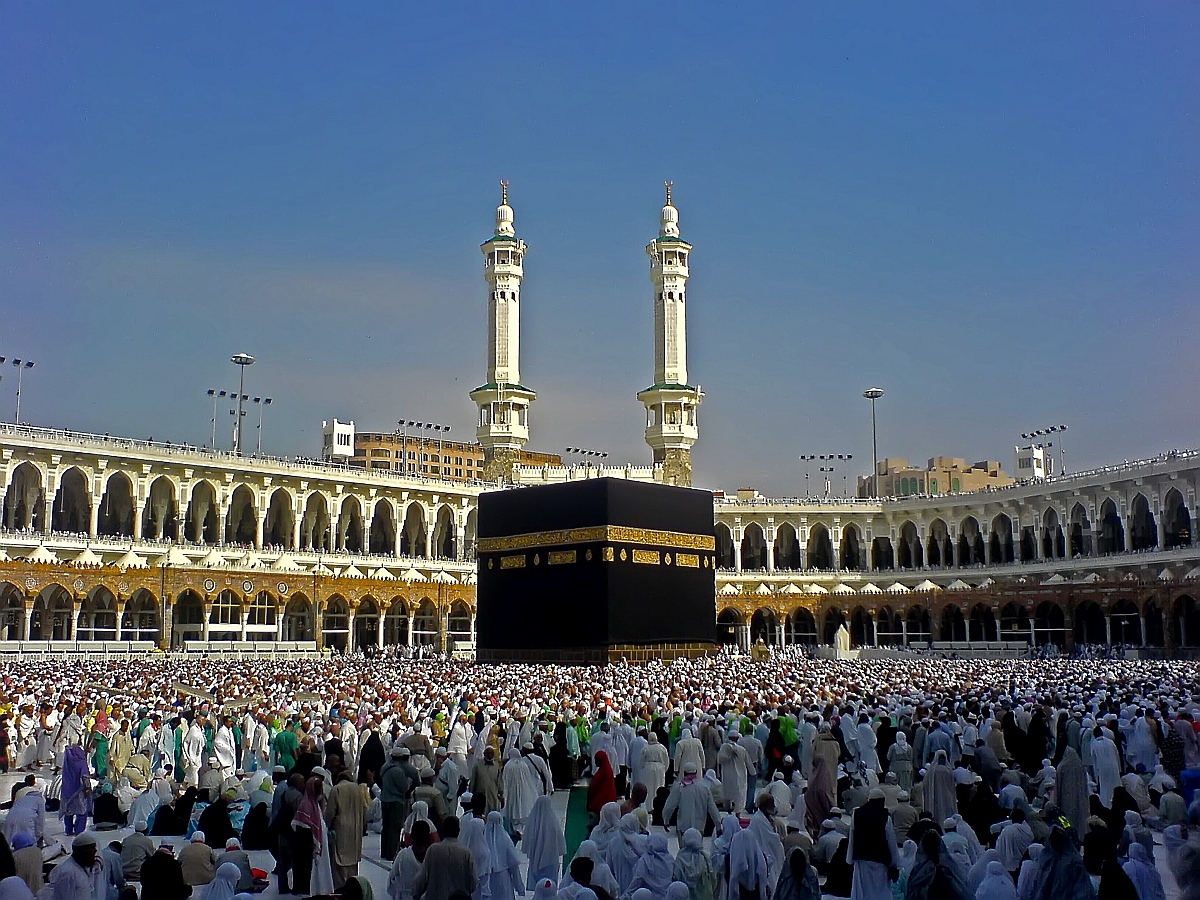
For Muslims, Umrah is an act of worship and a turning toward God. Its rites repeat the story of Hagar, who ran between two hills looking for water for her son Ishmael and was answered with mercy. Walking around the Kaaba gathers pilgrims of every background into one circuit. Along with the Hajj, it expresses the unity of the Muslim community and its submission to Allah. Many pilgrims treat it as a moment of renewal, since it is open to them far more often than the Hajj.

Days Umrah is marked
Questions people ask about Umrah
When is Umrah marked?
Umrah is kept as part of Hajj, which runs from 14 to 18 May 2027.
What is Umrah?
It is a pilgrimage to Mecca in Saudi Arabia, made by Muslims. A pilgrim performs a set of rites in the Great Mosque: circling the Kaaba, walking between Safa and Marwah, and cutting the hair. It is often called the lesser pilgrimage next to the Hajj.
How is it different from the Hajj?
The Hajj is tied to particular dates in the Islamic lunar calendar, while Umrah may be done at most other times of year. Umrah is shorter, often finished within a few hours, and does not stand in for the Hajj. Muslim schools differ on whether it is obligatory or recommended.
Where do pilgrims go?
To Mecca in the Hejazi region of Saudi Arabia, and specifically to the Great Mosque, where the Kaaba and the hills of Safa and Marwah are. Ihram begins at a boundary station on the way, or for air travellers at a set line near the city.
How do pilgrims arrange the trip today?
Saudi Arabia's Ministry of Hajj and Umrah runs the Nusuk system, brought in during 2022 in place of the Eatmarna app. Nusuk Umrah, started in 2025, lets pilgrims from other countries apply for an Umrah visa and book services themselves, while accredited local agents remain available.
See also
 IhramA sacred state and simple dress that Muslims enter for Hajj and Umrah
 Eid al-FitrThe feast that ends Ramadan, opened with morning prayers, sweets and visits home
 PassoverA Jewish spring festival celebrating freedom from slavery with ritual meals
 SukkotA seven-day autumn Jewish festival of temporary booths, harvest prayers and hospitality
Good reading and sources
- Encyclopaedia BritannicaArticle
- Trump puts Pence in charge of US virus response – as it happened | CoronavirusThe Guardian, Article
- Trump puts Pence in charge of US virus response – as it happened | CoronavirusThe Guardian, Article
- Umrah on WikipediaEncyclopedia
- More photos on Wikimedia CommonsPhotos and video
- Wikidata recordOpen data
The facts on this page come from the Wikipedia article "Umrah", written by its contributors and used under the CC BY-SA 4.0 licence, and from its Wikidata record (CC0). EveryParampara rewrote the text in its own words, with AI assistance, and compares every page with the article to make sure no passage is copied. It may be reused under the same CC BY-SA 4.0 licence with a link back.
It may contain mistakes. Traditions differ from one family, village and community to the next, and the people who keep them know them best. If something is wrong, tell us. Last refreshed 2026-10-05.
More from Saudi Arabia
All the traditions of Saudi Arabia
🇸🇦 Mecca, Saudi ArabiaIhramإِحْرَام
A sacred state and simple dress that Muslims enter for Hajj and UmrahSpiritual
 🇸🇦 Mecca, Saudi Arabia and 1 moreDay of Arafahيوم عرفة
A holy day of prayer, repentance, and vigil on the second day of the Hajj pilgrimageSpiritual
🇸🇦 Mecca, Saudi Arabia and 1 moreDay of Arafahيوم عرفة
A holy day of prayer, repentance, and vigil on the second day of the Hajj pilgrimageSpiritual
 🇸🇦 Mecca, Saudi ArabiaSa'eeالسعي
The ritual walk between the twin hills of Safa and Marwa during Islamic pilgrimageSpiritual
🇸🇦 Mecca, Saudi ArabiaSa'eeالسعي
The ritual walk between the twin hills of Safa and Marwa during Islamic pilgrimageSpiritual
 🇸🇦 Saudi ArabiaManasikمناسك
The complete set of Islamic pilgrimage rites performed in and around Mecca.Spiritual
🇸🇦 Saudi ArabiaManasikمناسك
The complete set of Islamic pilgrimage rites performed in and around Mecca.Spiritual
The same idea elsewhere
Pilgrimage compared 🇺🇸 United States and 5 moreMother's Day
A worldwide annual celebration dedicated to mothers, maternal bonds and family careHome
🇺🇸 United States and 5 moreMother's Day
A worldwide annual celebration dedicated to mothers, maternal bonds and family careHome
 🇵🇱 Poland and 5 moreChristmas Eve
The evening before Christmas, marked by church services, family meals, and gift preparations across Christian cultures.Festival · Dinner
🇵🇱 Poland and 5 moreChristmas Eve
The evening before Christmas, marked by church services, family meals, and gift preparations across Christian cultures.Festival · Dinner
 🇮🇳 India and 1 moreKailash Mansarovar Yatraकैलाश मानसरोवर यात्रा (Hindi); ཀཱའི་ལ་ཤ་མན་ས་རོ་ཝར་ཡ་ཏྲ། (Tibetan)
A high-altitude pilgrimage to Mount Kailash and Lake Manasarovar in TibetSpiritual
🇮🇳 India and 1 moreKailash Mansarovar Yatraकैलाश मानसरोवर यात्रा (Hindi); ཀཱའི་ལ་ཤ་མན་ས་རོ་ཝར་ཡ་ཏྲ། (Tibetan)
A high-altitude pilgrimage to Mount Kailash and Lake Manasarovar in TibetSpiritual
 🇵🇭 Marinduque, PhilippinesMoriones Festival
A Holy Week reenactment in Marinduque where masked participants search for the Roman centurion Longinus.Festival
🇵🇭 Marinduque, PhilippinesMoriones Festival
A Holy Week reenactment in Marinduque where masked participants search for the Roman centurion Longinus.Festival