Spiritual and religiousMiddle EastMuslim
Sama
In its own language: Sema (Turkish); سَماع (Persian)
A Sufi rite of listening, music and turning, kept by Mevlevi and other Sufi orders
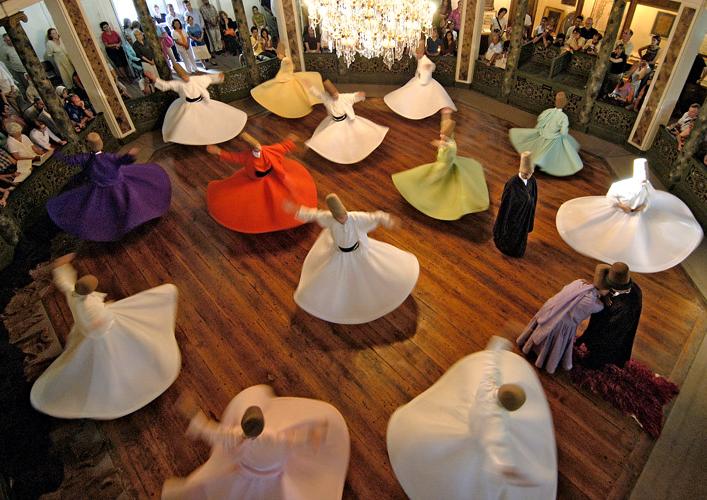
Sama is the Sufi ceremony of listening, in which participants hear sung poetry and prayer, and instruments, and may turn as they meditate. It belongs to dhikr, the Sufi remembrance of God, and is kept above all by the Mevlevi order in Turkey, with related forms among Alevi and Bektashi communities and in Egypt as tannoura.
When is Sama kept?
Sama is kept on within the dhikr gatherings of Sufi orders; Alevi troupes also dance during the yearly Hacı Bektaş Veli festival.
Sama is a Sufi rite of listening. Those who take part hear music, poetry and prayer, and some turn in place as they do so. It grew out of dhikr, the Sufi practice of keeping God in mind, and it is best known through the Mevlevi order that traces itself to Rumi. Alevi and Bektashi communities in Turkey keep a related form.
What it is
Sama takes its name from an Arabic word for hearing. In Sufi practice it is a way of listening with the whole self: to voices, to instruments, to lines of poetry, and to prayer. It belongs inside dhikr, the Sufi discipline of keeping God in mind, and the two are hard to separate. Al-Ghazali discussed it in The Alchemy of Happiness. The aim is reflection on tawhid, the belief that God is one and everywhere present. Sama is not a show staged for an audience. Those who take part come to it as worship, and many Sufi orders, not only the Mevlevi, use it when they gather.
Origins and history
The word may have been in use by the tenth century for a kind of dhikr. Abu Sa'id, born in 967 CE at Mayhana near Sarakhs, is remembered for setting rules of conduct for the khanaqah, the Sufi lodging house, and for bringing music, poetry and dance into group remembrance. The Mevlevi ceremony is credited to Rumi. A story tells of him walking through a marketplace, hearing goldbeaters beat metal in rhythm, catching the words of the dhikr, and stretching out his arms to spin. Rumi's son and a student of his are said to have corrected the rite later. In 2005 UNESCO named Turkey's Mevlevi Sema Ceremony a Masterpiece of the Oral and Intangible Heritage of Humanity; it joined the Representative List in 2008.
How it is kept
Mevlevi initiates, adults who have joined the order, are the best-known participants; in earlier times only men were admitted. They move as one circle, each turning where they stand. Alevi sema is different: young people, girls and boys together, dance it, and the turning is shared rather than a solo whirl. Its two usual forms are kirklar semahı, the sema of the forty, and turnalar semahı, the crane sema. Many cemevleri, the Alevi meeting houses, keep their own sema troupes, which dance during the yearly festival held in Hacı Bektaş Veli's name. In Egypt the Mevlevi form is called tannoura, and other Sufi orders have taken it up, sometimes as a folk or concert dance.
Music and poetry
Song sits at the centre. Instruments mostly open the ceremony or accompany the voices, and only those judged suitable for worship are played: the tambourine, bells and flute are the common ones. Hymns known as qawl and bayt are sung. Poetry is read as well, since it can carry a listener toward contemplation; any poem may be understood as spoken to God, even a sensual one, provided the heart is clean first. Verses of the Qur'an are never used in this way and never altered, so that they remain sacred. Not every Muslim approves: some call music in worship an innovation, while others, al-Ghazali among them, defend it.
What it means
For those who keep it, sama is a picture of the soul's climb. Mind and love carry the traveller upward; turning toward what is true, the self is set aside and perfection found. The one who returns is meant to be of use to everything created. Wajd, the ecstatic state, marks nearness to God, and fanaa is the passing away of the self. Rumi's words about dancers keeping a Ka'ba in their midst tie the rite to pilgrimage.
How Sama is kept
Mevlevi initiates, adults who have joined the order, are the best-known participants; in earlier times only men were admitted. They move as one circle and each turns where they stand. Alevi sema is danced by young people, girls and boys together, and the turning is shared rather than a solo whirl. Its two usual forms are kirklar semahı and turnalar semahı, the sema of the forty and the crane sema. Many cemevleri run their own sema troupes. Throughout, those taking part stay quiet and still and keep themselves in hand, holding back movement and tears until they can no longer, since a trance that is acted is worthless.
When and where
There is no single date. Sama belongs to the gatherings where a Sufi order meets to remember God, and it is kept wherever those circles form. Alevi sema troupes also dance during the yearly festival held in Hacı Bektaş Veli's name.
It is strongest in Turkey, where the Mevlevi order, the Alevi community and the Bektashi order all keep a form of it. In Egypt the Mevlevi version is called tannoura and other Sufi orders have adopted it. Sufi orders elsewhere, including the Chishti order of the South Asian subcontinent, have used sama too.
What Sama means
For those who keep it, sama is a picture of the soul's climb. Mind and love carry the traveller upward; turning toward the truth, the self is set aside and perfection found. The one who returns is meant to be of use to all created things. Wajd, the ecstatic state, marks nearness to God, and fanaa is the passing away of the self. Rumi's words about dancers keeping a Ka'ba in their midst link the rite to pilgrimage.


Questions people ask about Sama
When is Sama kept?
Sama is kept on within the dhikr gatherings of Sufi orders; Alevi troupes also dance during the yearly Hacı Bektaş Veli festival.
What is sama?
Sama is a Sufi rite of listening. Those present hear song, instruments, poetry and prayer, and some turn as they listen. It is part of dhikr, the Sufi practice of keeping God in mind, and it is treated as worship rather than as a show for onlookers.
Where and when is it kept?
Mostly in Turkey, among the Mevlevi order and Alevi and Bektashi communities, and in Egypt as tannoura. It has no fixed date in the year; it belongs to the gatherings where an order meets, and Alevi troupes dance during the yearly Hacı Bektaş Veli festival.
Who takes part?
Among the Mevlevi, participants are adult members of the order, and in earlier times only men were admitted. Alevi sema works differently: it is danced by teenagers, girls and boys together, and the movement is shared rather than solo.
Is there music and poetry in it?
Yes. Singing leads, and instruments such as the tambourine, bells and flute are used, but only ones thought fitting for worship. Hymns called qawl and bayt are sung, and poems may be read as words addressed to God, though Qur'anic verses are never treated this way.
Do all Muslims accept it?
No. Views differ. Critics, among them Salafis and Wahhabis, call music in worship an invented practice and liken the ecstatic state to drunkenness. Supporters, Sufis among both Sunnis and Shias, and the scholar al-Ghazali before them, hold that music and dance help the religious life when the heart is pure.
See also
 Holy FireA fire ceremony in Jerusalem each year, kept by Orthodox Christians before Easter
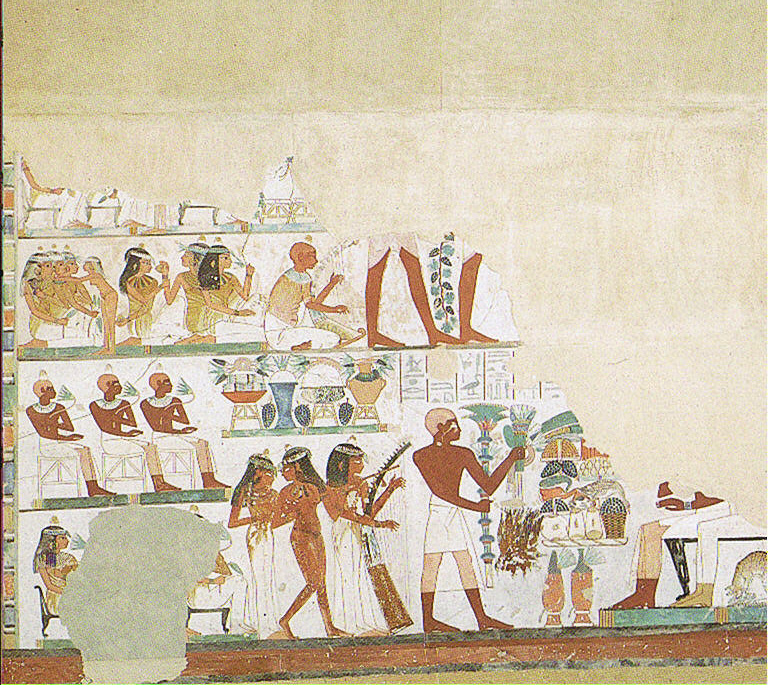 Beautiful Festival of the ValleyAn ancient Egyptian festival honouring the dead with river processions across Thebes
 Mother's DayA worldwide annual celebration dedicated to mothers, maternal bonds and family care
 Eid al-FitrThe feast that ends Ramadan, opened with morning prayers, sweets and visits home
Good reading and sources
- Sama (Sufism) on WikipediaEncyclopedia
- More photos on Wikimedia CommonsPhotos and video
- Wikidata recordOpen data
The facts on this page come from the Wikipedia article "Sama (Sufism)", written by its contributors and used under the CC BY-SA 4.0 licence, and from its Wikidata record (CC0). EveryParampara rewrote the text in its own words, with AI assistance, and compares every page with the article to make sure no passage is copied. It may be reused under the same CC BY-SA 4.0 licence with a link back.
It may contain mistakes. Traditions differ from one family, village and community to the next, and the people who keep them know them best. If something is wrong, tell us. Last refreshed 2026-10-05.
More from Turkey
All the traditions of Turkey 🇹🇷 Konya, Turkey and 4 moreMevlevi OrderMevlevilik
A Sufi tradition from Konya known for its whirling ceremony and devotion to Rumi's teachings.Spiritual
🇹🇷 Konya, Turkey and 4 moreMevlevi OrderMevlevilik
A Sufi tradition from Konya known for its whirling ceremony and devotion to Rumi's teachings.Spiritual
 🇹🇷 TurkeyRamadan in Turkey
A holy month of fasting, prayer, and community meals, observed across Turkey with unique local customs.Spiritual · Fasting and breaking the fast
🇹🇷 TurkeyRamadan in Turkey
A holy month of fasting, prayer, and community meals, observed across Turkey with unique local customs.Spiritual · Fasting and breaking the fast
 🇦🇲 Yerevan, Armenia and 6 moreArmenian Genocide Remembrance DayՄեծ Եղեռնի զոհերի հիշատակի օր
An annual day of mourning and remembrance for the victims of the 1915 Armenian Genocide.Spiritual
🇦🇲 Yerevan, Armenia and 6 moreArmenian Genocide Remembrance DayՄեծ Եղեռնի զոհերի հիշատակի օր
An annual day of mourning and remembrance for the victims of the 1915 Armenian Genocide.Spiritual
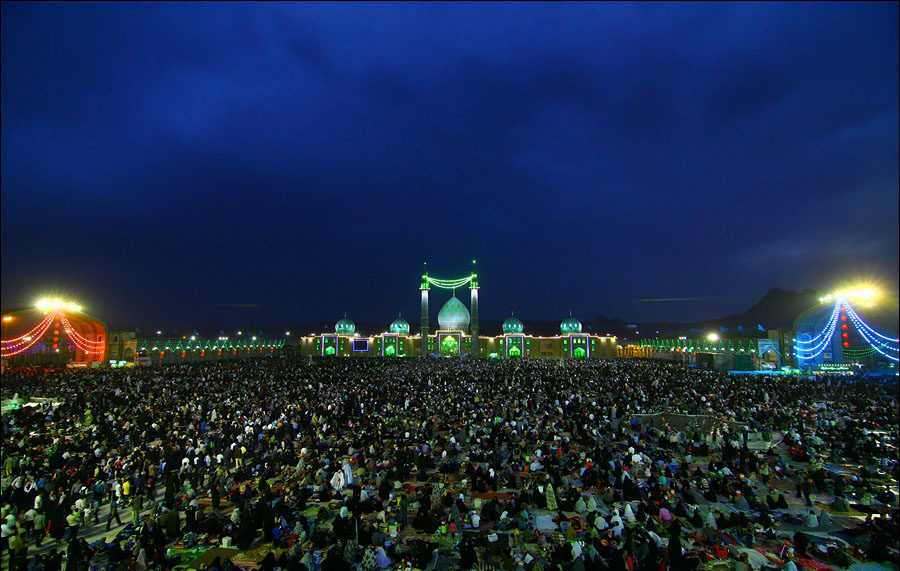 🇮🇷 Iran and 5 moreMid-Sha'banنصف شعبان
An Islamic night of prayer, remembrance, and seeking divine forgiveness.Spiritual
🇮🇷 Iran and 5 moreMid-Sha'banنصف شعبان
An Islamic night of prayer, remembrance, and seeking divine forgiveness.Spiritual
The same idea elsewhere
Pilgrimage compared
🇺🇸 United States and 5 moreMother's Day
A worldwide annual celebration dedicated to mothers, maternal bonds and family careHome
 🇵🇱 Poland and 5 moreChristmas Eve
The evening before Christmas, marked by church services, family meals, and gift preparations across Christian cultures.Festival · Dinner
🇵🇱 Poland and 5 moreChristmas Eve
The evening before Christmas, marked by church services, family meals, and gift preparations across Christian cultures.Festival · Dinner
 🇮🇳 India and 1 moreKailash Mansarovar Yatraकैलाश मानसरोवर यात्रा (Hindi); ཀཱའི་ལ་ཤ་མན་ས་རོ་ཝར་ཡ་ཏྲ། (Tibetan)
A high-altitude pilgrimage to Mount Kailash and Lake Manasarovar in TibetSpiritual
🇮🇳 India and 1 moreKailash Mansarovar Yatraकैलाश मानसरोवर यात्रा (Hindi); ཀཱའི་ལ་ཤ་མན་ས་རོ་ཝར་ཡ་ཏྲ། (Tibetan)
A high-altitude pilgrimage to Mount Kailash and Lake Manasarovar in TibetSpiritual
 🇵🇭 Marinduque, PhilippinesMoriones Festival
A Holy Week reenactment in Marinduque where masked participants search for the Roman centurion Longinus.Festival
🇵🇭 Marinduque, PhilippinesMoriones Festival
A Holy Week reenactment in Marinduque where masked participants search for the Roman centurion Longinus.Festival