Spiritual and religiousMiddle EastMuslim
Mid-Sha'ban
In its own language: نصف شعبان
An Islamic night of prayer, remembrance, and seeking divine forgiveness.
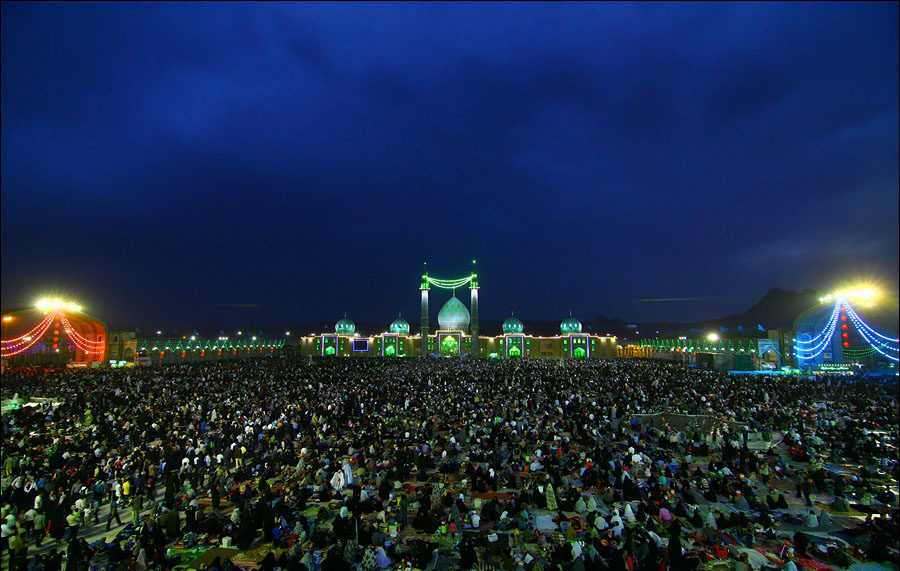
Mid-Sha'ban is an Islamic observance held on the fifteenth night of the month of Sha'ban across South, Central, Southeast, and West Asia. Muslims spend the night in prayer, recite the Quran, share food, honour ancestors, and seek divine pardon, while Twelver Shia communities also mark the birth of Muhammad al-Mahdi.
When is Mid-Sha'ban in 2027?
Mid-Sha'ban 2027 is on Saturday, 23 January 2027. The date follows the moon or a local calendar, so it can move by a day. Other years: 2026, Tuesday, 3 February 2026; 2028, Wednesday, 12 January 2028.
Mid-Sha'ban is an Islamic holy night observed on the eve of the fifteenth day of the eighth lunar month. Recognized across many Muslim communities as a time when God grants pardon and determines the fortunes of the coming year, worshippers spend the hours between sunset and dawn in prayer, supplication, and remembrance of the dead. It is also celebrated as the birth anniversary of the twelfth Shia Imam.
Night of pardon and destiny
Believers regard the middle of Sha'ban as a window for spiritual renewal and divine mercy. According to Islamic tradition, God assesses human actions and settles destinies for the upcoming year on this night. Many spend the dark hours reciting passages from the Quran, offering voluntary prayers, and asking for their sins to be absolved. The occasion also carries a solemn duty to remember relatives who have passed away. Communities gather in cemeteries before sunset or during the night to clean headstones, place floral offerings, light candles, and pray for the salvation of departed souls, mirroring traditions recounted in classical accounts of the Prophet Muhammad visiting burial grounds.
Twelver Shia commemorations
For Twelver Shia Muslims, the fifteenth of Sha'ban holds added reverence as the birthday of Muhammad al-Mahdi, their twelfth Imam, born in 868 CE. Festive lights illuminate towns and public thoroughfares, notably across Iran. Devotees visit shrines and mosques to offer specific prayers for his reappearance and perform acts of voluntary worship. In regions such as Khorasan and Kurdistan, families visit burial sites with offerings of date-based halva and light small fires with wild rue and salt to ward off ill will. These customs blend joy for the Imam's birth with reverent care for the dead.
Community customs and charity
Across South and Southeast Asia, the night is accompanied by hospitality and communal charity. Families prepare sweets such as halwa, zarda, and festive pastries to share with neighbours, friends, and the less fortunate. In Iraq, children walk through their neighbourhoods collecting sweets. Indonesian congregations in provinces like Aceh and South Kalimantan assemble in mosques for communal remembrance chants and religious lectures. In cities like Old Dhaka, bakers craft ornate breads decorated with fish designs, buildings glow with paper lanterns and cloth canopies, and public spaces host gatherings for sermon recitation, poetry, and shared evening feasts.
Perspectives and debates
The observance of Mid-Sha'ban has inspired diverse theological views within the Islamic world. Classical jurists like Imam Shafi'i and Imam Nawawi affirmed the night as one of the special occasions when supplications are answered. However, scholars differ on the reliability of specific traditions attached to the date. Certain movements and institutions, including the Deoband seminary in India and Salafi scholars in the Arab world, discourage festive public practices like fireworks, collective mosque vigils, or lavish sweet preparation as innovations, advising worshippers instead to keep any devotion quiet, personal, and strictly focused on prayer.
How Mid-Sha'ban is kept
Observance begins at sunset on the fourteenth day of Sha'ban. Families often clean ancestral graves in cemeteries, lighting candles and reciting Quranic verses for deceased relatives. At home or in mosques, worshippers spend the night praying, chanting zikr, and seeking forgiveness until the pre-dawn meal. Charitable giving is widespread, with households distributing platters of halwa, decorative breads, and confectionery to neighbours and people in need. Shia communities adorn streets with decorative lights in honour of the twelfth Imam, while some Muslims observe a voluntary fast during the daylight hours.
When and where
Mid-Sha'ban takes place on the eve of the fifteenth day of Sha'ban, the eighth month in the Islamic lunar calendar. Because the lunar year is roughly eleven days shorter than the solar year, the observance moves forward through the Gregorian calendar each year.
The holiday is widely observed across West Asia, Central Asia, South Asia, and Southeast Asia. Traditions are especially prominent in Iran, Iraq, Turkey, India, Bangladesh, Pakistan, and Indonesia, kept by both Sunni and Shia communities.
What Mid-Sha'ban means
The night symbolizes divine deliverance, atonement, and the renewal of fate. Worshippers believe that sins are forgiven and the coming year's fortunes are decided by God. Commemorating deceased relatives emphasizes unbroken family bonds across generations, while the Twelver Shia celebration of Muhammad al-Mahdi's birth reflects spiritual hope and redemption.
On the table
- Halwa
- Zarda
- Sandesh
- Pitha
- Borfi
- Rasmalai
- Boondi kabab polao
- Hari kabab


Mid-Sha'ban dates: 2026, 2027, 2028
| Year | Mid-Sha'ban date |
|---|---|
| 2026 | Tuesday, 3 February 2026 |
| 2027 | Saturday, 23 January 2027 |
| 2028 | Wednesday, 12 January 2028 |
This date follows the moon or a local calendar and can move by a day, so check with a local source nearer the time.
Questions people ask about Mid-Sha'ban
When is Mid-Sha'ban in 2027?
Mid-Sha'ban 2027 is on Saturday, 23 January 2027. The date follows the moon or a local calendar, so it can move by a day. Other years: 2026, Tuesday, 3 February 2026; 2028, Wednesday, 12 January 2028.
What is Mid-Sha'ban?
It is an Islamic observance held on the fifteenth night of the month of Sha'ban. Muslims dedicate the night to seeking God's forgiveness, praying for their ancestors, and preparing for the upcoming year's destiny, while Twelver Shia Muslims also celebrate the birth of their twelfth Imam.
Where is the observance celebrated?
It is observed across many countries in South Asia, West Asia, Central Asia, and Southeast Asia, including India, Pakistan, Bangladesh, Iran, Iraq, Turkey, and Indonesia. Local customs vary widely by region and religious tradition.
What foods are traditionally prepared for the occasion?
In South Asia, households prepare sweet dishes such as halwa, zarda, and milk sweets to distribute to neighbours and the poor. In Bangladesh, decorative breads and savoury dishes like kabab polao are also served, while Iranian families make date-based sweets.
See also
 Eid al-FitrThe feast that ends Ramadan, opened with morning prayers, sweets and visits home
 Isra and Mi'rajAn Islamic observance marking the prophet Muhammad’s night journey and ascent through the heavens.
 Krishna JanmashtamiA Hindu festival celebrating the birth of Krishna with fasting, singing and night vigils
 Ghost FestivalA full-moon night in the seventh lunar month for feeding ghosts and guiding souls home
Good reading and sources
- Shab-e-Baraat 2020: Date, history and significance of Shab-e-BaraatHindustan Times, Article
- Shab-e-Barat 2021: Know about the importance of the dayThe Indian Express, Article
- Tradition of breadmaking on SHAB-E-BARAT still alive in Old DhakaThe Daily Star, Article
- Shab-e-Baraat 2020: Date, history and significance of Shab-e-BaraatHindustan Times, Article
- Shab-e-Barat 2021: Know about the importance of the dayThe Indian Express, Article
- Tradition of breadmaking on SHAB-E-BARAT still alive in Old DhakaThe Daily Star, Article
- Mid-Sha'ban on WikipediaEncyclopedia
- More photos on Wikimedia CommonsPhotos and video
- Wikidata recordOpen data
The facts on this page come from the Wikipedia article "Mid-Sha'ban", written by its contributors and used under the CC BY-SA 4.0 licence, and from its Wikidata record (CC0). EveryParampara rewrote the text in its own words, with AI assistance, and compares every page with the article to make sure no passage is copied. It may be reused under the same CC BY-SA 4.0 licence with a link back.
It may contain mistakes. Traditions differ from one family, village and community to the next, and the people who keep them know them best. If something is wrong, tell us. Last refreshed 2026-10-04.
More from Iran
All the traditions of Iran 🇮🇱 Jerusalem, Israel and 5 moreTisha B'Avתשעה באב
A solemn fast day in July or August to mourn the destruction of the Jerusalem Temples and other Jewish tragedies.Spiritual · Fasting and breaking the fast
🇮🇱 Jerusalem, Israel and 5 moreTisha B'Avתשעה באב
A solemn fast day in July or August to mourn the destruction of the Jerusalem Temples and other Jewish tragedies.Spiritual · Fasting and breaking the fast
 🇨🇳 China and 5 moreAncestor worship
Honouring dead relatives with offerings and prayers, kept in many cultures worldwideSpiritual
🇮🇷 Iran and 5 moreMid-Sha'banنصف شعبان
An Islamic night of prayer, forgiveness, ancestral remembrance and sweet offeringsSpiritual · Sweets given and shared
🇨🇳 China and 5 moreAncestor worship
Honouring dead relatives with offerings and prayers, kept in many cultures worldwideSpiritual
🇮🇷 Iran and 5 moreMid-Sha'banنصف شعبان
An Islamic night of prayer, forgiveness, ancestral remembrance and sweet offeringsSpiritual · Sweets given and shared
 🇮🇷 Iran and 2 moreRowzeh-khani
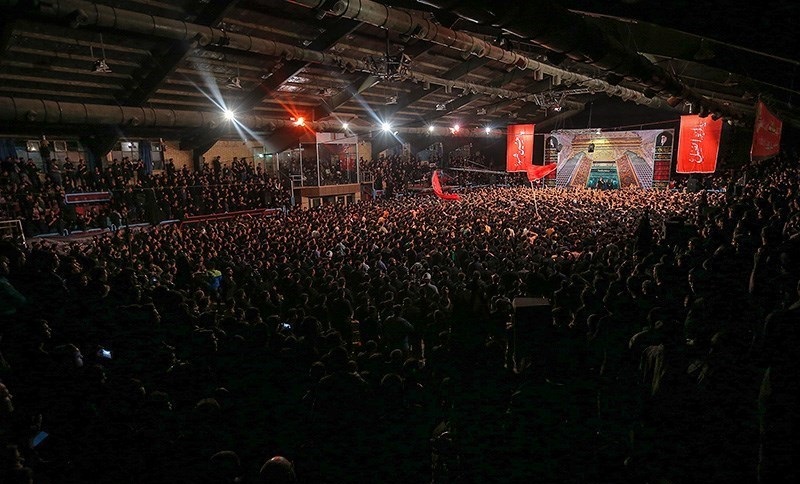
A Shia Muslim ritual of reciting mourning narratives about the Battle of Karbala.Spiritual
🇮🇷 Iran and 2 moreRowzeh-khani
A Shia Muslim ritual of reciting mourning narratives about the Battle of Karbala.Spiritual
The same idea elsewhere
Remembering the ancestors compared 🇮🇪 Ireland and 5 moreHalloween
An annual observance on 31 October marking the eve of All Saints' Day, rooted in Christian tradition and Celtic heritageFestival · Sweets given and shared
🇮🇪 Ireland and 5 moreHalloween
An annual observance on 31 October marking the eve of All Saints' Day, rooted in Christian tradition and Celtic heritageFestival · Sweets given and shared
 🇮🇳 Ayodhya, India and 7 moreDiwaliदीपावली (Dīpāvalī)
A five-day festival of lights celebrated across India and its diaspora to mark the victory of light over darkness.Festival · Feasts and festival meals
🇮🇳 Ayodhya, India and 7 moreDiwaliदीपावली (Dīpāvalī)
A five-day festival of lights celebrated across India and its diaspora to mark the victory of light over darkness.Festival · Feasts and festival meals
 🇮🇳 India and 5 morePretaप्रेत
Offerings and rites for spirits enduring deep hunger across Asian traditions.Spiritual
🇮🇳 India and 5 morePretaप्रेत
Offerings and rites for spirits enduring deep hunger across Asian traditions.Spiritual
 🇧🇩 Bangladesh and 1 moreAlpanaআলপনা (Alpona)
A Bengali floor painting tradition using rice flour paste to mark festivals and rituals.Performance
🇧🇩 Bangladesh and 1 moreAlpanaআলপনা (Alpona)
A Bengali floor painting tradition using rice flour paste to mark festivals and rituals.Performance