Music, dance and storytellingEurope
Schuhplattler
An Alpine folk dance of stomps, claps and flat-hand slaps on shoes, knees and thighs
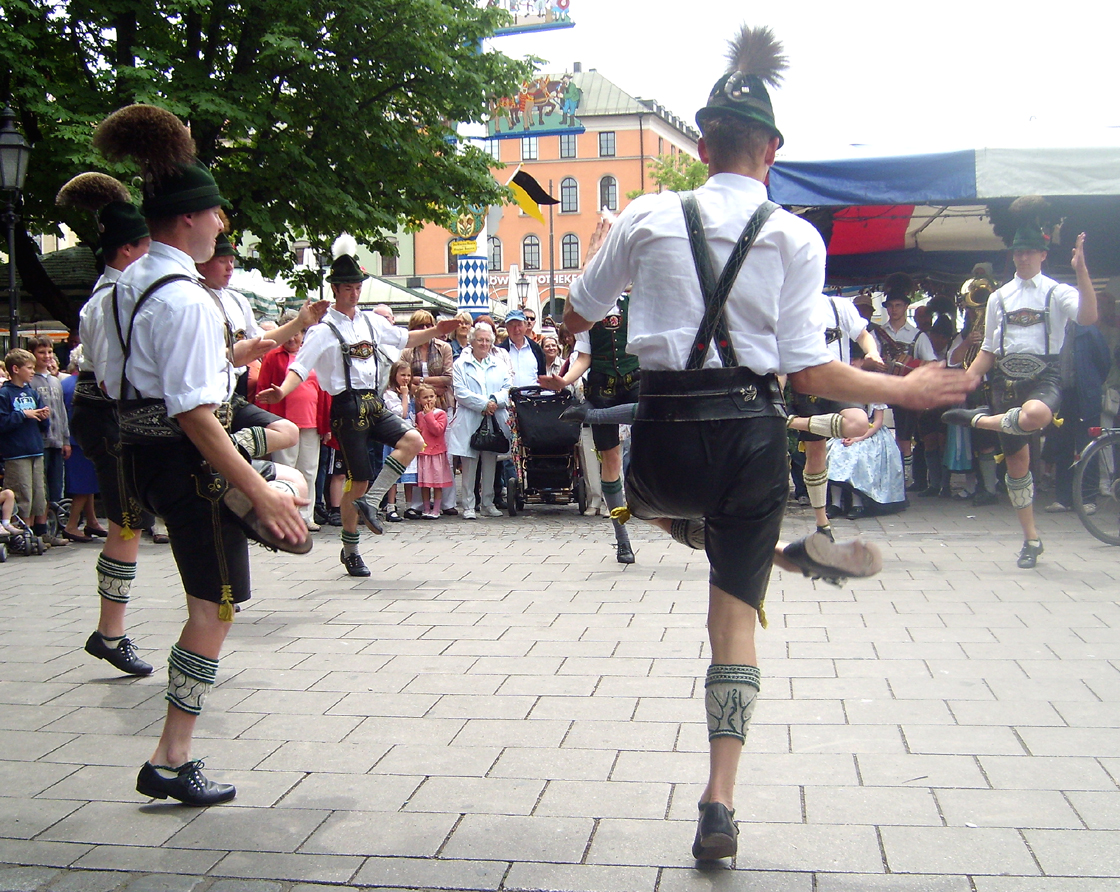
A folk dance of the Eastern Alps, from Upper Bavaria, Tyrol and Salzburg. Dancers, mostly men, stamp and clap and slap their shoe soles, thighs and knees with flat hands, adding leaps and acrobatics. Costume clubs keep it at festivals and competitions in Europe and in German communities abroad.
When is Schuhplattler kept?
Schuhplattler is kept on no fixed date; performed through the year at club events, festivals and competitions.
The Schuhplattler is a folk dance from the Eastern Alps, in Upper Bavaria, Tyrol and Salzburg. Men do most of the dancing: they stamp, clap and strike their shoe soles, thighs and knees with flat hands. Costume clubs, called Trachtenvereine, keep it going at festivals and competitions in Europe, and in German communities abroad. Crowds cheer the leaps, the whoops and the slapping.
What it is
The dance is built on a simple action. A dancer raises one hand at a time and brings it down flat, hitting a shoe sole, a thigh or a knee. Claps and stamps go with the beat. Beyond the basics, more than 150 named Schuhplattler exist, along with marches and acrobatic figures that groups mix into a performance. In the partner form, a couple starts with a Ländler, a slow turning dance; then they part, the woman twirls in her dirndl and the man shows his Platteln. Groups also dance without women at all, standing in a circle, a square or a line.
Origins and history
One early account may come from 1030, when a monk at Tegernsee Abbey in Bavaria wrote about a village dance with leaps and hand movements. Over the centuries farmers, hunters and woodsmen shaped the dance in remote Alpine towns. The forms closest to today's version were the minuet, quadrille and Française of the 18th century, but country dancers improvised freely, without the rules of the court. Acrobatics were part of it by the 1820s, when men balanced on a partner's shoulders and stamped on the ceiling. Many treat King Maximilian II of Bavaria's 1858 tour of the Alps as the birth of the modern dance.
Clubs and performances
From the late 19th century, costume and dance clubs called Trachtenvereine were founded across Bavaria and Tyrol, and they later spread to German communities in America and elsewhere. Their stated aim was to keep the customs and dress of the Alpine regions of Germany and Austria, and the Schuhplattler became a centrepiece of their programmes. Older clubs could be strict about steps and about how members dressed. After the Second World War new groups formed with looser ties to the old forms. Today traditionalist clubs dance in pairs, while newer groups are made up entirely of men who plattle, and children's clubs perform at festivals and competitions on their own.
Dress and objects
Lederhosen and dirndls go with the dance. Lederhosen are leather breeches; some groups wear knee-length knickers, though they can be hot to dance in, and short versions are more common, with the shortest seen in South Tyrol. Suspenders may be plain and narrow or wide and heavily embroidered. Socks reach the knee in grey, green or white; Loferl socks stop at the ankle with a separate band around the calf. The dirndl began in the 18th century as a servant's dress of skirt, bodice, blouse and apron, made for winter in heavy cotton, linen or wool, and for summer in lighter cloth.
Today and change
The dance is still seen across Europe and in German immigrant communities worldwide, from Munich to Edmonton in Canada. Traditionalist Trachtenvereine keep the partner form, with women crossing the stage in dirndls while the men leap and slap. Newer groups often consist only of plattlerists; they dance the same standard figures with a sharper energy that pulls in crowds. Children's clubs such as the Oberbairing Kinder and the Jungen Wimberger train alongside adult clubs and appear at festivals and competitions by themselves. Adults still do most of the dancing, but young dancers are drawn by the costumes and by all the jumping, kicking and horseplay.
How Schuhplattler is kept
A Schuhplattler can begin with couples dancing a Ländler, a slow turning waltz, on a town square or a stage. Then the pair separates. The woman keeps turning, and the man performs the Platteln: he slaps his shoe soles, thighs and knees with flat hands, spins, drops to his knees, jumps and throws his hat, sometimes with a shout. Groups also dance as men alone, arranged in a circle, a square or a line, working through named figures, marches and acrobatic tricks. Audiences clap and cheer when the hardest parts land.
When and where
There is no fixed date. Schuhplattler groups perform through the year at club evenings, festivals and competitions. A French traveller, Hugues Krafft, wrote in 1886 that couples danced to music on the larger town squares on Sundays and holidays.
It belongs to the Eastern Alps: Upper Bavaria in Germany, and Tyrol and Salzburg in Austria. Costume clubs carried it from there to German communities in North America and elsewhere, and it is still danced in Europe and abroad, including in Munich and in Edmonton, Canada.
What Schuhplattler means
For the clubs that keep it, the dance stands for the customs and dress of the German and Austrian Alps, and performing it well is a point of local pride. The leaps and slaps show strength, skill and high spirits; crowds cheer the dancers who master the hard figures. Young people are drawn in by the costumes and by the playful, showy side of the dance.


Questions people ask about Schuhplattler
When is Schuhplattler kept?
Schuhplattler is kept on no fixed date; performed through the year at club events, festivals and competitions.
What is the Schuhplattler?
It is a folk dance from the Eastern Alps. Dancers, mostly men, stamp and clap and hit their shoe soles, thighs and knees with flat hands. Groups mix named figures, marches and acrobatic tricks into a performance.
Where does it come from?
Its home is the Eastern Alps, and the sources name Upper Bavaria, Tyrol and Salzburg. Farmers, hunters and woodsmen in those mountain villages shaped it over the centuries. Costume clubs later carried it to German communities abroad.
What do the dancers wear?
Lederhosen, which are leather breeches, and dirndls, a dress of skirt, bodice, blouse and apron. Knee-length or short lederhosen are common, with suspenders. Socks may reach the knee or stop at the ankle with a band around the calf.
Who dances it today?
Adults still make up most of the dancers. Traditionalist costume clubs keep the partner form, newer groups are all men, and children's clubs perform on their own at festivals and competitions.
See also
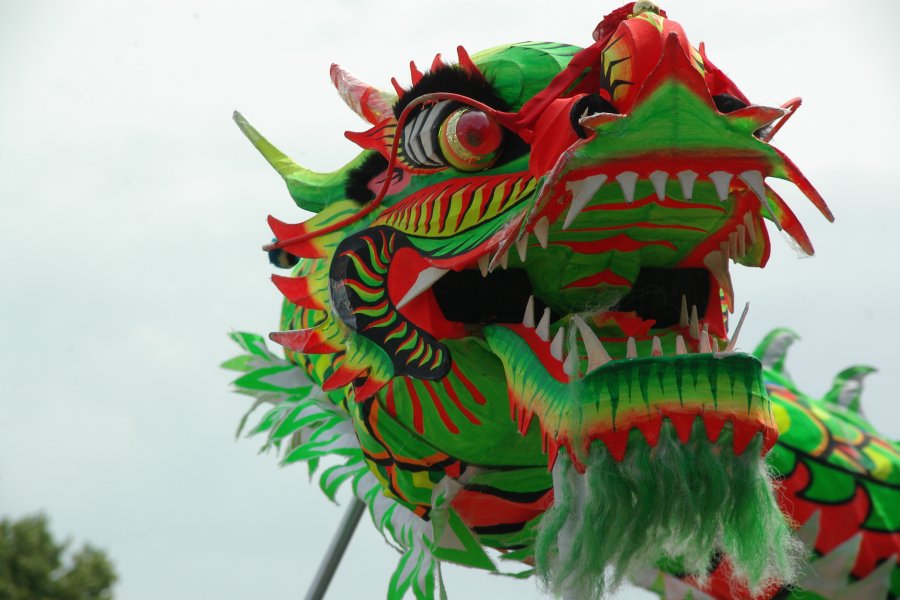 Dragon danceA long dragon puppet on poles, danced by a team at Chinese New Year and other festivals
 TiniklingA Philippine folk dance where dancers step between clapping bamboo poles
 RaraA Haitian street music of bamboo trumpets and drums, played in the Easter season
Good reading and sources
- Schuhplattler on WikipediaEncyclopedia
- More photos on Wikimedia CommonsPhotos and video
- Wikidata recordOpen data
The facts on this page come from the Wikipedia article "Schuhplattler", written by its contributors and used under the CC BY-SA 4.0 licence, and from its Wikidata record (CC0). EveryParampara rewrote the text in its own words, with AI assistance, and compares every page with the article to make sure no passage is copied. It may be reused under the same CC BY-SA 4.0 licence with a link back.
It may contain mistakes. Traditions differ from one family, village and community to the next, and the people who keep them know them best. If something is wrong, tell us. Last refreshed 2026-10-05.
More from Germany
All the traditions of Germany 🇦🇹 Vienna, Austria and 2 moreViennese waltzWiener Walzer
A fast rotary partner dance kept across Austria and Europe, celebrated in ballrooms and social halls.Performance
🇬🇧 Newcastle upon Tyne, United Kingdom and 5 moreRapper sword
A fast-paced five-person sword dance from the coalfields of North East England, kept alive by teams worldwide.Performance
🇦🇹 Vienna, Austria and 2 moreViennese waltzWiener Walzer
A fast rotary partner dance kept across Austria and Europe, celebrated in ballrooms and social halls.Performance
🇬🇧 Newcastle upon Tyne, United Kingdom and 5 moreRapper sword
A fast-paced five-person sword dance from the coalfields of North East England, kept alive by teams worldwide.Performance
 🇬🇧 United Kingdom and 5 moreChristmas carol
Festive songs and hymns sung during the Christmas season and door to doorPerformance
🇬🇧 United Kingdom and 5 moreChristmas carol
Festive songs and hymns sung during the Christmas season and door to doorPerformance
 🇲🇦 Marrakesh, Morocco and 5 moreGnawa musicڭْناوة or كْناوة
A spiritual musical tradition of Morocco that blends West African rhythms with Islamic ritual to heal and connect communPerformance
🇲🇦 Marrakesh, Morocco and 5 moreGnawa musicڭْناوة or كْناوة
A spiritual musical tradition of Morocco that blends West African rhythms with Islamic ritual to heal and connect communPerformance
The same idea elsewhere
All of this kind 🇹🇷 Kayseri, Turkey and 4 moreHalay
A traditional line and circle folk dance kept across Turkey, Azerbaijan, Armenia, Iran, and Syria.Performance
🇹🇷 Kayseri, Turkey and 4 moreHalay
A traditional line and circle folk dance kept across Turkey, Azerbaijan, Armenia, Iran, and Syria.Performance
 🇳🇿 Auckland, New ZealandPoi
A Māori performing art of swinging tethered weights in rhythmical patterns.Performance
🇳🇿 Auckland, New ZealandPoi
A Māori performing art of swinging tethered weights in rhythmical patterns.Performance
 🇵🇭 Philippines and 1 morePangalay
A traditional fingernail dance of the Tausūg and Bajau peoples in the Sulu Archipelago and Sabah.Performance
🇵🇭 Philippines and 1 morePangalay
A traditional fingernail dance of the Tausūg and Bajau peoples in the Sulu Archipelago and Sabah.Performance