Music, dance and storytellingEurope
Sean-nós dance
In its own language: damhsa ar an sean nós
An improvised solo Irish dance: low footwork, free arms and a loud battering beat
Sean-nós dance is an older, informal style of solo Irish dance, named from the Irish words for old style. Dancers improvise low footwork, batter the accented beat and move their arms freely, at sessions and festivals in Ireland and among the Irish diaspora in America and Canada.
When is Sean-nós dance kept?
Sean-nós dance is kept on all year round, at informal music sessions, festivals and competitions.
Sean-nós dance is an old-style solo dance from Ireland, kept today by dancers who value personal expression over set routines. Its name comes from the Irish for old style. Dancers stay close to the floor, batter out the accented beat, and let their arms swing freely. It is the informal cousin of Irish stepdance, and it lives on in pubs, sessions and festivals.
Old style dancing
The Irish phrase sean nós means old style, and it names both this dance and an older way of singing. Damhsa ar an sean nós is therefore dancing in the old manner. It is a solo tradition, usually performed by one person at a time, and it is casual rather than competitive. Historians of Irish music and ethnomusicologists have written it down, but it was never only a memory: it still turns up in parts of the Irish music scene, where dancers and musicians keep it going.
How it is danced
Footwork stays close to the ground and the steps are made up on the spot rather than fixed beforehand. Personal style matters more than a uniform look, so dancers rarely perform in unison; they take turns, answering the energy of whoever went before. Arms swing with the rhythm or rest loosely at the side. The batter, a heavier strike, marks the accented beat. Any flat surface can serve: a wooden floor, a door taken off its hinges, a table, a barrel, even a stool top. A small space tests the dancer's control.
Contrast with stepdance
Irish stepdance is the formal, competitive cousin, and sean-nós dance probably influenced it. Stepdancers wear stylised costumes, kick high, keep their arms rigid and hold themselves upright. Sean-nós dancers have no such rules. They wear whatever they happen to have on, stand only as straight as the steps require, and let the arms move. Shoes are a personal choice too, though many pick something that can rap out a percussive sound. Patrick O'Dea treats the two as separate dances, one an old style and one a newer variation.
Competition and change
Competitions, stage shows and teaching that copies one dancer after another have produced standard old style steps, which sits oddly with a form built on improvisation. The same steps now appear again and again at competitions, along with a set of standard tunes. Many leading dancers have taken up tap shoes, which alters both the sound and the look of the dancing. Old style dance can still be sorted into three looser kinds: wholly improvised, a mix of improvisation and personal steps, and fully choreographed pieces.
In the diaspora
Irish emigrants carried the dance with them. It has left marks on other solo traditions, among them tap dance and the informal freeform solo folk dancing of America. In the United States and Canada it is most often seen at folk festivals and at informal Irish music sessions, sometimes mixed with casual stepdancing and other regional styles. American sean-nós dancing has also absorbed influences from other dance cultures it met there. Dance workshops in America have begun to teach the style to a wider circle.
How Sean-nós dance is kept
Usually one dancer at a time, at an informal session or festival, with a musician or band playing a lively tune. The dancer chooses steps as the music goes, keeping the feet low and driving the accented beat with a batter. Arms move with the rhythm rather than staying rigid. In a small group, dancers take turns, each responding to the one before. Solo performances have often happened in cramped spots, such as on a half-door or a table. In America and Canada the setting is typically a folk festival or a session, sometimes alongside casual stepdancing.
When and where
There is no fixed date. Sean-nós dancing belongs to informal Irish music sessions and folk festivals all year round, and to the competitions and workshops that have grown up around it. One dance competition and workshop, Comórtas Damhsa Chóilín Sheáin Dharach, is held every year in Ros Muc in Conamara.
It belongs to Ireland, where it survives in parts of the Irish music scene, and it travelled with Irish emigrants to the United States and Canada. There it is seen at folk festivals and informal sessions. Comórtas Damhsa Chóilín Sheáin Dharach takes place in Ros Muc, Conamara, and a festival called Sean-nós Northwest is held in America.
What Sean-nós dance means
For the people who keep it, the dance is a claim about how tradition lives: not as a fixed routine but as something each dancer makes again in the moment. Spontaneous expression is what is prized, and personal style is the mark of a good dancer. A small floor, a door or a table is not a limitation but a test, and old accounts remember dancers who could work in a space no wider than a tray.
Questions people ask about Sean-nós dance
When is Sean-nós dance kept?
Sean-nós dance is kept on all year round, at informal music sessions, festivals and competitions.
What is sean-nós dance?
It is an older style of solo Irish dance, casual rather than competitive. The Irish name means old style, and it is used for this dance and for an older manner of singing. Dancers improvise low footwork and let their arms move freely with the music.
How is it different from Irish stepdance?
Stepdance is formal and competitive, with stylised costumes, high kicks, rigid arms and upright posture. Sean-nós dancing has no set costume, no required posture and free arms, and many dancers wear whatever they have on. Patrick O'Dea treats the two as entirely different dances, one old style and one a newer variation.
Do dancers need special shoes or a stage?
No. Dancers use whatever shoe they like, though many prefer one that can make a percussive sound. A wooden floor is common, but a door off its hinges, a table, a barrel or a stool top has served too, and a narrow surface is taken as a test of skill.
Is it a group dance?
It is usually a solo form. Because steps are improvised, dancers rarely perform the same routine together; instead they may take turns, one playing off the energy of the other. Small groups do dance, but a synchronised performance needs choreography worked out in advance.
See also
 Morris danceA rhythmic English folk dance performed in costume with bells, sticks and handkerchiefs
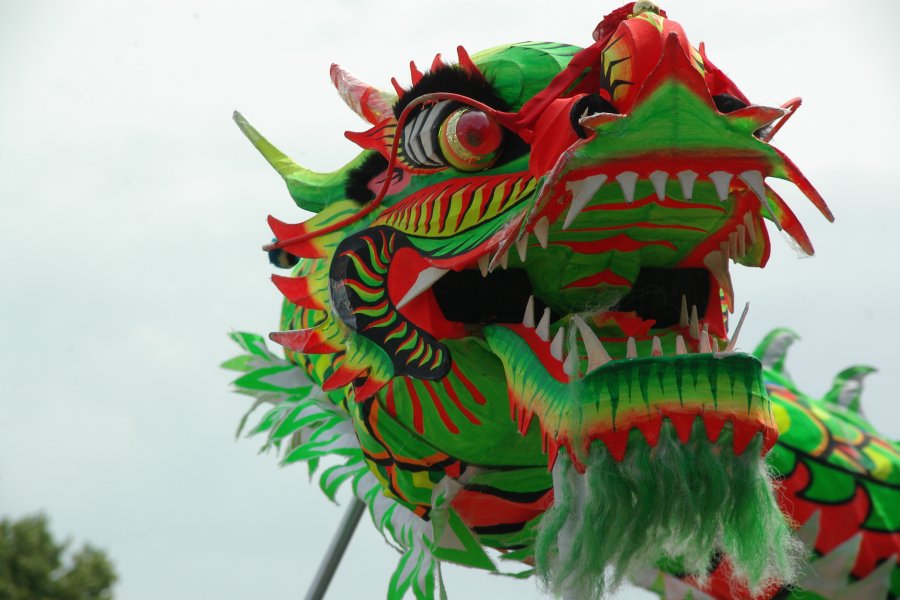 Dragon danceA long dragon puppet on poles, danced by a team at Chinese New Year and other festivals
 TiniklingA Philippine folk dance where dancers step between clapping bamboo poles
 PlenaPuerto Rican folk songs and dance sharing community news with rhythmic frame drums
Good reading and sources
The facts on this page come from the Wikipedia article "Sean-nós dance", written by its contributors and used under the CC BY-SA 4.0 licence, and from its Wikidata record (CC0). EveryParampara rewrote the text in its own words, with AI assistance, and compares every page with the article to make sure no passage is copied. It may be reused under the same CC BY-SA 4.0 licence with a link back.
It may contain mistakes. Traditions differ from one family, village and community to the next, and the people who keep them know them best. If something is wrong, tell us. Last refreshed 2026-10-05.
More from Ireland
All the traditions of Ireland 🇮🇪 Dublin, Ireland and 2 moreIrish traditional music
A living folk practice of dance tunes, airs, songs and communal pub sessionsPerformance
🇮🇪 Dublin, Ireland and 2 moreIrish traditional music
A living folk practice of dance tunes, airs, songs and communal pub sessionsPerformance
 🇮🇪 Dublin, Ireland and 2 moreIrish stepdance
A percussive dance form with swift, intricate footwork and an upright torsoPerformance
🇮🇪 Dublin, Ireland and 2 moreIrish stepdance
A percussive dance form with swift, intricate footwork and an upright torsoPerformance
 🇮🇪 Waterford, IrelandSean-nós singingSean-nós
An unaccompanied, highly ornamented style of traditional Irish folk singingPerformance
🇮🇪 Waterford, IrelandSean-nós singingSean-nós
An unaccompanied, highly ornamented style of traditional Irish folk singingPerformance
 🇮🇪 Ireland and 5 moreFleadh CheoilFleadh Cheoil na hÉireann
An annual gathering of Irish traditional music and dance, featuring competitions, public sessions, and concerts across IPerformance
🇮🇪 Ireland and 5 moreFleadh CheoilFleadh Cheoil na hÉireann
An annual gathering of Irish traditional music and dance, featuring competitions, public sessions, and concerts across IPerformance
The same idea elsewhere
All of this kind 🇹🇷 Kayseri, Turkey and 4 moreHalay
A traditional line and circle folk dance kept across Turkey, Azerbaijan, Armenia, Iran, and Syria.Performance
🇹🇷 Kayseri, Turkey and 4 moreHalay
A traditional line and circle folk dance kept across Turkey, Azerbaijan, Armenia, Iran, and Syria.Performance
 🇳🇿 Auckland, New ZealandPoi
A Māori performing art of swinging tethered weights in rhythmical patterns.Performance
🇳🇿 Auckland, New ZealandPoi
A Māori performing art of swinging tethered weights in rhythmical patterns.Performance
 🇵🇭 Philippines and 1 morePangalay
A traditional fingernail dance of the Tausūg and Bajau peoples in the Sulu Archipelago and Sabah.Performance
🇵🇭 Philippines and 1 morePangalay
A traditional fingernail dance of the Tausūg and Bajau peoples in the Sulu Archipelago and Sabah.Performance