Music, dance and storytellingSoutheast Asia
Tinikling
A Philippine folk dance where dancers step between clapping bamboo poles

Tinikling is a folk dance of the Philippines, named for the tikling, a rail bird whose light footwork it copies. Two people strike long bamboo poles while dancers weave between them, usually to rondalla string music, at school shows, cultural events and national occasions.
When is Tinikling kept?
Tinikling is kept at school events, cultural shows and national occasions; in the Philippines often on certain Sundays.
Tinikling is a folk dance of the Philippines, and its name comes from the tikling, a rail bird that walks among grass and tree limbs. Dancers copy the bird's quick, light steps, moving barefoot between bamboo poles that two seated or kneeling people clap and slide in rhythm. Filipino communities keep it at home and in the United States.
What it is
Two or four pairs of bamboo poles lie parallel on the ground. Each pole runs about 6 to 12 feet, roughly 1.8 to 3.7 metres. People sit or kneel at the ends and hold them, and they are called clappers or clickers. The poles work as percussion instruments, struck on the floor, sometimes on raised pieces of wood, and knocked against one another. The pattern runs in triple metre: two taps on the ground for the first two beats, then the poles meet on the third. That clapping rhythm normally goes with rondalla music.
Origins and history
The dance is older than Spanish rule in the islands, and it began in Palo on Leyte, an island in the Visayas. Its name points to the tikling, a word covering several rail birds, among them the slaty-breasted rail, the buff-banded rail and the barred rail. At least one telling, and it has no historical evidence behind it, says the dance came from field workers who were struck on the feet with bamboo poles for working slowly, and who learned to avoid the blows. Bamboo dances also exist in parts of Asia Spain never governed, so a pre-Hispanic beginning is thought likely.
How it is danced
Dancers go in barefoot, hands at the hips or clasped behind the back. They follow the beat closely, because the poles snap shut and an ankle caught between them can be injured. Two or more dancers weave in and out. The poles speed up as the dance goes on, so the dancers draw closer and their movements grow busier. At the fastest point they take each other's hands. To finish, they release their grip and walk clear of the poles. Women wear the Balintawak or the patadyong, men an untucked embroidered barong Tagalog.
Across Asia
Bamboo pole dances turn up in many parts of Asia, which points to long links between neighbouring peoples. Taiwan has Ami and Puyuma versions. In Indonesia there is Rangku Alu among the Manggarai and Gaba-gaba among the Ambonese. Vietnam has Múa Sạp, Thailand Lao Kra Top Mai, Cambodia Robam Kom Araek, Myanmar the Karen or Chin bamboo dance, and Brunei Alai Sekap. Magunatip belongs to the Murut of Borneo. Northeast India keeps the Cheraw dance of Mizoram and bamboo dances of Naga and Kuki groups, and southern China has Zhuang, Li and Yao forms.
Today and change
Tinikling is taught in the United States, from kindergarten through grade twelve, where physical education teachers use it as aerobic exercise that builds rhythm, foot speed and hand coordination. Schools there often swap bamboo for plastic pipe or wooden dowels, or have two students jump apart and together with elastic bands at their ankles, so more of the class takes part. Stage and cultural-show performances usually place it in a Rural Suite beside dances such as Sayaw sa Bangko, Maglalatik and Pandanggo sa Ilaw. Modern versions add poles or use percussion-heavy songs instead.
How Tinikling is kept
Two or more people sit or kneel and hold the poles, and the dancers, usually barefoot, take their places beside them. The poles begin at a steady triple beat, and the dancers step in and out, hopping, jumping and turning. As the music quickens, the poles close faster and the dancers move nearer one another. Near the end they join hands, then let go and step away from the poles. Rondalla string music, or a recording of it, plays throughout. In the Philippines the dance often appears on certain Sundays, and elsewhere at school events and Filipino holidays.
When and where
There is no fixed season. In the Philippines it is often danced on certain Sundays, and it is a regular item at school programmes, cultural shows and national occasions such as Filipino Independence Day. American schools use it in physical education lessons through the school year. Its older form belongs to the time before Spanish rule.
It comes from Palo on Leyte, in the Visayas region of the Philippines, where it is a national folk dance. Filipino communities abroad keep it too. The United States is the other place where it is well established, taught in schools across the country. Related bamboo dances are found in Taiwan, Indonesia, Vietnam, Thailand, Cambodia, Myanmar, Brunei, Malaysia, India and southern China.
What Tinikling means
For the people who dance it, Tinikling holds two things at once. It is a picture of the tikling bird, a small creature that survives by quickness of foot. It is also a shared Filipino dance, one that families and students learn young and perform together. Some tell its story through the hardship of farm labour under Spanish rule, though no evidence supports that account. Whichever story a dancer carries, the dance asks for trust: the poles are in other people's hands, and the timing is theirs as much as yours.

Questions people ask about Tinikling
When is Tinikling kept?
Tinikling is kept at school events, cultural shows and national occasions; in the Philippines often on certain Sundays.
What is Tinikling?
It is a Philippine folk dance. Two or more people hold and clap long bamboo poles while one or more dancers step between them, copying the quick movement of a bird called the tikling. It is usually danced to rondalla string music.
Where did it come from?
It began in Palo, on the island of Leyte in the Visayas, before Spanish colonial rule. Similar bamboo dances exist in other parts of Asia that Spain never governed, which is one reason a pre-Hispanic origin is considered likely.
What do the dancers wear?
Women wear either the Balintawak, a bright dress with wide arched sleeves, or the patadyong, a pineapple-fibre blouse with a checkered skirt. Men wear the barong Tagalog, a light long-sleeved embroidered shirt, with red trousers. Nobody wears shoes.
Is it hard to learn?
It takes practice. Dancers have to follow the beat exactly, since the poles snap shut and can catch an ankle. They begin slowly with their hands at their hips, and the poles speed up until the dancers crowd together and hold hands near the end.
See also
 PlenaPuerto Rican folk songs and dance sharing community news with rhythmic frame drums
 Morris danceA rhythmic English folk dance performed in costume with bells, sticks and handkerchiefs
 PangalayA traditional fingernail dance of the Tausūg and Bajau peoples in the Sulu Archipelago and Sabah.
 Irish traditional musicA living folk practice of dance tunes, airs, songs and communal pub sessions
Good reading and sources
- Tinikling on WikipediaEncyclopedia
- More photos on Wikimedia CommonsPhotos and video
- Wikidata recordOpen data
The facts on this page come from the Wikipedia article "Tinikling", written by its contributors and used under the CC BY-SA 4.0 licence, and from its Wikidata record (CC0). EveryParampara rewrote the text in its own words, with AI assistance, and compares every page with the article to make sure no passage is copied. It may be reused under the same CC BY-SA 4.0 licence with a link back.
It may contain mistakes. Traditions differ from one family, village and community to the next, and the people who keep them know them best. If something is wrong, tell us. Last refreshed 2026-10-05.
More from the Philippines
All the traditions of the Philippines 🇵🇭 PhilippinesPandanggo
A lively Philippine folk dance of quick steps, clapping and balanced lightsPerformance
🇵🇭 PhilippinesPandanggo
A lively Philippine folk dance of quick steps, clapping and balanced lightsPerformance
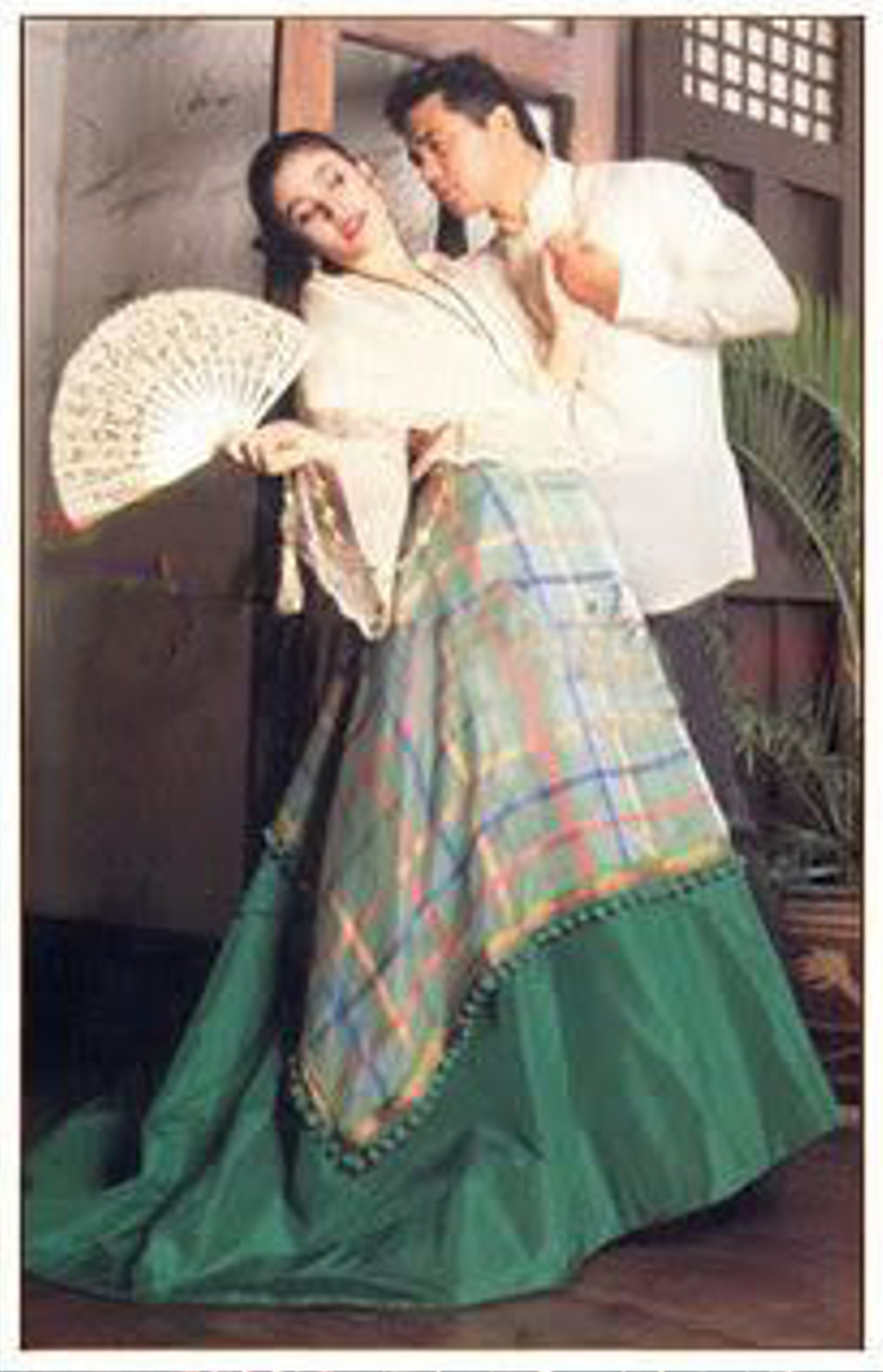 🇵🇭 PhilippinesCariñosa
A Philippine folk dance of colonial origin where a couple uses a fan and handkerchief to enact a playful romance.Performance
🇵🇭 PhilippinesCariñosa
A Philippine folk dance of colonial origin where a couple uses a fan and handkerchief to enact a playful romance.Performance
 🇹🇼 Yilan, Taiwan and 4 moreTaiwanese opera歌仔戲
A Taiwanese theatrical art of Hokkien balladry, stylized staging, and expressive song.Performance
🇵🇭 Philippines and 1 morePangalay
A traditional fingernail dance of the Tausūg and Bajau peoples in the Sulu Archipelago and Sabah.Performance
🇹🇼 Yilan, Taiwan and 4 moreTaiwanese opera歌仔戲
A Taiwanese theatrical art of Hokkien balladry, stylized staging, and expressive song.Performance
🇵🇭 Philippines and 1 morePangalay
A traditional fingernail dance of the Tausūg and Bajau peoples in the Sulu Archipelago and Sabah.Performance
The same idea elsewhere
All of this kind 🇹🇷 Kayseri, Turkey and 4 moreHalay
A traditional line and circle folk dance kept across Turkey, Azerbaijan, Armenia, Iran, and Syria.Performance
🇧🇷 BrazilBaião
A syncopated folk rhythm and partnered dance from northeastern BrazilPerformance
🇹🇷 Kayseri, Turkey and 4 moreHalay
A traditional line and circle folk dance kept across Turkey, Azerbaijan, Armenia, Iran, and Syria.Performance
🇧🇷 BrazilBaião
A syncopated folk rhythm and partnered dance from northeastern BrazilPerformance
 🇺🇦 Kyiv, UkraineBanduraБандура
A Ukrainian plucked string instrument played to accompany epic songs and folk balladsPerformance
🇺🇦 Kyiv, UkraineBanduraБандура
A Ukrainian plucked string instrument played to accompany epic songs and folk balladsPerformance
 🇳🇿 Auckland, New ZealandPoi
A Māori performing art of swinging tethered weights in rhythmical patterns.Performance
🇳🇿 Auckland, New ZealandPoi
A Māori performing art of swinging tethered weights in rhythmical patterns.Performance