Home and family lifeEuropeHinduBuddhist
Housewarming party
A gathering held soon after moving into a new home to celebrate the space and welcome guests.

A housewarming party is an informal social event hosted shortly after a family moves into a new residence. It serves as a way for the hosts to show their new home to friends and receive gifts that help furnish the space. The tradition has deep historical roots in medieval Europe and persists globally with distinct regional customs.
When is Housewarming party kept?
Housewarming party is kept on soon after moving into a new residence.
A housewarming party is a gathering held shortly after a family moves into a new residence. The hosts invite friends to see the new space and offer gifts to help furnish it. This custom blends social celebration with practical support for the new household.
Origins and history
The English term comes from the literal act of warming a cold new house before central heating existed. Guests would bring firewood to light fires in every fireplace. This warmth was believed to create a protective atmosphere that repelled evil spirits. Uninhabited homes were seen as targets for vagrant spirits, so cleansing them was considered essential before children could safely live there. The practice dates back to medieval times.
Regional traditions
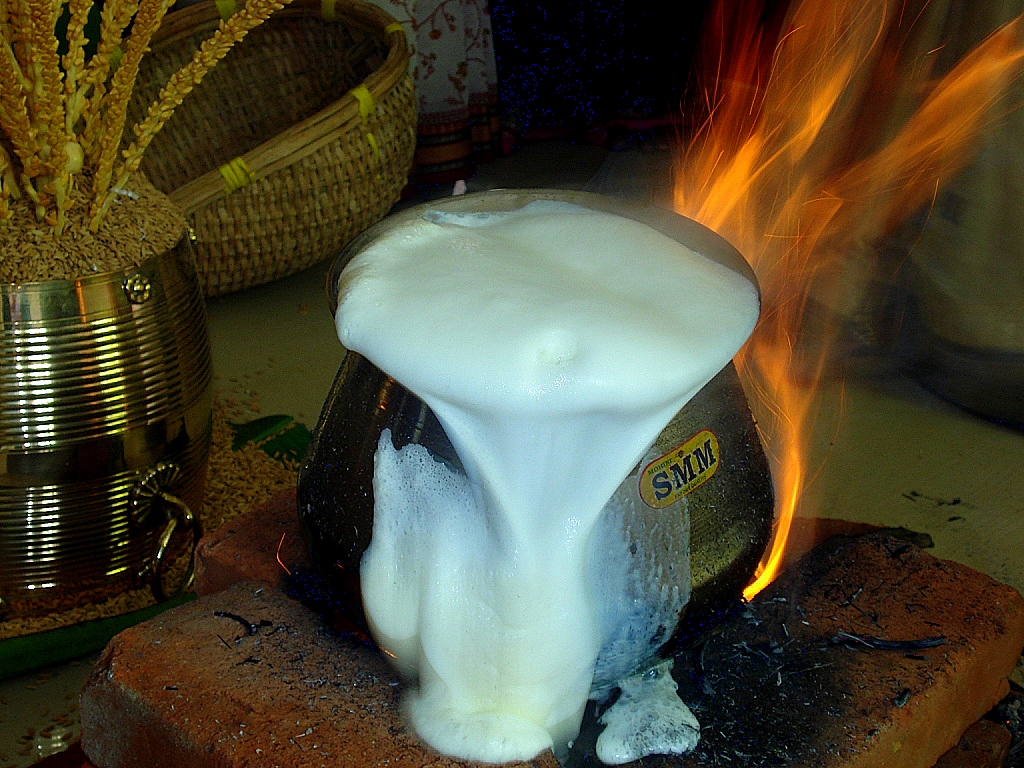
In France, the event is called pendaison de crémaillère, meaning hanging of the chimney hook. This refers to a medieval custom where builders were thanked with a meal cooked over a fire controlled by a specific hook. In India, the grihapravesha ceremony involves a sacred cow entering first and rituals to rid the house of negative energy. Southern US communities hold Food Pounder parties where guests bring pantry staples like flour or cheese to stock the new kitchen.
Gifts and symbols
Bread and salt are common gifts in Russia, Germany, and Jewish traditions, symbolizing hospitality. Greeks traditionally give pomegranates to place near domestic altars for luck and abundance. Historically, pineapples were extravagant gifts in Europe and America, representing wealth and indigenous hospitality. Karakalpaks in Uzbekistan exchange cloth when moving into yurts. In Russia and post-Soviet states, a cat is often the first to enter to bring family luck.
How Housewarming party is kept
Hosts invite friends and family to visit their new residence shortly after moving in. The atmosphere is generally informal. Guests arrive with gifts intended to help furnish the home or provide food. In some cultures, specific rituals occur, such as a sacred animal entering first or monks blessing the space. The gathering allows the community to welcome the new household and share in the joy of the move.
When and where
It takes place soon after a family moves into a new residence. There is no fixed calendar date, but it occurs in the early days or weeks of occupancy.
The tradition is found globally. It is prominent in Russia, Germany, France, India, and the United States. Specific regional variations exist in places like Uzbekistan and the Caribbean through historical trade influences.
What Housewarming party means
The core meaning is protection and welcome. Warming the house was originally about driving away evil spirits and ensuring safety for children. Gifts like bread and salt represent sustenance and hospitality. Pomegranates symbolize fertility and wealth. The gathering itself strengthens community bonds and offers practical support to the new residents.
Questions people ask about Housewarming party
When is Housewarming party kept?
Housewarming party is kept on soon after moving into a new residence.
What is a housewarming party?
It is an informal gathering held shortly after someone moves into a new home. Friends and family visit to see the new space and give gifts to help furnish it.
Why do people bring firewood?
Historically, this was done to warm the cold house before central heating existed. It also created a protective atmosphere believed to repel evil spirits from uninhabited spaces.
What is grihapravesha?
This is the Indian term for entering a new house. It involves rituals like a sacred cow entering first and prayers to remove evil spirits from the property.
What does pendaison de crémaillère mean?
It is the French term for housewarming, literally meaning hanging of the chimney hook. It references a medieval thank-you meal for builders cooked over a fireplace.
See also
 GrihapraveshA Hindu housewarming ritual to purify a new home and invite blessings.As-salamu alaykumA traditional Arabic greeting of peace exchanged in daily life and prayer
 Barn raisingA communal tradition where neighbours assemble to erect a farm barn in a few days
 Akhand PathThe unbroken, continuous reading of the entire Sikh scripture over two days
Good reading and sources
- Housewarming party on WikipediaEncyclopedia
- More photos on Wikimedia CommonsPhotos and video
- Wikidata recordOpen data
The facts on this page come from the Wikipedia article "Housewarming party", written by its contributors and used under the CC BY-SA 4.0 licence, and from its Wikidata record (CC0). EveryParampara rewrote the text in its own words, with AI assistance, and compares every page with the article to make sure no passage is copied. It may be reused under the same CC BY-SA 4.0 licence with a link back.
It may contain mistakes. Traditions differ from one family, village and community to the next, and the people who keep them know them best. If something is wrong, tell us. Last refreshed 2026-10-04.
More from Russia
All the traditions of Russia 🇷🇺 Tula, Russia and 3 moreSamovarсамовар
A heated urn that brews tea for a slow, sociable pour, from Russia to Iran and KashmirTable custom · Tea, coffee and drinking ceremonies
🇷🇺 Tula, Russia and 3 moreSamovarсамовар
A heated urn that brews tea for a slow, sociable pour, from Russia to Iran and KashmirTable custom · Tea, coffee and drinking ceremonies
 🇲🇳 Mongolia and 2 moreTsagaan SarЦагаан сар
The Mongolian Lunar New Year festival of peace, elders, white foods and renewalSeasonal · Feasts and festival meals
🇲🇳 Mongolia and 2 moreTsagaan SarЦагаан сар
The Mongolian Lunar New Year festival of peace, elders, white foods and renewalSeasonal · Feasts and festival meals
 🇺🇦 Ukraine and 4 moreKorovaiкоровай (Ukrainian), каравай (Russian)
A round wedding bread of Eastern Europe, baked with songs and shared by all the guestsTable custom · Feasts and festival meals
🇺🇦 Ukraine and 4 moreKorovaiкоровай (Ukrainian), каравай (Russian)
A round wedding bread of Eastern Europe, baked with songs and shared by all the guestsTable custom · Feasts and festival meals
 🇷🇺 Russia and 1 moreRussian tea culture
The everyday cup of Russia, brewed strong and diluted to taste, with jam and sweetsTable custom · Tea, coffee and drinking ceremonies
🇷🇺 Russia and 1 moreRussian tea culture
The everyday cup of Russia, brewed strong and diluted to taste, with jam and sweetsTable custom · Tea, coffee and drinking ceremonies
The same idea elsewhere
New homes and beginnings compared 🇹🇷 Turkey and 5 moreEid al-Fitrعيد الفطر
The feast that ends Ramadan, opened with morning prayers, sweets and visits homeFestival · Feasts and festival meals
🇺🇸 United States and 1 moreBarn raising
A communal tradition where neighbours assemble to erect a farm barn in a few daysCraft · Lunch
🇹🇷 Turkey and 5 moreEid al-Fitrعيد الفطر
The feast that ends Ramadan, opened with morning prayers, sweets and visits homeFestival · Feasts and festival meals
🇺🇸 United States and 1 moreBarn raising
A communal tradition where neighbours assemble to erect a farm barn in a few daysCraft · Lunch
 🇮🇩 Indonesia and 2 moreKenduri
A communal prayer meal and gathering shared across Indonesia, Malaysia and BruneiSpiritual · Feasts and festival meals
🇮🇩 Indonesia and 2 moreKenduri
A communal prayer meal and gathering shared across Indonesia, Malaysia and BruneiSpiritual · Feasts and festival meals
 🇮🇳 India and 2 morePujaपूजा (pūjā)
Hindu worship: light, flowers and food offered to a deity or a guestSpiritual
🇮🇳 India and 2 morePujaपूजा (pūjā)
Hindu worship: light, flowers and food offered to a deity or a guestSpiritual