Spiritual and religiousEast AsiaShinto, Taoist and folk Chinese
Sundo
In its own language: 국선도 (國仙道); also 선도 (仙道)
Korean Taoist meditation: still postures, deep belly breathing, calm attention

Sundo, called Kouk Sun Do in Korea, is a Taoist practice built on meditation, held postures and deep abdominal breathing. Sources place its roots in the Korean mountains long ago, carried quietly from teacher to pupil; today it is taught in dojangs and schools in South Korea, France, Czechia, the United States and beyond.
When is Sundo kept?
Sundo is kept in dojangs through the year, ideally daily, with retreats several times a year.
Sundo is a Korean practice of Taoist meditation, known in Korea as Kouk Sun Do. Sitting and standing postures, deep belly breathing and quiet attention are used to build what practitioners call Ki, the body's vital energy. People keep it for health, ease of movement and steadiness of mind. It travelled from mountain hermits to towns and, in recent decades, to schools in Europe and North America.
What it is
Sundo is a Korean Taoist discipline. Practitioners sit or hold still positions, breathe deeply into the belly and let the mind settle. The aim is development on three fronts at once: body, mind and spirit. What they cultivate is Ki, the vital energy the Chinese call Qi. Regular work is said to bring suppleness, an easier body, better health and a calmer temper. People often compare it with Indian yoga or with Chinese qigong and tai chi. It is not the same as Sunmudo, a Buddhist martial art of moving forms; the two names sound alike, but Sundo rests on stillness and meditation.
Mountain roots
According to the tradition, the practice is very old and grew out of Northeast Asia, in the mountains of what is now Korea. For centuries it carried the name San Saram, or Taoism of the Mountain, and its keepers were hermits who taught one pupil at a time and kept the art to themselves. The sources trace a turning point to 320 CE, when an order called Samrang, also known as Kukson, gave it a settled place in the kingdom of Paekche. Later, after Koguryo, Silla and Paekche were united under the Hwarang, some practitioners withdrew to the hills again so they could train as they wished.
Be-Kyung and the first school
Be-Kyung, whose early name was Chung-San, meaning Blue Mountain, met a Taoist monk named Chung-Woon, or Clear Clouds, on a mountain when he was a boy in the late 1940s. A story tells that the monk offered to show him how to break stone with bare hands if the boy followed him, and he agreed. He trained for twenty years with Chung-Woon and with Chung-Woon's own master, Moo-Woon, or Without Cloud. In 1967 his teacher told him to leave the hills and teach, and gave him the name Be-Kyung, the Secret Frontier. He opened the first school in Seoul in 1970 and wrote two books, both published only in Korea.
Levels and forms
A learner moves through forms, sequences of postures rather like the taolu of Chinese arts. Each new form brings a new belt, and belts run up to black, as in Korean and Japanese martial arts. The sources name five stages. In the first, Jung Ki Dan Boup, white and white-yellow belts work two forms of twenty-five postures; Keon Gon Dan Boup is the yellow belt and one form of twenty-three. Won Ki Dan Boup covers red and blue belts with three sets of ten forms of twelve postures. Chook Ki Dan Boup, the gray belt, has one form of five postures. The black-belt stage, Jin Ki Dan Boup, is a single posture. From red belt a practitioner may be named Instructor, then Senior Instructor, then Teacher, or Sa Bom Nim.
Across the world
Hyun-moon Kim, one of twelve masters trained by Be-Kyung, took the practice abroad from 1979, chiefly to the United States, Canada and Europe. A doctor of philosophy, he teaches Taoist principles alongside Western psychology, wrote The Tao of Life, and runs a school in West Hartford, Connecticut, with retreats in Barnet, Vermont. In France, Philippe Lewkowicz earned the Sundo master degree in Korea in 1996 and Nicolas Tacchi teaches in Nancy and works with musicians on breathing and posture. Czechia is home to the European SunDo Association. Federations in Korea, including the World Kukseondo Federation, look after around 300 dojangs.
How Sundo is kept
Practitioners train in a dojang, a hall for the art. A session opens with about half an hour of stretching and self-massage to loosen the body. Then comes the heart of the work: forty minutes of holding positions with slow abdominal breathing, called Danjeon breathing. Newcomers take twenty-five positions; a master holds one. The closing part twists and stretches the body so that energy can travel the meridians, with some rhythmic strengthening at the end. Daily practice is thought best; two or three sessions a week already make a difference. Instructors also lead retreats several times a year.
When and where
Sundo has no single date in the year. Training goes on through the calendar, ideally each day, and retreats fall a few times a year wherever instructors arrange them. The sources mark 320 CE for its place in the Paekche court and 1967 as the year its teaching left the mountains.
Its home is Korea, and Seoul is where the first open school appeared in 1970. From there it reached the United States and Canada and parts of Europe. The sources point to France, Czechia, Romania and Russia as places where it has put down roots, and to around 300 dojangs linked to the World Kukseondo Federation in South Korea.
What Sundo means
For those who keep it, Sundo is a way of gathering and steadying Ki, the vital energy, so that body, feelings and spirit stay in balance. The theory follows acupuncture: energy travels the meridians, and working with them is said to bring calm and a stronger immune system. The deeper aim is a strengthened mind and a better character, with self-control. The sources are clear that the point is not quick or extraordinary powers. Nurturing the lower danjeon, the energy centre, is slow work that changes a person over years.

Questions people ask about Sundo
When is Sundo kept?
Sundo is kept in dojangs through the year, ideally daily, with retreats several times a year.
What is Sundo?
A Korean Taoist practice of meditation, still postures and deep belly breathing. Its goal is personal development across body, mind and spirit, and it is often compared with yoga, qigong and tai chi.
Where is it kept?
Korea is the home country and the source of its teaching line. It is also taught in France, Czechia, Romania, Russia, the United States and Canada, among other places.
Is it a martial art?
It has a martial side, Su Sul, which Be-Kyung first taught alongside the internal work before choosing to concentrate on meditation and breathing. It should not be confused with Sunmudo, a Buddhist martial art built on movement.
Do you need to be fit or young to begin?
The sources say it suits all ages and levels of fitness, whatever a person's starting point, because the exercises grow harder only as the learner is ready for them.
See also
 CandlemasA Christian feast of candle blessings marking the end of the Christmas season
 Sweat lodgeA purification ceremony kept by Indigenous peoples of the Americas using a heated hut and steam.
 OvooA stone cairn on a peak or pass, circled by travellers and honoured in sky worship
 GutSacred rites of song, dance, and spirit communion performed by Korean shamans
Good reading and sources
- Sundo on WikipediaEncyclopedia
- More photos on Wikimedia CommonsPhotos and video
- Wikidata recordOpen data
The facts on this page come from the Wikipedia article "Sundo", written by its contributors and used under the CC BY-SA 4.0 licence, and from its Wikidata record (CC0). EveryParampara rewrote the text in its own words, with AI assistance, and compares every page with the article to make sure no passage is copied. It may be reused under the same CC BY-SA 4.0 licence with a link back.
It may contain mistakes. Traditions differ from one family, village and community to the next, and the people who keep them know them best. If something is wrong, tell us. Last refreshed 2026-10-12.
More from South Korea
All the traditions of South Korea
🇰🇷 Jeju, South KoreaGut굿
Sacred rites of song, dance, and spirit communion performed by Korean shamansSpiritual
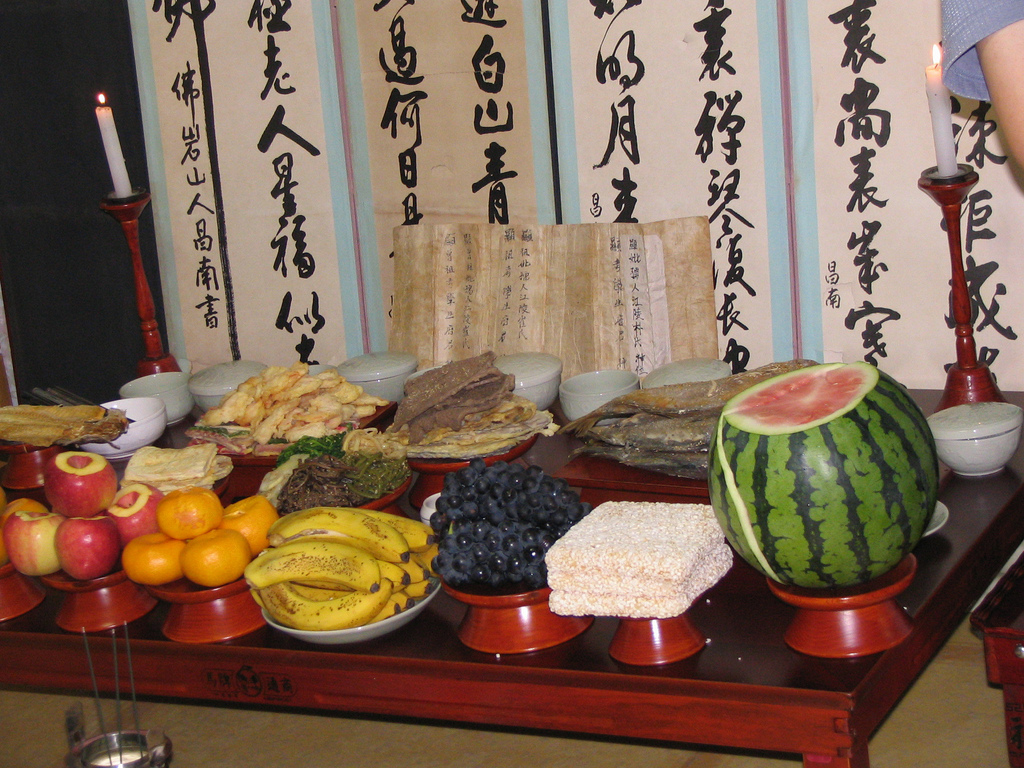 🇰🇷 South KoreaJesa제사 (Jesa)
A Korean ancestral memorial ceremony held on death anniversaries and major holidays.Spiritual · Feasts and festival meals
🇰🇷 South KoreaJesa제사 (Jesa)
A Korean ancestral memorial ceremony held on death anniversaries and major holidays.Spiritual · Feasts and festival meals
 🇰🇷 Seoul, South KoreaTemplestay템플스테이
A program that invites visitors to live in South Korean Buddhist temples and join the daily routines of monastic life.Spiritual · Dinner
🇰🇷 Seoul, South KoreaTemplestay템플스테이
A program that invites visitors to live in South Korean Buddhist temples and join the daily routines of monastic life.Spiritual · Dinner
 🇮🇳 India and 6 moreBuddha's Birthday佛诞
A festival marking the birth of Siddhartha Gautama, observed across Asia with temple rituals and community gatherings.Spiritual
🇮🇳 India and 6 moreBuddha's Birthday佛诞
A festival marking the birth of Siddhartha Gautama, observed across Asia with temple rituals and community gatherings.Spiritual
The same idea elsewhere
Healing, luck and protection compared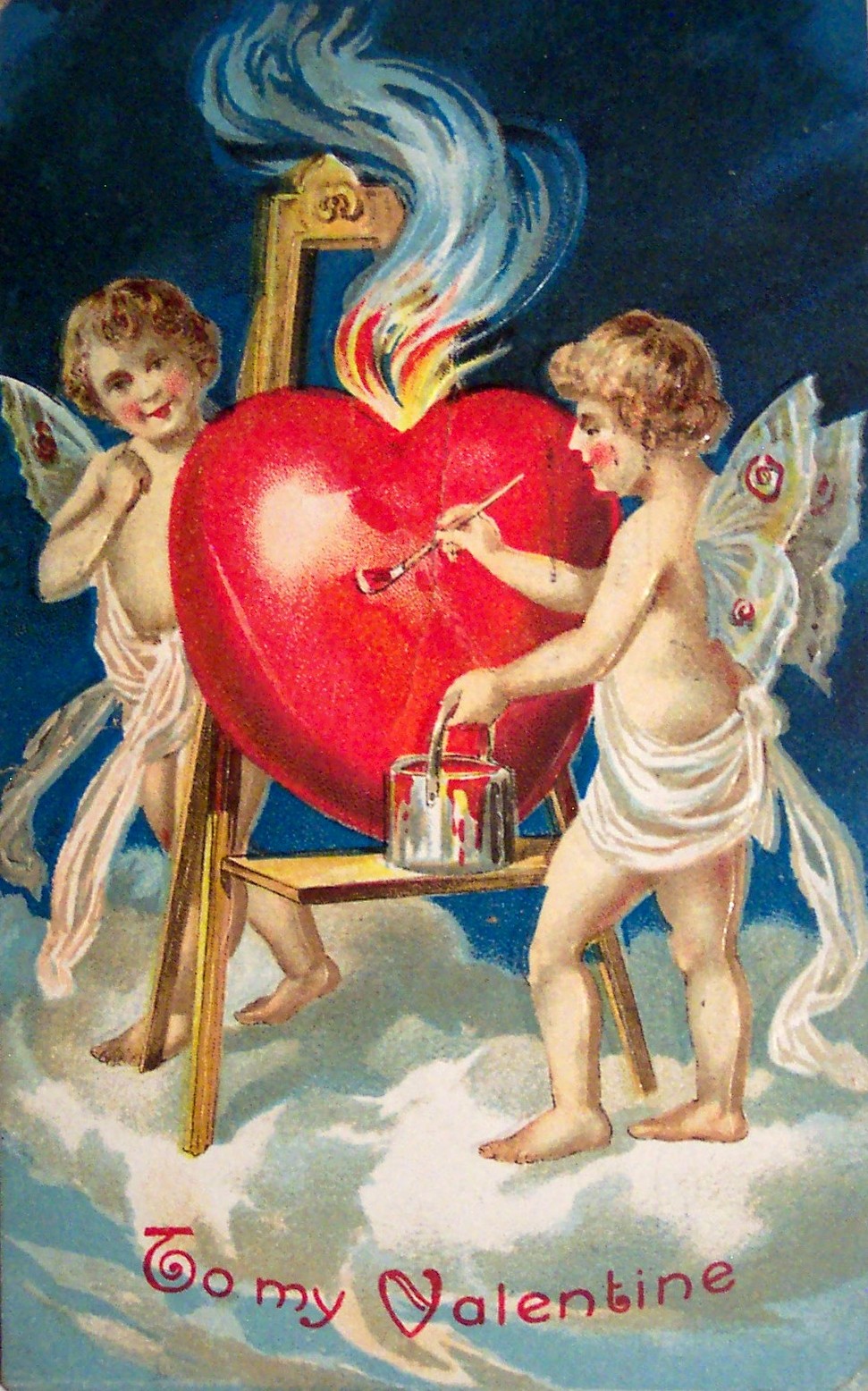 🇮🇹 Rome, Italy and 4 moreValentine's Day
A Christian feast day and cultural celebration of love kept on February 14 in many countries.Festival
🇮🇹 Rome, Italy and 4 moreValentine's Day
A Christian feast day and cultural celebration of love kept on February 14 in many countries.Festival
 🇩🇪 Germany and 5 moreChristmas tree
A decorated evergreen or artificial tree placed indoors to mark the Christmas season.Festival
🇫🇷 France and 5 moreCandlemas
A Christian feast of candle blessings marking the end of the Christmas seasonSpiritual
🇩🇪 Germany and 5 moreChristmas tree
A decorated evergreen or artificial tree placed indoors to mark the Christmas season.Festival
🇫🇷 France and 5 moreCandlemas
A Christian feast of candle blessings marking the end of the Christmas seasonSpiritual
 🇮🇪 Ireland and 2 moreJack-o'-lantern
A carved pumpkin lantern lit with a candle to brighten and protect Halloween nightsFolklore
🇮🇪 Ireland and 2 moreJack-o'-lantern
A carved pumpkin lantern lit with a candle to brighten and protect Halloween nightsFolklore