Spiritual and religiousEast AsiaHinduBuddhist
Jesa
In its own language: 제사 (Jesa)
A Korean ancestral memorial ceremony held on death anniversaries and major holidays.
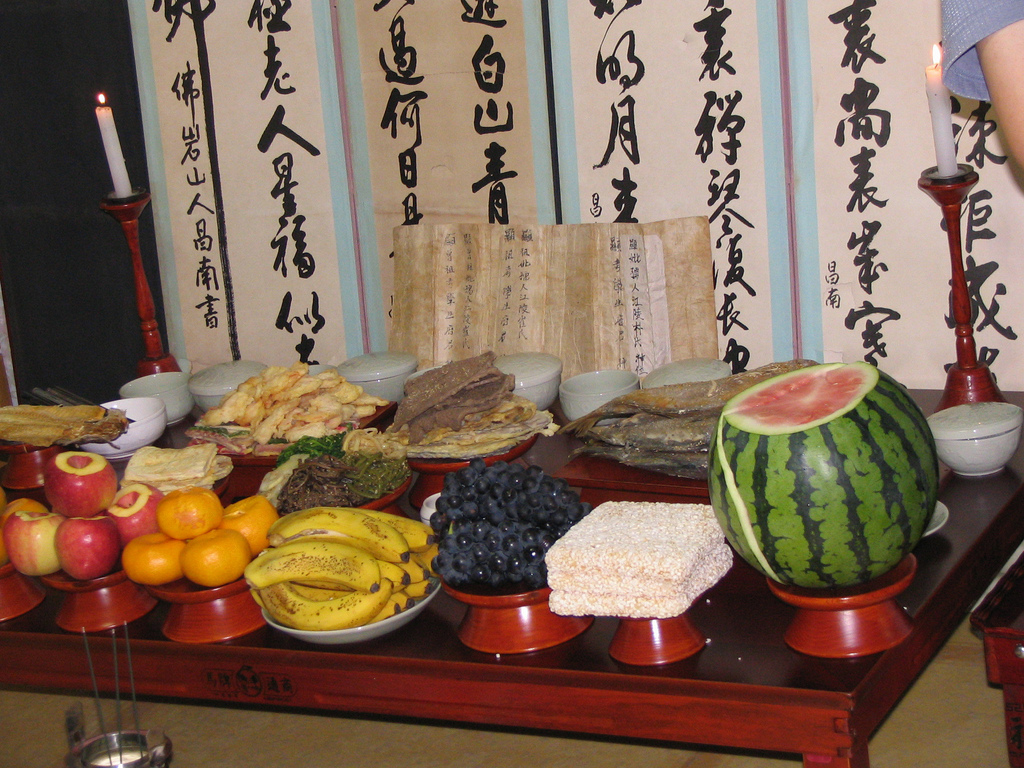
Jesa is a traditional Korean ritual honoring the spirits of deceased family members. It is primarily observed by Catholics, Buddhists, and nonbelievers in Korea, while Protestants generally do not participate. The practice involves setting an altar with specific foods and performing formal bows to remember ancestors.
When is Jesa marked?
Jesa is kept as part of Chuseok, which runs from 15 to 17 September 2027.
Jesa serves as a solemn memorial for Korean families to honor their lineage. Held on death anniversaries or seasonal festivals, the ritual connects the living with their forebears through food and prayer. While many religious groups observe it, Protestant communities typically abstain from these ancestral rites.
Origins and history
The roots of Jesa stretch back to the Korean Bronze Age, where dolmens served as sites for early ancestor worship. Over centuries, these practices evolved into formal Confucian rituals. State-sponsored ceremonies existed in ancient kingdoms like Goguryeo and Silla. By the Joseon Dynasty, Confucianism became the dominant ideology, shaping the structured nature of modern Jesa. Although Catholic authorities once banned such rites, Pope Pius XII lifted the prohibition in 1939, recognizing them as civil customs rather than religious idolatry.
Types of rites
Families distinguish between several types of ancestor rituals based on timing and purpose. Gije occurs on the specific death anniversary of a relative. Charye takes place during major holidays such as Korean New Year and Chuseok. Sije honors ancestors who are five or more generations removed, usually performed in the tenth lunar month. Historically, these rites might extend up to five generations, but contemporary practice often limits observance to parents or grandparents.
How it is kept
The eldest son traditionally prepares the altar, though daughters or younger sons may perform the duties today. A memorial tablet represents the ancestor's spirit. Food is arranged precisely: rice and meat on the west, soup and fish on the east. Candles flank the table. The ceremony follows a strict sequence involving offerings of wine, bowing, and inserting a spoon into the rice. Participants leave the room while the ancestors are believed to partake, then return to share the meal, symbolizing receiving blessings.
Food and meaning
The altar features dishes favored by the deceased, including fruits, vegetables, and rice cakes called songpyeon. Consuming this sacrificial food, known as eumbok, allows participants to receive spiritual blessings. In some regions like Andong, historical scholars ate similar meals called heotjesatbap as late-night snacks. Today, Jesa remains a vital cultural touchstone, reinforcing family bonds and respect for lineage despite modern simplifications in schedule and scope.
How Jesa is kept
The eldest descendant sets a lacquer table facing north with a memorial tablet. Rice, meat, and white fruits go on the west; soup, fish, and red fruits go on the east. Two candles light the ends. The eldest male offers wine first, followed by other relatives. They bow, insert a spoon into the rice, and leave the room so the ancestor can eat. Upon returning, they burn the prayer paper and share the food, believing this grants blessings.
When and where
Held annually on the death anniversary of a specific ancestor. Also performed during major calendar events like Korean New Year and Chuseok. Seasonal rites for distant ancestors occur in the tenth lunar month.
Primarily practiced in South Korea within family homes. Historically centered in the eldest son's residence, though modern adaptations allow performance at other family houses.
What Jesa means
Jesa reinforces filial piety and maintains the bond between the living and the dead. Sharing the sacrificial meal signifies that the ancestors have accepted the offering and bestowed good fortune upon the family. It is a tangible expression of gratitude and remembrance.


Days Jesa is marked
Questions people ask about Jesa
When is Jesa marked?
Jesa is kept as part of Chuseok, which runs from 15 to 17 September 2027.
What is Jesa?
Jesa is a Korean ancestral memorial ceremony. Families hold it to honor deceased relatives, typically on death anniversaries or major holidays like Chuseok. It involves setting an altar with food and performing formal rituals.
Who performs Jesa?
It is commonly practiced by Catholics, Buddhists, and nonbelievers in Korea. Most Protestants do not participate in these ancestral rites due to theological differences regarding ancestor veneration.
What happens during the ritual?
Family members arrange food on a table facing a memorial tablet. They offer wine, bow, and leave the room so the ancestor can 'eat.' They return to burn the prayer and share the food, which symbolizes receiving blessings.
See also
 GutSacred rites of song, dance, and spirit communion performed by Korean shamans
 YeondeunghoeA Korean lantern festival celebrating the Buddha's birthday with glowing lotus lights
 Buddha's BirthdayA festival marking the birth of Siddhartha Gautama, observed across Asia with temple rituals and community gatherings.
 HaenyeoFemale free-divers of Jeju Island who harvest seafood from the ocean.
Good reading and sources
- Jesa on WikipediaEncyclopedia
- More photos on Wikimedia CommonsPhotos and video
- Wikidata recordOpen data
The facts on this page come from the Wikipedia article "Jesa", written by its contributors and used under the CC BY-SA 4.0 licence, and from its Wikidata record (CC0). EveryParampara rewrote the text in its own words, with AI assistance, and compares every page with the article to make sure no passage is copied. It may be reused under the same CC BY-SA 4.0 licence with a link back.
It may contain mistakes. Traditions differ from one family, village and community to the next, and the people who keep them know them best. If something is wrong, tell us. Last refreshed 2026-10-05.
More from South Korea
All the traditions of South Korea
🇰🇷 Jeju, South KoreaGut굿
Sacred rites of song, dance, and spirit communion performed by Korean shamansSpiritual
🇰🇷 Seoul, South KoreaYeondeunghoe연등회
A Korean lantern festival celebrating the Buddha's birthday with glowing lotus lightsSpiritual
 🇰🇷 Seoul, South KoreaJongmyo jerye종묘 제례
Ancestral rite for Korea's Joseon kings, with court music and a line dance, held in SeoulSpiritual
🇰🇷 Seoul, South KoreaJongmyo jerye종묘 제례
Ancestral rite for Korea's Joseon kings, with court music and a line dance, held in SeoulSpiritual
 🇰🇷 Seoul, South KoreaTemplestay템플스테이
A program that invites visitors to live in South Korean Buddhist temples and join the daily routines of monastic life.Spiritual · Dinner
🇰🇷 Seoul, South KoreaTemplestay템플스테이
A program that invites visitors to live in South Korean Buddhist temples and join the daily routines of monastic life.Spiritual · Dinner
The same idea elsewhere
Remembering the ancestors compared 🇮🇪 Ireland and 5 moreHalloween
An annual observance on 31 October marking the eve of All Saints' Day, rooted in Christian tradition and Celtic heritageFestival · Sweets given and shared
🇮🇪 Ireland and 5 moreHalloween
An annual observance on 31 October marking the eve of All Saints' Day, rooted in Christian tradition and Celtic heritageFestival · Sweets given and shared
 🇮🇳 Ayodhya, India and 7 moreDiwaliदीपावली (Dīpāvalī)
A five-day festival of lights celebrated across India and its diaspora to mark the victory of light over darkness.Festival · Feasts and festival meals
🇮🇳 Ayodhya, India and 7 moreDiwaliदीपावली (Dīpāvalī)
A five-day festival of lights celebrated across India and its diaspora to mark the victory of light over darkness.Festival · Feasts and festival meals
 🇮🇷 Iran and 7 moreNowruzنوروز
The Iranian new year at the March equinox, kept with fire, greenery and picnicsSeasonal
🇮🇷 Iran and 7 moreNowruzنوروز
The Iranian new year at the March equinox, kept with fire, greenery and picnicsSeasonal
 🇮🇱 Jerusalem, Israel and 1 moreHanukkahחֲנֻכָּה
An eight-day Jewish festival marking the rededication of the Second Temple in Jerusalem and the miracle of a single day'Festival
🇮🇱 Jerusalem, Israel and 1 moreHanukkahחֲנֻכָּה
An eight-day Jewish festival marking the rededication of the Second Temple in Jerusalem and the miracle of a single day'Festival