Spiritual and religiousEast AsiaBuddhist
Templestay
In its own language: 템플스테이
A program that invites visitors to live in South Korean Buddhist temples and join the daily routines of monastic life.

Templestay is a cultural initiative run by the Jogye Order of Korean Buddhism. It began in 2002 to share temple culture with the world during the FIFA World Cup. Participants stay in mountain temples to learn meditation, eat monastic food, and attend ceremonies alongside monks and nuns.
When is Templestay kept?
Templestay is kept on year-round, with retreat seasons in summer and winter.
Templestay offers a chance to live inside a South Korean Buddhist temple. The program lets guests join monks and nuns for their daily work, meals, and prayers. It started in 2002 to share Korean culture during a global event. Today it remains a popular way to find peace and learn about Buddhist history.
Origins and growth
The Jogye Order created this program in 2002. They wanted to turn the FIFA World Cup into a cultural exchange. Temples opened their doors to locals and travelers alike. The response was strong, with thousands joining in just one month. Major news outlets covered the story. The order made the program permanent later that year. A special cultural group now manages the operations. Government support helped expand the list of participating temples. Many more sites joined over the following years.
Daily activities
Guests begin with a tour of the grounds. Guides explain the architecture and point out hidden details. Visitors then join Seon meditation sessions. These involve sitting quietly and walking slowly. Monks lead tea conversations in the afternoon. Guests ask questions and receive advice. Everyone eats together using traditional bowls. The meal teaches gratitude for every bite. Ceremonies mark the day at set times. Instruments call everyone to the main hall.
Rituals and crafts
Bowing is a key practice for clearing the mind. Participants may perform many bows to let go of attachments. Making lotus lanterns is another common activity. These paper flowers symbolize purity and wisdom. Guests glue each petal with care. This craft reminds them to be less selfish. Lantern parades happen in Seoul during festivals. The whole experience aims to bring inner calm. It connects modern visitors to ancient traditions.
How Templestay is kept
Visitors arrive at a temple and take a guided tour first. They learn where to eat and rest. Then they join meditation sessions that mix sitting and walking. Afternoons often feature tea talks with monks. Meals are eaten from specific bowls while reflecting on gratitude. Daily ceremonies include chanting and ringing bells. Guests might also make lotus lanterns or perform bows. These actions help participants understand monastic life and find peace.
When and where
The program runs all year. It grew out of a 2002 World Cup initiative. Retreats happen in summer and winter. Dates depend on the temple schedule. Guests can usually book stays in advance.
This tradition exists in South Korea. Temples across the country participate. Many sit in mountainous areas. Seoul hosts large lantern parades. The program has grown from a few sites to over a hundred locations nationwide.
What Templestay means
The practice aims to quiet the mind. Meditation helps focus thoughts through doubt. Bowing removes greed and attachment. Lotus lanterns represent inner purity. Eating together teaches thankfulness. The whole experience seeks to improve well-being. It connects people to Buddhist virtues.


Questions people ask about Templestay
When is Templestay kept?
Templestay is kept on year-round, with retreat seasons in summer and winter.
Where is Templestay kept?
Templestay belongs to the traditions of South Korea, and is tied most closely to Seoul.
Who keeps Templestay?
As our sources describe it, Templestay is kept by The Jogye Order of Korean Buddhism. Many other communities and families now share it too.
See also
 Joya no KaneA Japanese Buddhist New Year's Eve ritual where temple bells are struck to cleanse the year of worldly desires.
 Eid al-FitrThe feast that ends Ramadan, opened with morning prayers, sweets and visits home
 Good FridayA solemn Christian holy day commemorating the crucifixion and death of Jesus Christ.
 PassoverA Jewish spring festival celebrating freedom from slavery with ritual meals
Good reading and sources
The facts on this page come from the Wikipedia article "Templestay", written by its contributors and used under the CC BY-SA 4.0 licence, and from its Wikidata record (CC0). EveryParampara rewrote the text in its own words, with AI assistance, and compares every page with the article to make sure no passage is copied. It may be reused under the same CC BY-SA 4.0 licence with a link back.
It may contain mistakes. Traditions differ from one family, village and community to the next, and the people who keep them know them best. If something is wrong, tell us. Last refreshed 2026-10-04.
More from South Korea
All the traditions of South Korea
🇯🇵 Japan and 2 moreJoya no Kane除夜の鐘
A Japanese Buddhist New Year's Eve ritual where temple bells are struck to cleanse the year of worldly desires.Spiritual
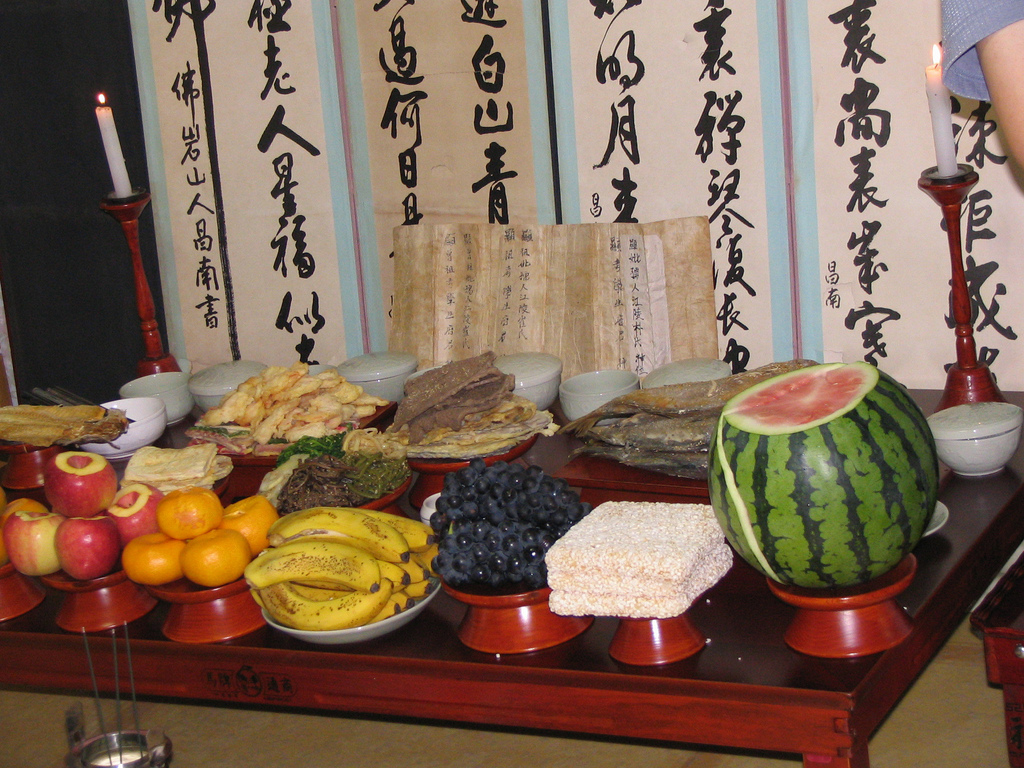 🇰🇷 South KoreaJesa제사 (Jesa)
A Korean ancestral memorial ceremony held on death anniversaries and major holidays.Spiritual · Feasts and festival meals
🇰🇷 South KoreaJesa제사 (Jesa)
A Korean ancestral memorial ceremony held on death anniversaries and major holidays.Spiritual · Feasts and festival meals
 🇰🇷 Jeju, South KoreaGut굿
Sacred rites of song, dance, and spirit communion performed by Korean shamansSpiritual
🇰🇷 Jeju, South KoreaGut굿
Sacred rites of song, dance, and spirit communion performed by Korean shamansSpiritual
 🇰🇷 Seoul, South KoreaYeondeunghoe연등회
A Korean lantern festival celebrating the Buddha's birthday with glowing lotus lightsSpiritual
🇰🇷 Seoul, South KoreaYeondeunghoe연등회
A Korean lantern festival celebrating the Buddha's birthday with glowing lotus lightsSpiritual
The same idea elsewhere
Pilgrimage compared 🇵🇱 Poland and 5 moreChristmas Eve
The evening before Christmas, marked by church services, family meals, and gift preparations across Christian cultures.Festival · Dinner
🇵🇱 Poland and 5 moreChristmas Eve
The evening before Christmas, marked by church services, family meals, and gift preparations across Christian cultures.Festival · Dinner
 🇵🇭 Manila, Philippines and 5 moreNovena
A nine-day Christian prayer tradition for petitions, feasts, or mourning.Spiritual
🇵🇭 Manila, Philippines and 5 moreNovena
A nine-day Christian prayer tradition for petitions, feasts, or mourning.Spiritual
 🇵🇭 Marinduque, PhilippinesMoriones Festival
A Holy Week reenactment in Marinduque where masked participants search for the Roman centurion Longinus.Festival
🇵🇭 Marinduque, PhilippinesMoriones Festival
A Holy Week reenactment in Marinduque where masked participants search for the Roman centurion Longinus.Festival
 🇮🇩 IndonesiaIsra and Mi'rajالإسراء والمعراج (al-’Isrā’ wal-Miʿrāj)
An Islamic observance marking the prophet Muhammad’s night journey and ascent through the heavens.Spiritual
🇮🇩 IndonesiaIsra and Mi'rajالإسراء والمعراج (al-’Isrā’ wal-Miʿrāj)
An Islamic observance marking the prophet Muhammad’s night journey and ascent through the heavens.Spiritual