Spiritual and religiousEast AsiaIndigenous and traditional
Gut
In its own language: 굿
Sacred rites of song, dance, and spirit communion performed by Korean shamans

Gut are traditional rites conducted by Korean shamans to connect human beings with deities, ancestors, and nature spirits. Through multi-stage ceremonies of rhythmic movement, chant, and sacred offerings, practitioners seek blessings, heal spiritual sickness, cleanse departed souls, and foster peace within the community.
When is Gut kept?
Gut is kept on linked to specific life events or dates on the lunar calendar.
Gut are sacred ceremonies led by Korean shamans to bridge the ordinary world with the realm of spirits, deities, and ancestors. By offering prayers, songs, dynamic dance, and ritual sacrifices, shamans appeal to unseen powers for human wellbeing and protection. Communities and families arrange these ceremonies to cure illness, guide departed souls safely onward, mark village milestones, or bring prosperity to their households.
Ceremonial stages and cleansing
Every ritual unfolds across several defined stages known as gori. Preparation starts with cleansing both body and mind to ensure effective contact between people and ancestral spirits. Shamans purify the ceremonial altar during the opening stage using water and fire, while white paper is burned to cleanse the physical body. White features heavily throughout the space as an emblem of cleanliness. As the rite proceeds, the practitioner enters an ecstatic state, chanting oracles and altering costumes repeatedly to represent various entities. On Jeju Island and parts of the mainland, shamans chant narrative myths called bon-puri to recount the origin of each invoked deity.
Initiation and spiritual callings
Becoming a practitioner requires undergoing naerim-gut, an initiation ceremony conducted by an established shaman. This event welcomes spirits sanctioned by Heaven to possess the novice, which relieves a temporary acute state known as sinbyeong. Another prominent ceremony, the jaesu-gut, spans twelve segments aimed at securing fortune. During these rites, the female shaman often wears male garments to channel otherworldly spirits and the greedy supervisor deity called daegam. This cross-dressing allows the female officiant to parody male figures of authority, trade sharp banter with the audience, and transcend social constraints in an atmosphere of intense audience engagement.
Communal rites and village welfare
Villages in the central regions of South Korea gather for the dodang-gut, a communal observance organised to request prosperity and protection for local households. These events are scheduled either annually or every few years, coinciding with seasonal turns such as spring, autumn, or the New Year. Female shamans take leading roles throughout the proceedings, leading community prayers and offerings. Because traditional ceremonies follow the lunar calendar or immediate social circumstances rather than the Gregorian calendar, regional communities schedule them whenever collective renewal is needed.
Rites for the departed
A major branch of ritual work focuses on caring for deceased relatives. According to traditional belief, a soul cannot enter the realm of the dead while weighed down by spiritual impurity. The ssitgim-gut, commonly observed in south-western provinces, is performed to wash away this defilement from the departed spirit. Broader ceremonies known as cheondoje'ui assist individuals who met untimely or tragic ends. Some variations, such as mul-gut or sumang-gut, specifically comfort and rescue souls lost to water, soothing their grievances and helping them travel safely to a peaceful destination.
How Gut is kept
A gut begins with purification rites, where the shaman cleanses the altar with fire and water and burns white paper for bodily purity. The officiant then advances through different stages called gori, shifting into an ecstatic state. Wearing colourful robes that change according to the spirit invoked, the shaman dances, sings, delivers oracles, and recites sacred myths. Attendees interact directly with the officiant, who presents sacrifices and prayers to ancestors and deities on their behalf to resolve grievances or grant protection.
When and where
Gut dates are not set by the Gregorian calendar. Instead, they are timed according to the lunar calendar, seasonal points like spring and autumn, or New Year celebrations. They are also arranged whenever specific life circumstances arise, such as a death, a severe illness, or a community need.
These rites are practiced across South Korea. Communal village rites are common in central regions, while soul-cleansing ceremonies are strongly centered in south-western provinces. Distinct myth recitations are preserved on Jeju Island and throughout mainland areas.
What Gut means
The ceremonies embody mutual commitment between the living, ancestral forms, and divine powers. The color white represents inner and outer purity necessary for sacred contact. Through costume changes and spirit possession, shamans mediate between realms, resolving earthly grief, breaking down social hierarchies, and restoring balance to individuals and community life.

Questions people ask about Gut
When is Gut kept?
Gut is kept on linked to specific life events or dates on the lunar calendar.
What is a gut ritual?
A gut is a ceremony in Korean shamanism where a practitioner acts as a mediator between humans, ancestors, and deities. Through music, dance, offerings, and spirit possession, the shaman seeks good fortune, cures illnesses, or guides spirits to the other world.
Why does the shaman change costumes during the rite?
The shaman changes attire across the ritual segments to embody various spirits and deities, including male overseers and otherworld figures. Wearing these costumes allows the officiant to channel distinct spiritual personalities, parody authority figures, and connect directly with the onlookers.
What is the purpose of the ssitgim-gut?
The ssitgim-gut is a cleansing rite held primarily in south-western South Korea. Based on the belief that a deceased person's spirit is too impure to enter the afterlife immediately, this ritual spiritually washes the soul so it can travel onward peacefully.
See also
 YeondeunghoeA Korean lantern festival celebrating the Buddha's birthday with glowing lotus lights
 Joya no KaneA Japanese Buddhist New Year's Eve ritual where temple bells are struck to cleanse the year of worldly desires.
 Postpartum confinementA period of rest, nourishment, and seclusion for mothers after giving birth.
 Buddha's BirthdayA festival marking the birth of Siddhartha Gautama, observed across Asia with temple rituals and community gatherings.
Good reading and sources
The facts on this page come from the Wikipedia article "Gut (ritual)", written by its contributors and used under the CC BY-SA 4.0 licence, and from its Wikidata record (CC0). EveryParampara rewrote the text in its own words, with AI assistance, and compares every page with the article to make sure no passage is copied. It may be reused under the same CC BY-SA 4.0 licence with a link back.
It may contain mistakes. Traditions differ from one family, village and community to the next, and the people who keep them know them best. If something is wrong, tell us. Last refreshed 2026-10-04.
More from South Korea
All the traditions of South Korea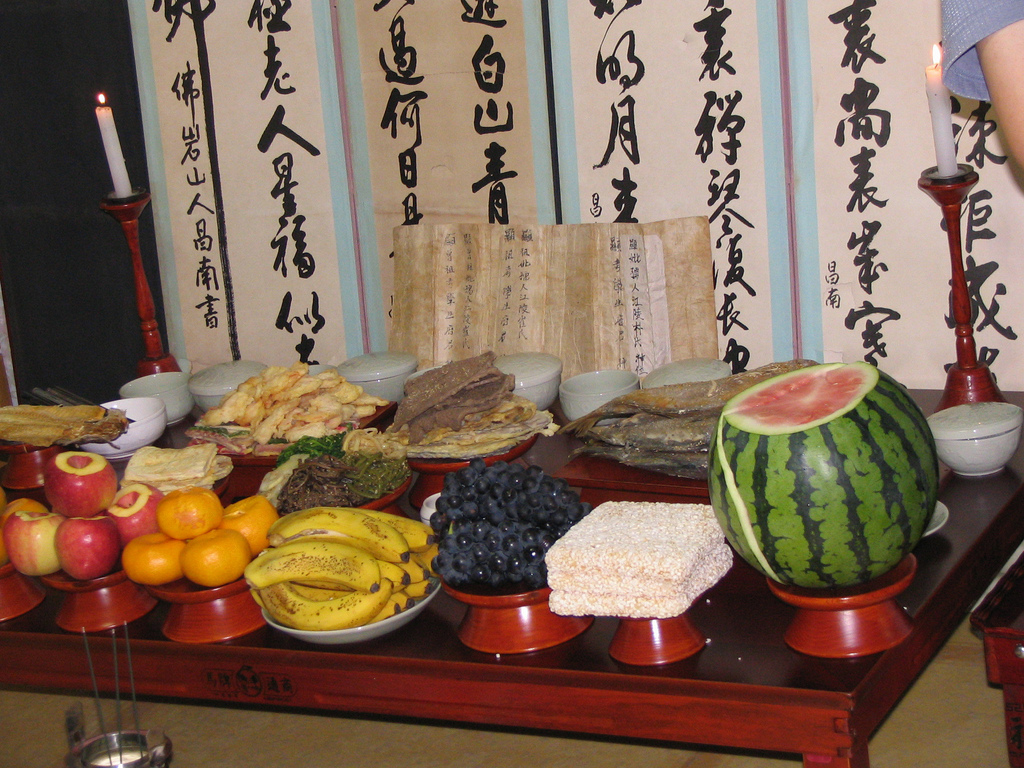 🇰🇷 South KoreaJesa제사 (Jesa)
A Korean ancestral memorial ceremony held on death anniversaries and major holidays.Spiritual · Feasts and festival meals
🇰🇷 Seoul, South KoreaYeondeunghoe연등회
A Korean lantern festival celebrating the Buddha's birthday with glowing lotus lightsSpiritual
🇰🇷 South KoreaJesa제사 (Jesa)
A Korean ancestral memorial ceremony held on death anniversaries and major holidays.Spiritual · Feasts and festival meals
🇰🇷 Seoul, South KoreaYeondeunghoe연등회
A Korean lantern festival celebrating the Buddha's birthday with glowing lotus lightsSpiritual
 🇰🇷 Seoul, South KoreaJongmyo jerye종묘 제례
Ancestral rite for Korea's Joseon kings, with court music and a line dance, held in SeoulSpiritual
🇯🇵 Japan and 2 moreJoya no Kane除夜の鐘
A Japanese Buddhist New Year's Eve ritual where temple bells are struck to cleanse the year of worldly desires.Spiritual
🇰🇷 Seoul, South KoreaJongmyo jerye종묘 제례
Ancestral rite for Korea's Joseon kings, with court music and a line dance, held in SeoulSpiritual
🇯🇵 Japan and 2 moreJoya no Kane除夜の鐘
A Japanese Buddhist New Year's Eve ritual where temple bells are struck to cleanse the year of worldly desires.Spiritual
The same idea elsewhere
Remembering the ancestors compared 🇮🇷 Iran and 7 moreNowruzنوروز
The Iranian new year at the March equinox, kept with fire, greenery and picnicsSeasonal
🇮🇷 Iran and 7 moreNowruzنوروز
The Iranian new year at the March equinox, kept with fire, greenery and picnicsSeasonal
 🇮🇳 Mathura, India and 5 moreHoliहोली (Hindi)
A spring festival of colours and bonfires that marks the end of winter and the triumph of good over evil.Festival
🇮🇳 Mathura, India and 5 moreHoliहोली (Hindi)
A spring festival of colours and bonfires that marks the end of winter and the triumph of good over evil.Festival
 🇮🇳 Guwahati, IndiaBihu dance
A folk dance from Assam that celebrates spring, fertility and the new year with energetic movement and music.Performance
🇮🇳 Guwahati, IndiaBihu dance
A folk dance from Assam that celebrates spring, fertility and the new year with energetic movement and music.Performance
 🇮🇷 Isfahan, Iran and 4 moreChaharshanbe Suriچهارشنبهسوری
An Iranian festival of fire and renewal celebrated on the eve of the final Wednesday before spring.Festival · Tea-time and snacking customs
🇮🇷 Isfahan, Iran and 4 moreChaharshanbe Suriچهارشنبهسوری
An Iranian festival of fire and renewal celebrated on the eve of the final Wednesday before spring.Festival · Tea-time and snacking customs