Music, dance and storytellingEast AsiaBuddhistIndigenous and traditional
Throat singing
Several deep, guttural singing styles, each named and kept by its own people

Throat singing covers several singing techniques that grew up in separate cultures, mainly among Turkic, Mongolic and Tungus-Manchu peoples of Mongolia, Russia and China. Inuit duets in Canada, Ainu rekuhkara in Japan, Sardinian canto a tenore and Buddhist monastery chant are other forms, and UNESCO recognises two examples as intangible cultural heritage.
Throat singing is a set of vocal practices kept in several parts of the world. Singers use a low, guttural voice, and listeners often hear two or more notes coming from one voice at once. Turkic, Mongolic and Tungus-Manchu peoples in Mongolia, Russia and China have the best-known forms; Inuit singers in Canada, Ainu singers in Japan and Sardinian singers have their own.
What it is
Throat singing is an umbrella term for several vocal practices found in different cultures. They share a low, guttural sound that stands apart from the chest voice and the light head or falsetto register most singing uses. Listeners often describe hearing two or more distinct notes at once, even when the singer makes only one sound. The techniques began inside particular cultures but share acoustic features, which is why outsiders group them together. Ethnomusicologists may study them through ritual, storytelling and work-song contexts, while musicologists look at acoustics and physiology.
The name and its problems
The English label comes from translating two words: the Tuvan Xöömei and the Mongolian Xöömi, which mean throat and guttural. It is a loose term. All singing is produced at the larynx, so the word throat could in theory be applied to opera or pop as well, and 'throat' is not part of official anatomical terminology. Some writers, performers and listeners use throat singing and overtone singing as if they were the same, and some dictionaries do too. They are not synonyms, though a Tuvan technique, khargyraa, uses a deep tense voice and overtone singing together. Some singers dislike the phrase 'singing with the throat' because it suggests strain.
Where it is found
The best-documented forms belong to Turkic peoples such as Tuvans, Tofalars, Altai, Khakass, Yakuts, Kazakhs and Kyrgyz, to Mongolic peoples such as Mongols, Buryats and Kalmyks, and to Tungus-Manchu peoples such as Evenks and Evens. Mongolian and Tuvan singing is practised in Mongolia, in the Republic of Tuva inside the Russian Federation, and in China. Inuit singers in Canada perform duets in contests. Rekuhkara was formerly done by the Ainu of Hokkaidō in Japan. Canto a tenore belongs to Sardinia, and a Corsican polyphony called Paghjella is similar but is not throat singing. Some monasteries in Tibet, and Tibetan communities in exile in India, use low chant.
Techniques and sounds
Under the broad label sit several named techniques. Overtone singing, also called overtone chanting or harmonic singing, is the one most often meant. Undertone singing builds subharmonics, made when parts of the vocal apparatus vibrate at whole-number ratios such as 1:2, 1:3 or 1:4. Diplophonic voice uses ratios that are not whole numbers and is usually linked to pathological processes. Growl voice sets structures above the larynx, particularly the aryepiglottic folds, vibrating along with the vocal folds. Vocal fry belongs to the vocal fry register. Buddhist chant in some monasteries uses vocal-ventricular phonation, the combined vibration of vocal folds and ventricular folds, to reach low pitches.
Today and change
Throat singing now travels. Groups from the cultures that keep it give concerts and workshops abroad, and audiences outside those places have taken an interest. Musicians working in contemporary, rock, new-age, pop and independent styles have borrowed the sound. Two forms carry international recognition: the Khöömei of Mongolia, Tuva and China, and the Canto Tenore of Sardinia, and both appear on UNESCO's Intangible Cultural Heritage list. At the same time the label is being questioned. It has been common in writing since the 1960s, yet some scholars today prefer to name each tradition separately rather than use one general term.
How Throat singing is kept
Among Turkic, Mongolic and Tungus-Manchu peoples, a single singer shapes a low, guttural tone and lets a second, higher note sound above it. Mongolian and Tuvan forms use several techniques, among them khargyraa, which pairs a deep tense voice with overtone singing. Inuit singers in Canada perform as a duet in contests. Monks in some monasteries in Tibet, and in Tibetan communities in India, chant so that the vocal folds and the ventricular folds vibrate together and reach low pitches. Rekuhkara was formerly done by Ainu singers on Hokkaidō, and canto a tenore is the Sardinian form.
When and where
There is no single season or date. These are living vocal practices, sung on ordinary days, at contests, in monasteries and at concerts. The ancient forms are the ones most often cited in writing; the term itself has appeared in the literature since the 1960s, and Mongolian Khöömei and Sardinian canto a tenore now carry UNESCO recognition.
Mongolia, the Republic of Tuva within the Russian Federation, and China are home to the best-known forms. Inuit singers in Canada keep their duets, and Buddhist chant with low vocal-ventricular phonation is heard in monasteries in Tibet and among Tibetan communities in exile in India. Rekuhkara belonged to the Ainu of Hokkaidō in Japan, and canto a tenore belongs to Sardinia in Italy.
What Throat singing means
The meaning differs with each community. For many Central and North Asian peoples these techniques carry stories, rituals, religious practice and labour songs, and they are treated as part of a group's identity. In monasteries the low chant serves prayer. Inuit duets are contests between partners, a form of play and skill. The label itself carries weight: some singers find 'singing with the throat' belittling, because it suggests strain rather than training.

Questions people ask about Throat singing
What is throat singing?
It is a group of vocal practices in which a singer makes a low, guttural sound, and listeners often hear two or more separate notes from that one voice. The practices grew up separately in different cultures, so the label covers several techniques rather than one style.
Where is it kept?
Mainly among Turkic, Mongolic and Tungus-Manchu peoples of Mongolia, Russia and China. Inuit singers in Canada, Ainu singers formerly in Japan, Sardinian singers in Italy, and monks in Tibet and Tibetan communities in India also keep their own forms.
Is it the same as overtone singing?
No. Some authors, performers, coaches and listeners treat them as the same, and some dictionaries do too, but the sources for this page say they are not synonyms. Overtone singing is the technique most often meant by the label, and a Tuvan technique called khargyraa uses both at once.
When is it performed?
It has no fixed season. People sing it in everyday settings, in contests, in monasteries, and at concerts and workshops abroad. Mongolian Khöömei and Sardinian Canto Tenore both appear on UNESCO's Intangible Cultural Heritage list.
Why is the name debated?
Every singing voice is made at the larynx, so the phrase does not name one technique exactly, and 'throat' is not part of official anatomical terminology. 'Singing with the throat' can also sound belittling to singers, which is why some scholars now avoid the term.
See also
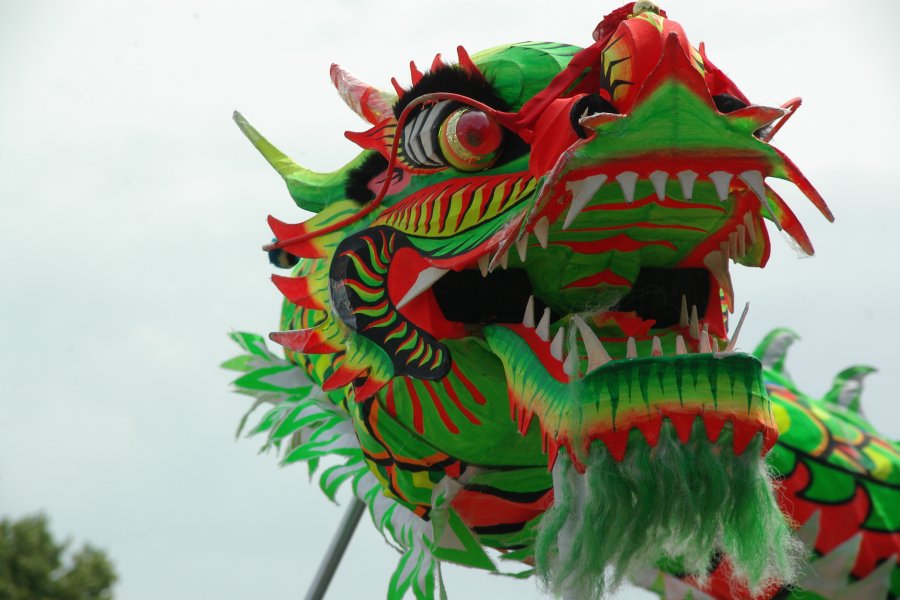 Dragon danceA long dragon puppet on poles, danced by a team at Chinese New Year and other festivals
 IkebanaThe Japanese art of arranging cut branches and flowers in a vessel
 KizombaA close, slow couple dance from Angola, named after a Kimbundu word for party
Good reading and sources
- Encyclopaedia BritannicaArticle
- Mongolian traditional art of KhöömeiUNESCO, Heritage listing
- Mongolian traditional art of KhöömeiUNESCO, Article
- Throat singing on WikipediaEncyclopedia
- More photos on Wikimedia CommonsPhotos and video
- Wikidata recordOpen data
The facts on this page come from the Wikipedia article "Throat singing", written by its contributors and used under the CC BY-SA 4.0 licence, and from its Wikidata record (CC0). EveryParampara rewrote the text in its own words, with AI assistance, and compares every page with the article to make sure no passage is copied. It may be reused under the same CC BY-SA 4.0 licence with a link back.
It may contain mistakes. Traditions differ from one family, village and community to the next, and the people who keep them know them best. If something is wrong, tell us. Last refreshed 2026-10-05.
More from Mongolia
All the traditions of Mongolia 🇲🇳 MongoliaMorin khuurморин хуур (Mongolian Cyrillic); ᠮᠣᠷᠢᠨ ᠬᠣᠭᠣᠷ (traditional Mongol script)
Mongolia's two-string horsehead fiddle, played with a horsehair bowPerformance
🇲🇳 MongoliaMorin khuurморин хуур (Mongolian Cyrillic); ᠮᠣᠷᠢᠨ ᠬᠣᠭᠣᠷ (traditional Mongol script)
Mongolia's two-string horsehead fiddle, played with a horsehair bowPerformance
 🇷🇺 Russia and 1 moreTuvan throat singing
A style of singing from Tuva where one voice sounds a drone and a melody at oncePerformance
🇷🇺 Russia and 1 moreTuvan throat singing
A style of singing from Tuva where one voice sounds a drone and a melody at oncePerformance
 🇲🇳 MongoliaBiyelgeeБиелгээ
A traditional Mongolian dance of upper body movements rooted in nomadic lifePerformance
🇲🇳 MongoliaBiyelgeeБиелгээ
A traditional Mongolian dance of upper body movements rooted in nomadic lifePerformance
 🇲🇳 Ölgii, Mongolia and 3 moreHunting with eagles
The Central Asian tradition of hunting foxes and hares from horseback with golden eagles.Game
🇲🇳 Ölgii, Mongolia and 3 moreHunting with eagles
The Central Asian tradition of hunting foxes and hares from horseback with golden eagles.Game
The same idea elsewhere
All of this kind 🇹🇷 Kayseri, Turkey and 4 moreHalay
A traditional line and circle folk dance kept across Turkey, Azerbaijan, Armenia, Iran, and Syria.Performance
🇧🇷 BrazilBaião
A syncopated folk rhythm and partnered dance from northeastern BrazilPerformance
🇹🇷 Kayseri, Turkey and 4 moreHalay
A traditional line and circle folk dance kept across Turkey, Azerbaijan, Armenia, Iran, and Syria.Performance
🇧🇷 BrazilBaião
A syncopated folk rhythm and partnered dance from northeastern BrazilPerformance
 🇺🇦 Kyiv, UkraineBanduraБандура
A Ukrainian plucked string instrument played to accompany epic songs and folk balladsPerformance
🇺🇦 Kyiv, UkraineBanduraБандура
A Ukrainian plucked string instrument played to accompany epic songs and folk balladsPerformance
 🇳🇿 Auckland, New ZealandPoi
A Māori performing art of swinging tethered weights in rhythmical patterns.Performance
🇳🇿 Auckland, New ZealandPoi
A Māori performing art of swinging tethered weights in rhythmical patterns.Performance