Music, dance and storytellingLatin America and the CaribbeanSecular and civic
Plena
Puerto Rican folk songs and dance sharing community news with rhythmic frame drums

Plena is a Puerto Rican music and dance tradition rooted in Afro-Puerto Rican working communities of the early twentieth century. Singers share news, satire, and local stories over the rhythms of round hand drums and güiro gourds during protests, holidays, and street gatherings.
When is Plena kept?
Plena is kept during Christmas festivities, civic demonstrations, and spontaneous social gatherings.
Plena is a narrative music and dance tradition from Puerto Rico. Created by working-class Afro-Puerto Rican communities around the turn of the twentieth century, it turns daily life, neighborhood gossip, politics, and breaking news into rhyming songs. Carried by lightweight hand drums and rasping gourds, plena invites onlookers to sing along, clap, and dance, serving both as community commentary and as a voice for public gatherings.
The sung newspaper
Because early songs broadcast local happenings before mass media became common, plena earned the nickname el periódico cantado, or the sung newspaper. Lyricists chronicle everything from political scandals and severe storms to unusual visitors, local crimes, or romantic tales. The verses are typically composed in eight-syllable lines with assonant rhymes, often adopting a satirical tone that offered working people a creative outlet for social critique. Notable historical tunes recounted specific community tragedies or celebrated figures, turning real incidents into shared neighborhood memories that were quickly picked up and sung across town.
Origins and early struggles
The style emerged around 1900 in Barrio San Antón, an Afro-Puerto Rican neighborhood in the southern city of Ponce. Influenced by the older bomba tradition, it initially relied on instrumental accompaniment before singing was introduced around 1907. Early performances took place in neighborhood taverns called cafetines. Wealthier elites initially condemned plena as improper and disorderly, leading city authorities in Ponce to ban the dances within municipal borders in late 1917. Over the following decades, however, the genre gained broad appeal across different social groups, spreading through radio broadcasts and commercial recordings by the 1930s.
Instruments and rhythms
Percussion forms the core of any plena performance, driven by handheld frame drums known as panderetas or panderos. These circular wooden drums feature stretched goat skins and lack metal jingles. Musicians employ three distinct sizes: the large seguidor, the middle-sized punteador, and the smaller requinto, which improvises accents over the steady rhythm. A notched gourd scraper called a güiro adds rhythmic drive, while stringed cuatro guitars, accordions, and maracas frequently fill out the melody. Because the hand drums are lightweight and easy to carry, groups can assemble and perform almost anywhere without elaborate equipment.
Celebration and protest today
Plena remains an active soundtrack for Puerto Rican public life, celebrated during the year-end holiday season and at neighborhood festivities. Because of its long history of giving voice to everyday struggles, musicians and activists frequently play it during civic protests and demonstrations. Spectators regularly participate by joining the chorus, dancing, and clapping to the beat. The tradition also thrives across the Puerto Rican diaspora, preserved by ensemble groups who travel to perform for overseas communities, as well as mainstream artists who weave traditional rhythms into contemporary pop and urban tracks.
How Plena is kept
A group of musicians gathers with three sizes of pandereta frame drums, a notched güiro scraper, and sometimes a cuatro, accordion, or maracas. Lead singers introduce rhyming verses describing current news, humorous stories, or social issues, while backing musicians establish interlocking rhythms. Onlookers quickly gather in a circle, joining in repetitive vocal refrains, clapping with the beat, and dancing. Performances happen informally on streets, during holiday celebrations, at protest marches, or on stage.
When and where
Plena has no fixed single calendar date. It is performed throughout the year at neighborhood parties, street rallies, and social gatherings, and it is especially prominent during the winter Christmas season.
Originating in the San Antón neighborhood of Ponce, plena is practiced across the island of Puerto Rico. It is also kept alive by Puerto Rican diaspora communities abroad, including groups established in places such as Hawaii.
What Plena means
For those who keep it, plena represents working-class expression, resilience, and unity. Originating as a satirical medium for Afro-Puerto Ricans to comment on power and current hardships, it symbolizes community solidarity and serves as an enduring musical badge of Puerto Rican cultural identity.

Questions people ask about Plena
When is Plena kept?
Plena is kept during Christmas festivities, civic demonstrations, and spontaneous social gatherings.
What is plena?
Plena is a Puerto Rican folk music and dance tradition that originated among Afro-Puerto Rican communities around 1900. It features sung verses about current events, accompanied by frame drums and percussion.
Where did plena begin?
The tradition originated in Barrio San Antón, a neighborhood in Ponce, Puerto Rico. It grew out of the working-class community before spreading across the entire island and into diaspora communities.
Why is it called the sung newspaper?
It earned this nickname, or el periódico cantado, because the lyrics chronicled community news, political developments, famous visitors, and notable neighborhood events before modern media became widespread.
What instruments are used in plena?
The primary instruments are panderetas, which are handheld wooden frame drums with goat skin heads, alongside the güiro scraper. Groups may also include accordions, maracas, guitars, and the Puerto Rican cuatro.
See also
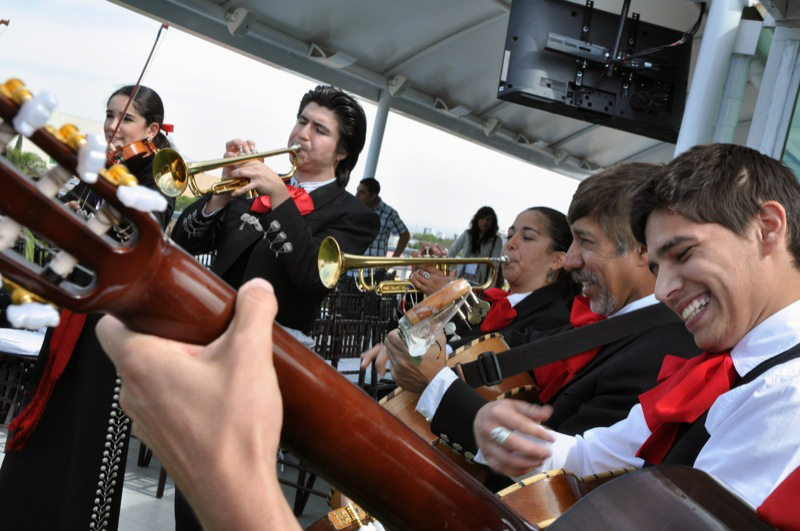 MariachiA Mexican string and trumpet music tradition featuring charro attire and communal singing.
 MerengueA fast-paced folk dance and music tradition born in the Dominican Republic
 Latvian Song and Dance FestivalA grand gathering of choirs, dancers and folk artists held every five years in Latvia
 KlezmerAn Ashkenazi Jewish instrumental tradition of lively dance tunes and ritual melodies
Good reading and sources
The facts on this page come from the Wikipedia article "Plena", written by its contributors and used under the CC BY-SA 4.0 licence, and from its Wikidata record (CC0). EveryParampara rewrote the text in its own words, with AI assistance, and compares every page with the article to make sure no passage is copied. It may be reused under the same CC BY-SA 4.0 licence with a link back.
It may contain mistakes. Traditions differ from one family, village and community to the next, and the people who keep them know them best. If something is wrong, tell us. Last refreshed 2026-10-04.
More from Puerto Rico
All the traditions of Puerto Rico 🇵🇷 San Juan, Puerto Rico and 1 moreBomba
A Puerto Rican music and dance tradition where the drummer follows the dancer in a rhythmic dialogue.Performance
🇵🇷 Puerto Rico and 1 moreParranda
A Puerto Rican Christmas custom of night-time visits with songs, food and drinkPerformance · Supper
🇵🇷 San Juan, Puerto Rico and 1 moreBomba
A Puerto Rican music and dance tradition where the drummer follows the dancer in a rhythmic dialogue.Performance
🇵🇷 Puerto Rico and 1 moreParranda
A Puerto Rican Christmas custom of night-time visits with songs, food and drinkPerformance · Supper
 🇵🇷 Ponce, Puerto RicoVejigante
A masked folkloric character in Puerto Rican festivals, wearing ornate masks and performing a role of mischief or resistFestival
🇵🇷 Ponce, Puerto RicoVejigante
A masked folkloric character in Puerto Rican festivals, wearing ornate masks and performing a role of mischief or resistFestival
 🇪🇸 Spain and 5 moreMidnight MassMissa in nocte
The first service of Christmas, kept late on Christmas Eve in many Western churchesSpiritual
🇪🇸 Spain and 5 moreMidnight MassMissa in nocte
The first service of Christmas, kept late on Christmas Eve in many Western churchesSpiritual
The same idea elsewhere
All of this kind 🇹🇷 Kayseri, Turkey and 4 moreHalay
A traditional line and circle folk dance kept across Turkey, Azerbaijan, Armenia, Iran, and Syria.Performance
🇹🇷 Kayseri, Turkey and 4 moreHalay
A traditional line and circle folk dance kept across Turkey, Azerbaijan, Armenia, Iran, and Syria.Performance
 🇳🇿 Auckland, New ZealandPoi
A Māori performing art of swinging tethered weights in rhythmical patterns.Performance
🇳🇿 Auckland, New ZealandPoi
A Māori performing art of swinging tethered weights in rhythmical patterns.Performance
 🇺🇦 Kyiv, UkraineBanduraБандура
A Ukrainian plucked string instrument played to accompany epic songs and folk balladsPerformance
🇺🇦 Kyiv, UkraineBanduraБандура
A Ukrainian plucked string instrument played to accompany epic songs and folk balladsPerformance
 🇵🇭 Philippines and 1 morePangalay
A traditional fingernail dance of the Tausūg and Bajau peoples in the Sulu Archipelago and Sabah.Performance
🇵🇭 Philippines and 1 morePangalay
A traditional fingernail dance of the Tausūg and Bajau peoples in the Sulu Archipelago and Sabah.Performance